If you’ve ever felt a little wobbly stepping off a curb, turning quickly, or walking on uneven ground, you’re not alone. A balance workout for fall prevention over 50 isn’t just a “nice extra”, it’s one of the most practical things you can do to stay independent, confident, and steady in everyday life.
The good news? Balance is a trainable skill. And it’s not only about your legs and core, your brain plays a huge role.
Today’s routine improves your mind-body connection so you can self-correct faster when you trip, shift, or lose your footing. That quick response is what helps prevent falls, and it improves with consistent practice.
Why Balance Workouts Matter So Much After 50
A strong balance system helps you stay upright when life throws surprises at you, such as slippery floors, uneven sidewalks, quick turns, or carrying something heavy. When you do a balance workout for fall prevention over 50, you’re training your muscles to respond quickly and your brain to send clear signals under pressure.
And here’s what’s encouraging: wobbling is not failure, it’s the training. Every time you wobble and correct yourself, you’re building better communication between your brain and muscles. Over time, you’ll notice you react faster and feel more stable, which is exactly what fall prevention is all about.
The Secret Ingredient: Mental Focus Is a Physical Skill
This workout isn’t “hard” in a sweaty way, but it is challenging in a focus way. Mental focus is a physical skill you can improve through movement, especially balance work. That’s why this routine feels like brain training and body training at the same time.
As you practice, your brain learns how to keep your center steady, how to adjust when you tilt, and how to control small stabilizer muscles you don’t normally think about. That’s what makes a balance workout for fall prevention over 50so powerful: it trains the system that keeps you safe in real life.
Exercise 1: Knee Lifts for Core Stability and Mind-Body Connection
We start gently with knee lifts because they warm up your core and teach your body how to stabilize while one leg moves. This is the foundation of balance, being able to shift weight without tipping or collapsing through the hips.
How to do it: Stand tall and engage your core as you lift one knee. Keep your chest lifted and shoulders relaxed. Lower with control and repeat on the other side.
Why it helps: Knee lifts teach your core to stabilize your spine and pelvis. They also help you practice controlled single-leg balance in a safe, simple way, perfect for a balance workout for fall prevention over 50.

Exercise 2: Hip Rotations for Range of Motion and Balance (Right Leg)
Hip mobility and balance go together. If your hips feel stiff, your body often compensates with the lower back or knees, which can make you feel less steady. This drill improves hip control while you balance on one leg.
How to do it: Stabilize on your right leg. Bend your left knee slightly, toe touching the floor for support. Rotate your left knee outward to the side, then bring it back. Use a wall if you need it, and practice taking your hand on and off.
Why it helps: This strengthens stabilizers around the hip and improves joint range of motion. Over time, it supports smoother walking and steadier turns, key goals of any balance workout for fall prevention over 50.
Exercise 3: Hip Rotations for Joint Mobility (Left Leg)
Now you’ll switch sides. It’s normal to feel one hip tighter or shakier than the other, especially after 50. This is where balance work becomes very personal and very useful.
How to do it: Stabilize on your left leg and repeat the same motion: toe touch for support, rotate the knee out, then return. Only rotate as far as feels comfortable and controlled.
Why it helps: This builds symmetry and teaches your body to control both hips more evenly. A consistent balance workout for fall prevention over 50 helps reduce “favoring” one side, which often leads to more wobbling and less confidence.
Exercise 4: Head Turns with Balance for Coordination and Brain Training
This one is a fun challenge because turning your head changes your balance signals. You’re training your body to stay steady while your eyes and head move, something you do constantly in real life.
How to do it: Take your arms out wide for balance. Bend your left knee so your toe lightly touches the floor. Then look from side to side slowly, staying as steady as you can.
Why it helps: This strengthens coordination between your visual system, inner ear, and stabilizing muscles. It’s exactly the kind of real-life training that makes a balance workout for fall prevention over 50 so effective.
Exercise 5: Tandem Stance with Torso Rotation (Left Foot Forward)
Tandem stance (one foot in front of the other) narrows your base of support, which challenges balance quickly. Adding a slow torso rotation increases core control and teaches your body to stay upright during gentle twisting.
How to do it: Place your left foot in front of your right, like you’re standing on a tightrope. Engage your core, arms wide, and slowly rotate your torso side to side.
Why it helps: This trains your brain to communicate with your muscles to maintain equilibrium, meaning stay upright. And yes, wobbling is expected. That wobble is the practice that improves your reflexes in a balance workout for fall prevention over 50.
Exercise 6: Tandem Stance with Torso Rotation (Right Foot Forward)
Switching sides gives your brain and body a new challenge. One side may feel dramatically more stable, and that’s information you can use to focus your practice.
How to do it: Place your right foot in front of your left and repeat the slow torso rotation. If full tandem stance feels too hard, bring your back foot slightly wider or place it beside the middle of your front foot for better balance.
Why it helps: This teaches your body to self-correct more quickly when you shift or stumble. With repetition, your reaction time improves, which is one of the biggest goals of a balance workout for fall prevention.
Exercise 7: Three-Way Balance Challenge (Left Foot Forward)
Now we combine three tasks: feet position, arm motion and head turns. This is advanced brain-body training, and it’s incredibly effective for fall prevention because it mimics real life, where multiple things happen at once.
How to do it: Put your left foot in front of your right (tandem stance). Stabilize your core. Add a gentle paddling motion with your arms. If you feel steady, add slow head turns side to side.
Why it helps: This strengthens neural pathways, your brain’s ability to send steady signals under challenge. That’s why a balance workout for fall prevention can feel mentally demanding in the best way.
Exercise 8: Three-Way Balance Challenge (Right Foot Forward)
Last side! If you wobbled a lot, good. You found your starting point, and that’s how progress begins. Balance improves when you practice consistently, not when you “get it perfect” on day one.
How to do it: Switch feet (right foot in front). Stabilize first, add arms second, then add head turns only if you feel able. Move slowly and breathe.
Why it helps: This drill teaches you to react more swiftly and self-adjust when you trip or lose balance. That’s the heart of a balance workout for fall prevention, training the exact skills that keep you safe.
Cool Down and Track Your Wins (It Builds Consistency)
After the workout, take a moment to breathe and relax your shoulders. Even gentle balance work can fatigue the nervous system, so a calm cool down helps your body reset.
Then track your progress. A simple comment, journal note, or calendar checkmark creates consistency and consistency is what transforms a balance workout for fall prevention from “something you tried” into real results you can feel in daily life.
If you have energy, repeat the workout for a full 20 minutes. That extra practice can make improvements show up faster.
Free 28-Day New Year Activation Challenge
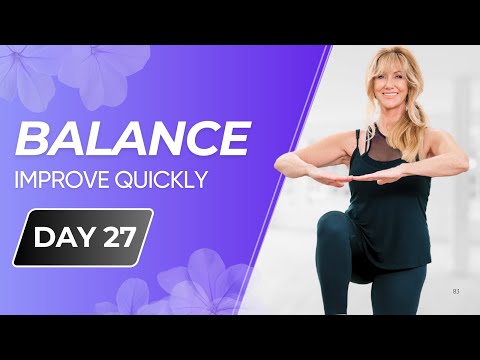
This workout is Day 27 of the Free 28-Day Activation Challenge, designed specifically for women in midlife who want to feel stronger, more energized, and confident in their bodies.
Each day includes a targeted 10-minute routine that fits easily into your schedule and helps build long-lasting healthy habits. If you’re just joining in, it’s never too late to start!
- Day 1: 10 Min Full Body Strength for Women Over 50: How to Start
- Day 2: Does Walking Burn Fat Over 50? This 8-Minute Workout Proves It
- Day 3: 10 Minute Workout to Tone Flabby Arms & Build Upper Body Strength
- Day 4: 10 Minute HIIT Workout to Burn Fat & Boost Energy Over 50
- Day 5: Full Body Strength Workout to Tone & Build Lean Muscle Over 50
- Day 6: How to Improve Balance After 50: 8 Min Balance & Stability
- Day 7: 8 Min Full Body Stretch to Release Joints & Lower Cortisol
- Day 8: Upper Body Strength for Women 50+ Chest, Shoulders & Triceps
- Day 9: Why This 8 Minute Walk Works Better Than Regular Cardio
- Day 10: Why This 10 Min “Pull” Routine Works Better Than Posture Correctors
- Day 11: Belly Fat Blasting HIIT Workout for Women Over 50
- Day 12: This Dumbbell Workout Builds Stronger Legs in 10 Minutes
- Day 13: You Need To Try This 8 Minute Balance workout Over 50
- Day 14: Do This 10 Min Stretch to Stop Waking Up Stiff & Aching
- Day 15: 10-Minute Standing Abs to Burn Belly Fat
- Day 16: Do This 10 Minutes Walk to Burn Calories All Day
- Day 17: 10 Minutes Strength Workout to Build Muscle Fast After 50
- Day 18: 10-Minute Beginner HIIT Workout to Get Fit & Burn Fat Fast
- Day 19: Do This 10 Min Full Body Strength Workout to Feel Stronger After 50
- Day 20: 10-Minute Balance Workout To Stay Young And Spritely
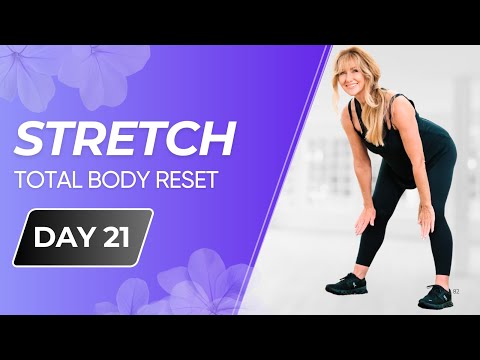
- Day 21: 10-Minute Total Body Stretch to Fix Stiff Hips & Aching Joints
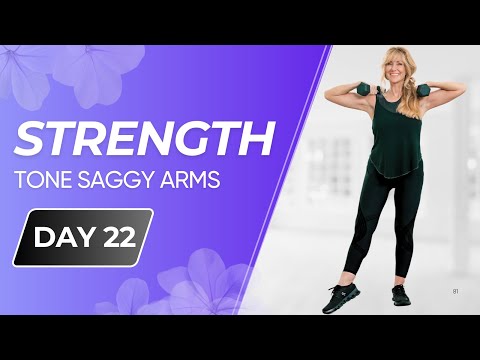
- Day 22: 10-Minute Upper Body Strength Workout to Tone Saggy Arms & Fix Posture
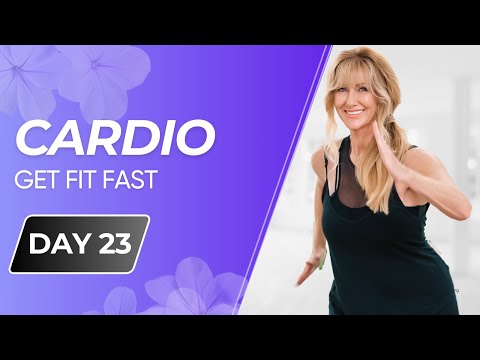
- Day 23: 10-Minute Walking Cardio Workout to Get Fit & Burn Fat Fast
- Day 24: These 7 Exercises Rebuild Leg Strength After 50
- Day 25: 10-Minute HIIT For Maximum Burn and Minimum Joint Stress Over 50
- Day 26: A 10-Minute Dumbbell Strength Workout to Build Muscle & Brain Power Over 50
You can track your progress, stay motivated, and be part of a supportive community that’s cheering you on every step of the way.
FAQs: Balance Workout for Fall Prevention Over 50
Aim for 3–5 times per week, even if it’s only 5–10 minutes. Balance improves fastest with frequent practice.
Yes, wobbling is part of the training. Every time you wobble and correct, your brain and muscles learn faster.
Absolutely. Use support as needed, then practice taking your hand on and off to build confidence safely.
It can significantly reduce risk by improving stability, reaction time, and coordination—especially when practiced consistently.
Only move within a comfortable range. With repetition, hip mobility often improves, and balance becomes easier.
These balance drills are generally low-risk because they’re controlled and low-impact. Still, avoid quick twisting or jerky movements and prioritize support.
Many women feel steadier within 2–4 weeks with consistent practice, especially when combined with strength training.
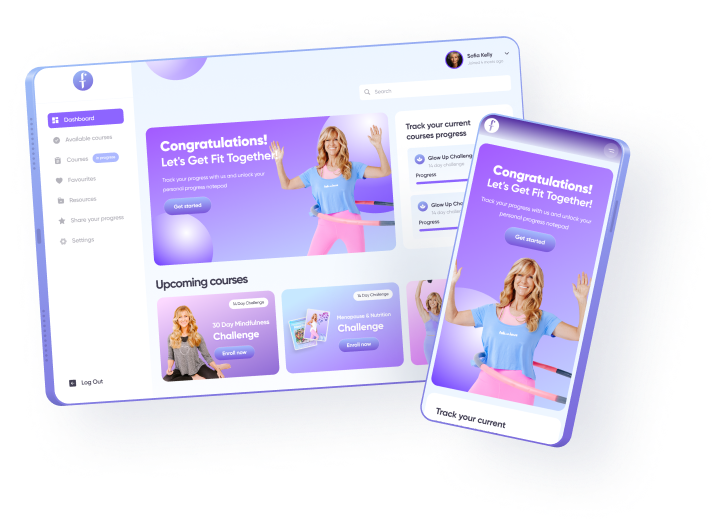
Want even more support? Check out the VitaliT app for midlife women, your hub for extended workouts, nutrition, brain training, face yoga, and new wellness tools like tapping. It’s all based on the same plan as this challenge: strength, cardio, balance, and mobility. Start your 14-day free trial and feel the difference.