If you’ve ever felt a little wobbly stepping off a curb, turning quickly in the kitchen, or balancing while putting on a shoe, you’re not alone. The good news? Balance isn’t just “something you either have or you don’t.” This 10-minute balance workout for women over 50 is designed to train the skills that actually keep you upright: timing, coordination, and reaction speed.
And here’s the exciting part: reaction speed is still highly trainable at this stage of life. With practice, your brain and body get better at talking to each other, so when you trip, slip, or shift your weight unexpectedly, you can recover faster.
That’s exactly why this 10-minute balance workout for women over 50 can be such a powerful tool for fall prevention and everyday confidence.
What Makes Balance Training So Important After 50?
Balance is about much more than standing still on one foot. It’s about how quickly you can react, adjust, and stabilize when life happens, like stepping on uneven ground, carrying a bag, or turning around too fast.
A consistent balance workout for women over 50 helps you practice those quick “save yourself” moments in a safe way. Over time, that practice builds better coordination, stronger ankles and feet, and sharper focus, so you feel steadier, not just during workouts, but all day long.

Warm-Up for Hip Hinge Mobility and Core Control After 50
Start with a gentle warm-up using a hip hinge. This wakes up your hips and core, two major players in balance. When your hips move well and your core can steady you, your whole body feels more controlled.
How to do it: Hinge at the hips and lower your body slightly (like a mini deadlift). As you lower, bring one arm forward and the other arm back. Exhale as you lower, inhale as you rise. Move slowly and smoothly, this is about control, not speed.
This warm-up also helps your nervous system “switch on” before the balance work begins. Think of it as tuning up the connection between your brain and your body, which is exactly what balance training needs.
One-Leg Arm Circles
This is a true brain-body exercise. Standing on one leg challenges your stability, and adding arm circles forces your brain to manage multiple tasks at once: balance, posture, coordination, and focus.
How to do it: Stand tall on one leg and start making controlled arm circles. Keep your gaze steady, ribs stacked over hips, and your standing foot grounded. If needed, lightly touch a wall or chair for support. The goal is to challenge yourself, not to struggle.
Why it helps: This move improves coordination and trains your nervous system to stay calm under balance pressure. It’s one of the best ways to make a balance workout feel “functional,” because real life often requires balance while your arms are moving too.
Plié Squat to Toe Balance
Strong ankles and steady feet are key for preventing falls, and this move targets both. The plié stance also adds a gentle hip-opening element, which can feel great if you’re stiff.
How to do it: Bring heels together (or close), toes turned out. Do a gentle half squat, then rise onto your toes and balance for a count of two. Go slow and use a wall if you need it. Keep the movement smooth and controlled.
Why it helps: Rising to your toes strengthens calves and ankles, while the balance hold trains stability. This is exactly the kind of training that improves “micro-reactions,” like catching yourself when you step on something uneven.
Right Side Balance Taps
Proprioception is your body’s ability to sense where you are in space, without looking. It’s a huge part of good balance, and it improves with practice.
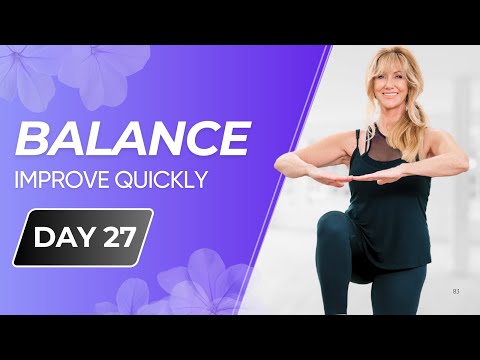
How to do it: Lift your right foot and bring your arms center → side → center → down (as shown in the workout). If that’s too challenging, tap your toe to the floor lightly and practice lifting it up and down again. That modification still trains your balance pathway.
Why it helps: These taps teach your body quick adjustments and better foot control. In a balance workout for women over 50, this is one of the most practical drills for building confidence when you’re moving in different directions.
Left Side Balance Taps
Now switch sides. Almost everyone has a “better” and “worse” side and that’s normal. The point isn’t perfection. The point is showing your body that improvement is possible.
How to do it: Repeat the same tapping pattern on the left leg. Keep your core gently engaged and your shoulders relaxed. If you wobble, reset and keep going. Wobbling isn’t failure, it’s your balance system learning.
Training both sides in your balance workout for women over 50 builds symmetry, which helps you feel steadier overall. Over time, you may notice walking feels smoother and turns feel more controlled.
Round 2: Repeat the Five Moves to Improve Reaction Speed
After a short sip of water, repeat the same five exercises for round two. This is where the magic happens: your nervous system starts adapting, and even tiny improvements can show up quickly.
Your goal isn’t to “nail” everything, it’s to improve even one exercise by a small amount. Maybe you wobble less, hold longer, or need the wall less. That’s real progress, and it adds up.
This repetition is a simple way to make abalance workout for women over 50 more effective without adding new moves or extra complexity.
Cool Down
When you finish, take a moment to stand tall, breathe, and notice how your body feels. Tracking your workouts (even with a quick “done” note) keeps you consistent, and consistency is what changes balance.
If you still have energy, repeat the full 10 minutes again. Two rounds gives you a 20-minute session and adds extra practice time, which is one of the fastest ways to improve balance after 50.
Final Thoughts
This 10-minute balance workout for women over 50 works because it trains the real foundations of balance: reaction speed, coordination, proprioception, ankle strength, and focus. It’s not about standing still and hoping you don’t wobble, it’s about teaching your body to recover quickly and confidently.
Practice it often, be patient with your “wobbly days,” and celebrate small improvements. Your future self truly will thank you because steadier balance is one of the biggest keys to staying active, independent, and confident as you age.
Free 28-Day New Year Activation Challenge
This workout is Day 20 of the Free 28-Day Activation Challenge, designed specifically for women in midlife who want to feel stronger, more energized, and confident in their bodies.
Each day includes a targeted 10-minute routine that fits easily into your schedule and helps build long-lasting healthy habits. If you’re just joining in, it’s never too late to start! Jump in with Day 4 or go back and begin from Day 1.
- Day 1: 10 Min Full Body Strength for Women Over 50: How to Start
- Day 2: Does Walking Burn Fat Over 50? This 8-Minute Workout Proves It
- Day 3: 10 Minute Workout to Tone Flabby Arms & Build Upper Body Strength
- Day 4: 10 Minute HIIT Workout to Burn Fat & Boost Energy Over 50
- Day 5: Full Body Strength Workout to Tone & Build Lean Muscle Over 50
- Day 6: How to Improve Balance After 50: 8 Min Balance & Stability
- Day 7: 8 Min Full Body Stretch to Release Joints & Lower Cortisol
- Day 8: Upper Body Strength for Women 50+ Chest, Shoulders & Triceps
- Day 9: Why This 8 Minute Walk Works Better Than Regular Cardio
- Day 10: Why This 10 Min “Pull” Routine Works Better Than Posture Correctors
- Day 11: Belly Fat Blasting HIIT Workout for Women Over 50
- Day 12: This Dumbbell Workout Builds Stronger Legs in 10 Minutes
- Day 13: You Need To Try This 8 Minute Balance workout Over 50
- Day 14: Do This 10 Min Stretch to Stop Waking Up Stiff & Aching
- Day 15: 10-Minute Standing Abs to Burn Belly Fat
- Day 16: Do This 10 Minutes Walk to Burn Calories All Day
- Day 17: 10 Minutes Strength Workout to Build Muscle Fast After 50
- Day 18: 10-Minute Beginner HIIT Workout to Get Fit & Burn Fat Fast
- Day 19: Do This 10 Min Full Body Strength Workout to Feel Stronger After 50
You can track your progress, stay motivated, and be part of a supportive community that’s cheering you on every step of the way.
FAQs: 10-Min Balance Workout for Women Over 50
Yes. Balance is a skill that responds to practice because it’s mostly about coordination, reaction speed, and nervous system training, not just strength.
Aim for 2–4 times per week. Short, frequent practice works better for balance than doing it once in a while.
Wobbling is normal and actually part of training. Use a wall or chair for support and focus on steady improvement, not perfection.
Either is fine. Shoes can feel safer for some. Barefoot can help you feel the floor and strengthen feet—just make sure the surface isn’t slippery.
Slow down, soften your gaze, and hold onto support. If dizziness is frequent, severe, or new, check in with a healthcare professional before pushing balance work.
They train your ankles, hips, and core to react quickly, and they improve proprioception (your body’s “where am I in space?” sense), which helps you recover faster.
Repeating builds better neural pathways. Your body learns quickly when it practices the same pattern twice, and you often feel improvement right away.
Want even more support? Check out the VitaliT app for midlife women, your hub for extended workouts, nutrition, brain training, face yoga, and new wellness tools like tapping. It’s all based on the same plan as this challenge: strength, cardio, balance, and mobility. Start your 14-day free trial and feel the difference.