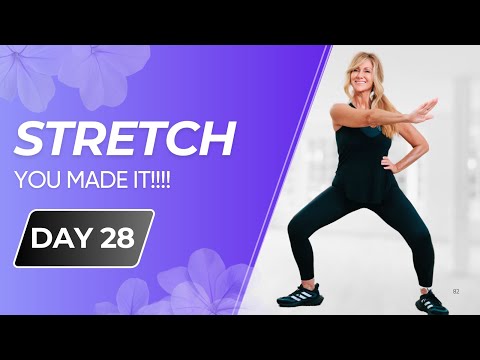
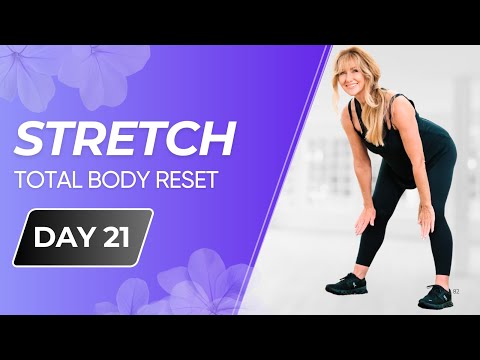
You made it to Day 21, three full weeks in, and that’s something to feel proud of. Today is all about recovery: a gentle, calming 10-minute total body stretch to fix stiff hips and aching joints so your body can loosen up after a busy week of movement.
Here’s a mindset shift that matters after 50: stiffness is often your body asking to be moved, not rested. When we sit more, stress more, or move less, our joints can feel tight and cranky.
This short stretch session helps you get blood flowing, calm your nervous system, and remind your hips, spine, and ankles how to move smoothly again.
Why This 10-Minute Total Body Stretch Helps Stiff Hips and Aching Joints
A great stretch routine isn’t about forcing flexibility, it’s about giving your body safe, gentle inputs that say, “You’re okay. You can move.” This 10-minute total body stretch to fix stiff hips and aching joints focuses on the areas that commonly get tight for women over 50: hips, hip flexors, glutes, low back, and ankles.
When you move slowly and breathe through each position, you’re also training your nervous system to relax. That’s why this kind of stretching often makes you feel better quickly, not just looser, but calmer and more comfortable in your body.
Butterfly Stretch
The butterfly stretch is a classic hip opener, and it’s especially helpful if you feel tight in your inner thighs or hips from sitting. It’s gentle, but it can be surprisingly effective when you combine it with slow breathing.
How to do it: Sit tall, bring the soles of your feet together, and let your knees fall wide. Inhale to lengthen your spine. As you exhale, lean forward slightly, only as far as feels comfortable. Keep breathing, and with each exhale, allow your body to soften and ease forward a little more.
Why it helps: This stretch can release tension around the hips and groin and improve comfort in everyday movement like walking, getting in and out of the car, and standing up from chairs.

90/90 Hip Rotations
This is one of the best hip mobility drills because it gently teaches your hips to rotate, something they often “forget” when we sit for long stretches of the day. It’s also very joint-friendly because you’re moving within your own range.
How to do it: Sit with both knees bent at 90 degrees, one leg in front, one to the side. Place your hands behind you for support. Slowly rotate your knees from side to side, aiming for both knees to touch the floor. If they don’t reach, that’s okay, go only as far as you can comfortably control.
Why it helps: Hip rotation supports smoother walking, easier turning, and better posture. Over time, practicing this helps wake up sleepy hips and can reduce that “stuck” feeling in your lower back and pelvis.
Hip Flexor Stretch
Tight hip flexors are one of the biggest reasons women over 50 feel stiff in the hips and achy through the low back. When hip flexors shorten from sitting, they can tug on your pelvis and affect your posture.
How to do it: Come down to a kneeling position and step one foot forward into a gentle lunge shape. Keep your chest lifted and shoulders back. Inhale tall, then exhale and glide forward a little deeper into the stretch. Breathe into the front of the hip and move slowly, no pushing or bouncing.
Why it helps: This stretch can improve stride length, reduce the “tight front hip” feeling, and help you stand taller with less pull in the lower back.
Switch Sides Hip Flexor Stretch
When you switch sides, you’ll probably notice one hip feels tighter, and that’s completely normal. One side often takes more load in daily life (how you stand, how you carry bags, how you climb stairs), so stretching both sides matters.
How to do it: Change knees and repeat the same slow inhale/exhale rhythm. On each exhale, ease forward a touch. Keep the movement small and controlled, and think of “melting” into the stretch rather than forcing it.
Why it helps: Even small improvements in hip flexor length can make walking feel smoother and reduce stiffness after sitting.
Figure-4 Hip Stretch
This stretch targets the glutes and outer hips, areas that can get tight and contribute to lower back discomfort. It’s also a great option if you feel “pinchy” hips or stiffness around the back of the pelvis.
How to do it: Place your left ankle over your right knee (like a seated cross-leg shape). Sit tall, inhale, then exhale and lean forward slightly. Keep the lifted knee from popping up too high, aim for it to stay relaxed and heavy. If it feels good, hold your foot gently for an extra stretch.
Why it helps: Releasing tight glutes can reduce pulling in the low back and help your hips move more freely when you walk, squat, or climb stairs.
Switch Sides Figure-4 Stretch
Switch to the other side and give yourself grace if it feels tighter. You’re not “bad at stretching”, you’re just discovering where your body needs more gentle attention.
Modification: If the classic figure-4 position is too intense, keep your foot closer to the floor and use a lighter forward lean. The goal is comfort and breath, not forcing depth.
Why it helps: Balancing flexibility from side to side can improve how you move and help reduce that uneven “one hip always aches” feeling.
90/90 Lift Holds
This is a mobility-strength combo, which is gold after 50. You’re not just stretching, you’re teaching the hip muscles to control rotation, which supports joint stability.
How to do it: Return to the 90/90 position. Draw the knee slightly into the hip, rotate, then lift the foot and hold for about 10 seconds. If that’s too hard, come down onto your elbow for support. The goal isn’t height, it’s clean, controlled movement.
Why it helps: These lift holds build deep hip strength, which can help protect your knees and lower back by improving how your hips manage movement.
Switch Sides 90/90 Lifts
Now repeat on the other side, moving slowly and paying attention to what you feel. This is the kind of drill that can be challenging in a quiet way, because it targets deep muscles that don’t get trained much in daily life.
How to do it: Rotate and lift, hold, then lower with control. If your range is small, that’s fine. Consistency matters more than depth.
Why it helps: Better hip control supports balance, walking mechanics, and comfort when you change directions or step sideways.
Glute Bridge
Glute bridges help “wake up” the glutes and support the hips and spine. They’re also a gentle way to strengthen without impact, which makes them perfect in a recovery-focused 10-minute total body stretch session.
How to do it: Lie on your back with knees bent. Slightly pigeon-toe your feet, then press hips up into a tabletop position. Squeeze your glutes at the top, and here’s the key: keep squeezing as you lower down. Many of us relax on the way down, but staying engaged builds better control.
Why it helps: Strong glutes support your pelvis, take pressure off your low back, and help your hips feel more stable during walking and standing.
Supine Spinal Twist
A gentle twist is one of the nicest ways to “unwind” the spine after a week of workouts (and regular life). It can also feel amazing for the lower back.
How to do it: Hug your knees in, extend your arms out wide, and drop both knees to one side. Keep your shoulders relaxed. Breathe slowly, then switch sides.
Why it helps: This decompresses the spine, encourages gentle rotation, and helps your body shift into recovery mode.
Knees-to-Chest + Ankle Mobility
This final piece feels simple, but it’s so important, especially the ankles. Strong, mobile ankles help with balance, walking, and confidence on uneven ground.
How to do it: Hug your knees toward your chest, then flex and point your feet. Add ankle circles in both directions. Move slowly and make it feel good.
Why it helps: This boosts circulation, reduces stiffness in the ankles, and supports steady steps—one of the most underrated pieces of staying active after 50.
Cool Down
When you finish, take a moment to notice how your body feels, often you’ll feel lighter, calmer, and looser. If you still have energy, repeat the full stretch again for a longer 20-minute recovery session. This is one of the easiest ways to improve flexibility without pushing too hard.
Final Thoughts
This 10-minute total body stretch to fix stiff hips and aching joints works because it targets the spots that tighten fastest after 50, such as hips, hip flexors, glutes, spine, and ankles; while using breath and gentle movement to calm the body.
Do this on recovery days, after workouts, or anytime you feel stiff from sitting. Your body doesn’t need more pressure—it often just needs consistent, kind movement.
Free 28-Day New Year Activation Challenge
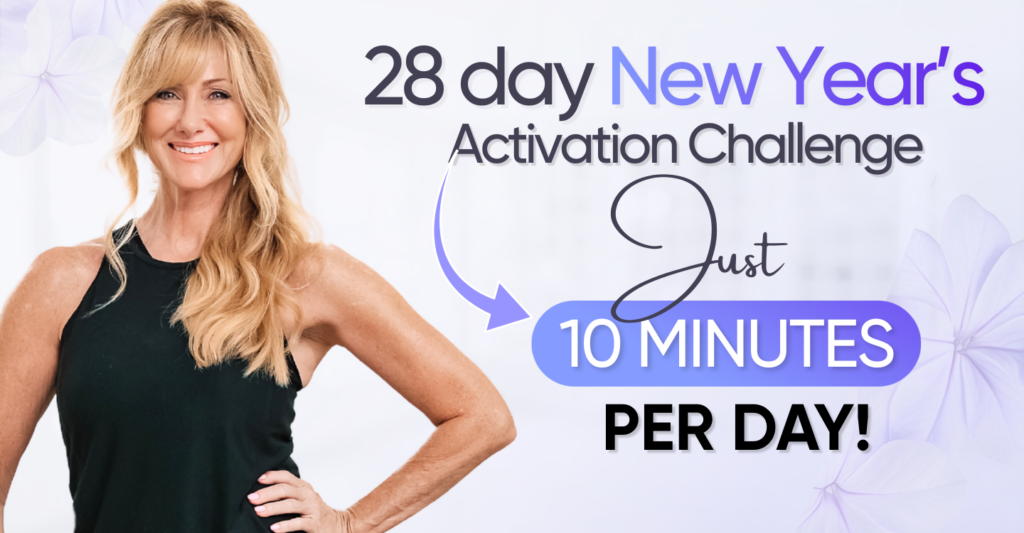
This workout is Day 21 of the Free 28-Day Activation Challenge, designed specifically for women in midlife who want to feel stronger, more energized, and confident in their bodies.
Each day includes a targeted 10-minute routine that fits easily into your schedule and helps build long-lasting healthy habits. If you’re just joining in, it’s never too late to start!
- Day 1: 10 Min Full Body Strength for Women Over 50: How to Start
- Day 2: Does Walking Burn Fat Over 50? This 8-Minute Workout Proves It
- Day 3: 10 Minute Workout to Tone Flabby Arms & Build Upper Body Strength
- Day 4: 10 Minute HIIT Workout to Burn Fat & Boost Energy Over 50
- Day 5: Full Body Strength Workout to Tone & Build Lean Muscle Over 50
- Day 6: How to Improve Balance After 50: 8 Min Balance & Stability
- Day 7: 8 Min Full Body Stretch to Release Joints & Lower Cortisol
- Day 8: Upper Body Strength for Women 50+ Chest, Shoulders & Triceps
- Day 9: Why This 8 Minute Walk Works Better Than Regular Cardio
- Day 10: Why This 10 Min “Pull” Routine Works Better Than Posture Correctors
- Day 11: Belly Fat Blasting HIIT Workout for Women Over 50
- Day 12: This Dumbbell Workout Builds Stronger Legs in 10 Minutes
- Day 13: You Need To Try This 8 Minute Balance workout Over 50
- Day 14: Do This 10 Min Stretch to Stop Waking Up Stiff & Aching
- Day 15: 10-Minute Standing Abs to Burn Belly Fat
- Day 16: Do This 10 Minutes Walk to Burn Calories All Day
- Day 17: 10 Minutes Strength Workout to Build Muscle Fast After 50
- Day 18: 10-Minute Beginner HIIT Workout to Get Fit & Burn Fat Fast
- Day 19: Do This 10 Min Full Body Strength Workout to Feel Stronger After 50
- Day 20: 10-Minute Balance Workout To Stay Young And Spritely
You can track your progress, stay motivated, and be part of a supportive community that’s cheering you on every step of the way.
FAQs: Total Body Stretch to Fix Stiff Hips & Aching Joints
Often it’s from sitting more, moving less, and muscles tightening around the hips. This 10-minute total body stretch to fix stiff hips and aching joints helps restore gentle movement and circulation.
Light stretching can feel great when it’s gentle and pain-free. Avoid pushing into sharp pain, numbness, or tingling. If something feels “wrong,” back off or skip that position.
2–5 times per week is ideal, especially on recovery days or after long periods of sitting. Even 10 minutes can make a noticeable difference.
That’s very common. Go only as far as you can without forcing it. With consistent practice, your hip range usually improves over time.
Place a cushion under your knee, or do a standing hip flexor stretch (split stance, tuck pelvis gently, shift forward slightly). Comfort and consistency matter most.
Most of us have one hip that’s stiffer due to habits, old injuries, or how we stand and move. Keep the tighter side gentle and consistent, don’t force it.
Both. They strengthen the glutes and support the hips and low back while also opening the front of the hips when done slowly and with control.
After a warm-up is usually best. If you’re doing this routine “cold,” start extra gently and focus on breathing and small ranges at first.
Want even more support? Check out the VitaliT app for midlife women, your hub for extended workouts, nutrition, brain training, face yoga, and new wellness tools like tapping. It’s all based on the same plan as this challenge: strength, cardio, balance, and mobility. Start your 14-day free trial and feel the difference.