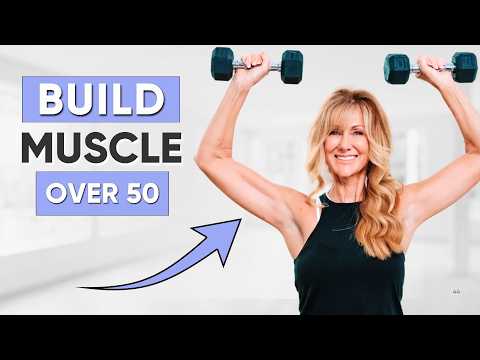
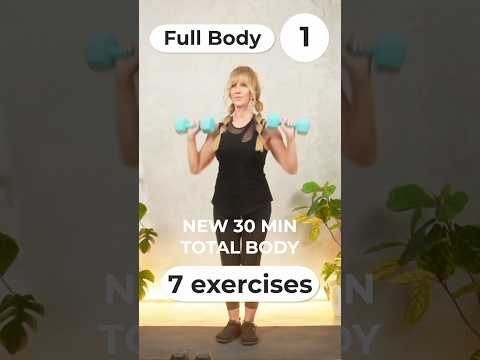
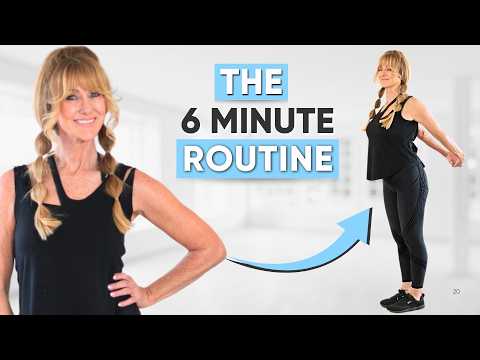
Most of us don’t need more complicated workouts. We need the right movements, done well, a few times a week. That’s the thinking behind this 5-minute strength workout. There are five ways to move it: push, pull, hinge, squat, and carry.
Together, they make strength training for women over 50 simple, quick and genuinely useful. These are the same movements we rely on every day. We use them to pick up groceries, climb out of a chair and reach a high shelf. When they stay strong, we stay independent.
Let’s walk through each one together.
The Way You Move Is Important After 50
It can feel like our bodies change overnight after 50. Stairs feel steeper, and shopping bags feel heavier than they used to. Much of that comes down to muscle. Adults lose roughly 3 to 8% of their muscle mass each decade after 30. The pace speeds up later in life.
That slow loss of strength is called sarcopenia, and it happens over time. On the plus side, training muscles at any age works. That’s why it’s so important for women over 50 to do strength training.
These movement patterns are especially effective for women over 50 because they train muscles the way we use them every day. Each pattern trains a whole chain of muscles that work together, not just one. People who work out after 50 call this “functional strength.” We can feel our strength in everyday life, not just at the gym.
Hinge Movement
Our first pattern is the hinge, and today we’re doing a Romanian deadlift. The hinge builds our glutes and hamstrings, the powerhouse muscles at the back of the body.
How do we do a Romanian deadlift?
- Hinge at the hips, keeping your back straight and your chest proud.
- Lower slowly until you feel a big stretch in your hamstrings.
- Push through your heels, bringing your chest and hips up together.
This movement teaches us to lift using our glutes and hamstrings instead of our back. Many back twinges happen when we bend from the spine to pick something up. Practising the hinge retrains that habit. Over time, lifting becomes safer and easier for the rest of our lives.
Squat Movement
Next comes the squat, and we’re doing a goblet squat. The squat strengthens our quads and glutes, so the front of the leg rather than the back.
How do we do a goblet squat?
- Hold your weight at your chest, toes slightly turned out.
- Lower down, pushing your knees outwards over your toes.
- Keep your chest tall, then drive through your heels to stand.
We use this pattern every single time we sit down and stand up. Think about how often that happens in one day. Keeping our squat strong means we can rise from a chair, the sofa or the floor without help. That’s real freedom, and it’s well worth five minutes of our week.
Push Movement
A push is any movement where we move a weight away from the body. Today we’re doing a standing shoulder press with palms facing in.
How do we do a standing shoulder press?
- Brace your core tight.
- Press the weights up overhead.
- Lower them back down with control.
Push movements train our chest, shoulders and triceps. These are the muscles we use to put things on a high shelf or push ourselves off the floor. Standing to press also makes our core work hard to keep us steady. Strong pushing muscles make everyday reaching feel easier and far more confident.
Pull Movement
Our fourth pattern is a pull, and we’re doing a bent-over row.
How do we do a bent-over row?
- Hinge at the hips with your back straight.
- Pull with your back, not your arms.
- Drive your elbows back and squeeze your shoulder blades together.
Pull movements train our back and biceps. We use them to open a heavy door or lift our bags. Most importantly, a row helps correct rounded shoulders. Over the years, we’ve been pulled forward by hours at desks, on phones and behind the wheel.
Rows are designed to bring us back, so we stand taller and feel lighter. In many ways, strength training for women over 50 is as much about posture as it is about muscle.
Farmer’s Carry Movement
Our final pattern is the farmer’s carry, which is simply walking with a load. It trains our body to stay strong and upright while we move.
How do we do a farmer’s carry?
- Pick up your heaviest weights, one in each hand.
- Stand tall, with shoulders back and core engaged.
- Walk with slow, controlled steps.
We use our heaviest weights here, because the load is what makes the body work to stay upright. The carry trains everything at once: grip, arms, shoulders, back, core and legs.
Grip strength matters more than many of us realize. In one large international study, weaker grip was linked with higher risk of death and cardiovascular disease. Every carry builds the strength to keep handling our own shopping, luggage and whatever life hands us.
How Often Should We Do This 5-Minute Strength Workout?
Health guidelines recommend muscle-strengthening activity on at least two days a week. This 5-minute strength workout makes that goal very achievable. Consistency is what makes strength training for women over 50 work. Here are a few simple ways to build it into our week:
- Do the circuit twice, back to back, for a 10-minute session.
- Pair it with a quick cardio workout on the same day.
- Repeat it two or three times across the week, with rest days between.
As we grow stronger, we can gradually lift heavier. Research backs this up too. In the LIFTMOR trial, postmenopausal women with low bone mass did supervised, high-intensity resistance training. Their bone density and physical function improved, and no serious injuries were reported.
The full version of this workout can be found in the Fabulous50s Vitality App. We can try it for free and follow along at our own pace.
READ ALSO: The Ultimate Strength Training Blueprint For Women Over 50
What If You’re New to Lifting Weights?
Starting something new can be intimidating, especially if you’ve never lifted weights before. That feeling is completely normal. The best approach to strength training for women over 50 is starting light and focusing on form. Choose weights that let you finish each movement with control.
Celebrate every small win, like standing a little taller or carrying the shopping with ease. Those wins add up quickly. Within a few weeks, many of us notice that everyday tasks feel lighter. Strength is built one session at a time, not overnight.
READ ALSO: Is Weight Lifting for Women Over 50 a Good Idea?
Final Thoughts
These five movement patterns for women over 50 cover almost everything our bodies do in daily life. Hinge, squat, push, pull and carry are the foundation of functional strength after 50. Practising them each week keeps us capable, confident and independent.
The best part is that strength training for women over 50 doesn’t need hours in a gym. Five focused minutes can really help. Treat these sessions as a little experiment. Try the routine twice this week and notice how your bodies feel. Then let us know in the comments: was it five minutes well spent?
Frequently Asked Questions
What are the 5 movement patterns for women over 50?
They are the hinge, squat, push, pull and carry. Together, they train every major muscle group and mirror the movements we use in daily life.
Is a 5-minute strength workout really enough?
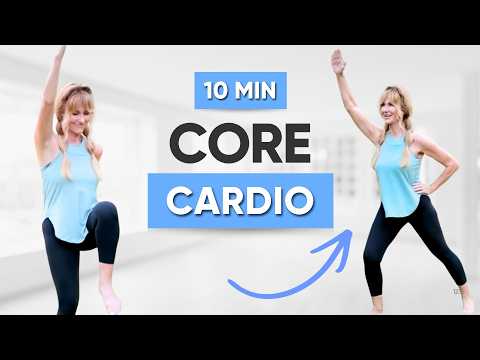
It’s a brilliant starting point, especially on busy days. For more challenge, we can repeat the circuit or pair it with a short cardio session.
What weights should I use for this workout?
Start with dumbbells that let you keep good form through every repetition. For the farmer’s carry, choose your heaviest pair, because the load does the work.
Can strength training improve posture?
Yes. Pull movements like the bent-over row strengthen the upper back and help correct rounded shoulders, so we stand taller.
Is it safe to lift weights if I have low bone density?
Research such as the LIFTMOR trial suggests supervised strength training for women over 50 can be safe and helpful. Check with your doctor or physiotherapist first, then build up gradually.
Where can I find the full version of this workout?
The full workout is in the Fabulous50s Vitality App, which we can try for free.