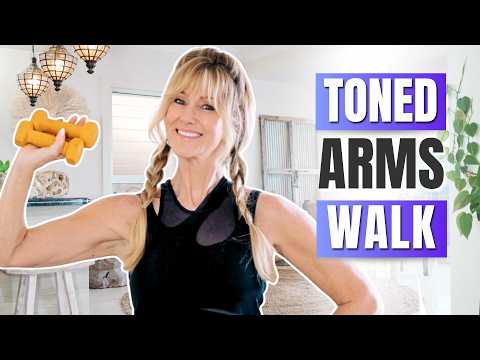
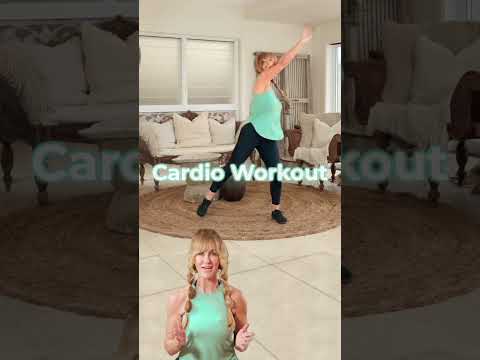
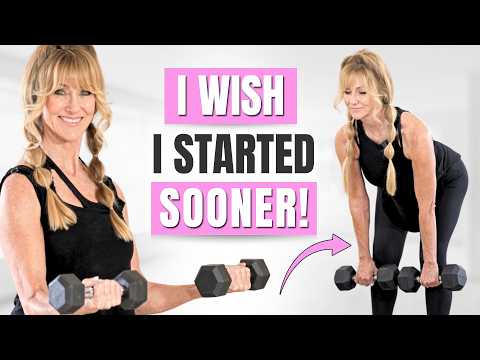
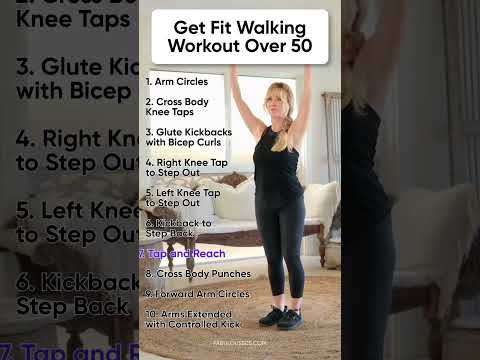
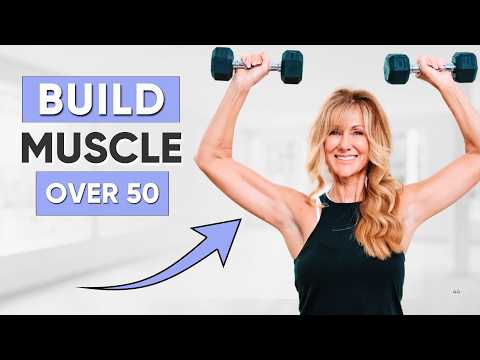
Some days we want a walk, and other days we want to work our arms. This walking workout with dumbbells lets us do both in just 20 minutes. Our feet keep moving the whole time while our arms do the focused work.
Each exercise runs for 45 seconds, then we walk it out for 15 seconds. We go through 10 moves, then repeat the round once more. All we need is a pair of light dumbbells, comfy shoes and a little floor space.
So grab your weights, turn up the music, and let’s get started.
Why Do We Use Light Dumbbells for This Arm Workout?
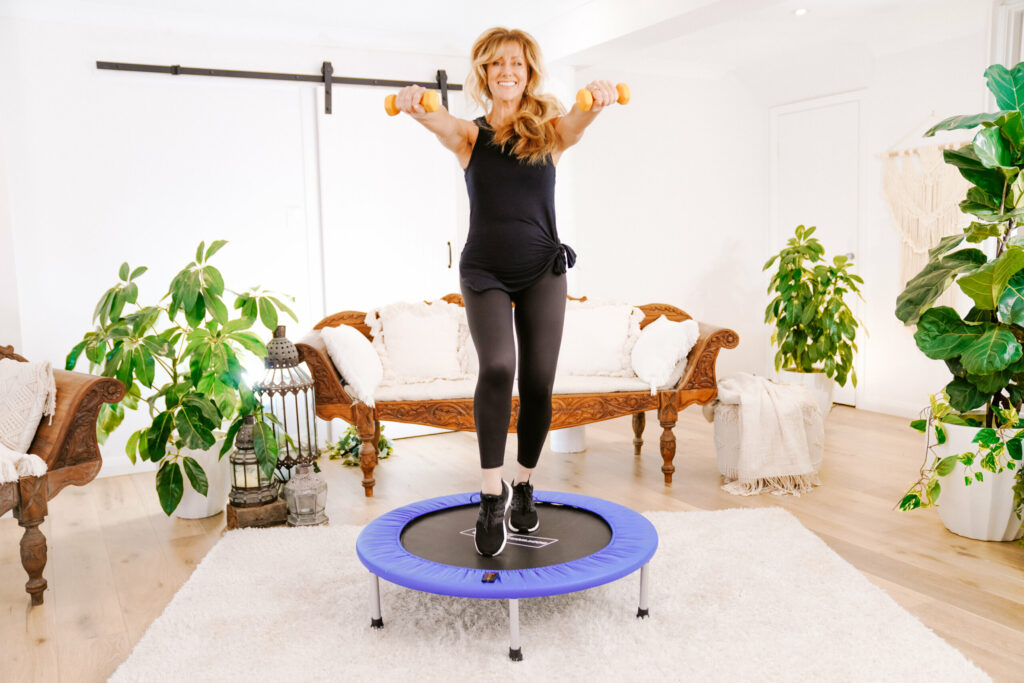
Many of us wonder whether light weights can really make a difference. It’s a fair question when so much fitness advice tells us to lift heavier. In this workout, we’re going for high reps and endurance rather than maximum strength. Our muscles work for longer at a lower load, which is much gentler on our joints.
The science is encouraging here. In one study, women in their early sixties were trained with either light or heavy loads until fatigue. Both groups gained similar strength and muscular endurance after eight weeks. A longer trial followed women aged 56 to 75 through six months of light, very high-rep training. Their maximal strength improved, and their lumbar spine bone density held up better than the control group’s.
So a light dumbbell arm workout for women over 50 is not the easy way out. It’s a smart, joint-friendly way to build arms that keep up with daily life. If you’re new to weights, 1 to 2 kg (2 to 4 lb) per hand is plenty. Water bottles work beautifully too as we build our confidence.
How Does This 20-Minute Walking Workout Work?
The format is simple, which makes it easy to follow from home. We start by walking in place to warm up our muscles and joints. Then we pick up our dumbbells and move through 10 exercises. Each one lasts 45 seconds, followed by a 15-second walking break. The whole sequence is completed twice, so each round takes about 10 minutes.
Throughout the workout, we keep our feet marching or walking. That steady movement keeps our heart rate gently lifted while our arms do the strengthening work. If we’re feeling tired, we slow the march down rather than stopping altogether.
READ ALSO: Why Walking Is One of the Best Cardio Workouts After 50
20-Minute Arm-Toning Walking Workout With Dumbbells – 10 Moves
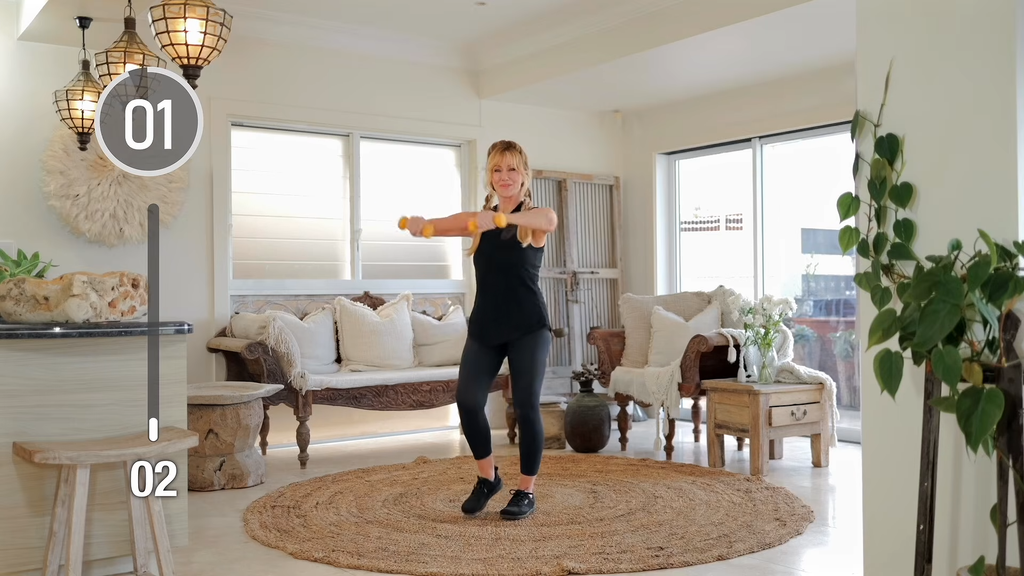
These are the moves in each round, in order. We keep our core gently engaged and our shoulders relaxed away from our ears throughout.
1. High March
Hold your dumbbells at your sides and march in place. Lift your knees as high as feels comfortable. This move wakes up our legs and gets our heart pumping. Our arms are also prepared to carry the weights.
2. Front Raise Work
Stand tall with your core engaged and keep marching. Raise the dumbbells in front of you to shoulder height, then lower them slowly. This exercise targets the front of our shoulders the most. We keep the movement smooth rather than swinging the weights up.
3. Reach and Row
Bring your dumbbells out in front of you at chest height. As you draw them back, squeeze your shoulder blades together. This is the opposite position to slouching over our phones and laptops. Many of us spend hours rounded forward, so this move opens the chest and strengthens the upper back.
READ ALSO: How Posture Affects Balance As You Age
4. Zottman Curl
Curl the dumbbells up with your palms facing up to work the biceps. At the top, turn your palms to face down, then lower slowly. On the way down, that turn challenges our forearms and wrists. Keep your elbows close to your body, your core tight and your back straight.
Grip strength matters more than most of us realize. In a Lancet study, researchers measured the grip of nearly 140,000 adults across 17 countries. Weaker grip was linked with a higher risk of death, even more strongly than systolic blood pressure. Researchers are still exploring how much training changes that risk. Even so, a stronger grip makes opening jars and carrying shopping much easier.
5. Front Raise to Open Arms
Raise the dumbbells to shoulder height in front of you. Then take your arms out wide to the sides and bring them back together. We’re working our shoulders and upper back at the same time. Like the reach and row, this move is wonderful for correcting our posture.
6. Triceps Pulses
If bat wings bother you, this is the move that makes them burn. Hinge forward at the hips with a flat back. Extend your arms back to straighten the triceps, then pulse to a count of four.
That burning feeling is expected, since the triceps are being worked hard. If it gets too much, drop the dumbbells and keep pulsing without them. A burn is normal, but sharp pain is a sign to stop.
7. Stir the Pot
Take your right arm out wide to the side and hold it there. Use your left arm to make circles in front of you, like stirring a big pot. Then switch sides. Doing two different things on each side of the body is a skill worth keeping for life.
Research on dual-task training, where we do two things at once, is very encouraging. A 2022 review of 30 trials founthat most reported better balance afterwards in older adultsds. So this playful move trains our coordination as well as our arms.
8. Chest Press
Hold the dumbbells together in front of your chest. Keep your feet together and your core tight. Exhale as you press your arms forward, then inhale as you draw them back to your chest. The chest, shoulders and triceps are all worked together in this move.
9. Hold Arms Out
March with high knees and hold your arms straight out in front of you. The goal is to hold them there for the full 45 seconds. This is a test of shoulder endurance, and it’s challenging but doable. If it gets too much, lower the dumbbells and keep your arms up without them.
10. Arm Circles
Put your dumbbells down for this final move of the round. Circle your arms so any tension in the shoulders is released. It’s a gentle way to close the round before we go again.
What If One Round Is All We Have Today?
Some days we simply don’t have the time or energy for round two. That’s completely fine. If one round is all we manage today, we celebrate it because we showed up and got it done. We just make sure to have a gentle stretch before finishing for the day.
If we’re up for more, we pick up our weights and go through all 10 moves again. Round two of this walking workout with dumbbells is where our endurance really builds. By the end, our arms will probably be on fire, in the best possible way.
How Often Should We Do This Workout?
Two or three sessions a week is a lovely place to start. The World Health Organization recommends muscle-strengthening activity on at least two days a week. Rest days should be built in between, so our arm muscles have time to recover. On those days, we can enjoy a regular walk, some balance practice or a stretch.
As the moves become easier, we add a few more reps or slightly heavier dumbbells. This gradual progress is how to tone your arms after 50 without overdoing it. If you have a shoulder or wrist injury, check with your doctor or physiotherapist first.
EXPLORE MORE: Strength Training for Osteoporosis After 50: A Beginner Guide
EXPLORE MORE: The Protein Habits Quietly Costing Us Muscle After 50
Final Thoughts
Strong arms help us carry grandchildren, lift suitcases and reach the top shelf with ease. This walking workout with dumbbells makes that strength simple and achievable in 20 minutes. We don’t need heavy weights or a gym membership. We need light dumbbells, good music and the willingness to show up. Every round we finish adds up, so let’s celebrate each one.
If you’re ready to commit to your long-term health and vitality, come and join me in the Fabulous50s Vitality App. You can try every feature free for 14 days. Let me know in the comments if your arms are on fire too!