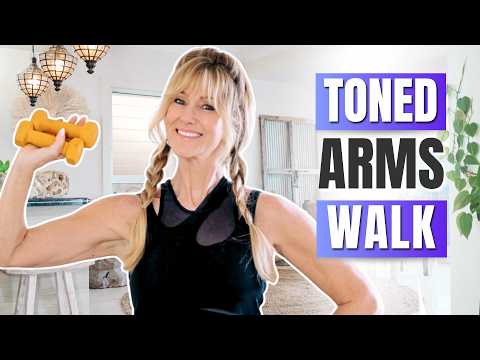
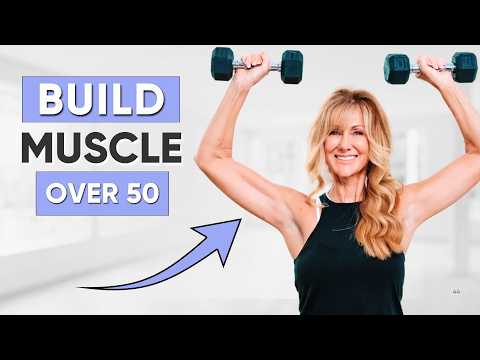
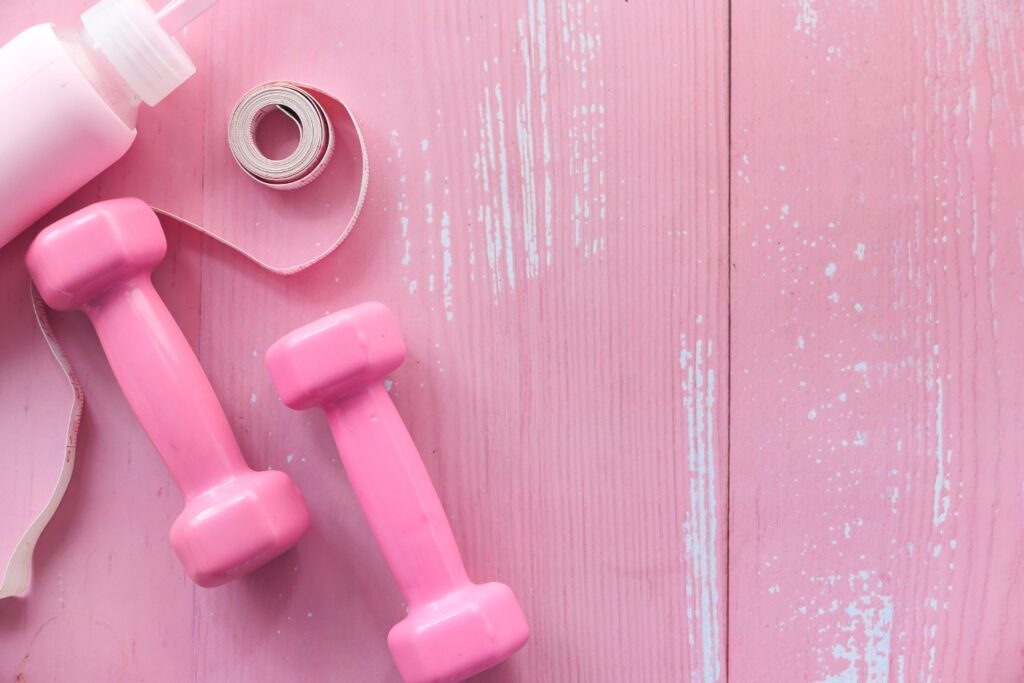
If you’ve ever picked up a pair of little pink dumbbells and wondered, “Are these actually going to do anything?” I want you to know that you are not wasting your time.
You do not need to start with the heaviest weights you can find to build muscle over 50. In fact, starting with a lighter weight can be one of the smartest things you do, especially if you’re new to strength training or coming back after a break.
The goal isn’t to prove how much you can lift. The goal is to challenge your muscles enough that they have a reason to adapt and become stronger.
That’s where progressive overload comes in. And once you understand how it works, choosing your dumbbell weight becomes much easier.
What Is Progressive Overload After 50?
Progressive overload simply means gradually giving your muscles a little more work to do over time.
That might mean increasing the weight, doing more repetitions, adding another set, slowing the movement down, changing the position of an exercise to make it more challenging, or reducing the amount of rest between sets.
You don’t need to change everything at once. In fact, you shouldn’t.
If your goal is to build muscle over 50, think of progressive overload as a conversation between you and your muscles. You give them a challenge, they adapt, and when that challenge becomes easier, you give them a little more.
Research supports the value of resistance training as we age. A systematic review of 22 randomized controlled trials found that resistance training significantly improved muscle strength in adults aged 75 and older, showing that our muscles can continue responding to training well into later life.
So yes, you can still get stronger.
How Do You Know What Dumbbell Weight to Use?
This is where I want you to forget about what someone else is lifting.
Your perfect dumbbell weight might be completely different from your friend’s, your partner’s, or the woman you’re watching on YouTube. That’s because the right weight depends on your current strength, experience, exercise and ability to maintain good form.
A good starting point is a weight that allows you to perform around 8 to 12 controlled repetitions.
For some women, that might be 1 or 2 kilograms. And that’s absolutely fine.
Those little pink dumbbells are not something you need to be embarrassed about. They can help you learn the movement, build confidence and establish good technique before you start increasing the load.
If you’re new to strength training, learning good form is far more important than rushing to a heavier weight.
For more guidance, you can also read How to Build Muscle and Get Stronger Over 50.
How Do You Know When You’re Lifting Heavy Enough?
Here’s a simple test I want you to remember.
As you get towards the end of your set, the last two or three repetitions should feel challenging, but you should still be able to maintain good form.
Let’s say you’re doing a front raise with 2-kilogram dumbbells.
You complete eight repetitions and feel like you could easily do another five or six. That’s a sign the weight may be too light for you now.
You could try the next weight and see how it feels.
But if you reach eight repetitions and think, “I could probably do another two, but that’s about it,” while still moving with control, you’ve probably found a good working weight.
This is one of the most important principles to remember when you want to build muscle over 50. Challenging doesn’t mean painful, and it certainly doesn’t mean throwing your body around to get the weight up.
What Happens When the Weight Is Too Heavy?
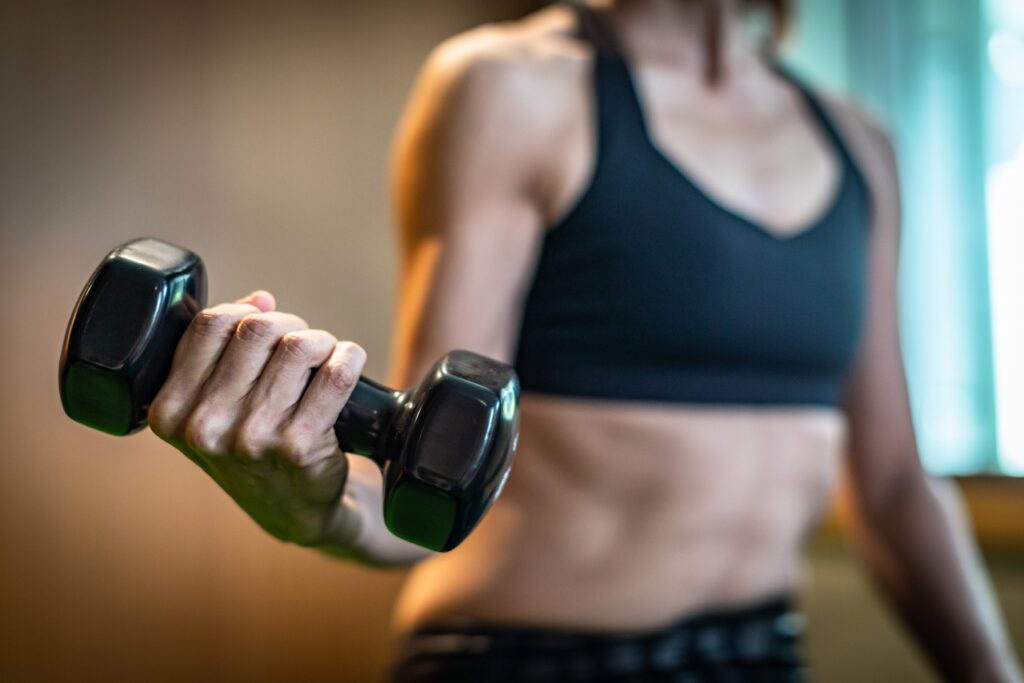
There is a very simple way to know when you’ve gone too far. Your body starts helping.
Maybe you’re swinging the dumbbell. Maybe you’re arching your back. Perhaps your elbow bends when it shouldn’t, your shoulders lift towards your ears, or you have to lean backwards just to finish the repetition.
That’s your body telling you that the weight is too heavy for that exercise.
And this is especially important after 50. We aren’t training to win a competition for the heaviest dumbbell.
We’re training to become stronger, more capable and more confident in our bodies.
If you pick up a heavier weight and can only manage one or two good repetitions before your form starts to disappear, that’s useful information. Put it down, go back to the previous weight and continue working there.
Over time, you’ll probably find that the heavier weight that once felt impossible becomes manageable.
That’s progress.
Why Good Form Matters More Than Heavy Weights
Before you increase your dumbbell weight, make sure you can perform the exercise correctly.
Take a front raise. Your goal is to lift the dumbbells towards shoulder height with control rather than using momentum to swing them upwards.
If you can do 8 to 10 repetitions with a light weight while maintaining excellent form, keep practising until the movement feels natural.
Then try the next weight.
Good form allows your muscles to do the work you’re asking them to do. It also gives you a much better way to measure your progress because you’re comparing the same controlled movement over time.
If you’re looking for more guidance, our 10 Strength Training Rules Women Over 50 Need to Follow is a great place to start.
Do You Have to Lift Heavy to Build Muscle Over 50?
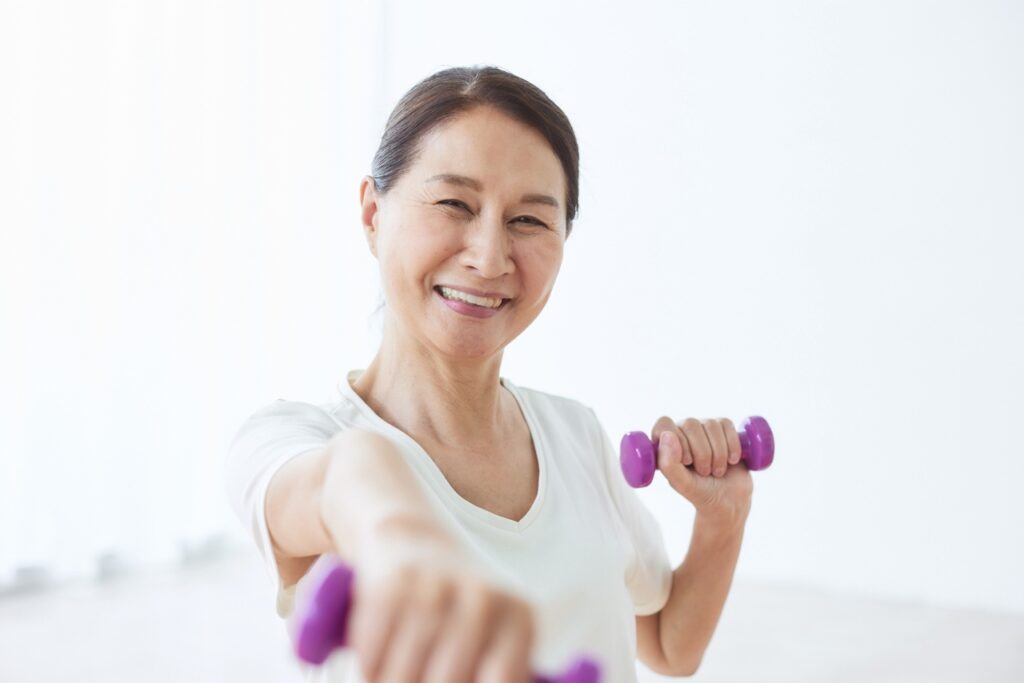
No. This is one of the biggest misconceptions I want women to let go of.
Heavy is relative. A weight that feels light to one woman may feel very challenging to another.
Research in older adults consistently shows that resistance training can improve strength and muscle-related outcomes. A 2025 systematic review and network meta-analysis of 151 randomized trials found that resistance training improved physical function, lean body mass, lower-body muscle strength and muscle hypertrophy in older adults.
The important thing is that your muscles are being challenged.
You can also read our guide on Can I Build Muscle Without Using Heavy Weights? Absolutely. Here’s How. for more on this.
How Can You Safely Progress to Heavier Dumbbells?
One of my favourite ways to progress is to keep a selection of dumbbells nearby.
Use your current weight for your working sets, but have the next weight available too.
Once your current weight feels comfortable for 10 to 12 repetitions with good form, try the next size. You might only manage one or two good repetitions at first.
That’s okay.
Those one or two repetitions are giving your muscles a new challenge. Then you can return to your previous weight and finish your workout safely.
The next time you try it, perhaps you’ll manage three repetitions. Eventually, you may reach eight or ten. That’s how you build muscle over 50 without turning every workout into a test of how much you can lift.
A 2022 systematic review and meta-analysis also found that progressive resistance training improved muscle strength and hip/femur bone mineral density in older adults. Your progress doesn’t have to be dramatic to be meaningful.
What Are the Other Ways to Use Progressive Overload?
Increasing your dumbbell weight is only one way to challenge your muscles.
You can add repetitions. You can add another set. You can slow down the movement so your muscles spend longer under tension. You can change your body position to make an exercise harder.
You can also reduce your rest time between sets. You don’t need to use all six methods at once. Pick one and give your body time to adapt.
Sometimes the best progress is simply doing the same exercise with better control than you did a few weeks ago. That counts too.
If you’d like to work on your strength with a structured routine, try our 20-Minute Strength Training Workout for Women Over 50.
Final Thoughts
If you’ve been waiting until you have heavier dumbbells before you start taking strength training seriously, you can stop waiting.
Pick up the pink ones.
Learn the movement. Practice your form. Find a weight that challenges you without taking away your control. Then, when that weight becomes easier, try the next one.
That’s what progressive overload is really about.
You don’t have to compete with anyone else. You simply need to give your muscles a reason to keep getting stronger.
As we get older, maintaining and building muscle becomes increasingly important for staying active and independent. Resistance training can help us keep doing the things we love, from carrying shopping bags to climbing stairs, traveling, playing with grandchildren and getting up from the floor with confidence.
So don’t underestimate those little pink dumbbells. They might be exactly where your strength journey begins.
FAQs
Can women over 50 still build muscle?
Yes, absolutely. Your muscles can respond to resistance training at any age.
Are pink dumbbells too light for muscle growth?
Not necessarily. If they challenge you while you maintain good form, they’re doing their job.
How many repetitions should I do to build muscle?
A practical starting point is around 8 to 12 controlled repetitions. The final few repetitions should feel challenging without sacrificing your form.
How do I know when to increase my dumbbell weight?
Increase the weight when your current weight feels comfortable for 10 to 12 repetitions. Make the change gradually and keep your technique controlled.
What happens if my dumbbell is too heavy?
Your form will usually start to break down. If you need to swing, bend or lean to complete the movement, reduce the weight.
Do I have to lift heavy weights after 50?
No. The right weight is the one that challenges your muscles appropriately for your current ability.