If you’ve been told your bones need extra care, you might feel nervous about jumping. That feeling makes complete sense. Your bones can still be strengthened at any age when they’re given the right kind of loading.
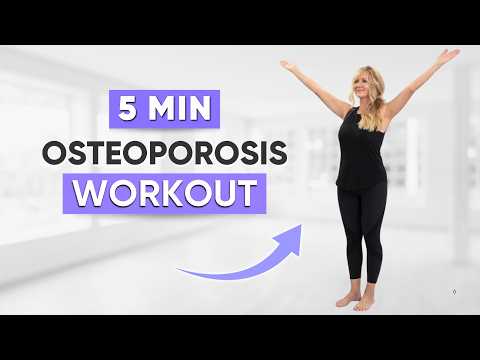
This short session takes you through 50 jumping exercises for bone density, followed by a gentle walking stretch. A modified option is included for every move, so you can start exactly where you are. We’ll go step by step, and you can use a chair or wall for support whenever you need it.
If you have osteoporosis or low bone density, please check with your doctor before adding impact work to your routine.
How Do Jumping Exercises for Bone Density Work?
Your bones are living tissue, and they respond to the forces placed on them. Each time you land from a jump or drop your heels, your skeleton is loaded from above. That load tells your bone-building cells, called osteoblasts, to get to work and strengthen the bone.
This is why jumping exercises for bone density are so valuable after 50. Walking is wonderful, but it rarely creates enough force to send that strong signal. Short, controlled bursts of impact give your bones a clear message to stay strong.
The key is to land with soft knees and absorb the impact through your body. You’ll feel the effort, but you should never feel jarred or unsafe.
How Do You Build Bone Density After 50 Safely at Home?
Learning how to build bone density after 50 starts with listening to your body. Each exercise in this osteoporosis workout at home has two versions. The full version includes a jump, while the modified version keeps you lower or keeps your toes on the floor.
Here are a few simple ways to stay safe as you begin:
- Keep a sturdy chair or wall nearby for balance support.
- Land softly with your knees slightly bent.
- Choose the modified version if you’re just getting started.
- Breathe steadily, and rest whenever you need to.
There is no prize for jumping highest. Consistent, controlled effort is what your bones respond to over time.
What Are the Jumping Exercises in This Workout?
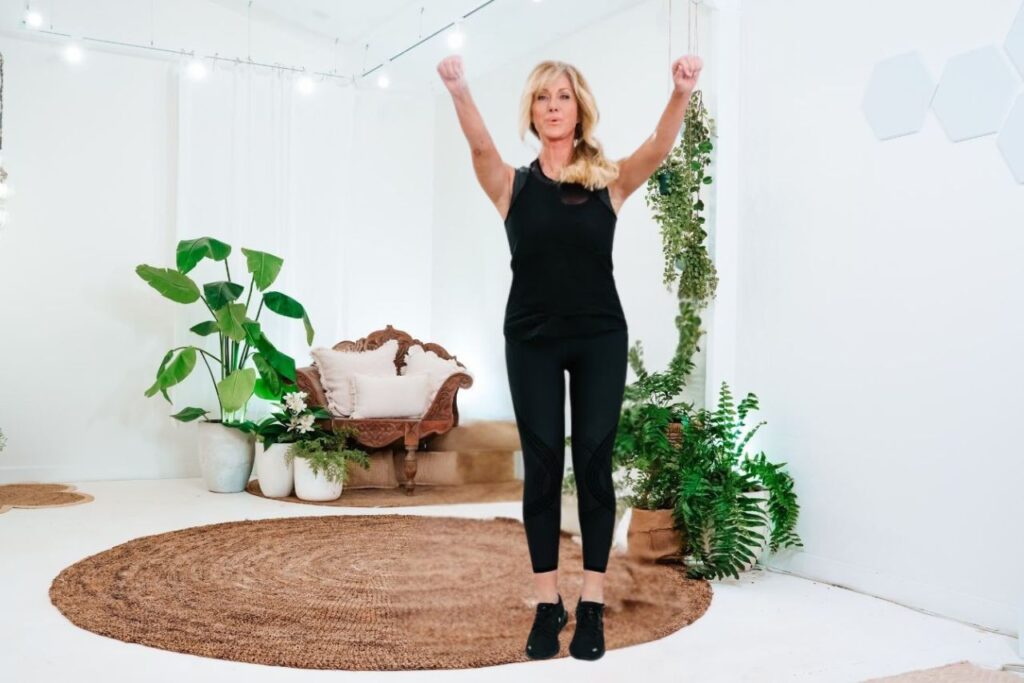
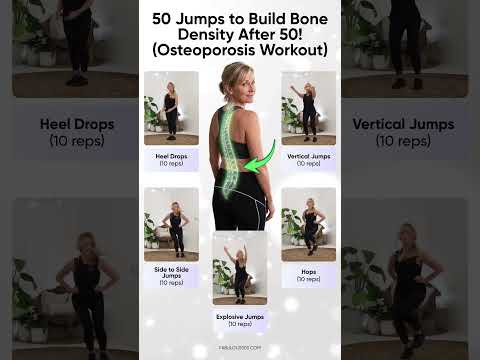
We complete 50 jumps in total across five exercises. Take your time, because these jumping exercises for bone density are meant to be done at your own pace.
1. How Do You Do a Heel Drop?
Lift onto your toes by pressing through the balls of your feet. Then let your heels drop down to the floor. The downward loading of your heels as you drop tells your bone-building cells to strengthen.
You have two options here. You can take your arms above your head for extra balance. If you prefer, a chair can be used for stability. Both versions give your bones the signal they need.
2. How Do You Do a Vertical Jump?
Drive through your heels to your toes, then power up into a jump. As you land, absorb the impact through your bones with soft knees. Ten of these are done together.
If you’re just getting started, use the modified version. You can even keep your toes on the floor and simply rise up with energy. This is still a great way to load the bones gently.
3. How Do You Do Side-to-Side Jumps?
Place your hands on your hips, engage your core, and bring your feet together. Use power and momentum to jump to the left, pause, and then jump to the right.
Side-to-side loading recruits the hip abductors, the muscles on the outside of your hips. These muscles are needed for pelvic stability and balance, which become even more important as we age.
4. How Do You Do Single and Double Hops?
If you haven’t hopped for a very long time, take it gently and use the chair for support. Hopping is a powerful bone builder, and it also helps prevent falls by improving your balance.
We do two single hops, followed by four sets of double hops. Stay light on your feet and keep your landings soft.
5. How Do You Do Explosive Jumps?
We finish our set of 50 with 10 explosive jumps. The goal is to use your arms to boost your takeoff. As you land, a body-weight force is created that fires up your osteoblasts.
Inhale as you squat, then exhale as you jump. Listen to your body and use the modified version if it suits you better today.
Why Is Impact Exercise for Women Over 50 So Important?
Impact exercise for women over 50 does more than strengthen bones. Many of these moves also train balance, power, and coordination. Together, those qualities help you stay steady on your feet and react quickly if you trip.
Hopping and side jumps are especially helpful for balance. Each landing teaches your body to control movement, which supports fall prevention in daily life.
When you pair jumping exercises for bone density with good balance, you protect your body in two ways. Your bones become stronger, and you are less likely to fall in the first place.
How Do You Stretch After Jumping Exercises?
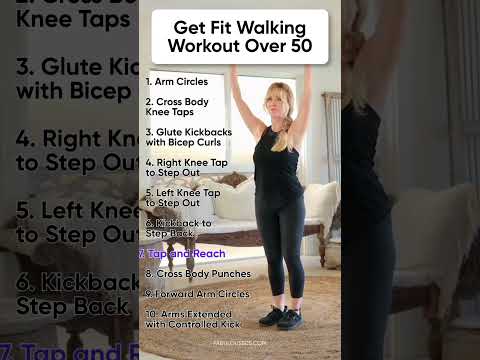
After the jumps, we move into a walking stretch that combines flexibility with balance work. If you have room, keep moving forward in a straight line. If you’re short on space, simply follow along on the spot.
How Do You Do a Walking Hamstring Stretch?
Hinge at the hips, straighten your legs, and point your toes up. Then scoop your hands down towards the floor. You’ll feel a lovely stretch along the back of your legs.
How Do You Stretch the Front of Your Thigh?
Hold on to your foot and bring it back behind you, stretching the front of your thigh. Make sure your knee is pointing downwards. Hold the wall for support if you need it, then change sides.
How Do You Stretch Your Hip Flexors?
Raise your knee and pull it towards your chest. As you do, you’ll feel a stretch through the hip flexors at the front of your hips. Repeat on the other side.
How Often Should You Do This Osteoporosis Workout at Home?
This osteoporosis workout at home is short enough to fit into almost any day. Start with a couple of sessions a week and see how your body feels. As your confidence grows, you can do it more often.
Bone is built best through regular loading over time. Think of these jumping exercises for bone density as a small, steady investment in the years ahead.
Final Thoughts
Knowing how to build bone density after 50 doesn’t mean you need long or complicated workouts. With these jumping exercises for bone density, your bones get a strong signal in just a few minutes.
When you finish, stretch it out, breathe deeply, and thank your body for the gift of movement. The work you’ve done today is the work you’re doing to protect your body from future frailty. Great work, and I’ll see you in the next workout.