If you spend hours sitting at a desk, scrolling on your phone, driving, or simply getting through a busy day, you may notice that tension has a way of settling into your neck, shoulders and upper back.
You might catch yourself rounding your shoulders, lifting them towards your ears or feeling stiff when you finally stand up.
The good news is that you don’t need a yoga mat, expensive equipment or a long workout to give your upper body some attention. This simple standing stretch for women over 50 takes just a few minutes and can be done almost anywhere.
The routine moves through the wrists, shoulders, chest, upper back, spine and neck, helping you loosen up and move with a little more freedom.
Why Stretching Becomes So Important After 50
As we get older, staying mobile becomes just as important as getting stronger.
You may notice that movements that once felt effortless now require a little more warming up. Your shoulders may feel tighter, your back may complain after sitting too long, and your neck can become stiff after looking down at a phone or computer.
That doesn’t mean you should stop moving. It’s actually a good reason to move more often.
Research suggests stretching can have meaningful benefits for older adults. A 2025 systematic review and meta-analysis found that stretching programs were associated with improvements in walking ability and balance in older adults.
Another systematic review found that static stretching can temporarily reduce muscle and muscle-tendon stiffness in older adults.
You don’t have to spend an hour stretching to benefit from movement. Small, consistent sessions can be a lovely way to break up your day.
A Standing Stretch You Can Do Anywhere
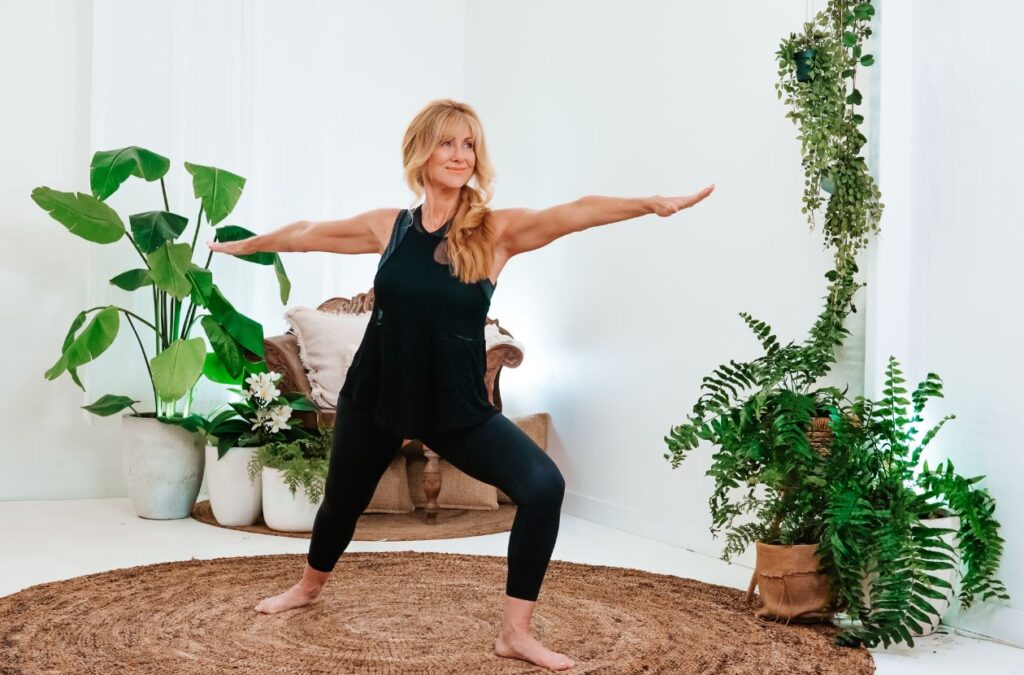
One of my favorite things about this standing stretch for women over 50 is how practical it is.
You don’t have to get down onto the floor. You don’t need a mat. You don’t need to change into workout clothes.
You can do these movements beside your desk, in your bedroom, in the kitchen or anywhere you have enough room to move your arms.
The routine uses gentle, controlled movements rather than forcing your body into deep stretches. Think about creating space and moving comfortably rather than trying to see how far you can go.
1. Start With Your Wrists and Forearms
Begin by extending one arm in front of you with your palm facing forward.
Use your opposite hand to gently draw your fingers back until you feel a comfortable stretch through your wrist and forearm. Hold briefly, then switch sides.
This is especially useful if your hands and wrists spend a lot of time typing, using a mouse or holding your phone.
Keep the movement gentle. You should feel a stretch, not pain.
2. Roll Out Tension in Your Shoulders
Now bring your attention to your shoulders. Stand tall and slowly roll your shoulders, allowing them to move through a comfortable range.
This is such a simple movement, but notice how different your upper body can feel after just a few repetitions.
Many of us carry stress in our shoulders without realizing it. We tense up while working, driving, concentrating, or rushing around, and suddenly our shoulders are sitting somewhere near our ears.
Let them drop. Take a breath. Roll them slowly and give yourself permission to relax.
3. Open Your Side Body With Gentle Side Bends
Reach one arm overhead and gently lean to the opposite side. You should feel a stretch along the side of your body, from around your ribs towards your waist. Come back to the center and switch sides.
This movement gives your spine a chance to move sideways while opening the rib cage and gently lengthening the muscles along your torso. Don’t collapse into the movement. Think about reaching up and over, creating length through your body.
Breathe out as you move into the side bend and breathe in as you return to center.
4. Stretch Your Upper Back, Arms and Chest
Your upper back and chest can become particularly tight when you spend a lot of time sitting. Interlace your fingers and press your palms forward, allowing your upper back to gently round. Then lower your arms and bring them back towards shoulder height.
You can also take one arm overhead, bend your elbow behind your head and gently press on the elbow with your opposite hand.
Switch sides. These movements target some of those areas that can feel restricted after hours of sitting or working at a computer.
5. Open Your Chest and Shoulder Blades
Next, interlace your fingers behind your hips. Straighten your arms gently and lift them slightly while drawing your shoulder blades together.
Feel your chest open. This is a beautiful counter-movement to sitting with your shoulders rounded forward.
You don’t need to force your arms high. A small movement with good posture is enough. The goal is to gently remind your upper body what it feels like to stand tall and open.
6. Release Your Hamstrings With a Standing Hinge
Now we’re going to give your legs and lower back some attention. Place your hands on your thighs and slowly hinge forward from your hips, allowing your hands to slide down your shins.
You’ll feel the stretch through the backs of your legs. Then slowly return to standing.
The important part here is the hinge. Think about sending your hips backwards rather than rounding your entire spine and collapsing forward.
If your hamstrings are tight, don’t worry about reaching your ankles or toes. Go only as far as feels comfortable.
7. Improve Shoulder Mobility
Bring your elbows up to shoulder height with your palms facing upwards. Slowly rotate through your shoulders so your palms turn down, then return to your starting position.
This simple movement takes your shoulders through rotation while encouraging better mobility.
Shoulder mobility matters because we use our shoulders for so many everyday activities: reaching into cupboards, getting dressed, carrying bags and lifting things overhead.
Keeping them moving comfortably is part of staying independent as we age.
8. Strengthen Your Posture With a Standing V Hold
Now hinge slightly forward from your hips while keeping your back long. Lift your arms overhead into a V position and hold.
You’ll feel your upper back, shoulders, glutes and the backs of your legs working, while your core helps keep your spine steady.
This isn’t just a stretch. It’s also a gentle posture and strength exercise. Hold for as long as you can maintain good form, then release.
9. Counteract Rounded Shoulders
Bring your arms out to shoulder height. Open your arms behind you to stretch across the chest, then bring your elbows forward and gently round through your upper back.
Repeat the movement slowly. This is one of my favorite movements if you’ve been sitting for a long time because it takes your upper body through both positions: opening and rounding.
Rather than trying to force your shoulders backwards all day, give your body opportunities to move in different directions.
10. Gently Move Your Neck and Spine
Now let’s finish with some lovely, gentle neck and spine mobility. Lower your chin towards your chest and feel a soft stretch through the back of your neck. Then slowly lift your chin and look slightly upwards.
Keep the movement small and comfortable. Your neck doesn’t need to go through a huge range of motion to benefit.
Next, gently twist from side to side, bringing your arms across your body. Keep your hips facing forward and allow the movement to come from your spine. This can feel especially good after a long period of sitting.
11. Finish With Big Arm Sweeps
For the final movement, bring your arms behind you with your chest open.
Sweep your arms in a wide arc overhead, pause, then return them behind your hips.
Keep your shoulders relaxed and avoid forcing the movement.
Take a slow breath and notice how your upper body feels now compared with when you started.
You may notice that your shoulders feel lower, your chest feels more open and your body simply feels a little less stuck.
How Often Should You Do a Standing Stretch?
You don’t need to wait until you’re extremely stiff before you stretch.
One of the easiest ways to make mobility part of your life is to attach a few movements to something you already do every day.
Try this standing stretch for women over 50 after sitting at your computer, after a long car journey, while waiting for the kettle to boil or whenever you notice yourself feeling tense.
Consistency matters more than perfection.
A Fabulous50s 8-Minute Mobility and Flexibility Workout for Women Over 50 is another option if you’d like to work on your whole-body mobility.
You might also enjoy our 5-Minute Daily Stretch for Women Over 50, especially on days when you don’t have much time.
And if neck tension is your biggest problem area, try How to Relieve Neck Tension: 10-Minute Daily Stretch.
Final Thoughts
Your body doesn’t need punishment. It needs movement.
If you’ve spent the day sitting, working, driving, looking at your phone or carrying a little too much stress in your shoulders, give yourself eight minutes to move.
You don’t need to be flexible. You don’t need to touch your toes. You don’t need to push yourself into uncomfortable positions.
Just stand up and move.
A few gentle stretches can give you a much-needed break from staying in the same position all day, while regular mobility work can help you maintain the freedom to bend, reach, twist, turn and move through everyday life.
And that’s really what we’re after as we get older.
FAQs
Is stretching good for women over 50?
Yes. Regular stretching can support flexibility, mobility and comfortable movement as you age.
Can I do this standing stretch every day?
Yes, if the movements feel comfortable for your body. Keep the stretches gentle and avoid pushing into pain.
Do I need equipment for this workout?
No. You only need enough standing space to move your arms safely.
Can stretching help neck and shoulder tension?
Gentle movement can help reduce stiffness and tension, particularly when it is related to staying in one position for long periods. Research on brief exercise interventions has also found benefits for neck and shoulder pain among sedentary workers.
Is stretching enough to improve mobility after 50?
Stretching is one useful part of a mobility routine. Strength training, walking and regular movement are also important for maintaining physical function.
What should I do if a stretch hurts?
Stop or reduce the range of motion. A stretch should feel comfortable and controlled, not sharp or painful.