If you want a seated arm workout that helps tone your upper body without putting extra pressure on your knees, hips, or ankles, this 10-minute routine is a wonderful place to start. It is simple, encouraging, and perfect for women over 50 who want to feel stronger without needing to stand, jump, or push through joint discomfort. All you need is a chair, a pair of light dumbbells, and a little space to sit tall and move with intention.
What makes this routine so appealing is that it does more than work the arms. It also challenges posture, core control, coordination, and endurance in a way that feels manageable and uplifting. With 50 seconds of effort and 10 seconds of rest, you stay focused, keep the body engaged, and finish feeling energized instead of drained.
Why a Seated Arm Workout Is So Effective After 50
Strength training is one of the key types of exercise recommended as part of a healthy routine, alongside endurance, balance, and flexibility. The American Heart Association also recommends strength training at least twice a week, noting that stronger muscles support everyday activities, help protect the body from injury, and improve overall quality of life.
That is exactly why a seated routine can be so valuable for women over 50. You still build strength and stamina, but you do it in a way that feels supportive and approachable. When you are seated, you can focus more easily on your form, your breathing, and the muscles you are using, which makes the workout feel safe, effective, and far less intimidating.
How This Seated Arm Workout Builds Strength Without Punishing Your Joints
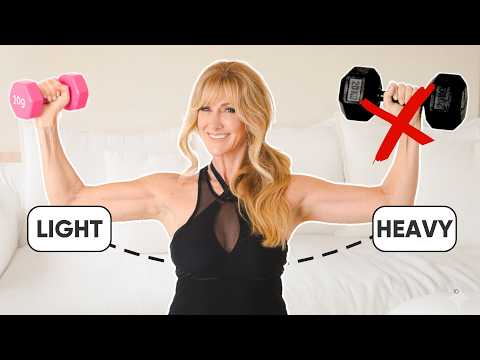
This seated arm workout uses both light and heavier dumbbells, which makes it easy to adjust the challenge to your comfort level. That kind of flexibility matters, because the American Heart Association’s seated strength examples often begin with hand weights as light as one to two pounds for upper-body movements like arm raises and bicep curls.
For women over 50, that is good news. You do not have to lift heavy to feel the benefits. A steady routine with controlled arm movements can help you build endurance, improve posture, and feel more capable in everyday life. This seated arm workout is a beautiful reminder that gentle does not mean ineffective.
Warm Up With Forward and Backward Arm Circles
The workout begins with arm circles, first moving forward and then backward. This is a smart way to warm up because it wakes up the shoulders, upper arms, and upper back while giving you a chance to sit tall and settle into good posture. It may look simple at first, but holding the arms up for nearly a minute creates a real challenge.
This warm-up also sets the tone for the whole session. You are encouraged to resist the urge to drop the arms too early, which helps build mental focus as well as muscular endurance. Early in a seated arm workout, that kind of gentle challenge helps you feel connected to your body and ready for the exercises ahead.
Exercise 1: Up, Out, Back, Out With Light Weights
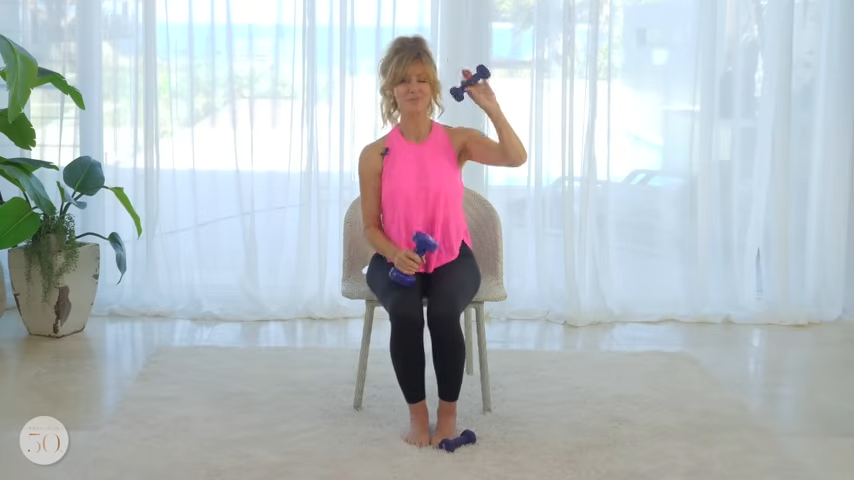
Once the dumbbells come into play, the first move takes the arms through a flowing pattern: up, out, back, and out again. This sequence keeps the shoulders and arms working from different angles, which is wonderful for building tone without making the movement feel repetitive or dull. The light weights are enough to create that lovely burning sensation without overwhelming the joints.
For women over 50, this is a great example of how small movements can create big results when done with control. The arms have to stay lifted, the shoulders have to stay steady, and the body has to keep good posture throughout. It is a simple but powerful way to build both strength and endurance in the upper body.
Exercise 2: Seated Twist and Lift With a Heavier Weight
The second move adds a twist and lift pattern using one heavier dumbbell, or two lighter weights together if that feels better. This changes the workout in a really helpful way because it brings the core into the movement while still making the arms do their share of the work. Sitting tall with a straight back is important here, because the lift feels much stronger when the posture stays long and proud.
This exercise is especially useful for women over 50 because it trains strength and control at the same time. You are not just swinging a weight around. You are rotating carefully, lifting with purpose, and teaching your body to stay stable while it moves. That kind of control supports healthy aging and can make daily movements feel easier and smoother.
Exercise 3: Edge-of-Chair Hold for Core and Arm Endurance
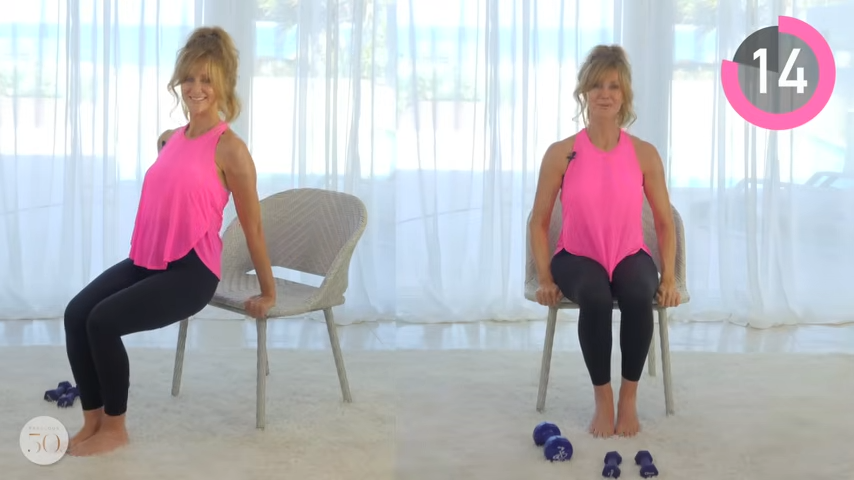
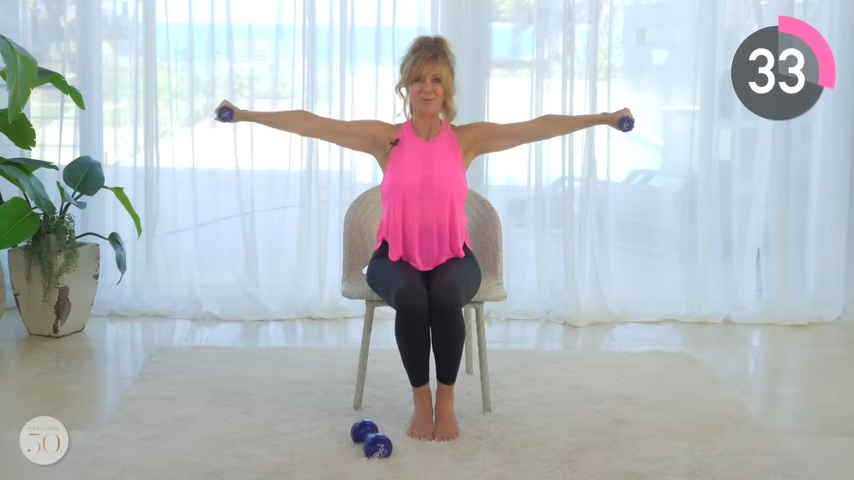
This section brings a fresh challenge by asking you to sit on the edge of the chair, lift the feet, and hold the arms wide. It is not flashy, but it is incredibly effective. Suddenly, the abs, hip flexors, shoulders, and upper back all have to work together just to maintain the position, and that creates a deep sense of effort very quickly.
The beauty of this move is that it builds balance and confidence at the same time. You can always place the feet down when needed, which makes it easy to modify without feeling like you have failed. For women over 50, exercises like this support body awareness, stability, and control, all of which matter for longevity and everyday movement.
Exercise 4: Chair Press Lifts for Shoulders and Triceps
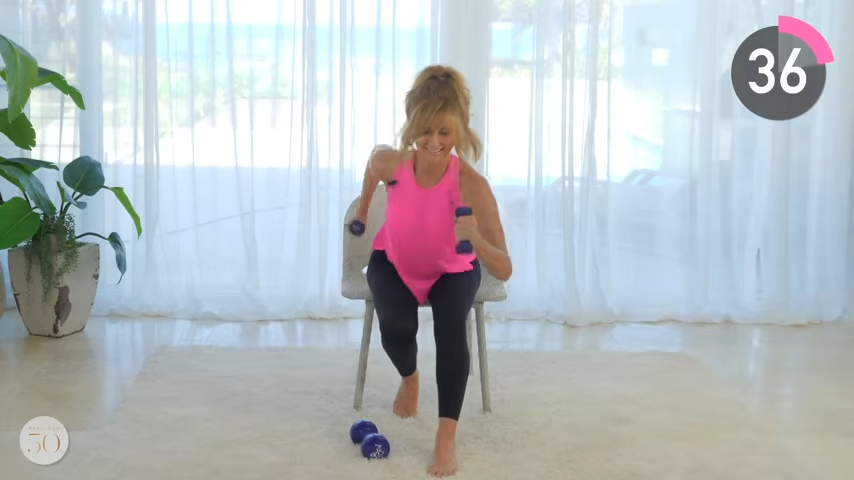
Next comes a bodyweight challenge that uses the chair to help you lift and lower yourself with the arms. If that version feels too demanding, there is a modified option that still keeps the arms moving forward and back. Both choices are useful, because both teach the shoulders and arms to work with purpose while keeping the movement accessible.
This part of the routine is especially good for the triceps, shoulders, and upper chest. It also shows how a seated arm workout can be far more dynamic than many women expect. You are not just sitting and curling weights. You are pressing, stabilizing, and learning to trust your upper body more with every repetition.
Exercise 5: Shoulder Rolls to Reset and Recover
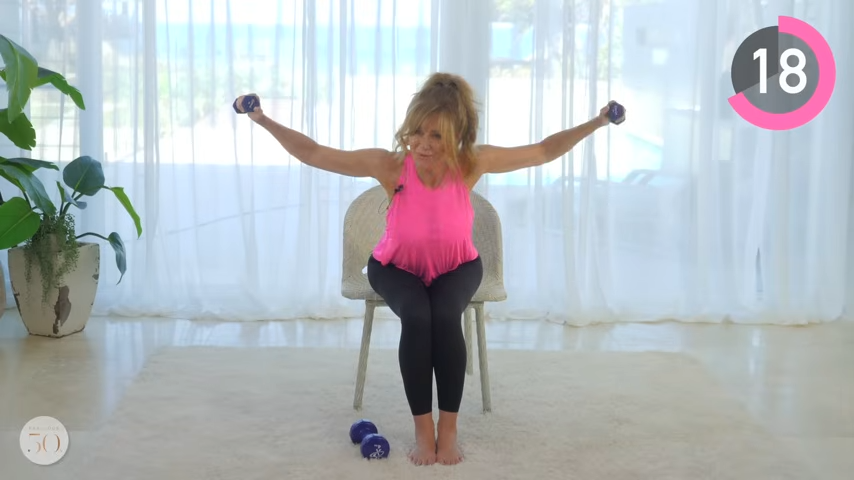
After the stronger bodyweight effort, the workout wisely shifts into shoulder rolls for a brief recovery. This section may feel easier, but it still plays an important role. Rolling the shoulders helps release tension, encourage mobility, and bring some freshness back into the upper body before the next round of work begins.
This is also a lovely reminder that variety matters. The National Institute on Aging notes that physical activity is an important part of healthy aging, and changing how the body moves can help keep exercise safe, interesting, and easier to maintain over time.
Exercise 6: Seated Power Arms With the Left Leg Extended
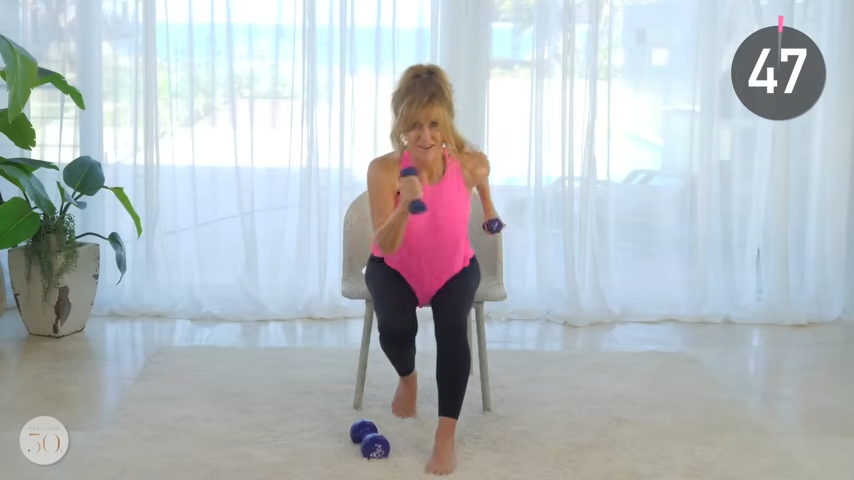
The next move brings the whole body into the workout by placing the left leg out in front while the arms drive back strongly, almost like running without going anywhere. This instantly changes the energy of the session. Even though you are seated, the move feels lively, athletic, and surprisingly powerful.
For women over 50, this is a wonderful way to challenge coordination and endurance without high-impact stress. The extended leg encourages more core engagement, while the pumping arms wake up the shoulders, upper back, and triceps. A seated arm workout like this can help you feel stronger, more alert, and more connected from head to toe.
Exercise 7: Repeat the Power Arms on the Right Side
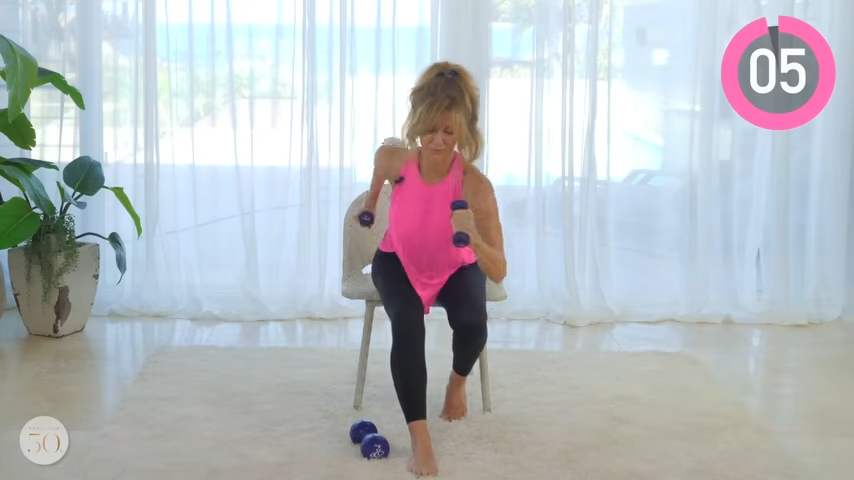
Repeating the same movement with the right leg extended helps keep the body balanced from side to side. This matters more than many people realize. When one side feels stronger or steadier than the other, it is helpful to notice it, work through it, and give both sides equal attention.
This second side also builds resilience. By now, the arms are already feeling tired, so continuing with good posture and strong backward arm drives helps improve stamina as well as strength. That kind of endurance can make everyday tasks feel easier, whether you are carrying shopping bags, lifting laundry, or reaching overhead around the house.
Exercise 8: Under-the-Knee Out-and-In Press
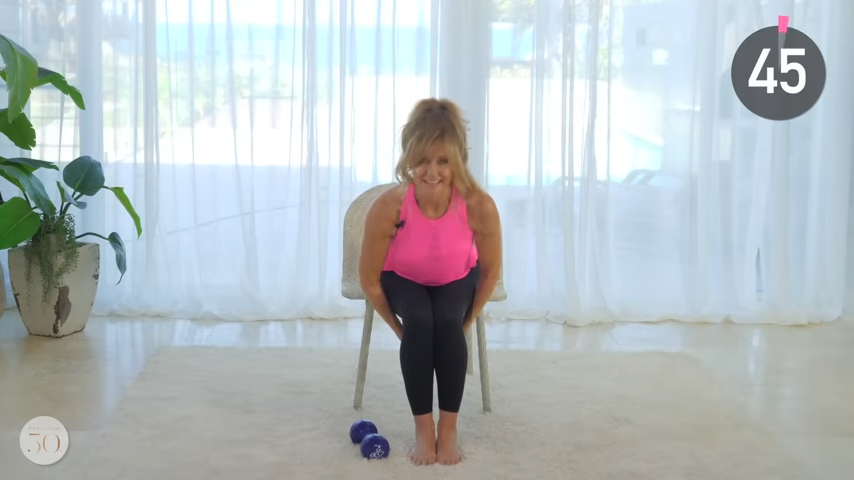
The final strength move has you place the weights under the knees and move them out and back in while keeping the back straight and the arms strong. It is a clever exercise because it asks you to stay upright, coordinate the movement carefully, and keep the upper body engaged even while fatigue is setting in.
This closing challenge ties the whole routine together beautifully. The shoulders, biceps, upper back, and core all need to work together to keep the movement neat and controlled. By the end of this seated arm workout, your arms feel awake, active, and far less stiff than they did when you started.
Cool Down and Enjoy That Strong, Awake Feeling
The cool down is short, but it matters. After several minutes of lifting, reaching, holding, and pressing, your upper body needs a moment to release tension and settle. That gentle finish helps you notice how much better your arms, shoulders, and posture already feel after just 10 minutes of focused movement.
It also leaves you with something just as important as toned arms: momentum. When a workout feels achievable, you are much more likely to come back and do it again. That is one of the reasons this style of training works so well for women over 50. It fits into real life, respects the body, and still helps you feel stronger every time.
Final Thoughts on This Seated Arm Workout
This seated arm workout is a brilliant option for women over 50 who want to build strength in a simple, low-impact way. It proves that you do not need long sessions or complicated equipment to create real change. A chair, a pair of dumbbells, and a few focused minutes can go a long way toward helping you feel toned, capable, and energized.
Over time, a routine like this can support stronger muscles, better posture, and more confidence in everyday movement. The CDC’s older-adult activity guidance highlights strength work as part of staying mobile and independent, and the American Heart Association recommends making strength training a regular part of adult fitness.