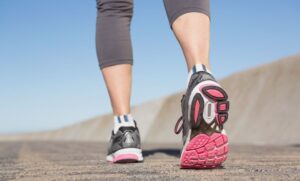

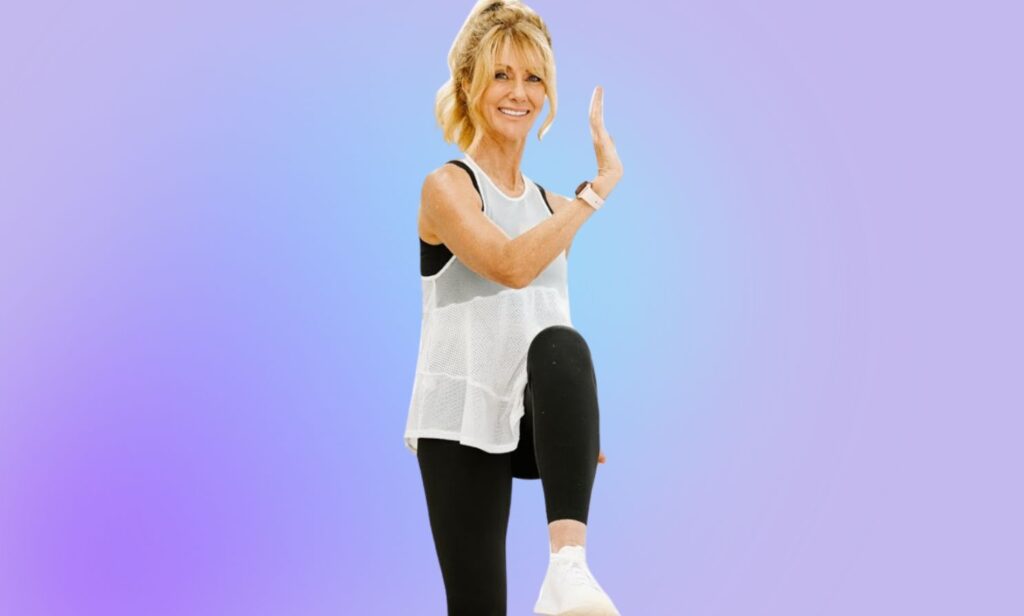
Twenty minutes, a pair of comfortable shoes and a little space in the living room. That’s all we need for this workout. It’s a low-impact, fat-burning walking workout built for women over 50, with brain training woven in.
This fat-burning routine is designed to be easy on your joints. It combines low-impact cardio with brain training exercises, offering a complete workout that leaves you feeling energized and strong.
We’ll walk on the spot, work our arms, legs and core, and finish with balance. Every move has a gentler option, so beginners can join in from day one. Let’s get our hearts pumping and our minds sharp together.
Quick Summary
- This 20-minute walking workout uses 45 seconds of movement and 15 seconds of walking recovery.
- It’s built in four blocks: arms, core, legs, and then balance and cool-down.
- Simple brain drills, like spelling words backwards, train focus while we move.
- Walking supports fat loss, especially deep belly fat, when we do it consistently.
- Five sessions a week, plus a little extra walking, covers the 150 weekly minutes experts recommend.
- No equipment, no jumping and no gym needed.
Why This Fat Burning Walking Workout Works
This 20-minute fat-burning walking workout is a follow-along session we can do at home, on a treadmill or outside. We move for 45 seconds, then walk for 15 seconds to recover. That simple rhythm keeps our heart rate up without wearing us out.
Instead of only marching, we add low-impact moves for the arms, legs and core. We also add short brain drills, like counting out loud or spelling a word backwards. Thinking and moving at the same time is harder than it sounds, and that’s the point.
READ ALSO: Easy 20-Minute Brain Boost and Belly Fat Walking Workout

How Is the 20-Minute Walking Workout Structured?
The workout is split into four blocks of about five minutes each. Between every move, we walk on the spot for 15 seconds.
Block 1: Arms (about 0 to 5 minutes)
The workout opens with our arms lifted and working while our feet keep walking. The moves include tricep pulses, tricep kickbacks and a prayer-position press. In the press, we join our elbows, press our palms together and pulse upward.
Here comes the first brain drill. We spell “tricep” forwards with each pulse, then backwards. During kickbacks, we spell our name forwards and backwards.
Block 2: Core (about 5 to 10 minutes)
Next, we wake up the core with standing ab moves. A harder version is shown on one side of the screen and a gentler one on the other. Choose whichever feels right today.
A quick direction drill follows: side, centre, front, centre. Calling out the pattern while we move keeps the brain switched on.
Block 3: Legs (about 10 to 15 minutes)
Now we build strength in the legs and glutes. In the wide squat, our feet are wide and our knees point out. We lower for a count of four, then push up through the heels and squeeze.
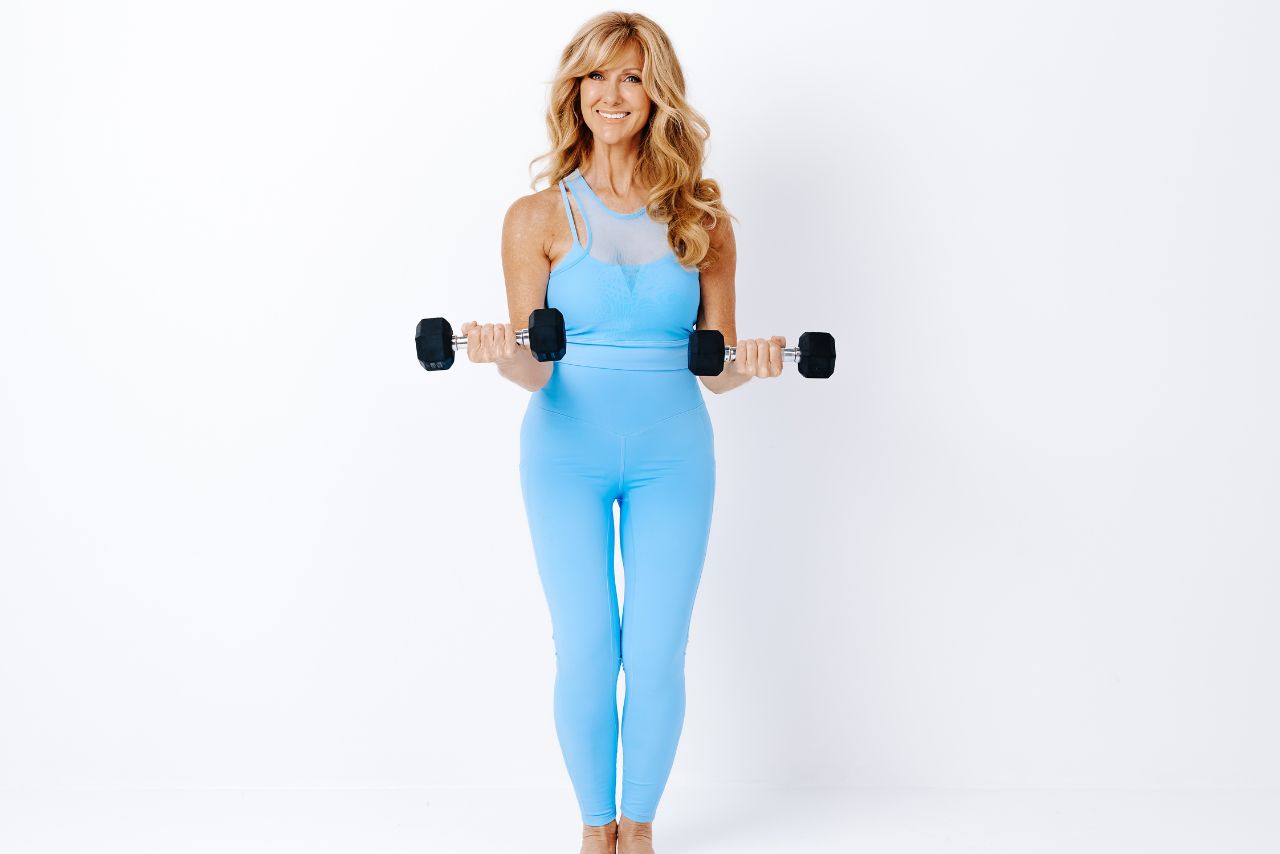
Bicep curls bring in another brain drill. We count out loud with each curl but skip every third number. It’s surprisingly tricky, and it always gets a laugh.
Block 4: Balance and Cool-Down (about 15 to 20 minutes)
We finish with three balance exercises. A wall or the back of a sturdy chair can be used for support. Balance is a skill, and it improves quickly with practice.
Then the pace is slowed, and we let our breathing settle before we stop.
READ ALSO: This 30-Minute Walking Workout Is an Effective Fat Burner
Can Walking Really Help Us Burn Fat After 50?
Yes, walking can help us burn fat, and it’s kind to our joints. The more we move, the more energy we use. Over weeks, that adds up.
According to Harvard Health, 30 minutes of walking at 3.5 mph burns about 107 to 159 calories. The exact number depends on body weight. A brisker 4 mph pace burns more.
What matters most for us after menopause is deep belly fat, called visceral fat. It sits around our organs and is linked to heart and metabolic problems. In one 12-week study, women with excess weight walked three times a week. Their visceral fat dropped by about a quarter, while a non-walking group saw no real change.
One honest note: ab moves strengthen our core, but they can’t choose where fat comes off first. The whole workout, our food and our sleep do that job together.
READ ALSO: Why Walking Is One of the Best Cardio Workouts After 50
How Can We Make Each Walk Burn More?
Once this fat-burning walking workout starts to feel easy, we can turn up the challenge in small steps.
- Walk a little faster. A 2025 PLOS ONE study found that walking about 10 to 15% faster improved stamina in older adults. That’s roughly 14 extra steps a minute.
- Lift the knees higher. Bigger movements recruit more muscle and raise the heart rate.
- Keep the arms working. Arms held high or pumping make the heart work harder.
- Add a hill. Outdoors or on a treadmill, a gentle incline increases the effort without adding impact.
- Add a second round. When 20 minutes feels comfortable, try 30.
Indoors or outdoors, both count. Choose whatever helps us show up most often.
READ ALSO: How a Slightly Faster Walking Pace Can Boost Strength & Stamina
READ ALSO: Indoor vs Outdoor Walking: Which Is Better After 50?
What If We Want a Second 20-Minute Session?
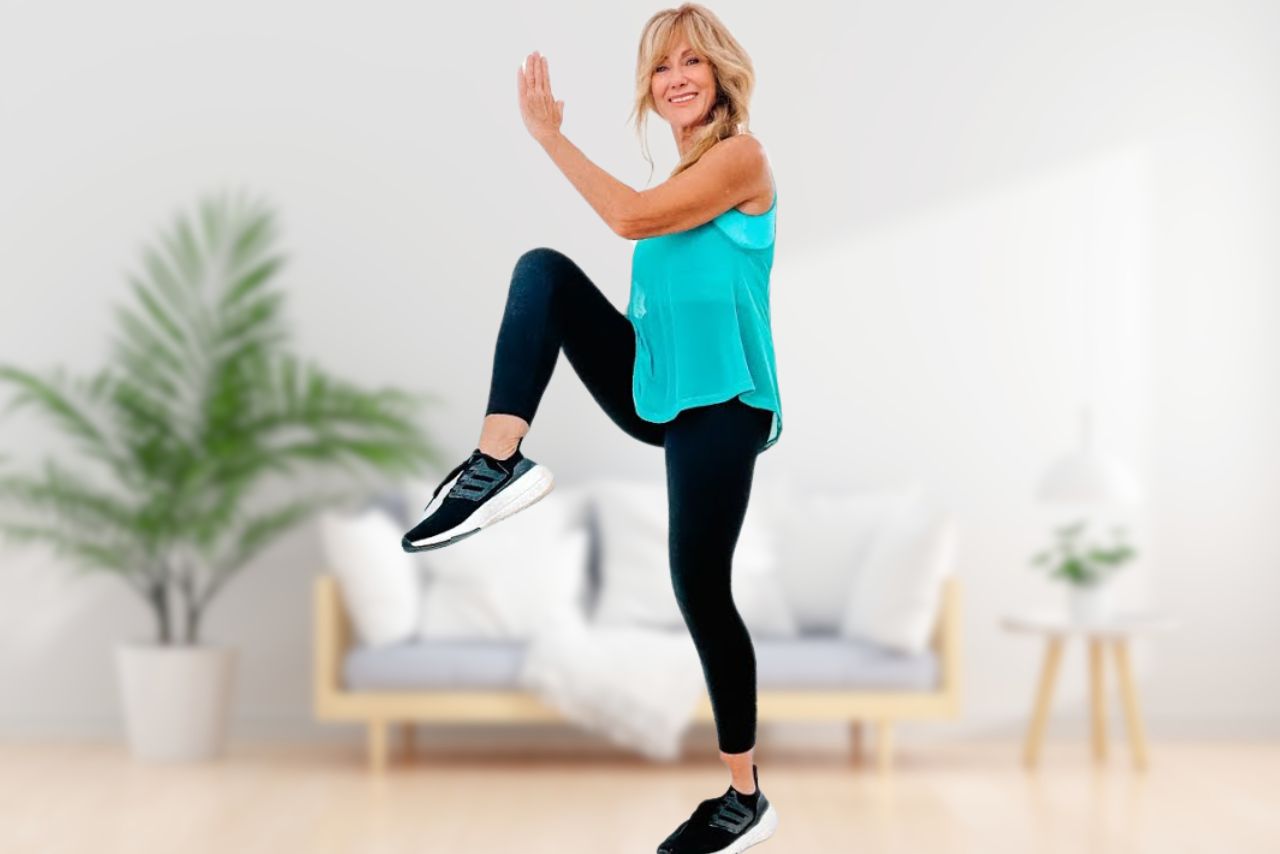
On days we want something different, this cardio walking workout is a lovely swap. It follows the same four-part flow: abs, arms, legs, then balance and stretching. High knees, a toes-together squat, a forward lunge and a stepping pattern are added in the leg block.
If anything feels too intense, simply walk on the spot until your breath comes back.
▶ VIDEO: 20-Minute Fat-Burning Walk: Burn Calories and Lose Weight
What Else Does Walking Do for Us?

Fat loss is only one part of the story. Regular walking does so much more for our bodies and minds.
It protects the heart. A large review in the British Journal of Sports Medicine pooled data from more than 30 million people. Just 11 minutes of brisk activity a day was linked to a 23% lower risk of early death. Heart disease and stroke risk was 17% lower too.
It sharpens the mind. Blood flow to the brain is boosted when we walk. Adding brain drills, like the ones in this workout, gives our focus and memory an extra challenge.
It lifts our mood. A walk helps us shake off stress, and finishing a workout feels like a small win.
It builds everyday fitness. Climbing stairs, carrying shopping and keeping up with grandchildren all get easier.
READ ALSO: How Much Walking Do You Need for Heart Health After 50?
READ ALSO: Why Walking Is the Best Exercise for Your Brain
How Often Should We Do This Walking Workout?
The American Heart Association recommends at least 150 minutes of moderate activity a week. It also suggests muscle-strengthening work on at least two days.
This workout five days a week gives us 100 minutes. Everyday walking can easily cover the rest. Short bouts are counted too, so a 10-minute walk after lunch adds up nicely.
If we’re just starting, three sessions a week is a wonderful beginning. We can add a day when we feel ready.
READ ALSO: 7-Day Walking Workout Challenge for Women Over 50
How Can We Add More Steps to Our Day?
The workout is our anchor, but every extra step helps. Here are a few easy ideas:
- Walk to the shops for small errands instead of driving.
- Take phone calls on the move.
- Invite a friend for a walk instead of a coffee.
- Join a local walking group for company and accountability.
- Try a new route each week to keep things fresh and engaging.
- Track your steps, and celebrate when the number creeps up.
How Do We Do This Walking Workout Safely?
This workout is designed to be gentle on the joints, but a few simple habits keep us safe.
- Wear supportive shoes, even indoors.
- Use the talk test. We should be able to talk, but not sing.
- Keep a wall or sturdy chair nearby for the balance moves.
- Sip water before and after.
- Take the gentler option whenever you need it. That’s smart training, not giving up.
If you have a heart condition, joint problems, or haven’t exercised in a while, please check with your doctor first.
Want the bigger picture? Cardio is one of the five pillars of the Fabulous50s Longevity Protocol, designed to help women over 50 build heart health, energy and stamina. Explore our complete Cardio After 50 guide for practical ways to build cardiovascular fitness at your own pace.
Final Thoughts
This 20-minute fat-burning walking workout proves we don’t need a gym or fancy equipment. A little space, steady effort and a playful brain drill are enough. Over a few weeks, we’ll feel stronger, steadier and more energized.
So let’s press play, start where we are and celebrate every session we finish. Tell me in the comments how you felt afterwards. I love reading them.
♡ Love ♡,
Schellea
Frequently Asked Questions
Can a 20-minute walking workout really burn fat?
Yes, especially when we do it most days. The energy we use adds up over weeks. Research also shows regular walking can reduce visceral belly fat. Pair it with good food, sleep and strength work.
How many calories does a 20-minute walking workout burn?
It depends on weight and pace. Harvard Health estimates that 30 minutes at 3.5 mph burns about 107 to 159 calories. So, at that pace, 20 minutes burns roughly 70 to 105 calories. Moving our arms, lifting our knees and walking faster all add to the total.
Is walking enough exercise for women over 50?
Walking is a wonderful base and counts as cardio. Experts also recommend strength training at least twice a week. As we age, strength work protects our muscles and bones. This workout includes some strength moves, like squats and arm work.
Can I lose belly fat by walking?
Walking can help reduce belly fat, including the deep visceral fat linked to heart health. Ab exercises alone can’t burn fat from one spot. Activity, diet and sleep work together to bring it down.
How often should I do this walking workout?
Aim for this fat-burning walking workout three to five times a week. Five sessions give you 100 minutes toward the recommended 150 minutes of weekly activity. Short everyday walks can cover the rest.
Is this walking workout good for beginners?
Yes. This workout is low impact, requires no equipment, and every move has a gentler option. If a move feels too hard, just keep walking in place.
Is it better to walk indoors or outdoors?
Both work. Indoor walking is safe in any weather and easy to follow. Outdoor walking adds fresh air and scenery. The best choice is whichever we’ll do most consistently.
Sources
- American Heart Association. Recommendations for Physical Activity in Adults. https://www.heart.org/en/healthy-living/fitness/fitness-basics/aha-recs-for-physical-activity-in-adults
- Garcia L, et al. Non-occupational physical activity and risk of cardiovascular disease, cancer and mortality outcomes. British Journal of Sports Medicine, 2023. https://bjsm.bmj.com/content/57/15/979
- Harvard Health Publishing. Calories burned in 30 minutes for people of three different weights. https://www.health.harvard.edu/exercise-and-fitness/calories-burned-in-30-minutes-for-people-of-three-different-weights
- Effect of walking exercise on abdominal fat, insulin resistance and serum cytokines in obese women. Journal of Exercise Nutrition and Biochemistry, 2014. https://pmc.ncbi.nlm.nih.gov/articles/PMC4241903/
- PLOS ONE, 2025. Faster walking pace and functional capacity in older adults. https://journals.plos.org/plosone/article?id=10.1371/journal.pone.0323759