
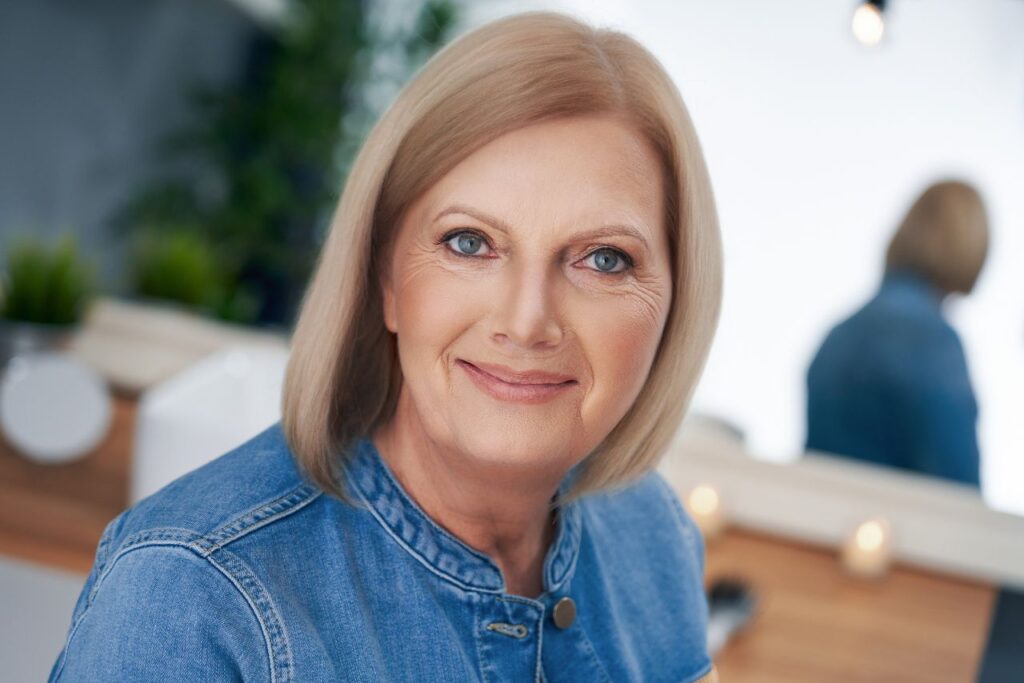
If you’ve ever looked in the mirror and thought, “Why is my makeup suddenly not behaving like it used to?” you are not imagining it. Skin changes after 50 are real.
Collagen and elastin decline, skin becomes more fragile, and menopause can make skin thinner and drier. That means makeup can settle faster, look duller, and cling to dryness, especially around the eyes and mouth.
The good news is you don’t need a full makeover of your face or your product drawer. You need smarter techniques that respect what mature skin needs most: hydration, gentle layering, and light-reflecting texture.
Here are simple hacks that will make your aging skin glow all year round, they are designed for real life, real faces, and real mornings.
Key Takeaways: Life-Changing Makeup Hacks For Aging Skin Glow
Here’s how to make your aging skin glow:
- Prep with “Hyper-Hydration”: Stop makeup from looking cakey by exfoliating gently twice a week and layering hydrating serums (like Hyaluronic Acid) and gripping primers before applying foundation.
- Switch to Sheer Coverage: Ditch heavy, matte foundations that crack in lines; instead, use tinted moisturisers or serum foundations applied with a damp sponge, spot-correcting imperfections only where needed.
- Lift with the “Triangle of Light”: Avoid bringing concealer right up to the lash line; place it at the inner and outer corners of the eye, blending the outer corner upwards to create a visual facelift.
- Move Blush Higher: Swap powder blush for cream formulas to mimic a natural glow, and apply it to the tops of your cheekbones (not the apples) to lift the face rather than drag it down.
- Define Eyes Softly: Replace harsh black eyeliner with brown or navy gel pencils and use the “tightline” technique (colouring between the lashes) to define hooded eyes without losing lid space.
- Set with Mist, Not Powder: Avoid heavy powders that settle into wrinkles; instead, use a hydrating setting spray to melt makeup layers together for a fresh, dewy finish that lasts all day.
Why Does Makeup Look Different on Aging Skin After 50?
It’s because aging and menopause can make skin drier, thinner, and more textured, which changes how makeup sits on the surface.
As we get older, our skin naturally loses collagen and elastin, and it holds onto water less easily. The National Institute on Aging also notes that hormonal changes like menopause can make skin thinner and drier. MedlinePlus adds that women gradually produce less oil after menopause, which makes it harder to keep skin moisturised.
So when makeup doesn’t glide the same way, it’s not that you’re “doing it wrong.” Your skin is simply asking for a different approach, more moisture underneath, and less weight on top.
The Ultimate Guide to 6 Life-Changing Makeup Hacks
If you are wondering how to stop foundation from settling into fine lines, or why your powder suddenly makes you look tired, you have come to the right place.
We have curated six essential makeup hacks specifically for midlife skin, designed to hydrate, lift, and illuminate.
#1: Stop Makeup From Looking Cakey
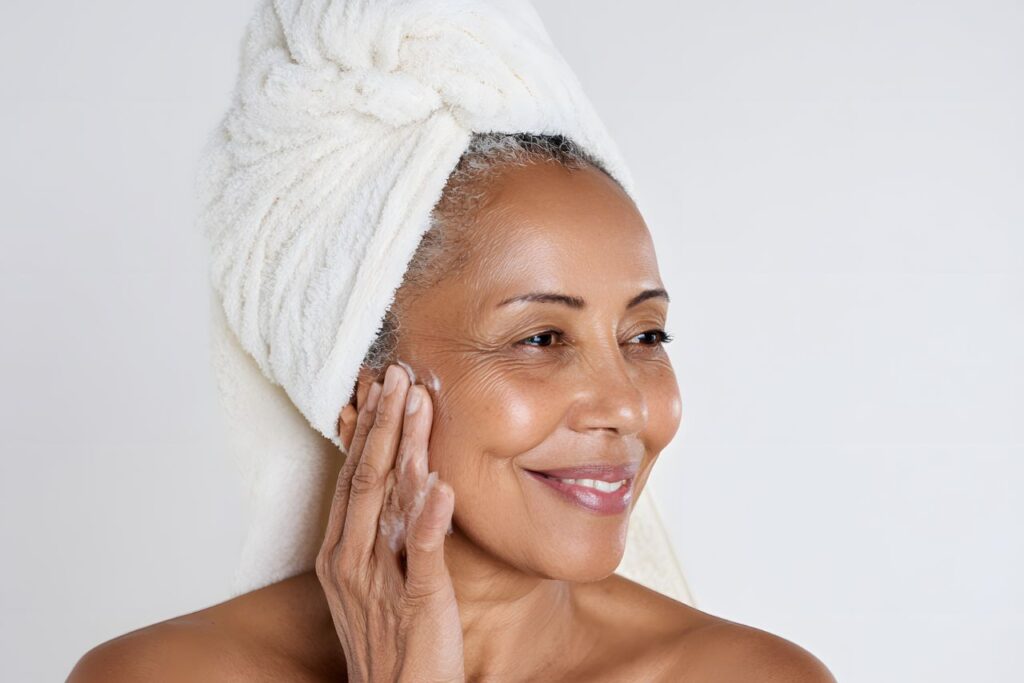
The secret lies in “hyper-hydrating” prep. The most common mistake women over 50 make isn’t the foundation they choose; it is what they do before they apply it. As oestrogen levels drop, skin becomes significantly drier.
If you apply makeup to dry skin, the pigment will cling to dry patches and settle into wrinkles, creating that dreaded “cakey” texture.
Why does primer matter for mature skin?
Think of your skin as a canvas. If the canvas is rough and thirsty, the paint won’t glide; it will stick. You need to create a barrier that smooths the surface while locking in moisture.
The Step-by-Step Hack:
1. Exfoliate Gently
You cannot glow if you are covered in dead skin cells. Use a gentle chemical exfoliant (like lactic acid or PHAs) twice a week to dissolve dull surface skin without the micro-tears caused by harsh scrubs.
2. Layer Your Moisture
Do not just slap on one cream. Start with a hydrating essence or serum containing Hyaluronic Acid or Glycerin. These humectants pull moisture from the air into your skin, plumping up fine lines instantly.
3. The Gripping Primer
Swap your matte, silicone-heavy primers for a “gripping” or illuminating primer. Look for terms like “dewy,” “hydrating,” or “radiant” on the bottle.
Pro Tip: Let your skincare sit for at least 5 minutes before applying makeup. If your skin feels tacky to the touch, you are ready. If it feels dry, apply another thin layer of moisturiser.
READ ALSO: The Best Sunscreens For Mature Skin
#2: Choose the best foundation for wrinkles
Switch to sheer formulas and “spot correcting” foundation.
Why does full coverage make me look older? It seems counterintuitive. You have age spots or redness, so you want more coverage, right? However, heavy, matte, full-coverage foundations are high in pigment and low in moisture. As the day wears on, the moisture evaporates, leaving a mask of pigment that cracks and settles into deep lines, emphasising texture rather than hiding it.
How do I get coverage without the weight? The modern approach to midlife skin is “transparency.” You want to see actual skin through the makeup.
The Step-by-Step Hack:
1. Ditch the Matte
Move towards tinted moisturisers, BB creams, or serum foundations. These products are hybrids, half skincare, half makeup. They move with your skin when you smile, rather than cracking.
2. The Damp Sponge Method
Apply your base with a damp beauty sponge, not a brush. A brush can leave streak marks and micro-exfoliate dry skin, causing flakiness. A damp sponge presses moisture into the skin for a seamless finish.
3. Spot Conceal Only
Apply a sheer layer of foundation all over to even out the tone. Then, go back with a high-coverage concealer only on the specific spots that bother you (like a sun spot or a broken capillary). This keeps 90% of your face looking fresh and light while still addressing imperfections.
READ ALSO: The Best Foundation For Women Over 50
#3: Use concealer to lift your face
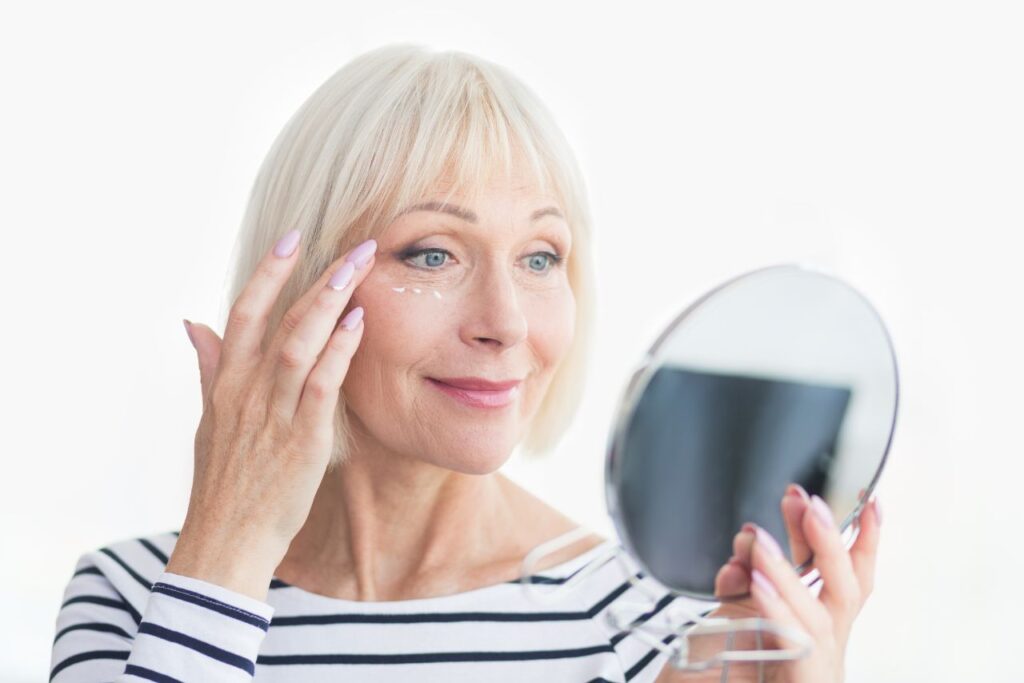
The skin under the eyes is the thinnest on the body. Piling thick concealer right up to the lash line is a recipe for disaster. It settles into crow’s feet and can make eyes look smaller and puffier.
How can concealer act like a facelift? Makeup artists use light to bring features forward. By strategically placing a lighter concealer, you can create an optical illusion of a lift.
The Step-by-Step Hack:
1. Avoid the Rim
Do not take your concealer all the way up to the bottom lashes. Leave a millimetre of space. This prevents the product from collecting in the natural folds when you blink or squint.
2. The Inner and Outer Corner Trick
Place a small dot of concealer (one shade lighter than your skin) at the very inner corner of the eye (the darkest part) to brighten. Then, place a small swipe at the outer corner of the eye, angling it upwards towards the tail of your brow.
3. Blend Upwards
Blend that outer swipe upwards. This creates a visual “lift,” counteracting the natural downward pull of gravity that happens with age.
Key Ingredient to Look For: Choose a concealer with caffeine or peptides to help de-puff while it covers.
#4: Use Powder or Cream Blush
Powder sits on top of the skin. On smooth, young skin, this looks fine. On textured skin or skin with peach fuzz (which increases after menopause), powder sits on the hairs and pores, looking dusty and flat.
Why is cream blush a game-changer? Cream or liquid blush melts into the skin, mimicking a natural flush from within. It also adds a reflective sheen to the cheek, which simulates the natural oils we lose as we age.
The Step-by-Step Hack:
1. The Colour Theory
Avoid brownish or muddy mauves. As skin ages, it loses its rosy undertone and becomes more sallow (yellow/grey). Bring back the life with fresh pops of colour, think bright peach, soft coral, or true pink. It looks scary in the pot, but sheer and youthful on the skin.
2. Placement is Everything
In our 20s, we were taught to smile and apply blush to the “apples” of our cheeks. Stop doing this. As facial volume drops, the “apples” fall lower. If you apply blush there, when you stop smiling, the colour drops, dragging your face down.
3. The Cheekbone Lift
Instead, apply your cream blush high on the tops of the cheekbones, blending back towards the hairline.
#5: Define Your Eyes
Why does eyeliner look harsh now over 50? Black, liquid eyeliner can look incredibly stark against softer, ageing features. Furthermore, if you have hooded lids (where the skin of the brow bone folds over the lash line), a thick liner takes up all the visible lid space, making eyes look heavy and smaller.
How can I define my eyes without closing them off? You want to define the lash line to make lashes look thicker, without drawing a heavy border.
The Step-by-Step Hack:
1. Swap Black for Brown or Navy
Dark chocolate brown or deep navy blue are much softer than black. They define the eye without casting harsh shadows.
2. The Tightline
Instead of drawing on top of your lid, use a waterproof gel pencil to draw in between your upper lashes and on the upper waterline (the wet rim under your upper lashes). This is called tightlining. It makes your lash base look thick and youthful without taking up any lid space.
3. Matte vs. Shimmer Eyeshadow
Keep shimmer away from the hooded part of the eye (the fleshy part that hangs down). Shimmer reflects light and makes things look bigger, you don’t want to emphasise the hood. Use a matte taupe or soft brown on the hood to create depth, and save a tiny bit of shimmer for the very centre of the eyelid or the inner corner to wake up the eyes.
#6: Set Your Makeup Without Drying Your Skin
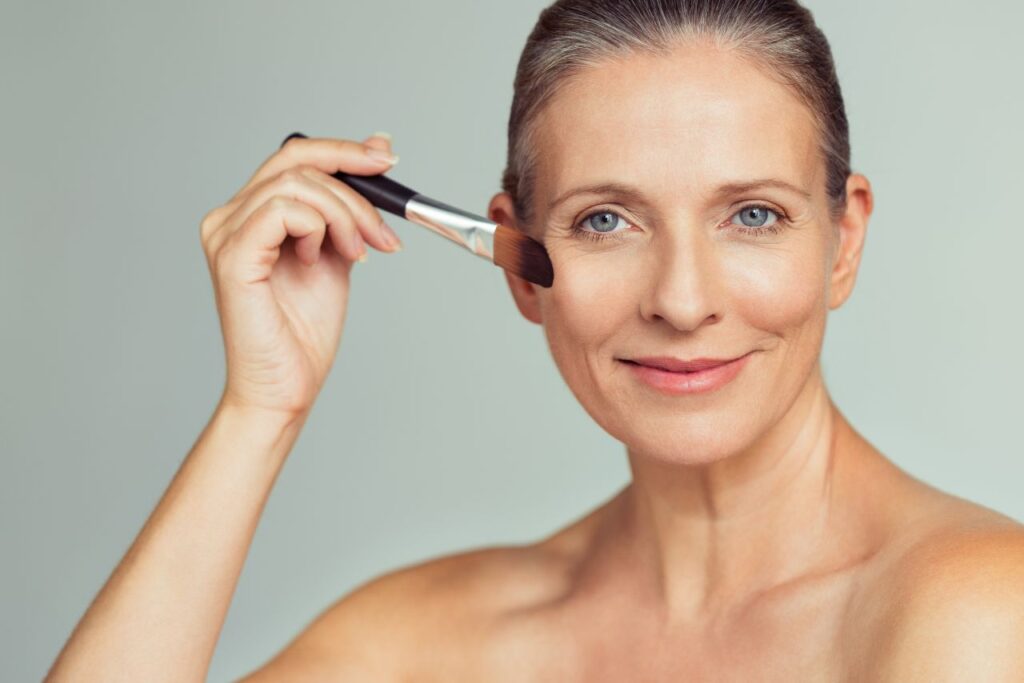
Is face powder necessary for mature skin? For many women, the answer is no. If your skin is dry, you may not need powder at all. However, if you have hot flushes or live in a humid climate, you need your makeup to stay put. The danger is that powder absorbs oil and moisture, sucking the life out of your glow.
What is the alternative to heavy powder? The goal is to set the makeup, not mattify the skin entirely.
The Step-by-Step Hack:
1. Micro-Powdering
If you must use powder, use a tiny, fluffy eyeshadow brush (not a big powder brush). Dip it in a translucent, finely milled powder, tap off the excess, and press it only where you get oily, usually the nose and chin. Leave the cheeks and under-eyes powder-free to maintain that glow.
2. The Setting Spray Finish
This is the holy grail for ageing skin. Once your makeup is done, mist your face generously with a hydrating setting spray (look for “dewy finish”).
Why this works
The spray melts the layers of cream, liquid, and powder together, removing the powdery look and creating a skin-like finish that lasts all day. It brings back the glow you might have lost during application.
READ ALSO: Wrinkled Lips Fix: Tips and Tricks for Women Over 50
Final Thoughts
Glowy makeup after 50 isn’t about chasing youth. It’s about working with your skin today, honoring the fact that menopause and natural aging change moisture levels, texture, and how products sit.
When you support your skin barrier with hydration and daily sun protection, you create the conditions for makeup to look fresh again.
Try these hacks one at a time. Let your face teach you what it likes. The goal is not perfection. The goal is that moment you catch your reflection and think, “There I am.” Soft. Bright. Healthy-looking. Confident.
FAQs
Try to avoid alcohol-based setting sprays or foundations, as they are drying. Avoid talc-heavy powders, which can look chalky. Be cautious with heavy fragrances, which can irritate sensitive menopausal skin. Also, steer clear of glitter(large particles) which settles into crepey skin; opt for mica or pearl (fine sheen) instead.
Absolutely! The myth that older women can’t wear shimmer is outdated. The key is placement. Avoid putting shimmer on textured areas (like the crow’s feet or the brow bone hood). Place shimmer on the smooth centre of the mobile lid or the inner tear duct to catch the light and look awake.
Because the under-eye area is delicate and skin becomes more fragile and textured with age. Using less product and pressing it in gently usually reduces creasing.
Not automatically, too much is the issue. Aging skin is often drier, so heavy powder can make texture look more obvious. Use small amounts only where needed.
Brighten the under-eye strategically and add cream blush. These two steps bring light back to the face without heavy coverage.
Prep with lip balm and use lip liner to define and “anchor” the color. Lip lines increase with age as collagen and elastin decline, so liner becomes more useful over time.
That’s common. Menopause-related hormone changes can contribute to thinner, drier skin, and women may produce less oil after menopause. Moisturising consistently helps.