

Feeling tired, foggy, or sluggish? The answer might be in your Mitochondria
As women over 50, energy levels shift, metabolism slows, and brain fog can become a daily struggle. But what if the real issue isn’t just aging, but mitochondrial decline? These tiny powerhouses in your cells determine how much energy you have, how well your brain functions, and how youthful you feel.
Mitochondria are often called the powerhouses of the cell, but what does that really mean for you? Imagine your body as a smartphone, and mitochondria are your battery pack.
When they are strong, you feel full of life. When they weaken, it is like trying to get through the day on 10 percent battery, no matter how much you eat or rest.
The good news is you can recharge your mitochondria and regain vitality. Here is what science says about optimizing mitochondrial health for women over 50.
What Are Mitochondria and Why Do They Matter?
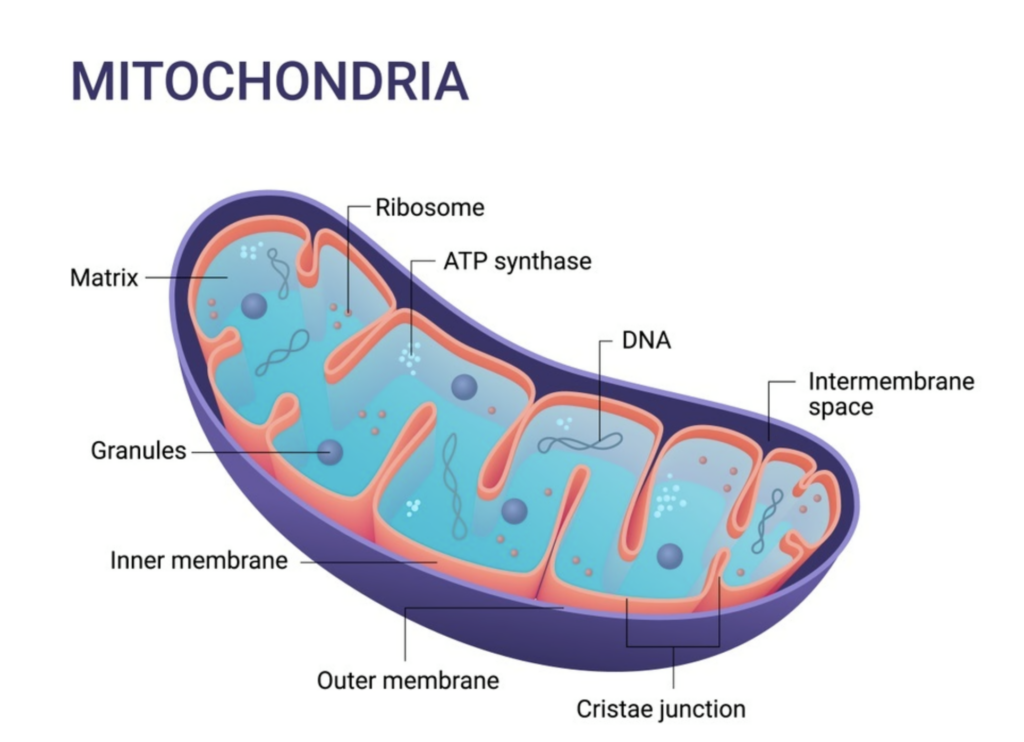
Mitochondria are tiny energy factories inside your cells that turn food and oxygen into usable energy, called ATP (adenosine triphosphate). This energy powers everything—your movement, thinking, digestion, and metabolism.
However, mitochondria weaken with age, leading to low energy, weight gain, brain fog, and increased risk of chronic disease.
? Scientific Fact: By age 70, mitochondrial function declines by nearly 40 percent compared to your 30s (Source: National Institute on Aging).
Signs Your Mitochondria Need Help

- Low Energy: You feel drained even after a full night’s sleep.
- Brain Fog: Forgetfulness, slow thinking, and difficulty concentrating.
- Mood Swings and Depression: Poor mitochondrial function is linked to anxiety and depression, as the brain needs enormous amounts of energy to function.
- Sluggish Metabolism and Weight Gain: Fewer active mitochondria mean calories are not efficiently burned, leading to weight gain.
- Aging Skin and Slow Recovery: Cells need mitochondrial energy to repair skin, muscles, and joints. Weak mitochondria result in slower healing.
How Science Supports Mitochondrial Health
Mitochondria get damaged over time by poor diet, stress, lack of exercise, and toxins. When dysfunctional, they create free radicals, accelerating aging and inflammation.
Harvard Study: A 2020 study in Cell Metabolism found that enhancing mitochondrial function reversed aging signs in mice, improving memory, endurance, and metabolism (Source).
Journal of Physiology: Exercise significantly improves mitochondrial efficiency, increasing energy levels (Source).
Frontiers in Physiology: Certain myokines, released during exercise, stimulate mitochondrial biogenesis, leading to better metabolic health (Source).
How to Supercharge Your Mitochondria Naturally

Want more energy, sharper thinking, and a faster metabolism? Here is how to wake up your mitochondria and restore youthful vitality.
Strength Training and Zone 2 Cardio
Exercise is like charging your phone faster. Strength training and steady-state cardio stimulate new mitochondria growth, keeping you energized.
READ ALSO: How Zone 2 Cardio Boosts Ageless Fitness for Women Over 50
Eat the Right Foods
Mitochondria thrive on healthy fats (olive oil, salmon, nuts) and protein. Avoid processed sugar and seed oils, as they slow down energy production.
Cold and Heat Therapy
Cold showers and sauna use activate mitochondrial function, making them more efficient.
Get Sunlight and Improve Sleep
Natural light regulates circadian rhythms, while deep sleep repairs mitochondria. Stress and poor sleep damage mitochondria.
Try Fasting (Even for a Few Hours)
Intermittent fasting triggers mitophagy, where the body removes damaged mitochondria and creates new, stronger ones.
The Bottom Line: Protect Your Mitochondria, Protect Your Future
If you are feeling drained, it is not just aging—it is your mitochondria signaling for help. The good news? You can recharge your body’s battery by making small daily changes.
Prioritize strength training, proper nutrition, sleep, and stress management to slow down aging, boost energy, and maintain sharp cognitive function.
Scientific Support: Research confirms that lifestyle interventions increase mitochondrial efficiency, reduce inflammation, and enhance overall well-being (Source: Journal of Clinical Medicine).
Every healthy choice you make is like plugging in your charger. Keep your mitochondria powered up, and you will feel stronger, more vibrant, and sharper than ever.
♡ Love ♡,
Schellea.
References
Bratic, A., & Larsson, N.-G. (2013). The role of mitochondria in aging. The Journal of Clinical Investigation, 123(3), 951–957. https://doi.org/10.1172/JCI64125
Bartman, S., Coppotelli, G., & Ross, J. M. (2024). Mitochondrial dysfunction: A key player in brain aging and diseases. Current Issues in Molecular Biology, 46(3), 1987–2026. https://doi.org/10.3390/cimb46030130
Lesnefsky, E. J., Chen, Q., & Hoppel, C. L. (2016). Mitochondrial metabolism in aging heart. Circulation Research, 118(10), 1593–1611. https://doi.org/10.1161/CIRCRESAHA.116.307505
Kwon, J. H., Moon, K. M., & Min, K.-W. (2020). Exercise-induced myokines can explain the importance of physical activity in the elderly: An overview. Healthcare, 8(4), 378. https://doi.org/10.3390/healthcare8040378
Sydney, B., Giuseppe, C., & Jaime, M. R . (2024). Unlocking the potential of exercise: Harnessing myokines to delay musculoskeletal aging and improve cognitive health. Frontiers in Physiology, 15, Article 1338875. https://doi.org/10.3389/fphys.2024.1338875
Anderson, R. M., & Weindruch, R. (2012). The caloric restriction paradigm: Implications for healthy human aging. The American Journal of Human Biology, 24(2), 101–106. https://doi.org/10.1002/ajhb.22243
Nanshan, S., Shuyuan, M., Xiangxu, W., Gang, H. & Ming, L. (2024). Mitochondrial dynamics and neurodegeneration: A review. Translational Neurodegeneration, 13, Article 409. https://doi.org/10.1186/s40035-024-00409-w