


There was a time when I thought of cardio as the workout you did at the gym. It meant an exercise class, a treadmill session, a bike or something that left you feeling as though you had really exercised.
Walking seemed almost too simple.
Over the years, I have completely changed my mind. Whenever life gets busy, I travel, I get sick or my usual exercise routine slips for a little while, I notice how quickly my fitness changes. A familiar walk can suddenly feel harder. I may feel more breathless or notice that I do not have quite the same energy.
And one of the simplest things that helps me reconnect with my fitness is walking.
Walking keeps the body moving. It builds endurance. It gets us outside or gives us an easy way to exercise indoors. And perhaps most importantly, it helps us maintain the fitness we need for real life.
That is why a walking cardio workout can be such a powerful part of our routine after 50. Cardio is no longer simply about burning calories. It is about having enough energy and stamina to participate fully in our lives.
Does Walking Really Count as Cardio?
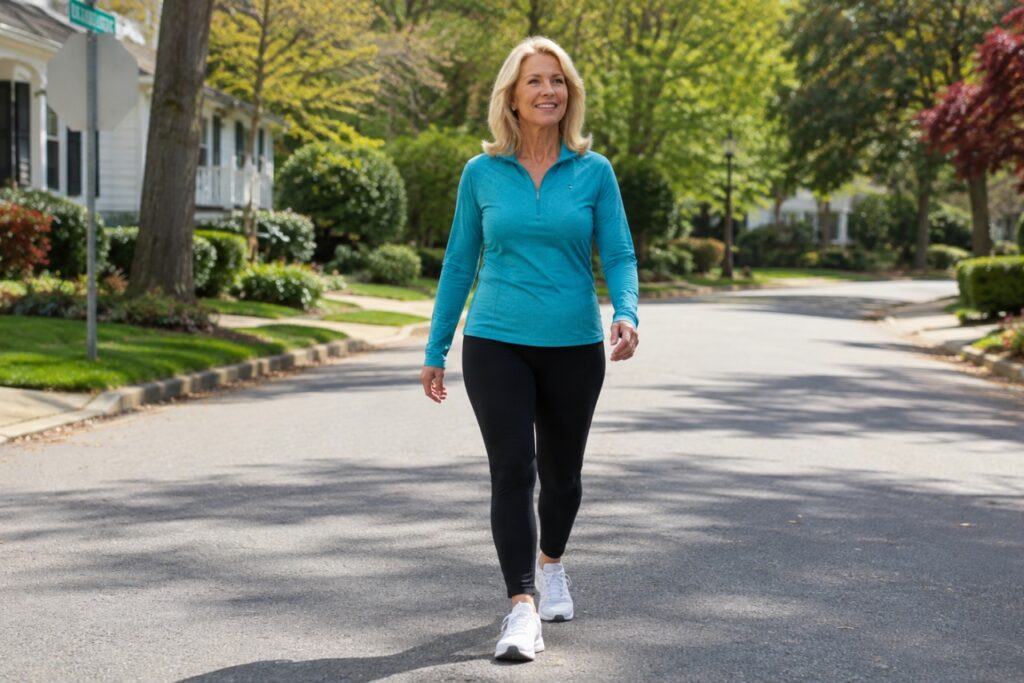
Yes. Walking can absolutely be cardio.
Cardiovascular exercise is movement that makes your heart, lungs and large muscle groups work harder. When you walk at a brisk enough pace, your heart rate rises, your breathing becomes faster and your cardiovascular system has to respond to the increased demand.
You do not have to run for movement to count.
A simple way to judge your intensity is the talk test. During moderate-intensity activity, you should generally be able to talk, although you may notice that your breathing is faster. If you can sing comfortably, you may be working at a lighter intensity.
That means your ideal walking speed is personal.
For one woman, a brisk pace may feel quite fast. For another, it may be a comfortable, purposeful walk. What matters is that your body is being asked to work a little harder than it does during a gentle stroll.
Walking Builds the Kind of Fitness We Use Every Day
I think this is where walking becomes especially valuable after 50.
Cardio fitness shows up in ordinary moments.
It is there when we climb stairs without needing a long recovery at the top. It is there when we spend a day sightseeing on holiday. It helps us walk around an airport, carry shopping, keep up with family and enjoy a long day out without feeling as though our energy has disappeared halfway through it.
Regular brisk walking can also help support heart health, blood pressure, blood sugar, cholesterol, stamina and mental wellbeing. The American Heart Association describes walking as one of the simplest ways to become and remain physically active and notes that brisk walking can contribute toward the recommended amount of moderate-intensity activity each week.
This is the shift I want us to make when we think about cardio.
We are training for capacity.
We want enough cardiovascular fitness in reserve to keep saying yes to the things we enjoy.
READ ALSO: How Much Walking Do You Need for Heart Health After 50?
Walking Can Support Your Mood as Well as Your Body
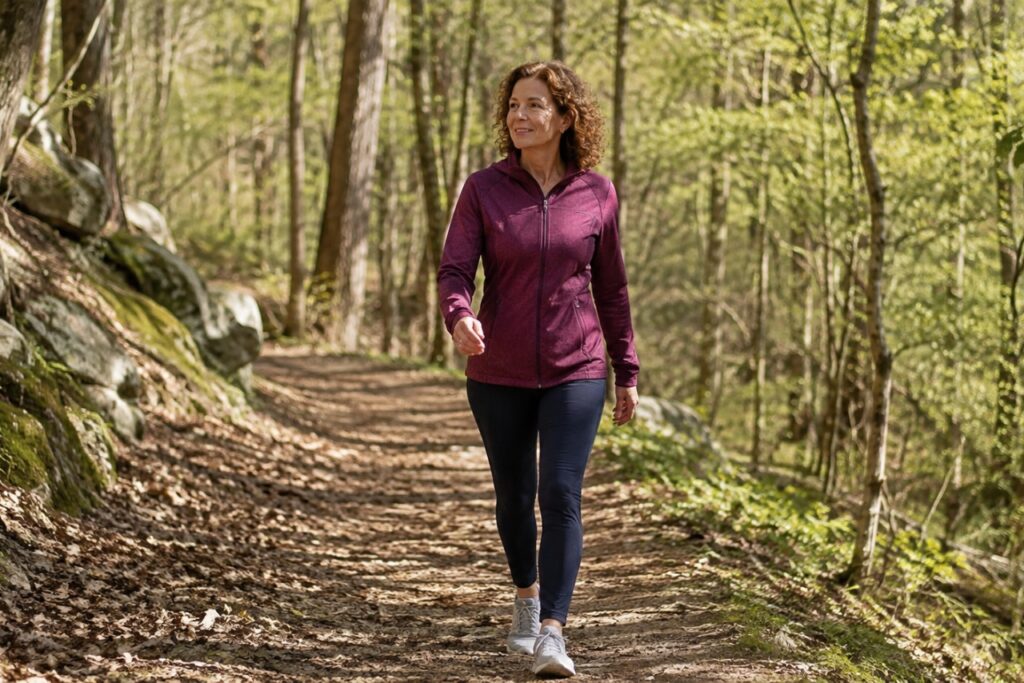
One of the things I notice most about walking has very little to do with fitness trackers.
Moving changes how we feel.
When I feel stressed, overwhelmed or mentally cluttered, a walk can create a completely different feeling in my body. Rhythm, movement, breathing and simply changing our environment can help us feel clearer and more settled.
Regular physical activity is associated with better mood, sleep and overall wellbeing, and the American Heart Association includes improved mental and emotional wellbeing among the benefits associated with regular walking.
Sometimes we imagine exercise has to last an hour before it is worthwhile. I do not believe that.
Five minutes of walking still gives us five minutes of movement. Ten minutes still counts.
A short walk around the block, a few laps of the house or an indoor walking workout can be enough to change the direction of your day and reinforce the habit of being someone who moves.
That consistency is powerful.
Walking is one of the simplest ways to build cardiovascular fitness after 50. If you want to understand the bigger picture of cardio and how it fits into healthy ageing, explore our complete Cardio After 50 guide.
How to Turn a Walk Into a Cardio Workout
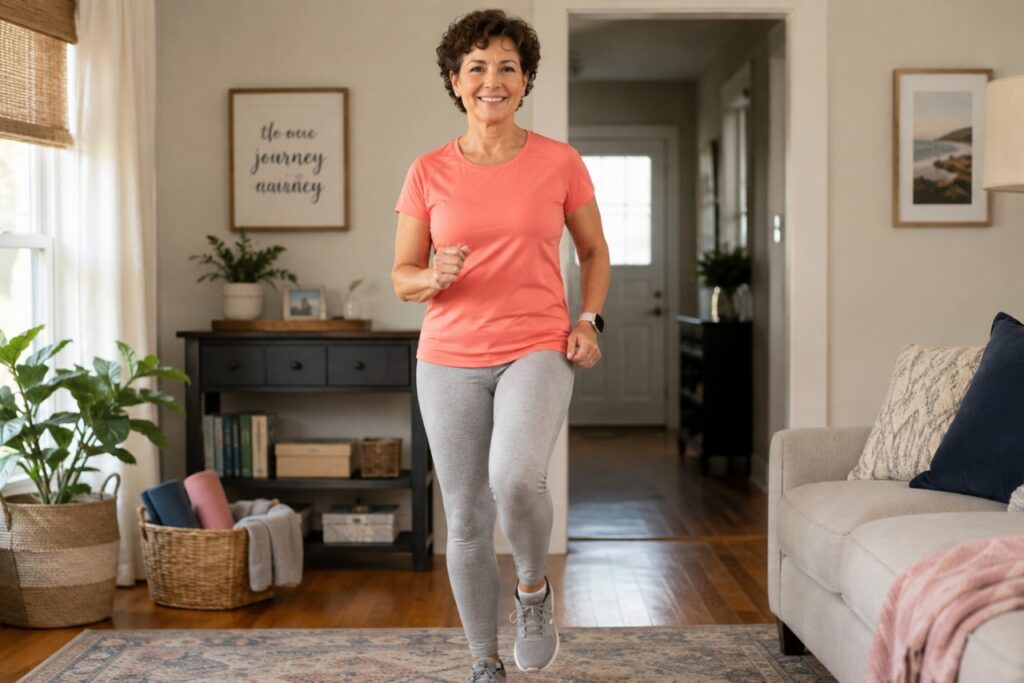
Walking itself is valuable, but your body also benefits when you occasionally ask it to do a little more.
The easiest way to create a walking cardio workout is to introduce small changes in intensity rather than trying to make every walk harder.
1. Walk With Purpose
Lengthen your stride comfortably, stand tall and allow your arms to swing naturally. A more energetic walking style can increase the amount of work your body is doing without changing the activity itself.
2. Add Short Faster Intervals
Try walking at your usual pace and then increasing your speed for 20 to 60 seconds. Your faster pace does not need to look like anyone else’s. A challenging interval for you might simply mean walking as quickly as you comfortably can before returning to your normal pace. Repeat this a few times during your walk.
3. Include Hills or Inclines
A gentle hill naturally asks more from your cardiovascular system and your legs. If you walk indoors on a treadmill, gradually adjusting the incline can create a similar challenge.
4. Use Your Arms
Arm swing is part of walking. Allowing your arms to move with rhythm can help turn an ordinary walk into more of a whole-body activity. Indoor walking workouts can take this further by adding reaches, punches, side steps and coordinated arm movements.
5. Change Direction and Movement Patterns
Cardio does not always have to happen in a straight line. Side steps, controlled direction changes, marching and different movement patterns can challenge coordination while keeping the body adaptable.
This is one reason I love indoor walking workouts. We can train the heart and lungs while also asking the feet, core, arms and brain to work together.
READ ALSO: How a Slightly Faster Walking Pace Can Boost Strength & Stamina for Women
How Much Walking Should You Aim For?

Current physical activity guidelines recommend that adults aim for at least 150 minutes of moderate-intensity aerobic activity each week, alongside muscle-strengthening activity on at least two days. Older adults are also encouraged to include balance-focused activity.
That 150-minute figure is a useful destination. It does not have to be your starting point.
If you are rebuilding your fitness, begin with what feels manageable.
You might start with:
- 10 minutes in the morning
- A short walk after lunch
- A 15-minute indoor walking workout
- A longer walk several times each week
- Short faster intervals during your normal walk
As your fitness develops, gradually increase your time, pace or frequency.
The body is remarkably adaptable. Fitness can decline when we stop using it, but it can also begin improving when we give the body a consistent reason to adapt again.

Watch Your Walk Change
Here is a simple experiment.
The next time you are at a park, shopping center, café or airport, notice how people walk.
- Look at their stride length.
- Notice their posture and arm swing.
- Watch their walking speed and the amount of energy they seem to bring to each step.
The way we move can reflect many different things, including strength, mobility, confidence and cardiovascular fitness. And these qualities can change gradually over time.
Now bring the same curiosity to your own walking.
- Are your steps becoming more confident?
- Can you walk a little longer?
- Do stairs feel more manageable?
- Are you recovering faster after a hill?
- Can you maintain a brisk pace more comfortably?
These are meaningful signs of progress.
Your walking cardio workout is doing much more than adding steps to a watch. It is helping your body practice moving through life with energy and purpose.
READ ALSO: 10 Signs Your Cardio Fitness Is Improving
Want the bigger picture? Cardio is one of the five pillars of the Fabulous50s Longevity Protocol, designed to help women over 50 build heart health, energy and stamina. Explore our complete Cardio After 50 guide for practical ways to build cardiovascular fitness at your own pace.
Walking Is Even Better When It Is Part of a Complete Routine
Walking is one of my favorite forms of exercise, but healthy aging works best when we give the body different kinds of movement.
The Fabulous50s Longevity Protocol™ includes five movement pillars: Strength, Cardio, Mobility, Balance and Power. Cardio supports the heart, lungs, stamina, circulation, mood and brain, while the other pillars help us maintain muscle, joint movement, stability and the ability to react quickly.
This is why walking and strength training work beautifully together rather than competing with each other.
Your walk develops endurance.
Strength training helps maintain muscle.
Mobility keeps your movement options open.
Balance helps you stay steady.
Power helps you retain speed and responsiveness.
Together, they help us build the kind of fitness that makes everyday life easier.
EXPLORE MORE: Zone 2 Walking for Longevity: A Beginner’s Guide for Women Over 50
Final Thoughts
Walking may be simple, but simple does not mean insignificant. A regular walking cardio workout can help us build stamina, support cardiovascular health, improve energy and stay connected to movement. And because walking can happen indoors, outdoors, alone, with friends or in short bursts throughout the day, it is one of the easiest forms of cardio to make part of real life.
Start where you are. Walk for five minutes if that is what fits today. Walk for 20 if you have more time. Occasionally pick up your pace, use your arms or add a hill.
Then keep coming back. Because the real goal of cardio after 50 is not to prove how fit we are during a workout. It is to build enough fitness to keep participating in everything that makes life worth living.
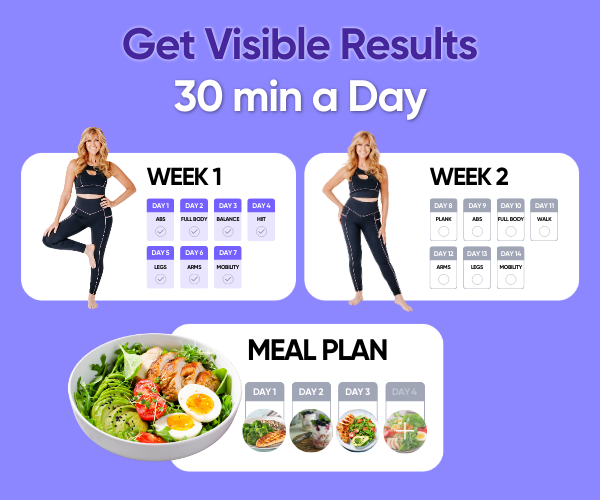
Ready to move? Explore a 20-Minute Cardio Walking Workout or discover more ways to build sustainable cardio fitness inside the Fabulous50s Vitality App. Start Your 14-Day Free Trial Today!
Frequently Asked Questions
Is Walking Enough Cardio After 50?
Brisk walking can count as moderate-intensity cardiovascular exercise when it raises your heart rate and breathing. However, a complete healthy-aging routine should also include strength, balance, mobility and power-focused movement.
How Fast Do I Need to Walk for Cardio?
There is no single speed that works for everyone. A useful guide is the talk test. At moderate intensity, you should usually be able to speak while noticing that your breathing is faster.
Is 30 Minutes of Walking Good Cardio?
A 30-minute brisk walk can contribute significantly toward weekly aerobic activity recommendations. Five 30-minute sessions would total 150 minutes, although shorter sessions throughout the week can also help you build a consistent movement habit.
Is Indoor Walking as Effective as Outdoor Walking?
Both can help you build cardiovascular fitness when the pace and movement raise your heart rate appropriately. The best choice is often the one that makes regular movement easiest to maintain.
Can Walking Improve Stamina After 50?
Yes. Regular walking gives the cardiovascular system repeated opportunities to adapt. Gradually increasing your duration, pace or terrain can help build endurance over time.
Can Walking Count as Zone 2 Cardio?
For many women, walking briskly enough may bring them into a Zone 2 effort, although the appropriate intensity differs according to fitness level, age and individual heart-rate response.
Should I Walk Every Day?
Walking can be included frequently if it feels comfortable and you are recovering well. Your overall routine should leave room for other forms of movement and for appropriate recovery.