
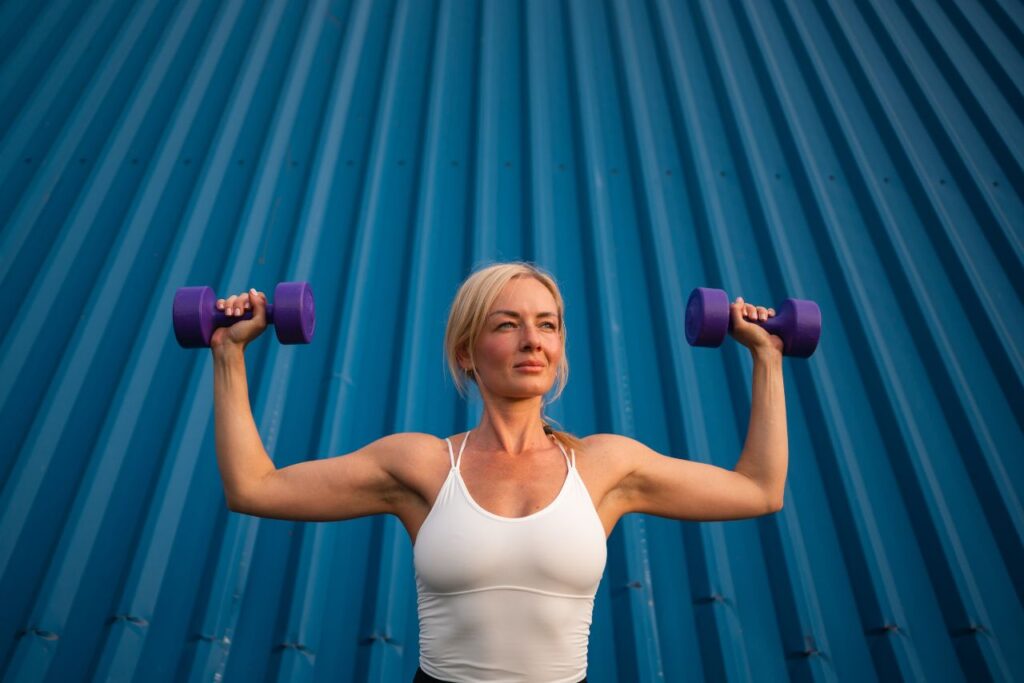
A lot of women come to strength training after a diagnosis. They get the DEXA scan result, hear the word ‘osteoporosis’, and then spend weeks feeling like their body has become something fragile and unpredictable. The instinct is to slow down, to be careful, and to do less.
That makes perfect sense. When something feels breakable, protecting it feels like the right thing to do. But what the research keeps showing us, consistently and clearly, is that the bones that get stronger are the bones that get asked to work. Gentle, progressive resistance training is not a risk for women with osteoporosis. For most of us, it is the single most protective thing we can do.
This guide is going to show you exactly how to start, from week one, with no gym, no prior experience, and no pressure to lift anything that does not feel right for your body right now. We are building strength here, one small session at a time.
Key Takeaways: Strength Training for Osteoporosis After 50
- Strength training for osteoporosis is one of the most evidence-backed interventions available for improving bone mineral density in women over 50.
- When muscles pull against bones during resistance exercise, the mechanical stress stimulates osteoblasts, the cells responsible for building new bone tissue.
- Beginners should start with bodyweight exercises or very light resistance, focus on form, and progress gradually over weeks and months.
- The most important bones to target with strength training are the hips, lumbar spine, and wrists, the three sites most vulnerable to osteoporosis-related fracture.
- Progressive overload, the principle of gradually increasing the challenge over time, is the engine that drives ongoing bone adaptation.
- Two to three strength sessions per week, each lasting 20 to 30 minutes, is a realistic and effective starting point for most beginners.
Why Is Strength Training So Effective for Osteoporosis?
Bone is living tissue. It is in a constant cycle of breakdown (driven by cells called osteoclasts) and rebuilding (driven by cells called osteoblasts). After menopause, falling estrogen levels tip that balance toward breakdown, and bone density declines.
During a resistance exercise, the muscles in action tug on the bones they are attached to. This pull applies mechanical stress on the bone. Your body recognises that stress as a demand, and it responds by sending osteoblasts to reinforce and rebuild the bone in that location. After a period of regular training this results in measurable gains in bone mineral density.
A 2023 systematic review and network meta-analysis published in Frontiers in Physiology analysed 19 randomised controlled trials covering 919 postmenopausal women and confirmed that resistance training produces significant improvements in bone mineral density, particularly at the lumbar spine and femoral neck. The review found that progressive resistance training, where the challenge is gradually increased over time, outperformed static protocols.
A separate study published in Sensors (MDPI, 2022) followed postmenopausal women with osteopenia and osteoporosis through a six-month structured resistance training programme and found a statistically significant 1.82% increase in lumbar spine bone mineral density in the exercise group, compared to virtually no change in the non-exercising control group.
Importantly, research has also shown that strength training is the only exercise modality that can improve bone density, build the muscle that protects the skeleton during a fall, and enhance balance and coordination all at the same time. No medicine can do all three at the same time. That is the magic of strength training.
For a complete overview of safe osteoporosis workouts, exercise videos, strength training, balance work, and movement tips for women over 50, visit our main guide: Osteoporosis Exercise Videos for Women Over 50.
What Are the Key Principles of Strength Training for Osteoporosis?
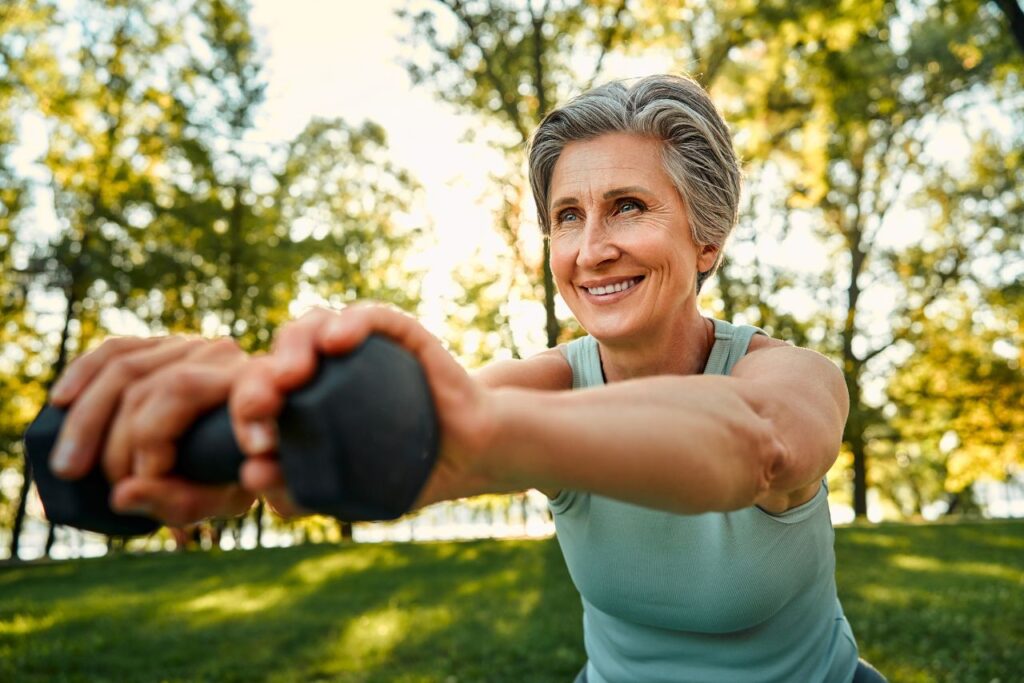
There are four principles that underpin safe, effective strength training for osteoporosis. Understanding these will help you train smarter from day one.
1. Mechanical Loading
Bones respond to load. The load has to be meaningful enough to create a stimulus, which is why doing dozens of reps with a teaspoon of resistance is not going to move the needle much.
Aim for a level of resistance where the last few repetitions of each set feel genuinely challenging, not painful, but effortful. That effort is the signal your bones are waiting for.
2. Progressive Overload
This is the single most important principle in all of strength training, and it’s especially important for your bones. Progressive overload is basically increasing the demand on your muscles and bones over time . This can be done by using a bit more resistance , doing one more repetition , or slowing the tempo of each movement .
Without progression, your bones adapt to the current load and stop responding. With progression, they keep rebuilding.
For beginners, this progression can be very gradual. Moving from 1kg dumbbells to 1.5kg over a month is still progressive overload. The body does not care about the absolute numbers. It cares about the direction of change.
3. Specificity
Strength training builds bone where the load is applied. Bicep curls strengthen the arm bones. Squats load the hip and leg bones. Rows strengthen the upper back and spinal muscles.
That means we need to select exercises that specifically target the bones that are most at risk for fracture from osteoporosis: the hips and legs, the lumbar spine, and the wrists and forearms. A full routine will take care of all three areas.
4. Recovery
Bone remodeling happens during rest, not during exercise. The training session is the stimulus. Sleep and rest days are when the actual rebuilding takes place.
This is why beginners should start with two to three sessions per week with at least one rest day between strength sessions. More is not always better, especially when you are starting out.
Which Strength Exercises Are Best for Osteoporosis in Beginners?
The exercises below are organised by the area of the body they primarily load. For osteoporosis, we prioritise the hips and legs, the upper back and spine, and the arms and wrists. Aim to include exercises from all three categories in each session, or rotate them across the week.
Lower Body: Hips, Glutes, and Thighs
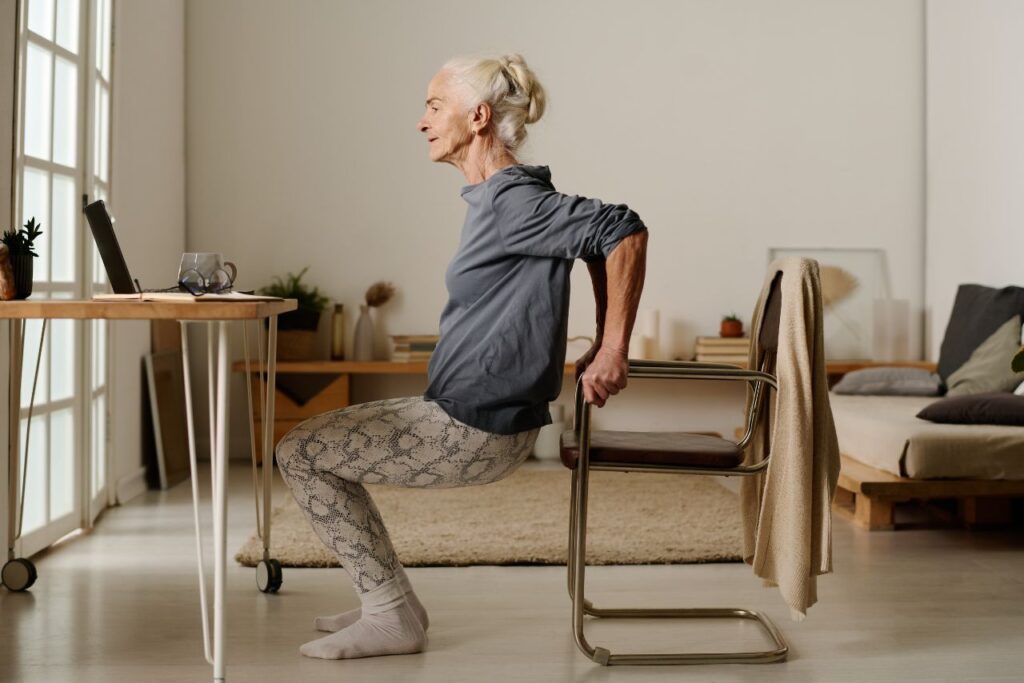
The hip is the most dangerous fracture site for women with osteoporosis. A hip fracture in later life carries serious consequences for independence and quality of life. Building the muscles of the glutes, thighs, and hips through strength training is one of the most protective things we can do.
- Chair Squats: Stand in front of a sturdy chair with feet hip-width apart. Lower yourself slowly as if sitting down, tap the seat lightly (or sit fully if needed), and then press through your heels to stand back up. Start with two sets of 10 and build from there. This is one of the most functionally important exercises for bone health and daily independence.
- Glute Bridge: Lie on your back with knees bent and feet flat on the floor. Press through your heels to lift your hips toward the ceiling, squeezing the glutes at the top. Hold for two seconds, then lower slowly. This targets the glutes and hamstrings while being completely joint-friendly for the knees and hips. Two sets of 12.
- Standing Side Leg Lifts: Hold the back of a chair for support. Stand tall and lift one leg directly out to the side, keeping it straight, then lower slowly. This targets the hip abductors, the muscles running along the outer hip that play a critical role in hip stability and bone loading. Two sets of 12 on each side.
- Step-Ups: Using the bottom step of a staircase, step up with one foot, bring the other foot up, then step back down. Repeat leading with the same foot for 10 repetitions, then swap. Hold the handrail for safety. Step-ups are weight-bearing, functional, and load the hip bones beautifully.
Follow along with a guided lower body session: 20-Minute Strength Training Workout for Women Over 50
Upper Back and Spine
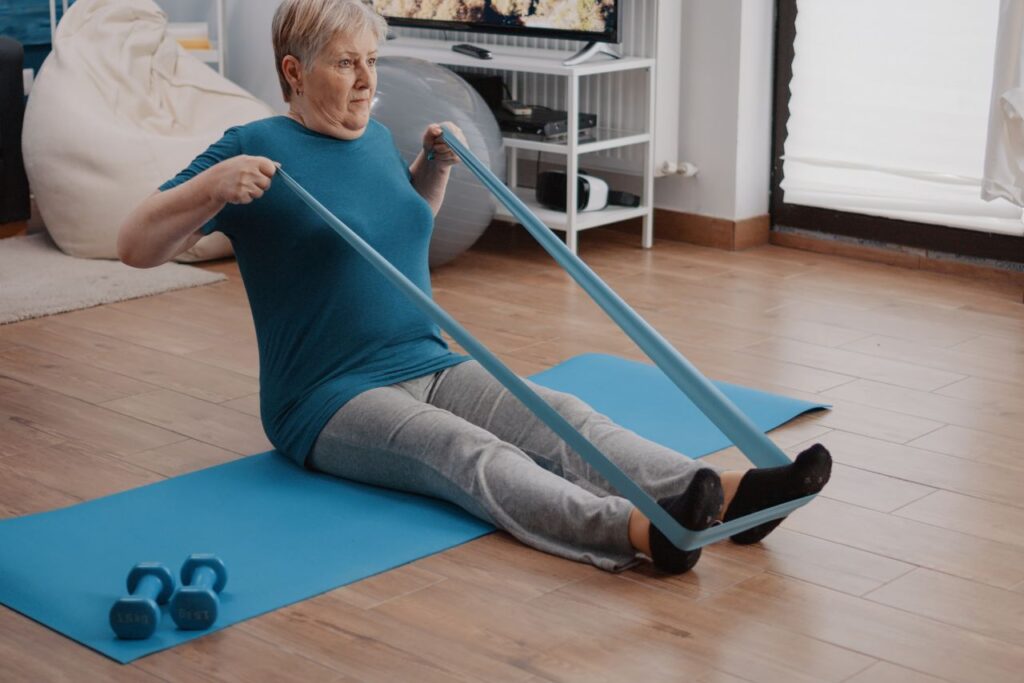
The thoracic and lumbar spine are the second major fracture zone in osteoporosis. Vertebral compression fractures, which can happen silently and without a fall, are directly related to the loss of bone density in the spine combined with poor postural loading.
Exercises that strengthen the muscles running along the spine provide active support and reduce compressive risk.
- Resistance Band Rows: Anchor a resistance band around a door handle or sturdy post at waist height. Hold one end in each hand, step back to create tension, and pull your elbows back as if rowing a boat. Squeeze the shoulder blades together at the end of each pull. This directly targets the rhomboids, trapezius, and erector muscles that hold the spine upright. Two sets of 12.
- Superman (Back Extensions): Lie face down on a mat with arms extended in front of you. Slowly lift your chest, arms, and legs off the floor simultaneously, hold for two seconds, then lower. This strengthens the erector muscles running along the full length of the spine. Begin with your arms at your sides if lifting them overhead is too challenging. Two sets of 8 to 10.
- Seated Shoulder Press: Sit tall on a sturdy chair with a light dumbbell in each hand at shoulder height. Press both dumbbells overhead until arms are almost straight, then lower slowly. This loads the spine through axial compression (weight pressing down through the length of the spine), which is a direct bone-building stimulus for the vertebrae. Two sets of 10.
EXPLORE MORE: The Ultimate Strength Training Blueprint for Women Over 50
Arms, Wrists, and Forearms
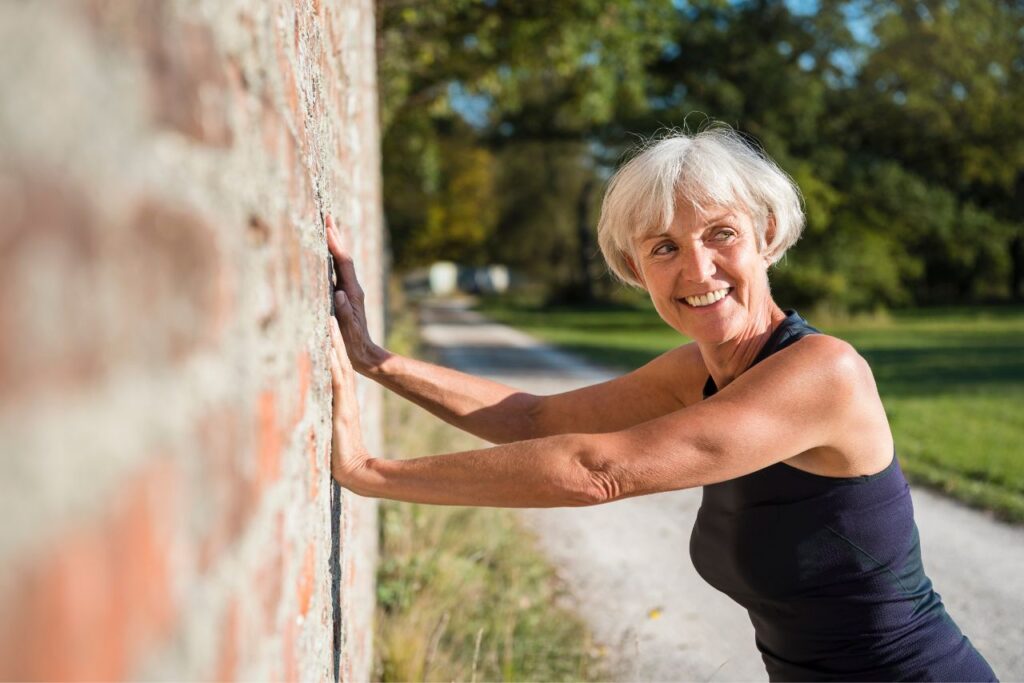
The distal radius (the bone at the end of the forearm near the wrist) is among the first bones to fracture in a fall because it is what we instinctively put our hands out to catch ourselves. Building bone density in the arms and forearms through resistance training is a meaningful protective measure.
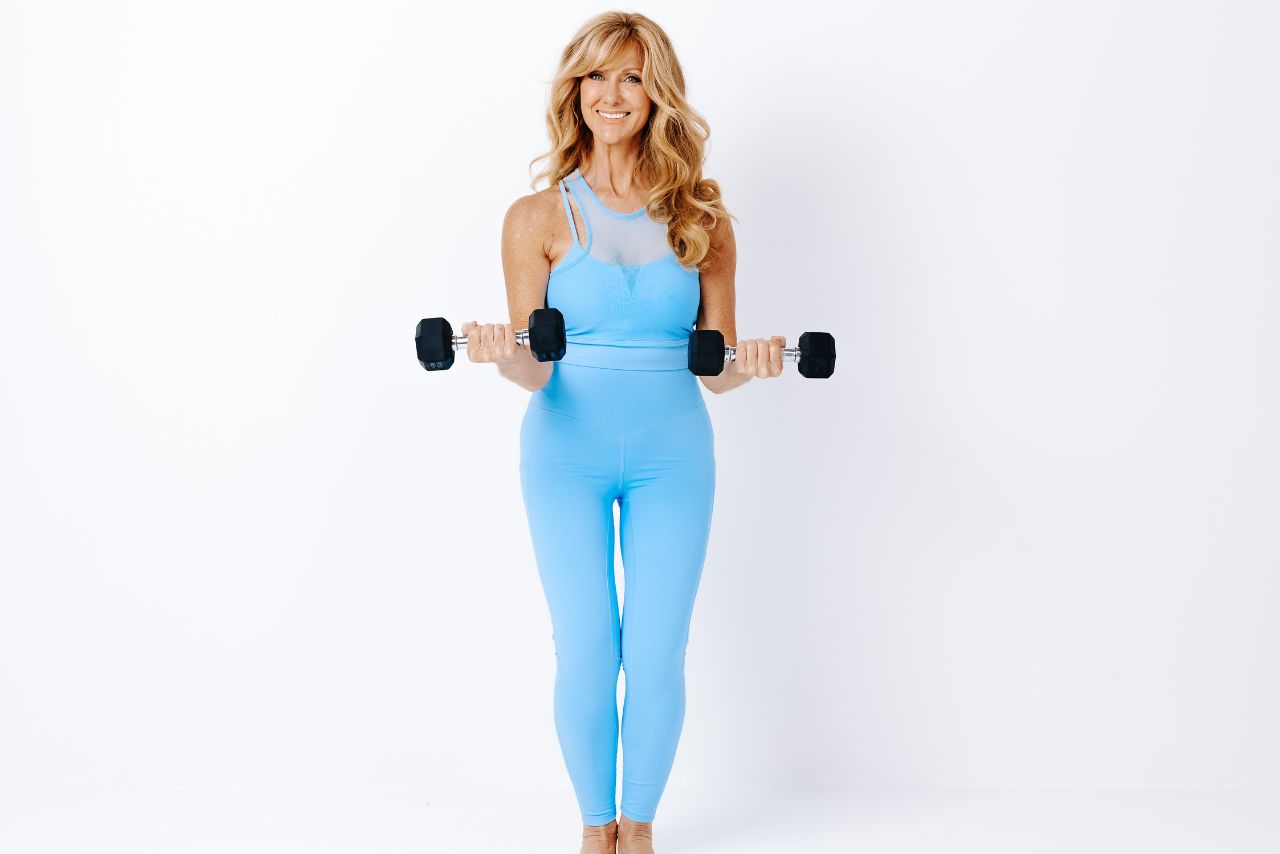
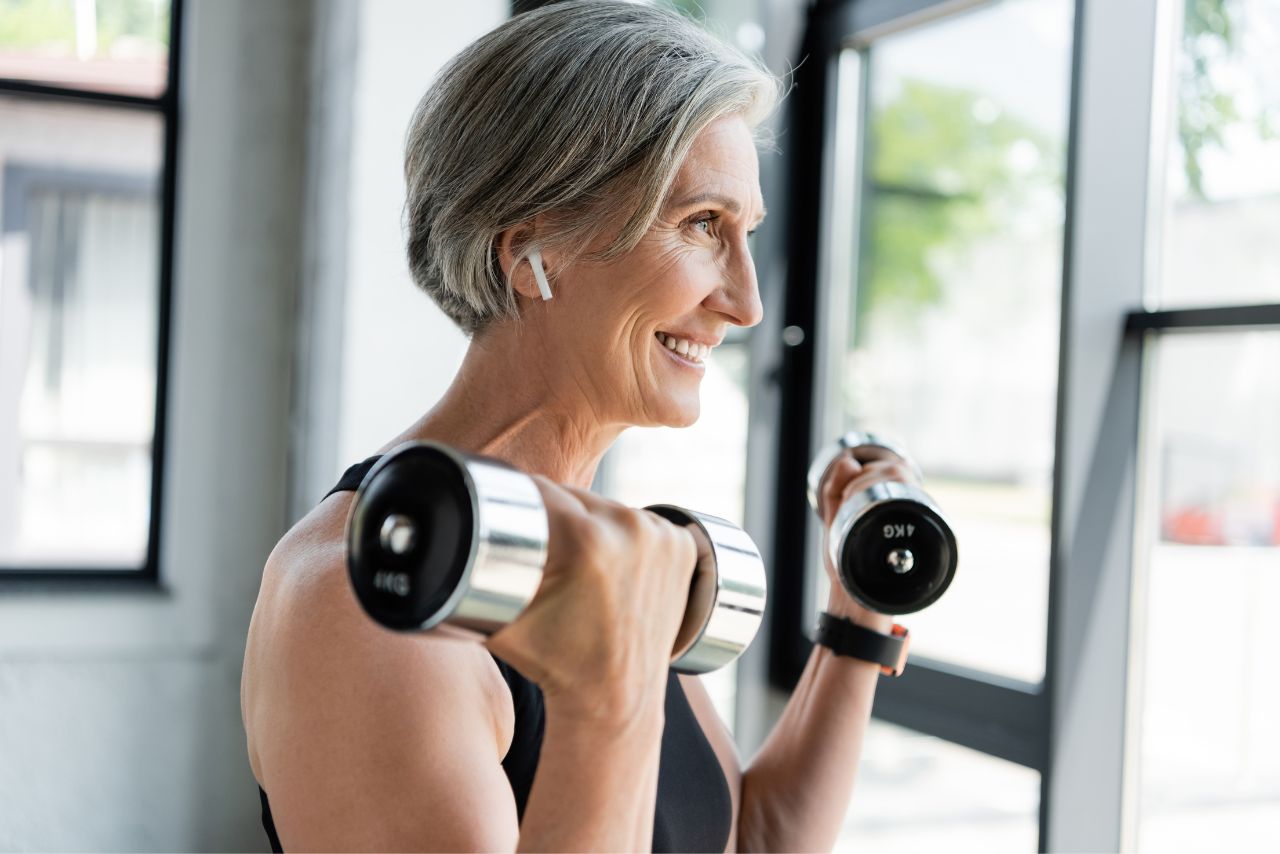
- Bicep Curls: Stand or sit tall with a light dumbbell in each hand, palms facing forward. Curl both dumbbells up toward your shoulders in a slow, controlled motion, then lower slowly. The eccentric phase, the downward return, is particularly valuable for muscle and bone stimulus. Two sets of 12.
- Tricep Overhead Extensions: Hold one dumbbell with both hands overhead. Bend the elbows to lower the dumbbell behind your head, then press back up. This targets the triceps and loads the bones of the upper arm. Two sets of 10.
- Wall Push-Ups: Stand arm’s length from a wall. Place your hands at shoulder height and width. Bend the elbows to lower your chest toward the wall, then press back. This loads the wrist, forearm, and arm bones through a functional pushing pattern. As strength builds, progress to a countertop, then to the floor. Two sets of 10.
- Wrist Curls with a Light Dumbbell: Sit with your forearm resting on your thigh, palm facing up and holding a light dumbbell. Curl the wrist upward slowly, then lower. This is a small movement with a specific purpose: loading the bones of the forearm and wrist. One set of 15 on each side is enough to begin.
Try this follow-along: 4 Best Strength Exercises to Do Regularly in Your 50s
How Do You Get Started with Strength Training for Osteoporosis as a Complete Beginner?
The most common mistake beginners make is trying to do too much too soon. Enthusiasm is wonderful. Overwhelm leads to giving up. We are going to build this slowly, intentionally, and in a way that your body can actually adapt to.
Week 1 to 2: Bodyweight Only
Spend the first two weeks doing all of the lower body and upper back exercises using only your bodyweight. The goal is to learn the movement patterns, build the mind-muscle connection, and let your joints adapt to the new demands. Chair squats, glute bridges, wall push-ups, step-ups, and back extensions are all completely achievable with bodyweight alone.
Week 3 to 4: Introduce Very Light Resistance
Once the movements feel familiar and comfortable, introduce very light resistance. For most beginners this means 0.5kg to 1 kg dumbbells for arm exercises and a light resistance band for rows. This small addition of load is enough to meaningfully increase the bone stimulus without overwhelming the body.
Week 5 and Beyond: Progressive Overload
Every two to four weeks, look for an opportunity to increase the challenge slightly. Add one more repetition. Use a slightly heavier dumbbell. Slow the tempo of each movement. Choose a slightly stronger resistance band. This is progressive overload in practice, and it is the mechanism behind ongoing bone adaptation.
The Ultimate Strength Training Blueprint for Women Over 50 at Fabulous50s provides a detailed guide on choosing weights by muscle group if you want a more structured approach to progression.
What Does a Sample Beginner Strength Training Week Look Like for Osteoporosis?
This is a simple, realistic template for a beginner strength week. Each session is 20 to 30 minutes. You do not need to do this in a gym. A clear space at home, a chair, a resistance band, and one or two light dumbbells is all you need.
- Monday: Lower body strength (chair squats, glute bridges, side leg lifts, step-ups) plus a 15-minute walk
- Tuesday: Rest or gentle walking
- Wednesday: Upper body and back strength (resistance band rows, wall push-ups, shoulder press, bicep curls)
- Thursday: Rest or balance exercises and stretching
- Friday: Full-body session (mix of lower body and upper body exercises from the week)
- Saturday: Longer walk, Tai Chi, or swimming
- Sunday: Rest
As your strength grows over the following weeks and months, you can increase session length, add a third strength session per week, and progressively increase resistance across all exercises.
READ ALSO: 10 Strength Training Rules Women Over 50 Need to Follow for the Best Results
What Are the Most Common Strength Training Mistakes to Avoid with Osteoporosis?
- Starting too heavy: The temptation to grab a heavier weight because something feels easy is understandable, but form always comes before load. A movement done well with light weight does more for bone health than a movement done sloppily with heavy weight.
- Skipping the back and spine: Many beginners focus exclusively on arms and legs and neglect the muscles running along the spine. This is the single biggest gap in most beginner programmes. The spine needs targeted loading too.
- Holding your breath: Bracing is fine, but breath-holding during exertion (a pattern called the Valsalva manoeuvre) can spike blood pressure. Exhale on the effort (the push, the lift, the press) and inhale on the return.
- Ignoring the eccentric phase: The slow, controlled return from each movement (the lowering of a dumbbell, the descent in a squat) is where much of the bone and muscle stimulus happens. Do not rush it.
- Doing too much too soon: More sessions per week does not mean faster bone building. Bones need rest days to respond to training. Stick to two to three sessions per week and let recovery do its work.
- Stopping when it gets hard: The last two to three reps of each set should feel genuinely effortful. If every rep feels effortless, the load is too light to produce a meaningful bone response.
What Equipment Do You Need to Start Strength Training for Osteoporosis at Home?
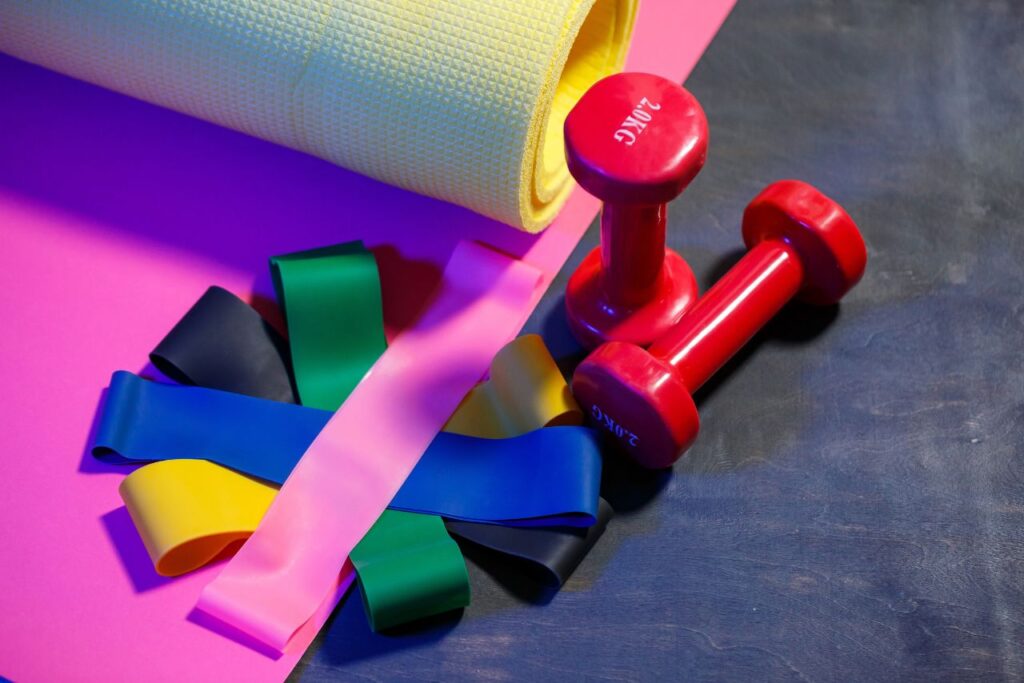
One of the most encouraging things about starting a beginner strength programme for osteoporosis is how accessible it is. You do not need a gym membership, expensive machines, or a dedicated workout space.
- A sturdy chair for chair squats and support during balance-based exercises
- A set of light dumbbells (0.5kg to 2kg to start for arm exercises, 2kg to 4kg for lower body work as you progress). If you do not have dumbbells, soup cans or water bottles work well to begin.
- A resistance band (light or medium tension) for rows and band-assisted exercises
- A mat or folded towel for floor-based exercises like glute bridges and back extensions
- Supportive, flat-soled shoes with good grip for standing exercises
That is genuinely all you need. The investment is minimal. The returns, in terms of bone health, strength, balance, and confidence, are enormous.
Browse free guided workouts on the Fabulous50s YouTube channel, where everything is designed for women over 50 and most sessions require only light dumbbells or bodyweight.
How Long Before Strength Training Improves Bone Density?
This is one of the most important things to understand, because managing expectations is part of staying consistent long enough to see real results.
Bone remodelling is a slow process. Significant changes in bone mineral density, the kind that would show up on a DEXA scan as a measurable improvement, typically take six months to one year of consistent training to become apparent. Studies that demonstrate meaningful bone density gains from resistance training have generally followed participants for this duration or longer.
What happens much sooner, often within four to eight weeks, is improvement in muscle strength, balance, and posture. These early gains matter enormously, because they directly reduce fall risk even before bone density has had time to change.
So the sequence looks like this: in the first one to two months, you feel stronger and more stable. Between three and six months, your balance, posture, and muscle tone show noticeable changes. At six to twelve months, bone density begins to reflect the work you have put in. All of it matters. All of it is cumulative.
EXPLORE MORE: Low-Impact Osteoporosis Exercises for Women Over 50
Explore More Osteoporosis Exercise Guides for Women Over 50
Osteoporosis can feel worrying at first, but the right kind of movement can help you feel stronger, steadier, and more confident in your body again. These guides will help you understand which exercises are safest, how to begin, and how to build a simple routine that supports bone strength, balance, posture, and fall prevention.
Start with the beginner-friendly guides, then explore strength training, low-impact movement, balance exercises, and bone-supporting routines you can add to your week.
Osteoporosis Exercise Guides
Best Osteoporosis Exercises for Beginners Over 50
A gentle starting point for women who are new to osteoporosis exercise or returning to movement after a break. This guide covers walking, resistance training, balance work, and posture exercises.
How to Start Exercising After an Osteoporosis Diagnosis
A reassuring guide for women who have recently been diagnosed and want to know what is safe, what to avoid, and how to begin without fear.
Low-Impact Osteoporosis Exercises for Women Over 50
Perfect for women who want bone-supporting exercises without jumping, jarring movement, or pressure on the joints. It includes walking, Tai Chi, chair-based strength, resistance bands, and water exercise.
Strength Training for Osteoporosis After 50: A Beginner Guide
A simple guide to starting strength training safely at home, using bodyweight, light dumbbells, or resistance bands to support bone density, muscle strength, and confidence.
Balance Exercises for Osteoporosis and Fall Prevention After 50
A practical guide to improving balance, stability, and fall prevention with simple exercises you can do near a chair or wall for support.
Osteoporosis Workout for Strong Bones: The Jump Routine Every Woman Over 50 Should Try
A focused guide on how gentle impact and jumping-style routines may help stimulate bone strength, especially around the hips and spine. This is best for women who have medical clearance and feel confident with higher-impact movement.
Related Bone Health and Fall Prevention Guides
Bone Health and Menopause: Preventing Bone Loss After 50
A helpful background guide on why bone loss accelerates after menopause and what women over 50 can do to protect their bone health.
Why Strength Training Is Essential During Menopause and After 50
A supporting guide that explains how strength training helps protect muscle, metabolism, bone density, and long-term independence after 50.
Best Exercises to Improve Balance and Prevent Falls After 50
A broader fall-prevention guide that supports the osteoporosis cluster by helping women improve stability, confidence, and everyday movement.
Calcium Rich Foods for Women Over 50
A nutrition-focused support article for women who want to strengthen their bones from the inside out with calcium-rich foods.
Final Thoughts
Strength training for osteoporosis is not about becoming an athlete. It is not about heavy weights, gym intimidation, or pushing through pain. It is about sending a simple, consistent message to your bones: we are still here, we are still strong, and we need you to keep rebuilding.
Two sessions a week. A chair, a resistance band, a couple of light dumbbells. Twenty minutes. That is all it takes to start. The women who transform their bone health are not the ones who do something dramatic for two weeks and then stop. They are the ones who show up, twice a week, every week, and keep going.
Start with one exercise from each category in this guide. Do two sets. Rest the next day. Come back and do it again. That is the whole programme in its simplest form, and it is genuinely enough to begin building the stronger bones you deserve.
Frequently Asked Questions
In most cases, yes. Strength training is recommended for osteoporosis because it helps support bone density, muscle strength, and balance. Start light, use proper form, and speak with your doctor or physiotherapist if you have a high fracture risk.
Start lighter than you think. For arm exercises, 0.5kg to 1kg is a good starting point. For lower body exercises, bodyweight may be enough at first. The last few reps should feel challenging, but your form should stay strong.
Strength training is generally safe when done correctly. The risk increases if the weight is too heavy, your form is poor, or you do movements that are unsafe for osteoporosis. Start slowly and get professional guidance if you have severe bone loss or past fractures.
It is better to leave at least one rest day between strength sessions. Two to three non-consecutive days per week is a good starting point.
Progressive overload means slowly increasing the challenge over time. This may mean using a slightly heavier weight, adding more reps, or moving more slowly. Bones respond to gentle, repeated challenge, so progression helps keep them strong.
Sources
1. Wang et al. (2023). Comparative efficacy of different resistance training protocols on bone mineral density in postmenopausal women. Frontiers in Physiology. https://pmc.ncbi.nlm.nih.gov/articles/PMC9941565/
2. Holubiac et al. (2022). Effect of Strength Training Protocol on Bone Mineral Density for Postmenopausal Women with Osteopenia/Osteoporosis. Sensors (MDPI). https://www.ncbi.nlm.nih.gov/pmc/articles/PMC8915025/
3. Layne & Nelson (1999). The effects of progressive resistance training on bone density: a review. PubMed. https://pubmed.ncbi.nlm.nih.gov/9927006/
4. Daly & Giangregorio (2025). Exercise for Postmenopausal Bone Health: Can We Raise the Bar? Current Osteoporosis Reports. Springer Nature. https://link.springer.com/article/10.1007/s11914-025-00912-7
5. Korean Society for Bone and Mineral Research (2023). Exercise Guidelines for Osteoporosis Management and Fall Prevention. https://pmc.ncbi.nlm.nih.gov/articles/PMC10345999/
6. Mayo Clinic. Exercising with Osteoporosis: Stay Active the Safe Way. https://www.mayoclinic.org/diseases-conditions/osteoporosis/in-depth/osteoporosis/art-20044989