
Balance is not only about your feet. It is about the way your whole body works together to keep you steady, upright, and confident. When you step off a curb, turn quickly in the kitchen, reach for something on a shelf, or walk across uneven ground, your core is helping you stay controlled.
Your core includes more than your abdominal muscles. It includes the deep muscles around your spine, pelvis, hips, lower back, and trunk. That is why core exercises for balance are so important after 50. These muscles help your body stay centered while your arms and legs move.
Balance is one of the Five Pillars of the Fabulous50s Longevity Protocol™ at Fabulous50s because balance supports fall prevention, coordination, steadiness, confidence, and nervous system response. The protocol also recognizes that no single type of exercise can meet every need of the midlife female body. Balance works best alongside Strength, Cardio, Mobility, and Power.
Key Takeaways: Core Exercises to Improve Balance
- Core exercises for balance help train the muscles that support posture, stability, and controlled movement.
- Balance after 50 depends on the core, hips, legs, feet, eyes, inner ear, and nervous system working together.
- Simple core moves like seated marches, wall planks, bird dogs, bridges, and standing knee lifts can improve steadiness.
- Core training works best when combined with balance, strength, mobility, and power.
- The Fabulous50s Vitality App helps women over 50 train balance as part of the full Fabulous50s Longevity Protocol™.
Why Does Core Strength Matter for Balance After 50?
Your core acts like the center of your movement. When it is strong and responsive, your body can adjust more easily when your weight shifts. When it is weak or underused, everyday movements can feel less steady because the body has to work harder to stay upright.
Research shows that trunk muscle strength is associated with static balance, dynamic balance, functional performance, and fall-related outcomes in older adults. A systematic review by Granacher and colleagues also found preliminary evidence that core strength training may positively influence balance and functional performance in older adults.
This matters because balance after 50 is not just about standing on one leg. It is about your ability to control your body while moving. We reach, twist, bend, carry bags, climb stairs, turn around, and recover when we wobble. Your core helps coordinate all of those movements.
Schellea’s Balance philosophy reminds us that real life does not happen in one position. Balance training should include side-to-side movement, forward and backward weight shifts, reaching, turning, stepping, and changing direction.
What Are the Best Core Exercises for Balance After 50?
The best core exercises for balance are the ones that train stability without making you feel unsafe. They should teach your body to stay tall, controlled, and centered while your arms or legs move.
For women over 50, the goal is not to do extreme abdominal exercises or push through strain. The goal is to strengthen the muscles that help you stand, walk, turn, reach, and recover with more confidence.
Start near a wall, bench, or sturdy chair. Move slowly, and breathe normally. If you feel dizzy, unsafe, or unusually unsteady, stop and speak with a healthcare professional.
How Do Seated Marches Help Balance?
Seated marches are a simple way to begin training the deep core muscles while keeping your body supported. Sit tall on a chair with both feet flat on the floor. Gently draw your lower belly in as if you are zipping up through the center of your body. Lift one knee a few inches, lower it with control, then repeat on the other side.
This exercise looks simple, but it teaches the core to stabilize the pelvis while the legs move. That is exactly what we need when walking, climbing stairs, and stepping over obstacles.
To make it slightly harder, sit away from the back of the chair and keep your posture tall. Avoid leaning backward or collapsing through the chest. We are training control and not speed.
How Do Standing Knee Lifts Train Balance and Core Control?
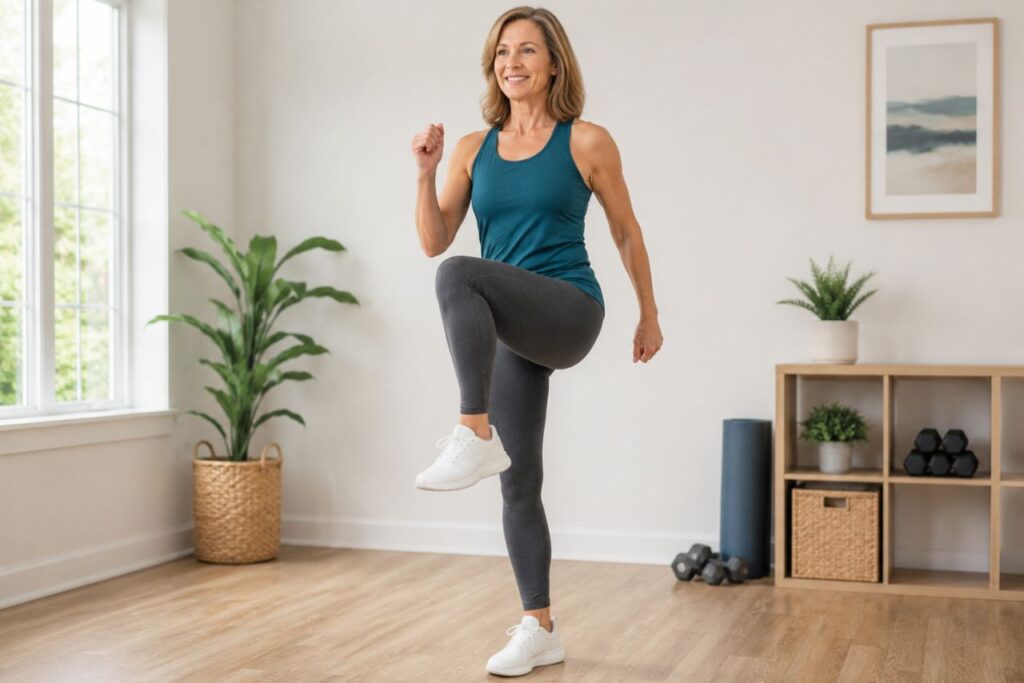
Standing knee lifts are one of the most practical core exercises for balance because they train the body in an upright position. Stand near a chair or wall. Gently brace through your center, then lift one knee to a comfortable height. Lower it slowly and repeat on the other side.
This movement strengthens the hip flexors and core while challenging your ability to stay steady on one leg for a moment. That small moment matters. It teaches your body to control weight shifts, which is one of the key skills we need for balance after 50.
If you feel wobbly, keep one hand on support. As you improve, lightly touch the support instead of gripping it. Over time, your body learns that it can stay upright without panic.
Why Are Wall Planks Safer Than Floor Planks for Beginners?
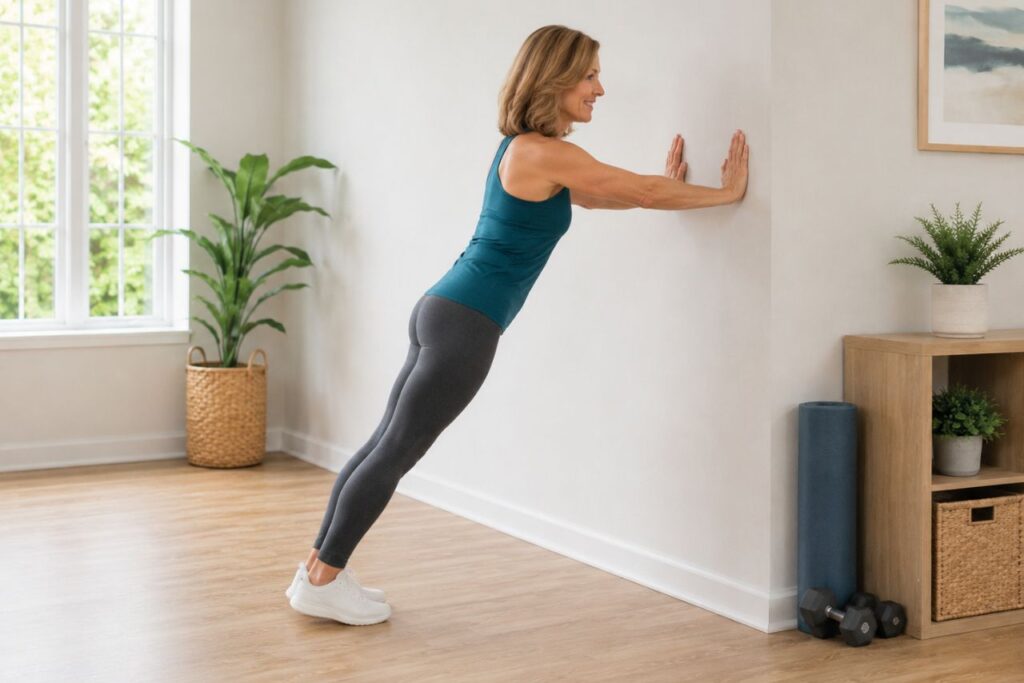
A wall plank is a wonderful beginner-friendly core exercise because it strengthens the trunk without requiring you to get down on the floor. Stand facing a wall and place your hands on the wall at shoulder height. Walk your feet back slightly so your body forms a gentle diagonal line. Keep your ribs, hips, and shoulders aligned, then hold for 10 to 20 seconds while breathing.
This exercise teaches your core to support your spine in a safe, upright position. It also strengthens the shoulders and arms, which helps with posture and everyday movement.
Wall planks are especially useful if traditional floor planks feel too hard on your wrists, shoulders, back, or pelvic floor. You can make the exercise harder by stepping the feet a little farther away from the wall or easier by staying more upright.
How Do Bird Dogs Improve Coordination and Stability?
Bird dogs train the core, back, glutes, shoulders, and nervous system at the same time. Traditionally, this exercise is done on hands and knees, but it can be modified beautifully for women over 50.
For a supported version, stand behind a chair and place both hands on the chair back. Gently brace your core, then extend one leg behind you without arching your back. Hold for a moment, lower with control, and repeat on the other side.
If you are comfortable on the floor, you can do the classic version on hands and knees by reaching one arm forward and the opposite leg back. The important part is to keep the hips level and move slowly.
Bird dogs are effective because they train cross-body coordination. That is important for walking, reaching, turning, and staying steady when life asks the body to move in more than one direction.
How Do Glute Bridges Support Balance?
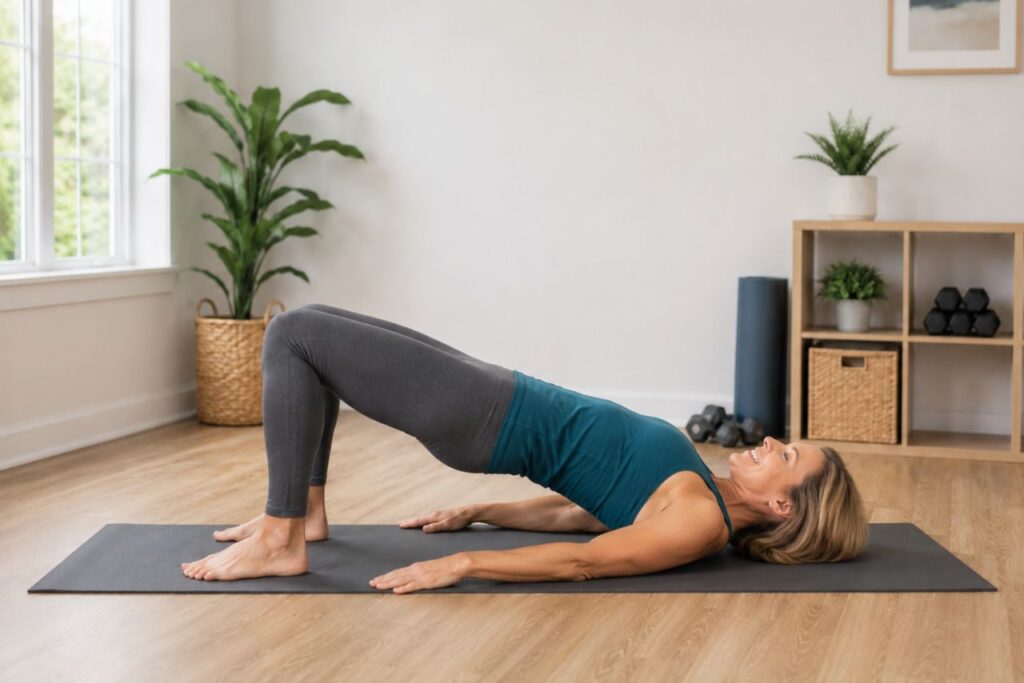
A glute bridge strengthens the back of the body, especially the glutes, hamstrings, lower back, and core. Lie on your back with your knees bent and feet flat on the floor. Gently engage your core, press through your heels, and lift your hips until your body forms a line from shoulders to knees. Lower slowly.
Your glutes are deeply connected to balance. They help control the hips and pelvis, which affects how steady you feel when walking, climbing stairs, or standing on one leg.
If floor work is uncomfortable, you can train the same pattern with a standing hip hinge. Stand behind a chair, soften your knees, gently send your hips back, then return to standing by squeezing your glutes. This is a practical alternative that still trains the hips and core.
How Do Heel Raises With Core Engagement Help Stability?
Heel raises strengthen the calves, ankles, feet, and core. Stand tall near a wall or chair. Gently engage your center, rise onto the balls of your feet, pause, then lower slowly.
This exercise is useful because balance depends heavily on the feet and ankles. Stronger ankles and better foot control help the body make small corrections when you wobble. When you add core engagement, you train the whole body to stay tall and aligned.
Try 8 to 12 slow repetitions. Avoid rushing. The lowering phase is just as important as the lift because it teaches control.
How Do Side Reaches Help Balance?
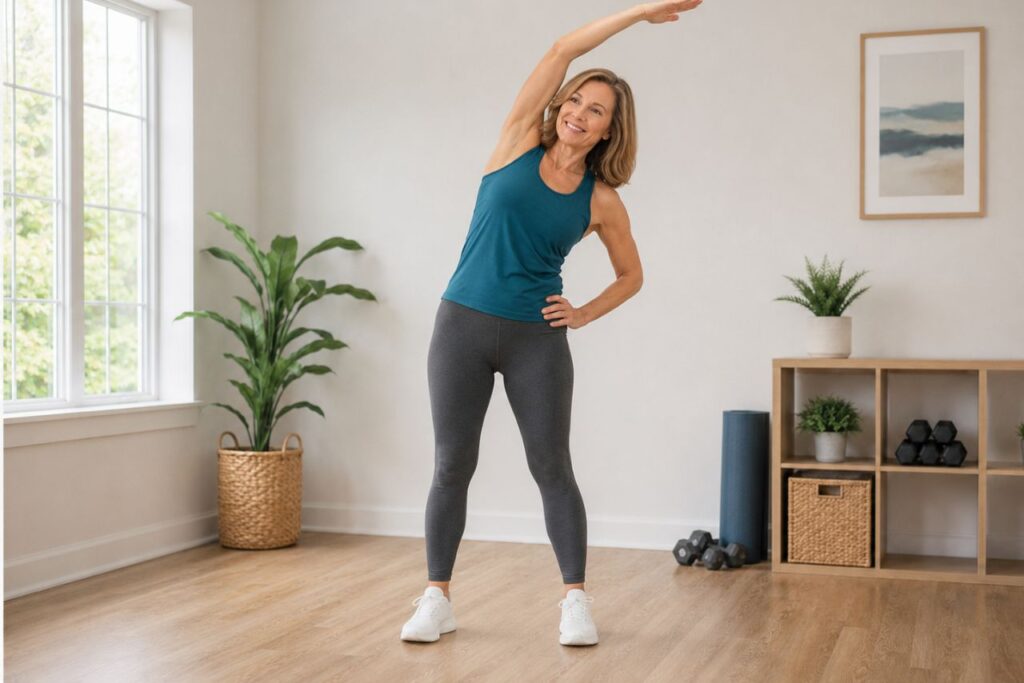
Balance is not only forward and backward. We also need side-to-side control. Standing side reaches help train the obliques, hips, and trunk muscles that support lateral stability.
Stand with feet hip-width apart and one hand near a wall or chair if needed. Reach one arm overhead and gently lean to the side without collapsing. Return to center and repeat on the other side.
The aim is not to stretch as far as possible. It is to control the movement and return to center. This teaches the body to shift, adjust, and recover.
Side control is important because many real-life balance challenges happen sideways. We step around objects, move through tight spaces, turn quickly, and adjust when someone bumps into us. Core exercises for balance should include this kind of side-body control.
How Do Dead Bugs Train the Deep Core?
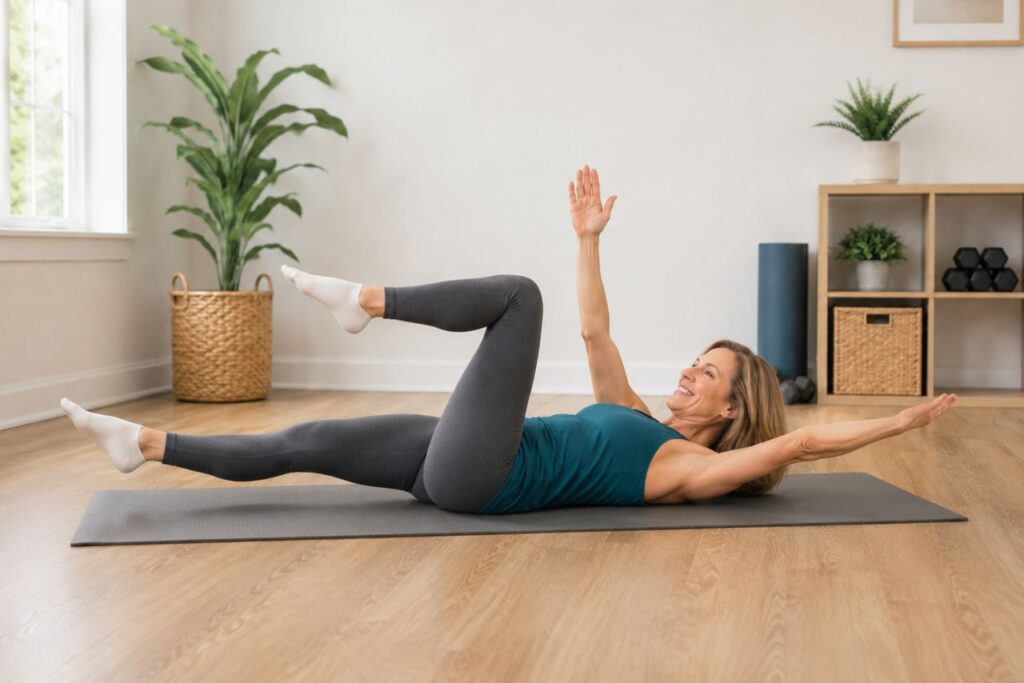
Dead bugs are excellent for the deep core because they teach the trunk to stay stable while the arms and legs move. Lie on your back with your knees bent. Bring one knee up at a time so your hips and knees are at about 90 degrees. Reach your arms toward the ceiling. Slowly lower one heel toward the floor, return, then repeat on the other side.
Keep your lower back comfortable and avoid holding your breath. If this feels too difficult, keep one foot on the floor and move only one leg at a time.
Dead bugs help train the core without excessive strain on the neck or back. They are especially useful for women who want a gentle but effective way to build control.
How Often Should Women Over 50 Do Core Exercises for Balance?
Most women can begin with core exercises for balance 2 to 3 times per week. A short session of 10 to 15 minutes is enough when the exercises are performed slowly and consistently.
Research on fall prevention shows that exercise programs reduce both the rate of falls and the number of people experiencing falls in older adults living in the community. Sherrington and colleagues found high-certainty evidence that exercise helps reduce falls, with balance and functional training being especially important.
That is why core training should not replace balance work. It should support it. A strong core helps you control movement, but you still need to practice balance itself through standing work, weight shifts, stepping patterns, reaching, turning, and changing direction.
READ ALSO: Standing Core Exercises for Women Over 50
Can Core Exercises Replace Balance Training?
Core exercises cannot fully replace balance training. They are an important part of the foundation, but balance also depends on the eyes, inner ear, feet, ankles, hips, reaction time, confidence, and brain-body communication.
A 2025 systematic review and meta-analysis found that core training can improve balance performance in older adults. Still, the strongest approach is a well-rounded program that includes balance-specific practice, strength, mobility, and functional movement.
This is exactly why the Fabulous50s Longevity Protocol™ brings the pillars together. Strength helps support the joints and muscles. Mobility helps the body move comfortably. Power helps us react quickly. Balance trains steadiness and recovery. Core training supports all of those pieces.
What Is a Simple Beginner Routine?
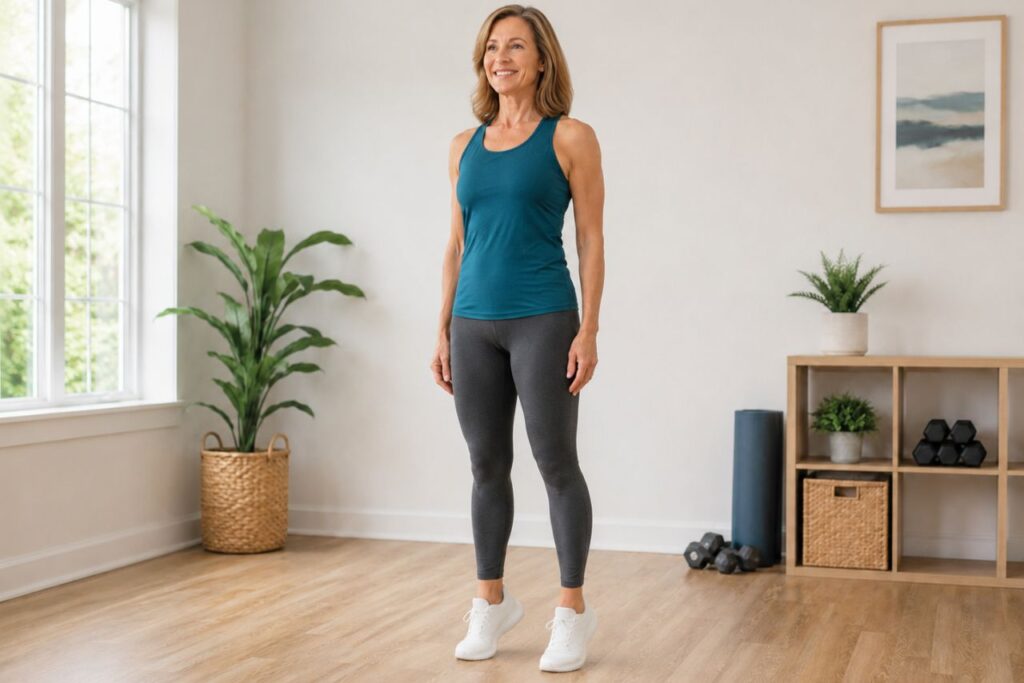
A simple beginner routine could include seated marches, wall planks, standing knee lifts, supported bird dogs, heel raises, side reaches, and glute bridges or standing hip hinges. Move slowly, use support when needed, and aim for 8 to 12 controlled repetitions of each exercise.
This kind of routine should leave you feeling more connected to your body. The best sign that you are working at the right level is that the movements feel challenging but safe.
Progress can come from holding a position a little longer, using lighter support, moving more slowly, or adding one extra repetition. Small progress counts.
What Should Women Over 50 Avoid When Training the Core?
Avoid rushing, holding your breath, straining through the neck, gripping the jaw, or forcing exercises that create pain. If an exercise causes dizziness, pressure, sharp pain, or pelvic floor symptoms, stop and modify.
Some women may need to avoid traditional crunches, high-pressure abdominal exercises, or fast twisting movements, especially if they have back pain, osteoporosis, prolapse symptoms, pelvic floor concerns, or recent surgery. This does not mean core training is off limits. It simply means the exercise needs to meet your body where it is.
The Fabulous50s approach is always to start safely and progress gradually. Modifications are not a lesser version. They are the right starting point.
Final Thoughts
Core strength is one of the quiet foundations of balance after 50. When your core is strong and responsive, your body has a better chance of staying controlled when you reach, turn, step, carry, bend, or recover from a wobble.
The best core exercises for balance are simple, controlled, and consistent. Seated marches, wall planks, standing knee lifts, bird dogs, glute bridges, heel raises, side reaches, and dead bugs all help train the body to stay centered while movement happens around it.
Balance is not about never wobbling. It is about teaching your body how to find its center again. Every time you practice, you are giving your nervous system another chance to learn, adapt, and trust movement.
Inside the Fabulous50s Vitality App, you can follow guided workouts that train Balance alongside Strength, Cardio, Mobility, and Power. The app brings the Fabulous50s Longevity Protocol™ into a simple weekly structure so you can build steadiness, confidence, and strength with support designed specifically for women over 50.
Frequently Asked Questions
What Are the Best Core Exercises for Balance After 50?
The best core exercises for balance after 50 include seated marches, standing knee lifts, wall planks, supported bird dogs, glute bridges, heel raises, side reaches, and dead bugs. These exercises train the core to stay steady while the arms and legs move.
Can a Weak Core Affect Balance?
Yes, a weak core can affect balance because the trunk helps control posture, weight shifts, and movement. When the core is not strong or responsive, the body may feel less stable during walking, reaching, turning, or standing on one leg.
How Often Should I Do Core Exercises for Balance?
Most women over 50 can practise core exercises for balance 2 to 3 times per week. Short, consistent sessions are often more effective than occasional long workouts.
Are Floor Core Exercises Necessary?
No, floor exercises are not necessary. Many effective core exercises can be done seated or standing, including seated marches, wall planks, standing knee lifts, heel raises, and supported bird dogs.
Do Core Exercises Prevent Falls?
Core exercises can support fall prevention by improving trunk control, posture, and stability. However, they work best when combined with balance training, strength training, mobility, and functional movement.
Should I Do Core Exercises If I Have Back Pain?
If you have back pain, start gently and choose supported exercises. Avoid movements that increase pain, and speak with a healthcare professional if your pain is persistent, severe, or linked to other symptoms.
Zhong, Y., et al. “Effects of Core Training on Balance Performance in Older Adults: A Systematic Review and Meta-analysis.” Frontiers in Public Health, 2025. https://pmc.ncbi.nlm.nih.gov/articles/PMC12548199/
Granacher, U., et al. “The Importance of Trunk Muscle Strength for Balance, Functional Performance, and Fall Prevention in Seniors: A Systematic Review.” Sports Medicine, 2013. https://pubmed.ncbi.nlm.nih.gov/23568373/
Suri, P., et al. “Trunk Muscle Attributes Are Associated With Balance and Mobility in Older Adults: A Pilot Study.” PM&R, 2009. https://pmc.ncbi.nlm.nih.gov/articles/PMC2964353/
Arnold, C., et al. “The Effect of Adding Core Stability Training to a Standard Balance Exercise Program on Sit to Stand Performance in Older Adults: A Pilot Study.” Journal of Aging and Physical Activity, 2015. https://pubmed.ncbi.nlm.nih.gov/24451365/
Sherrington, C., et al. “Exercise for Preventing Falls in Older People Living in the Community.” Cochrane Database of Systematic Reviews, 2019. https://pubmed.ncbi.nlm.nih.gov/30703272/