

Feeling unsteady after 50 can be unsettling. You may notice it when you step off a curb, turn around quickly, walk on uneven ground, climb stairs, or stand on one leg to put on your shoes. It can make you move more cautiously, and over time, that caution can affect your confidence.
The reassuring part is that balance is trainable. You can become steadier on your feet by practicing the skills your body uses every day: shifting weight, stepping in different directions, strengthening your legs and core, improving posture, and teaching your nervous system how to respond when you wobble.
Balance is one of the Five Pillars of the Fabulous50s Longevity Protocol™ because it supports fall prevention, coordination, steadiness, confidence, and nervous system response. Balance is not about never wobbling. It is about knowing how to recover when life moves you off-center.
Key Takeaways: How to Feel Steadier on Your Feet
- Feeling steadier on your feet after 50 comes from training balance, strength, posture, mobility, and reaction time.
- Balance is a skill, which means it can improve with regular practice. Short, supported balance exercises can help you build confidence safely.
- Research shows balance and functional exercises can reduce falls in older adults.
- The Fabulous50s Vitality App helps women practice balance as part of the Fabulous50s Longevity Protocol™.
- Regular practice keeps your hips and legs mobile, helping you maintain strength, confidence, and freedom in daily life
Why Do We Feel Less Steady After 50?
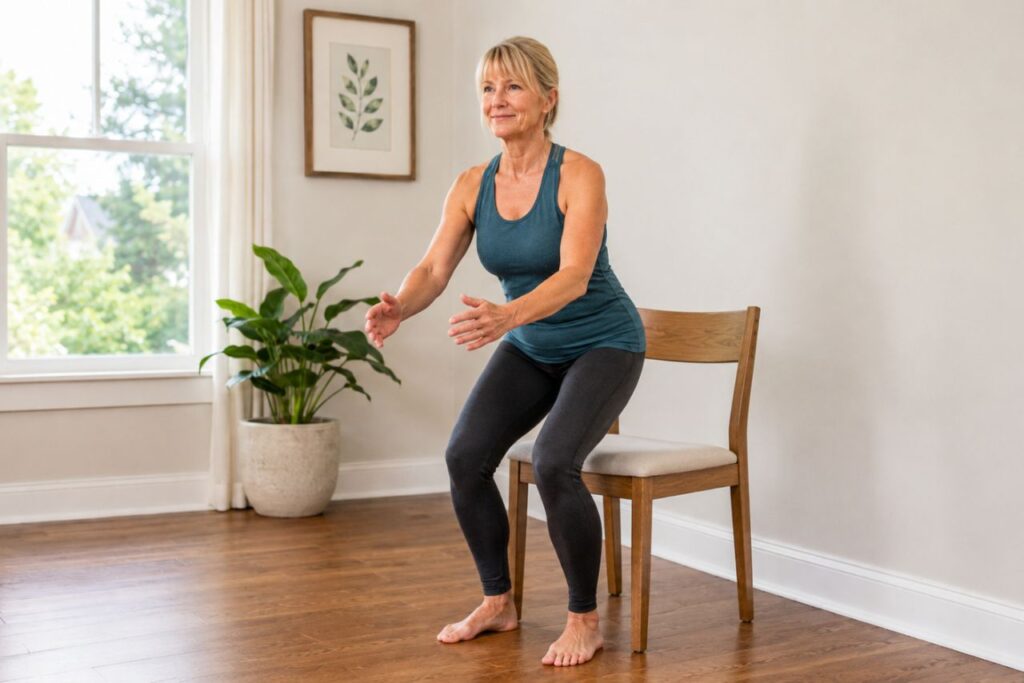
Balance depends on several systems working together. Your eyes help you understand where you are in space. Your inner ear helps with motion and orientation. Your feet, ankles, hips, joints, muscles, and nervous system send messages to the brain so your body can adjust.
After 50, some of these systems may become less responsive. Muscle loss, reduced ankle strength, stiff hips, weaker glutes, slower reaction time, changes in vision, foot issues, medication side effects, and reduced daily movement can all affect steadiness.
This is why becoming steadier on your feet is not only about standing on one leg. We need to train the whole system that keeps us upright.
What Does Research Say About Balance Training?
Research supports balance and functional training for fall prevention. A large Cochrane review found that exercise programs mainly involving balance and functional exercises reduced the rate of falls in older people living in the community by about 24%. Programs that combined balance and functional training with other types of exercise, often resistance training, also reduced falls.
The World Guidelines for Falls Prevention recommend balance-challenging and functional exercises, such as sit-to-stand and stepping exercises, three or more times per week, progressed over at least 12 weeks for better results.
For women over 50, this means small, consistent balance practice is one of the most practical things we can do to protect confidence and independence.
Which Exercises Help You Feel Steadier on Your Feet?
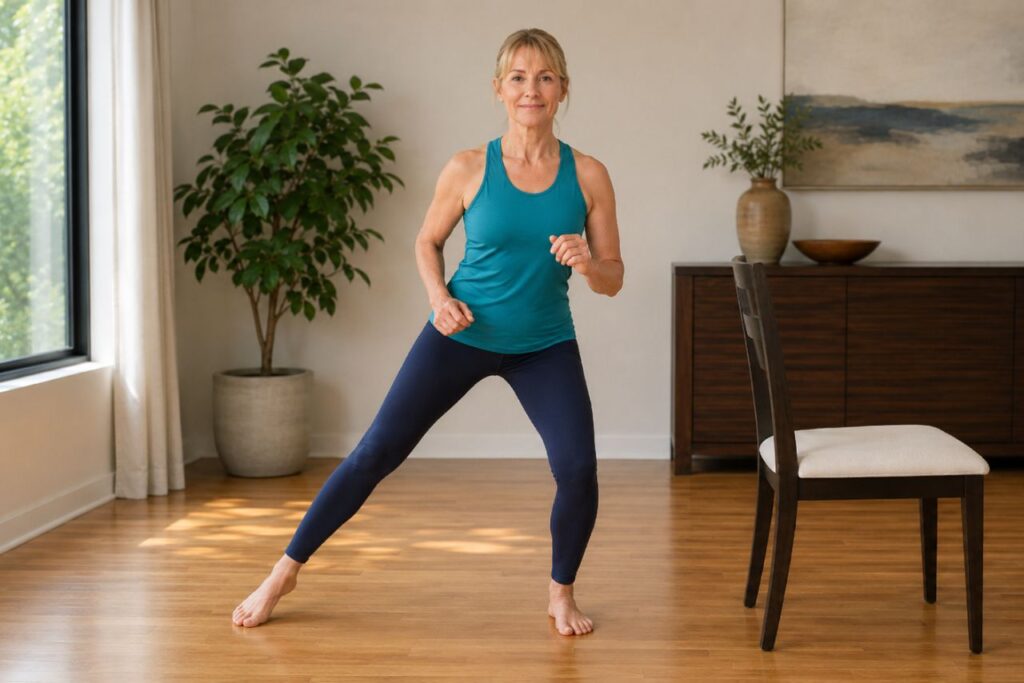
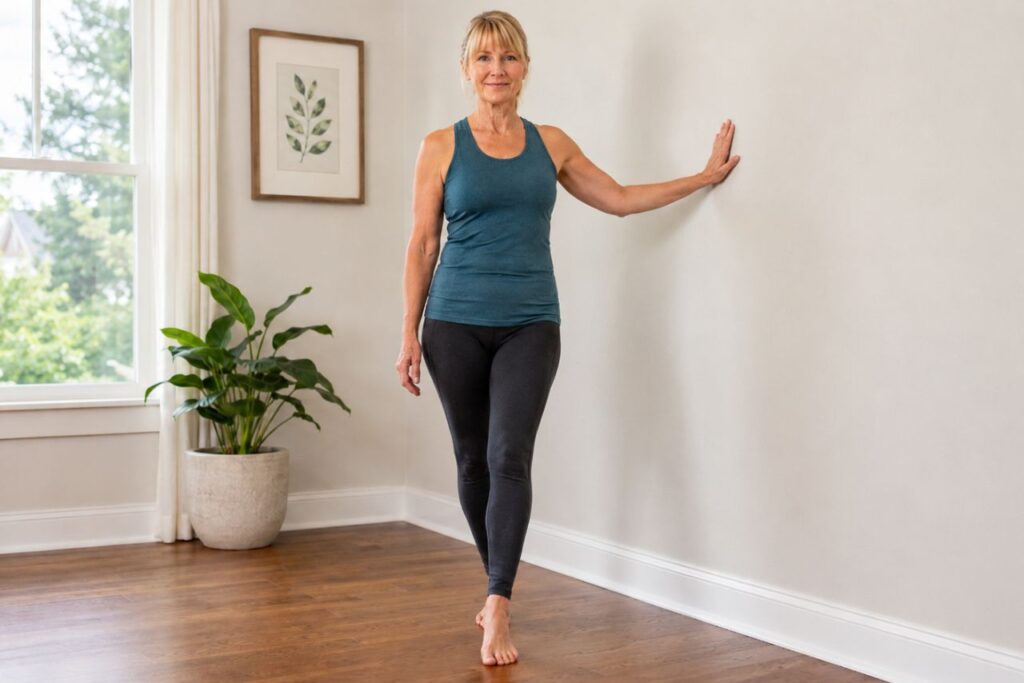
Start with supported exercises. Use a wall, kitchen counter, or sturdy chair so your body feels safe while it learns.
Weight Shifts: Stand with feet hip-width apart and gently shift your weight from side to side, then forward and backward. Keep the movement slow and controlled.
Supported Single-Leg Stand: Hold a chair or wall, lift one foot slightly, and hold for a few seconds. Switch sides. This trains ankle, hip, and core control.
Heel-to-Toe Stand: Place one foot directly in front of the other as if standing on a line. Hold support if needed. This challenges narrow-base balance.
Side Steps: Step to the side, bring the other foot in, then repeat. Side-to-side control is important because many real-life wobbles happen laterally.
Sit-to-Stand: Stand up from a chair and sit back down slowly. This builds leg strength and control for one of the most important daily movements.
These simple exercises help you become steadier on your feet because they train the body in positions you actually use in daily life.
How Can Strength Training Improve Steadiness?
Balance improves when the muscles that support you become stronger. Your glutes, thighs, calves, feet, ankles, core, and back all help you stay upright.
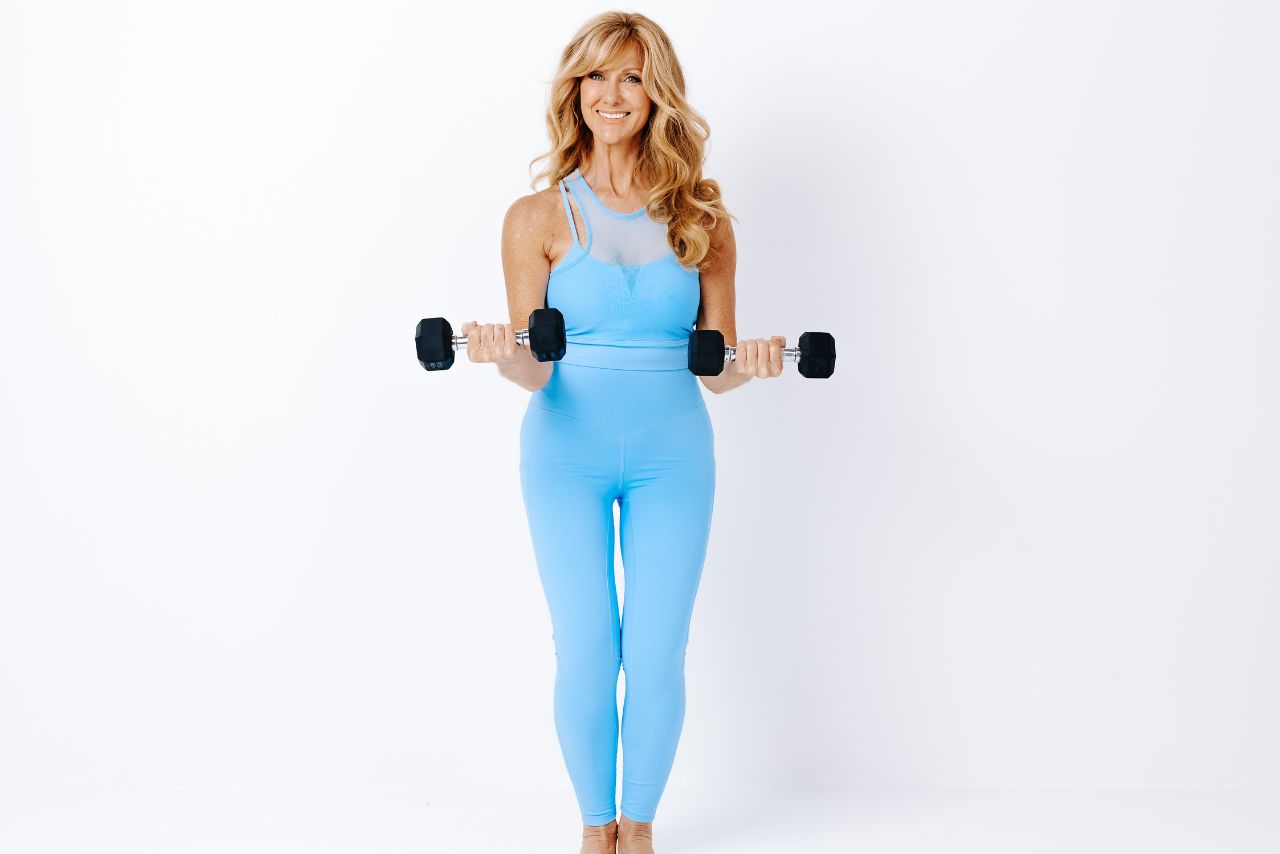
Strength exercises like sit-to-stands, heel raises, step-ups, wall push-ups, glute bridges, and supported squats can improve the foundation your balance depends on. You do not need heavy weights to begin. Bodyweight, light dumbbells, resistance bands, or chair-supported exercises can all help.
This is why the Fabulous50s Longevity Protocol™ does not treat Balance as a separate island. Balance works with Strength, Mobility, Cardio, and Power. Stronger legs help you walk and climb. Better mobility helps your joints respond. Power helps you react quickly. Balance helps you stay steady through it all.
READ ALSO: Fast Sit-to-Stands: A Simple Power Exercise After 50
What Daily Habits Make Balance Better?
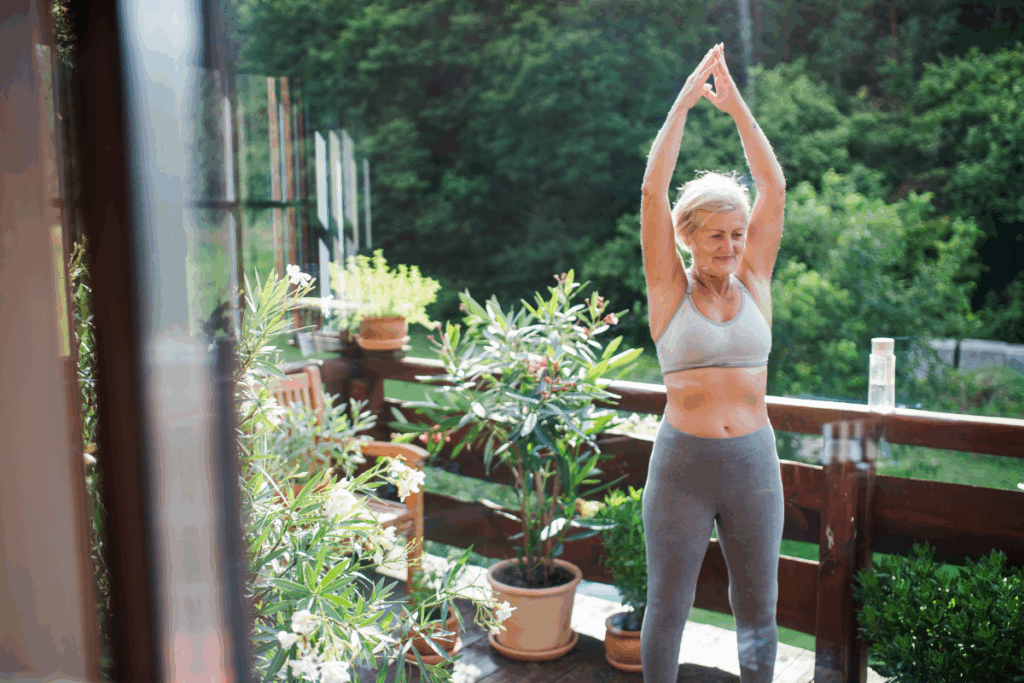
A few small daily habits can help you feel steadier on your feet without adding another long workout to your day.
Stand tall when you brush your teeth and gently shift your weight from one foot to the other. Practice standing up from a chair without using your hands if it feels safe. Walk a little more slowly when turning corners so your body learns control. Use stairs mindfully when available and safe. Notice your posture when walking, especially whether your chest is open, your steps are confident, and your eyes are looking forward rather than down.
Your body improves through repetition. The more often you give it safe balance signals, the more familiar steadiness begins to feel.
READ ALSO: Try This Balance Exercise and See How You Go! #shorts
Which Fabulous50s Balance Workouts Can Help?
These Fabulous50s workouts are useful starting points if you want guided practice. Keep support nearby, choose the safest version for your body, and stop if you feel dizzy, unsafe, or unwell.
Master Your Balance at 50+ With This Quick Standing Workout
A gentle 7-minute balance workout for women over 50 who feel unsteady, stiff, or worried about falling.
10 Minute Balance Workout Over 50
A short balance workout designed to help you stay steady on your feet.
9-Minute Balance Workout: Improve Stability & Prevent Falls
A beginner-friendly balance session for women over 50 who want to improve stability.
Fabulous50s Balance Workouts Playlist
A full playlist of balance workouts for women over 50.
How Often Should You Practice?
If you want to feel steadier on your feet, start with 5 to 10 minutes of balance practice two or three times per week. Once that feels comfortable, add short daily moments, such as a supported single-leg stand, a few weight shifts, or slow heel raises.
Progress should feel safe. You might hold a position longer, use lighter support, move more slowly, or add a gentle reach. You do not need to make balance work dramatically.
Small, repeated challenges are enough to teach your body.
READ ALSO: Chair Balance Exercises for Women Over 50
When Should You Get Medical Guidance?
Speak with a healthcare professional if your balance changes suddenly, if you feel dizzy, if you have had recent falls, or if you have symptoms such as numbness, weakness, vision changes, vertigo, severe pain, or unexplained unsteadiness.
You should also get guidance if you have osteoporosis, recent surgery, neurological symptoms, uncontrolled blood pressure, or a medical condition that affects safe movement. Balance training should help you feel more confident, not more at risk.
Final Thoughts
You can feel steadier on your feet after 50. Balance responds to practice, strength, posture, mobility, and repetition.
Start safely. Use support. Practice simple movements often. Celebrate the small wins, like standing a little longer, wobbling less, turning with more control, or walking with more confidence.
Inside the Fabulous50s Vitality App, you can follow guided workouts that train Balance alongside Strength, Cardio, Mobility, and Power. It brings the Fabulous50s Longevity Protocol™ into a simple weekly structure so you can keep building steadiness, confidence, and independence one workout at a time.
Frequently Asked Questions
Yes. Balance can improve after 50 with regular practice because the brain and body continue to adapt when they are challenged safely.
Unsteadiness can come from weaker muscles, stiff joints, poor vision, foot problems, slower reaction time, medication effects, inner ear issues, or reduced movement. Sudden or severe changes should be checked by a healthcare professional.
Supported single-leg standing, weight shifts, heel-to-toe standing, side steps, and sit-to-stands are good starting exercises.
Two to three times per week is a good foundation. Short daily practice can also help if the exercises feel safe.
Yes. A chair, wall, or bench is helpful, especially when starting. Support allows you to practice safely while your balance improves.
Yes. Stronger legs, glutes, calves, ankles, and core muscles help the body stay steady during walking, stairs, turns, and daily movement.
Seek medical advice if poor balance comes on suddenly, causes falls, includes dizziness or weakness, or feels very different from your usual movement.
Sherrington, C., et al. “Exercise for Preventing Falls in Older People Living in the Community.” Cochrane Database of Systematic Reviews, 2019. https://pubmed.ncbi.nlm.nih.gov/31792067/
Montero-Odasso, M., et al. “World Guidelines for Falls Prevention and Management for Older Adults: A Global Initiative.” Age and Ageing, 2022. https://academic.oup.com/ageing/article/51/9/afac205/6730755