
You stand up from a chair dozens of times a day. You rarely think about it until one day it feels harder. That everyday moment is exactly why fast sit-to-stands matter so much after 50.
This one simple movement trains power, the ability to produce force quickly. It needs only a sturdy chair. No jumping, no equipment, and no gym membership required.
Physiotherapists even use a timed version to gauge fall risk and healthy aging. So this chair exercise is far more powerful than it looks. Let me show you how to do it well.
Key Takeaways: Fast Sit-to-Stands Power Exercise
- Fast sit-to-stands are the simplest power exercise you can do after 50.
- The move trains leg power, the force that helps you rise, walk, and climb stairs.
- The rule is simple. Stand up quickly with energy, then sit down slowly.
- You need only a sturdy chair. There is no jumping and no impact.
- Doctors use a timed sit-to-stand test to measure fall risk and healthy aging.
- Start with a few repetitions, then build gradually as you feel stronger.
- The Fabulous50s Vitality App guides your form and progression step by step.
Why Are Fast Sit-to-Stands So Good After 50?
The magic is in how closely this move copies real life. Every time you rise from a chair, a toilet, or a car seat, you perform a sit-to-stand. Training it makes daily life easier.
Doing it quickly is what turns it into power. Research shows that adding speed to the rise trains your fast-twitch fibers. Those fibers fade first after 50, and menopause speeds up the loss.
There is also a fascinating link to longevity. A timed sit-to-stand test is one of the strongest simple predictors of fall risk and how well you are aging. Practicing fast sit-to-stands trains the very thing that the test measures.
READ ALSO: A Guide to Power Training for Women Over 50
How Do You Do Fast Sit-to-Stands Correctly?
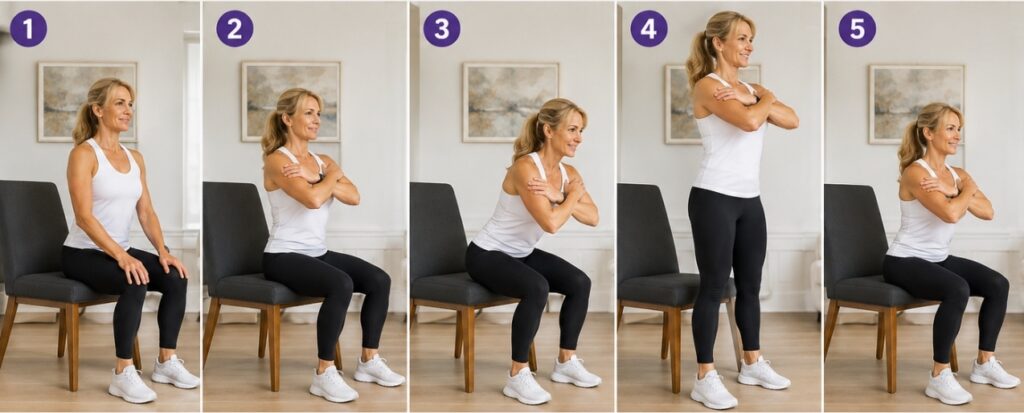
Good form keeps this move safe and effective. Set a sturdy chair against a wall so it cannot slide. Keep a countertop nearby in case you want extra support.
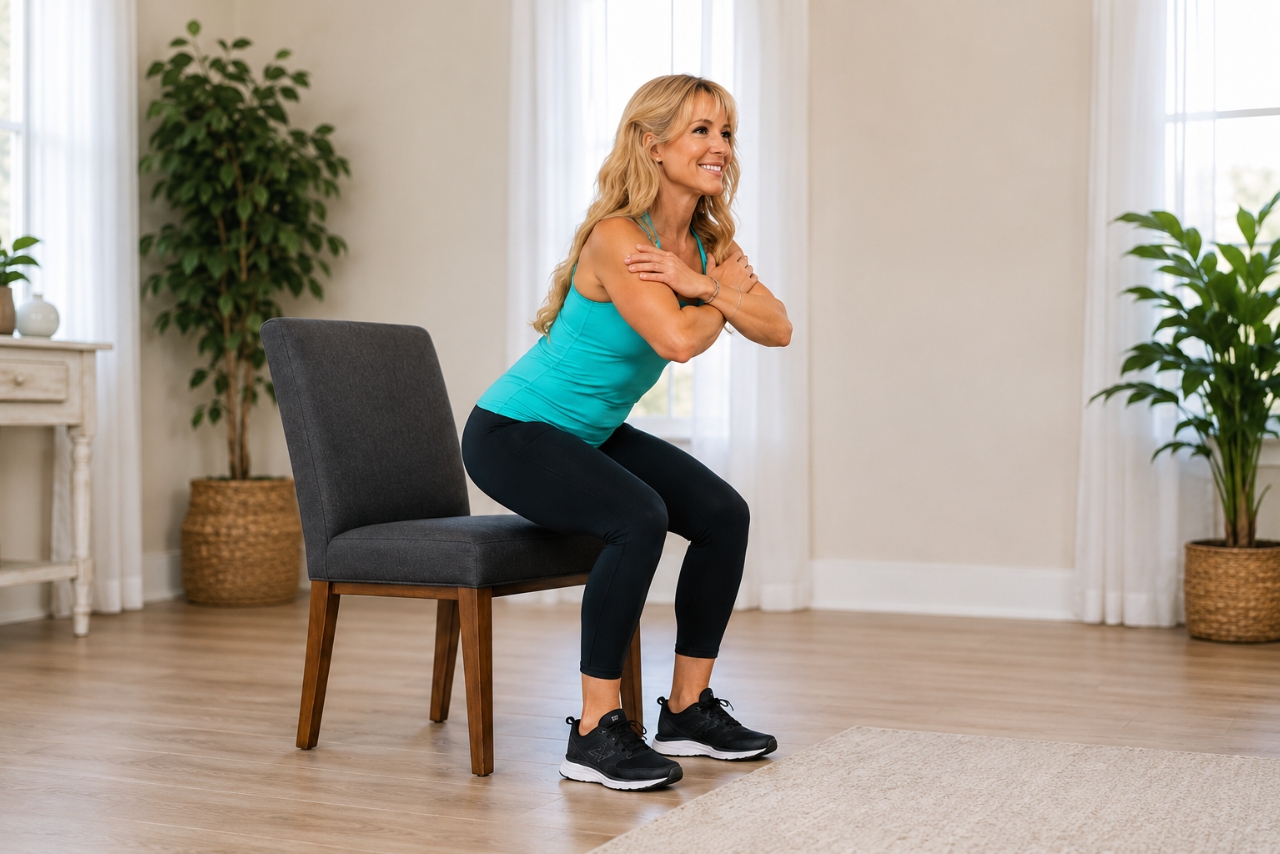
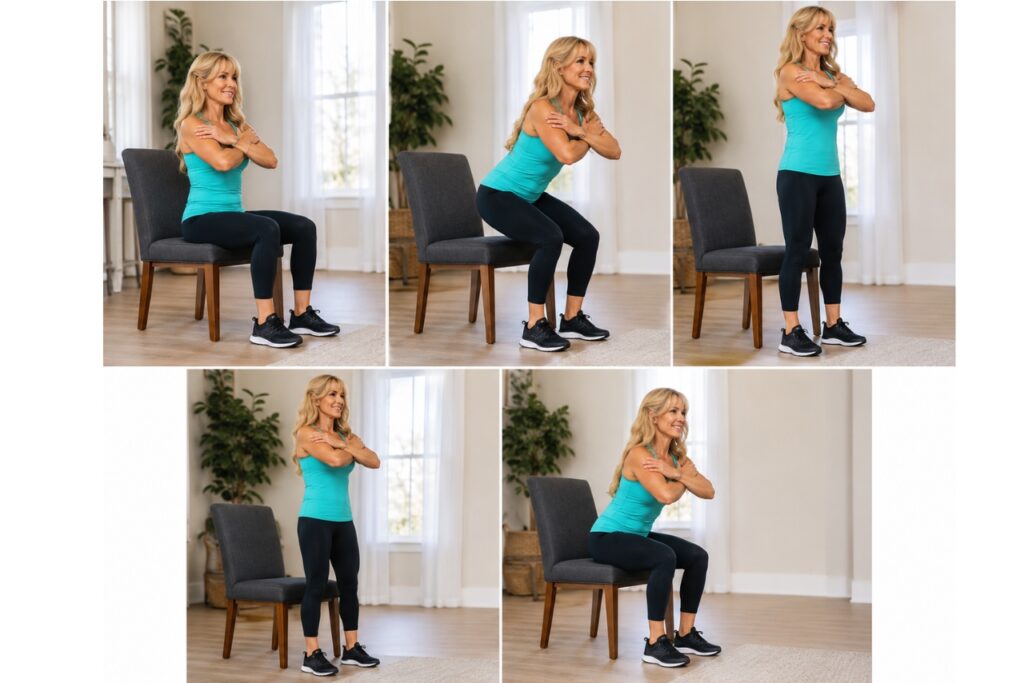
- Sit tall at the front of the chair, feet flat and hip-width apart.
- Cross your arms over your chest, or rest them lightly at your sides.
- Lean your chest slightly forward, bringing your nose over your toes.
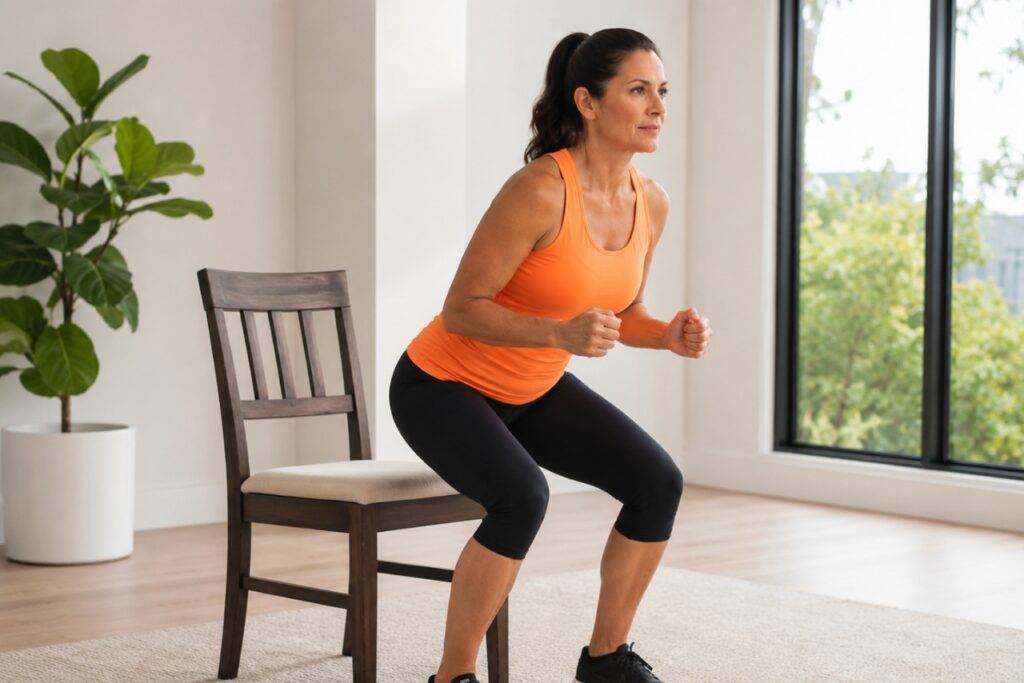
- Press through your heels and stand up quickly with energy.
- Lower yourself back down slowly and with control.
- Repeat 6 to 8 times, resting whenever you need to.
The golden rule: Stand up quickly and sit down slowly. That contrast is what trains power safely.
READ ALSO: Power Training: The New Science Behind Longevity and Fall Prevention
What Are the Common Mistakes to Avoid?
A few small adjustments make a big difference. Watch out for these gentle missteps:
- Pushing off with your hands. Use your legs, not your arms, once you feel steady enough.
- Rushing the way down. The lower should be slow and controlled, never a drop.
- Standing with locked knees. Keep a soft, easy posture at the top of the movement.
- Holding your breath. Breathe out as you rise and breathe in as you lower.
If standing without your hands feels too hard, that is completely fine. Use a higher chair or a cushion to raise the seat. Confidence comes first, and capability follows.
READ ALSO: Why You Need Strength and Power Training in Your Routine Over 50
How Do You Make the Exercise Harder Over Time?
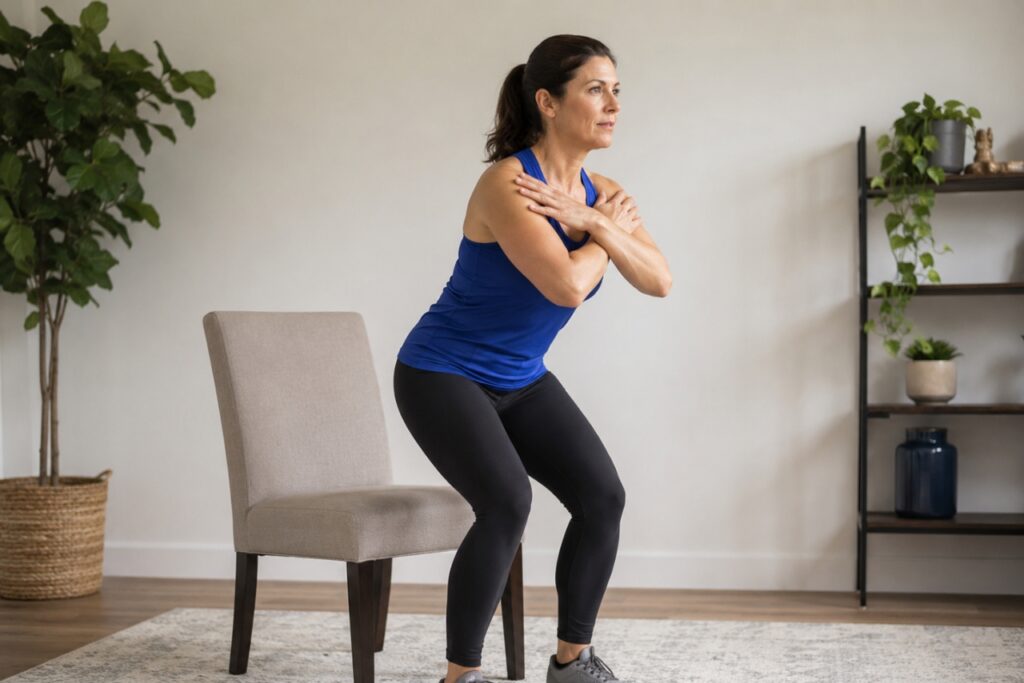
Once fast sit-to-stands feel easy, you can gently raise the challenge. Progress slowly, and only when the current level feels steady and comfortable.
- Lower the seat. Remove the cushion, or use a slightly lower chair.
- Add repetitions. Build from 6 up toward 10 or 12 in small steps.
- Hold light weights. Rise while holding water bottles or small dumbbells at your sides.
- Add a pause. Hover just above the seat for a moment before rising again.
READ ALSO: Leg Strengthening Exercises for Women Over 50 To Reduce Falls
How Often Should You Practice?
Short and frequent works best. Aim for a few minutes, three or four days a week. Consistency matters far more than long, tiring sessions.
A handful of quality repetitions each time is plenty to begin. If you would rather start seated, gentle chair work builds the same foundation. See Chair Exercises for Seniors for a full routine.
More Power Training Resources
- Power Training: The New Science Behind Longevity and Fall Prevention for Women Over 50
- A Guide to Power Training for Women Over 50
- Why You Need Strength and Power Training in Your Routine Over 50
- Strength Isn’t Enough: Why Women Over 50 Need Power Training Too
- How to Start Power Training Without Jumping
- How Power Training Helps You Stay Independent
- Is Power Exercise Safe After 50?
- Power Exercises That Help With Stairs, Trips, And Balance
- Beginner Power Exercises for Women Over 50
- Power Training vs. Strength Training: What’s the Difference?
- Strength Isn’t Enough: Why Women Over 50 Need Power Training Too
- Why You Need Strength and Power Training in Your Routine Over 50
- Power vs Strength: What Women Over 50 Need to Know
Final Thoughts
It is easy to overlook the simplest movements. Yet fast sit-to-stands may be the single most useful power exercise after 50. One chair, a little speed, and steady practice.
Try just six of them today. Rise with energy, lower with control, and notice how it feels. Build confidence first, and your future self will thank you for beginning.
Frequently Asked Questions
Yes, they are one of the safest power moves available. There is no jumping and no impact. Start with a higher chair or use your hands for support, then progress gently as you grow stronger.
A sit-to-stand uses a chair for guidance and support, which makes it gentler and easier to control. It trains the same leg muscles as a squat in a more accessible and confident way.
Rise with a little more speed and energy than usual, but never rush or strain. The quick effort trains power. Always lower yourself back down slowly and with full control.
Gentle sit-to-stands are often knee-friendly, but listen to your body. Use a higher seat to reduce the depth, and stop if you feel sharp pain. Check with your doctor if pain persists.
Many women feel steadier within a few weeks. Rising from chairs and climbing stairs often start to feel easier. Small, regular practice creates real and lasting change.
Power Training for Older Adults (2110 Fitness) https://www.2110fitness.com/post/power-training-for-older-adults
Fall Prevention: Balance and Strength Exercises for Older Adults (Johns Hopkins Medicine) https://www.hopkinsmedicine.org/health/wellness-and-prevention/fall-prevention-exercises
Sit-to-Stand Training for Older Adults (SB Physio) https://www.sbphysio.com/blog/how-to-improve-your-sit-to-stand-strength
Skeletal Muscle Power: A Critical Determinant of Physical Functioning in Older Adults (PMC) https://pmc.ncbi.nlm.nih.gov/articles/PMC3245773/
Sit to Stand Exercise for Older Adults (More Life Health) https://morelifehealth.com/sittostand