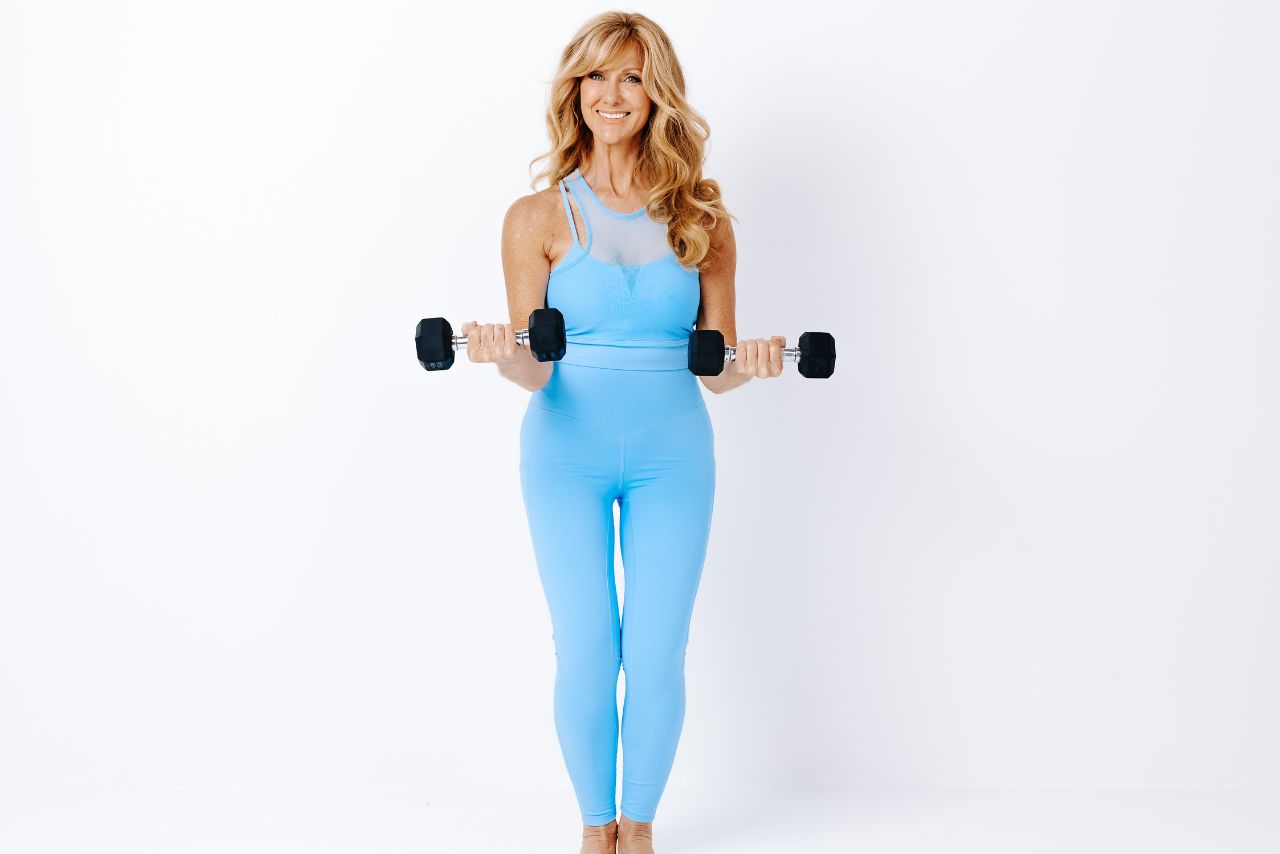

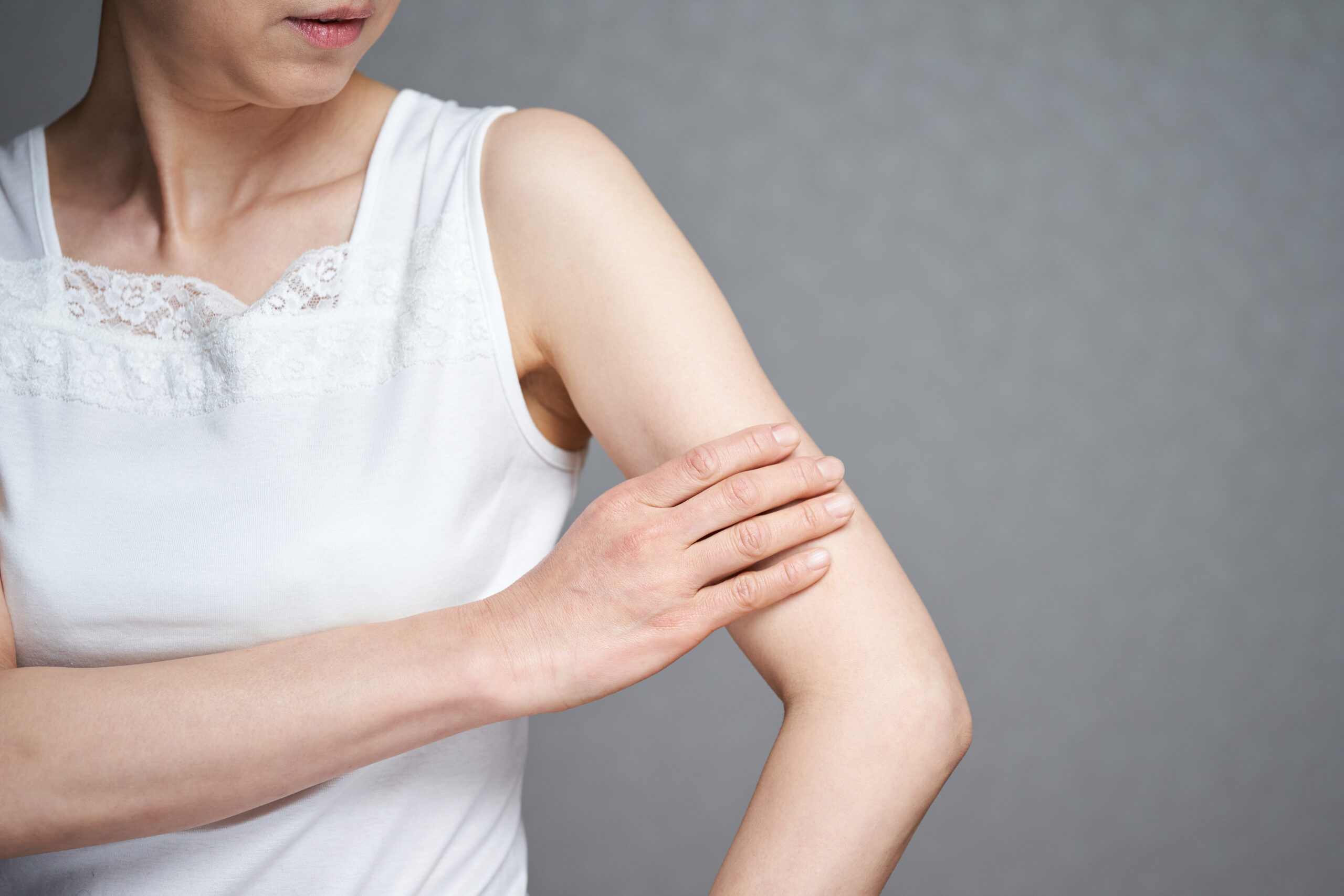
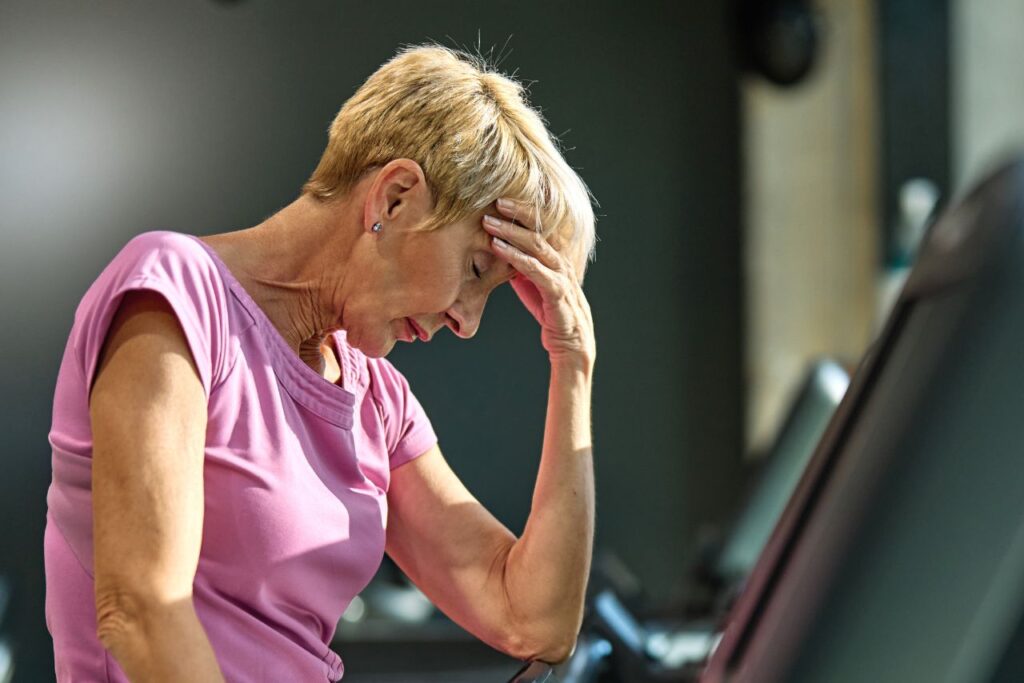
Muscle loss rarely announces itself in one dramatic moment. It may begin when we press our hands into the arms of a chair to stand. We start asking someone else to lift the suitcase. A flight of stairs feels steeper than it used to, or getting up from the floor takes more planning.
These can be signs you are losing muscle after 50, even when your weight has barely changed and you cannot see a major difference in the mirror.
I saw this happen with my mum as she grew older and became unwell. She had always been active. She practiced yoga, walked regularly and swam in the ocean, but strength training had never been part of her routine. As she became frailer, getting out of a chair became difficult, and the muscle that had supported her body for decades gradually disappeared.
At the time, we did not call it muscle loss. We simply noticed that she looked smaller and less steady.
That experience changed the way I think about strength. Today, I do not train to be skinny. I train to stay capable. I want to continue carrying my own luggage, getting up from the floor and doing the things that allow me to live independently for decades to come.
Key Takeaways: Signs You Are Losing Muscle
- Strength equals confidence, freedom and independence.
- Muscles should be connected to real-life abilities, such as carrying luggage, rising from the floor, climbing stairs and travelling independently.
- Every woman can begin where she is, including with chair exercises, bodyweight movements, resistance bands or light dumbbells.
- Form comes before heavier weight, while the final repetitions should still feel challenging.
- Progressive overload should be gradual and achievable.
- Strength training after menopause must respect joint discomfort, confidence, recovery, sleep, nutrition and the woman’s current starting point.
- The Fabulous50s approach does not simply build muscle. It helps rebuild movement, confidence and capability.
What Muscle Loss After 50 Really means

Age-related loss of muscle mass and function is commonly called sarcopenia. It is not defined only by having less visible muscle. Current clinical guidance places particular importance on declining muscle strength because strength may fall before a large reduction in muscle size becomes obvious.
Menopause may add to this change. Research in midlife women has linked the menopausal transition with reductions in lean and muscle mass, while hormonal changes may influence muscle tissue directly and indirectly. Ordinary walking remains valuable, but it does not provide the same muscle-building stimulus as resistance training.
That is why the earliest signs you are losing muscle after 50 often appear in what your body can do, not simply in how it looks.
READ ALSO: Why Women Lose Muscle After 50 and How to Rebuild It
Everyday Movements May Be Getting Harder
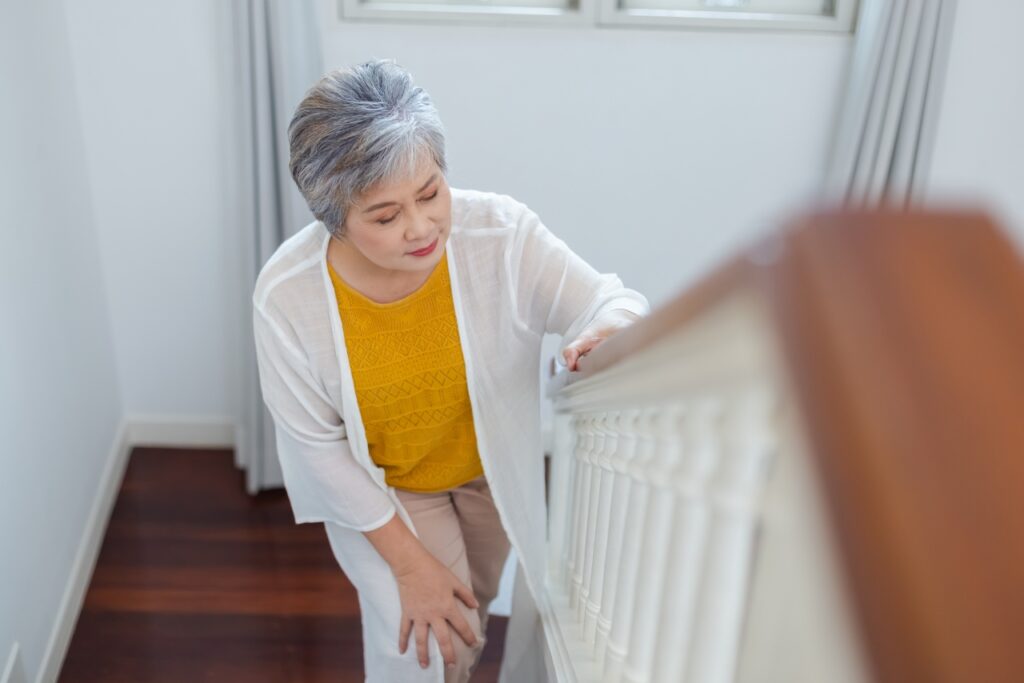
Rising from a chair takes more effort
Standing from a chair relies heavily on the hips and thighs. You may now push through the armrests, rock forward for momentum or need more than one attempt.
Repeated chair stands are used in clinical assessments because the movement reflects lower-body strength. A change in how easily you stand is not a diagnosis, but it is useful information about what your legs may need.
Stairs feel steeper than they used to
Climbing stairs asks the thighs, glutes and calves to repeatedly lift your body weight. When these muscles lose strength, you may pull harder on the handrail, slow down or pause between flights.
Breathlessness can also make stairs difficult, so notice whether the limitation feels cardiovascular or whether your legs simply do not produce the same force they once did.
READ ALSO: Power Exercises That Help With Stairs, Trips, And Balance
Shopping bags feel unusually heavy
Strength is revealed in real life. Groceries, laundry baskets, cookware, gardening supplies and luggage all provide natural feedback.
Muscles are conneted to independence rather than gym performance. Strength means being able to carry what needs carrying, move furniture when necessary and travel without depending on someone else to manage every bag.
When familiar objects begin to feel unusually heavy, it may be one of the signs you are losing muscle after 50.
Your grip feels less reliable
A weaker grip may show up when opening jars, carrying bags, holding cookware or maintaining a secure hold on a dumbbell. Grip strength is also used when clinicians assess possible sarcopenia.
Joint pain can complicate this picture. I noticed menopause-related discomfort in her knuckles and knees, which made gripping weights and squatting feel different. This is why the Fabulous50s approach places safe technique and gradual progression before heavier lifting.
You are avoiding the floor
Getting down to the floor and standing again requires strength, mobility, balance and coordination. When one of those systems becomes less reliable, we may avoid the movement altogether.
Supported floor-to-stand practice beside a stable chair or sofa can help rebuild the movement gradually rather than waiting until it becomes essential.
Your pace is slower and your steps are smaller
Muscles help propel the body forward and control each step. Declining strength may contribute to slower walking, shorter steps and a less confident stride. Walking performance is one of the areas considered when sarcopenia severity is assessed.
Pain, balance changes, heart or lung conditions and neurological problems can also affect walking, so a persistent or marked change deserves professional assessment.
You feel less steady or have started falling
Falls have many causes, but reduced leg and core strength can make it harder to stabilize the body or recover after a trip. Resistance training can improve functional mobility, including gait and balance-related outcomes, in older adults with muscle-function deficits.
This is where the five movement pillars of the Fabulous50s Longevity Protocol work together. Strength supports the body, Balance trains recovery, Mobility provides movement options, Cardio supports stamina and Power helps us respond quickly.
READ ALSO: Why Women Lose Muscle After 50 and How to Rebuild It
A Simple Check To Try At Home
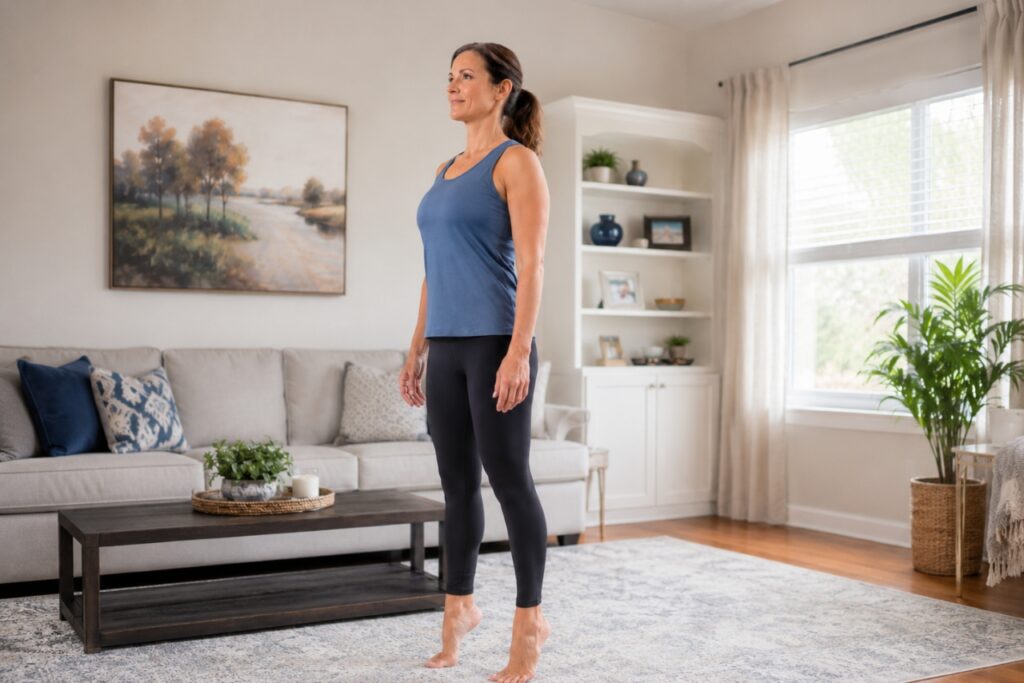
Sit towards the front of a stable dining chair with your feet flat on the floor. Cross your arms over your chest if that feels comfortable, then stand and sit again with control.
Notice whether you can rise without using your hands, whether your knees remain steady and whether you can lower yourself gently rather than dropping into the seat.
This cannot diagnose sarcopenia. It is simply a way to notice whether an everyday movement has changed. Chair-stand performance is used clinically because it provides useful information about lower-body strength.
Stop if you feel pain, dizziness or unusual shortness of breath.
What To Do When You Notice The Signs
Recognizing the signs you are losing muscle after 50 is useful because muscle remains responsive to training. Resistance exercise can improve strength and physical function in older adults, including people who begin with low strength or mobility limitations.
Your first workout does not need heavy dumbbells. Chair sit-to-stands, wall push-ups, bodyweight squats, resistance bands and light weights all count.
The form comes before load. If your body swings, twists or leans to complete the movement, the resistance is too heavy. The final repetitions should still feel challenging enough to give the muscle a reason to adapt.
Progress can be gradual. You may begin with 1 kg or 2 kg dumbbells and move to 3 kg when the exercises feel controlled. Small improvements, repeated consistently, create more capacity over time.
The World Health Organization recommends muscle-strengthening activity for the major muscle groups on at least two days each week. Your entry point may still be ten minutes, one short workout or a few controlled repetitions.
When Weakness Needs Medical Attention
Gradual changes are different from sudden or unexplained weakness. Seek medical advice when weakness is new, rapidly worsening, limited to one area, accompanied by repeated falls or associated with unintentional weight loss.
Sudden one-sided weakness or an abrupt inability to walk or move requires urgent medical care.
These symptoms can have causes other than age-related muscle loss, so strength training should not replace an appropriate medical assessment.
Strength Is How We Keep Life Open
The signs you are losing muscle after 50 are not a verdict on how the rest of your life will feel. They are an invitation to give your body a clearer signal.
Strength is one of the five pillars of the Fabulous50s Longevity Protocol because muscle supports posture, joints, movement, metabolism, bone health and independence. We are not training to become bodybuilders or to compete with women online. We are training to stay capable.
The Fabulous50s Vitality App brings the full protocol together with guided Strength, Cardio, Balance, Mobility and Power workouts created for women over 50. You can begin at your current level, use the modifications your body needs and progress with confidence rather than comparison.
Recognizing the signs you are losing muscle after 50 is the first step. The next is choosing one small strength action and repeating it.
Start your 14-day free trial of the Fabulous50s Vitality App and begin training to stay capable.
Frequently Asked Questions
The first signs often appear in everyday movement. You may find it harder to rise from a chair, climb stairs, carry shopping, open jars or get up from the floor. Your walking pace may also become slower, even when your body weight has not changed significantly.
Muscle loss usually happens gradually and varies between women. Menopause, inactivity, illness, inadequate protein, poor sleep and long periods without resistance training can all influence the rate. Because the changes are often slow, many women notice reduced strength before they notice visible muscle loss.
Yes. Research shows that women can improve muscle strength and physical function through progressive resistance training. The starting point may be chair exercises, bodyweight movements, resistance bands or light dumbbells. The body still responds when it receives a safe and consistent strength-building challenge.
Walking supports cardiovascular health, stamina, mood and daily movement, but it does not provide the same muscle-building stimulus as resistance training. A balanced routine should include walking or cardio alongside regular strength training.
Major physical activity guidelines recommend muscle-strengthening exercise on at least two days each week. Some women may train three times weekly when their fitness level, schedule and recovery allow it. The sessions should be spaced in a way that gives the muscles time to recover.
You need enough resistance to challenge the muscles, but heavy weights are not the correct starting point for everyone. Choose a weight that allows you to maintain good form while making the final repetitions feel difficult but achievable. Increase the resistance gradually as your strength and confidence improve.
Cruz-Jentoft, Alfonso J., et al. “Sarcopenia: Revised European Consensus on Definition and Diagnosis.” Age and Ageing, 2019.
https://pmc.ncbi.nlm.nih.gov/articles/PMC6322506/
Juppi, Hanna-Kaarina, et al. “Menopause and the Loss of Skeletal Muscle Mass in Women.” Journal of Clinical Medicine, 2021.
https://pmc.ncbi.nlm.nih.gov/articles/PMC7956097/
Papa, Evan V., Xiaoyang Dong and Mahdi Hassan. “Resistance Training for Activity Limitations in Older Adults With Skeletal Muscle Function Deficits.” Clinical Interventions in Aging, 2017.
https://pmc.ncbi.nlm.nih.gov/articles/PMC5479297/
Peterson, Mark D., et al. “Resistance Exercise for Muscular Strength in Older Adults: A Meta-Analysis.” Ageing Research Reviews, 2010.
https://pmc.ncbi.nlm.nih.gov/articles/PMC2892859/
World Health Organization. “Physical Activity.”
https://www.who.int/initiatives/behealthy/physical-activity
MedlinePlus. “Weakness.” U.S. National Library of Medicine.
https://medlineplus.gov/ency/article/003174.htm