
Life has a way of changing your body before you feel ready for it. One day, you are carrying groceries or climbing stairs without thinking twice. Then, gradually or suddenly, something feels different. The bags feel heavier, and your legs tire faster.
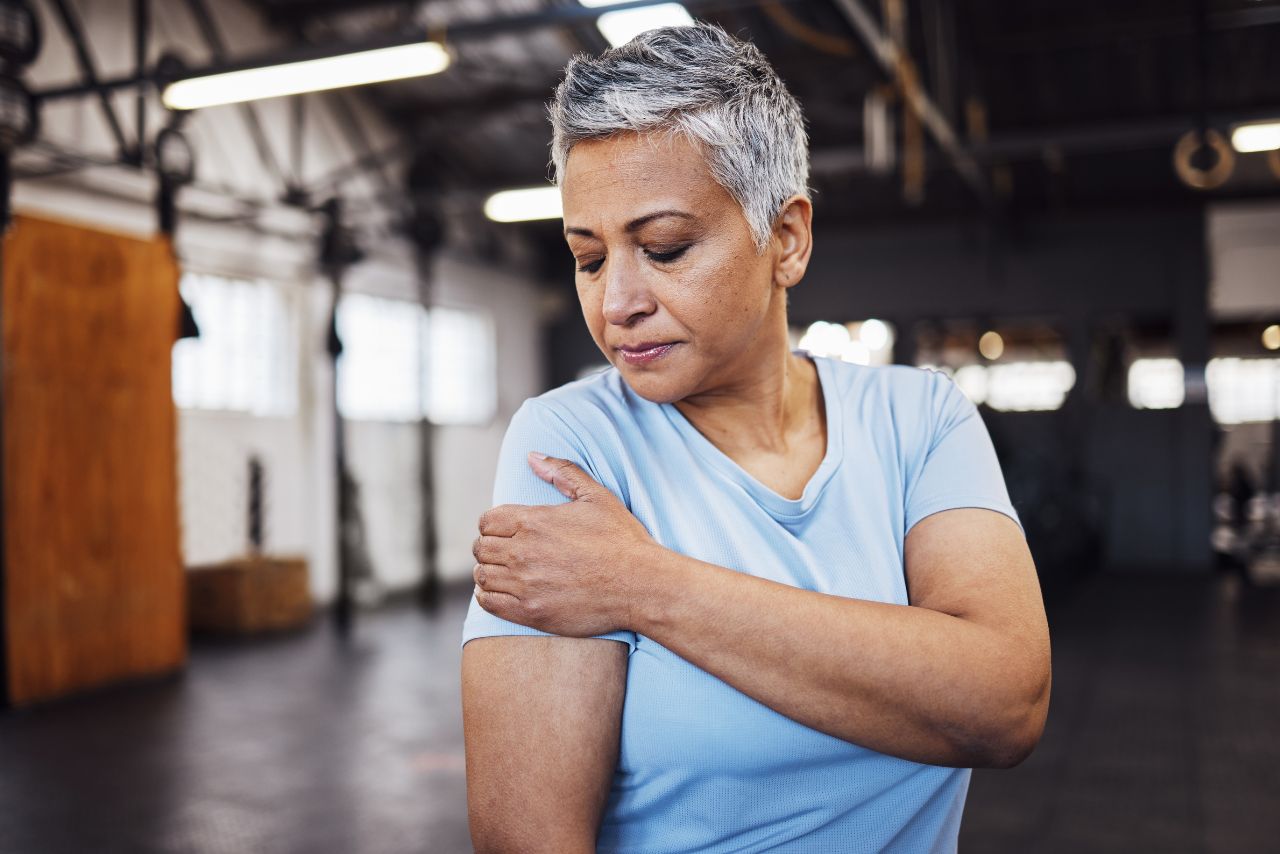
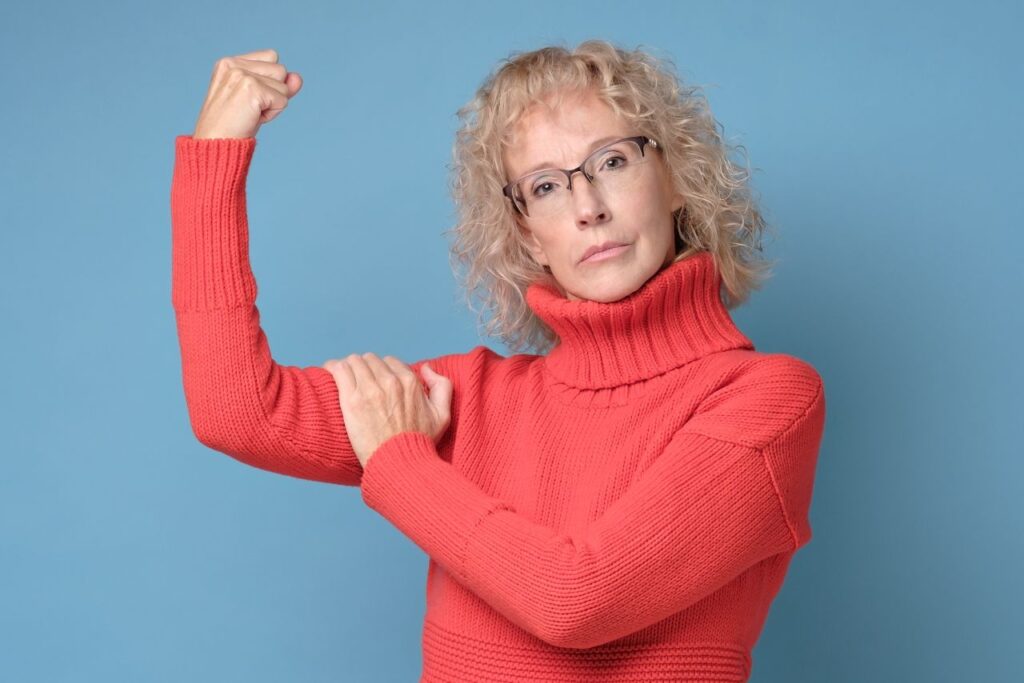
For many women, this shift becomes especially noticeable after 50. It can feel confusing and frustrating, almost personal, as if your own body is working against you. But muscle loss after 50 is not a failure of discipline. It does not mean you have left it too late.
This is a biological change with a clear cause behind it. Once you understand what is actually happening, you can begin to change the story for yourself.
Now let’s explore why women lose muscles after 50 and how to rebuild it.
What Is Muscle Loss After 50?
Muscle loss after 50 is often linked to a natural process called sarcopenia. Sarcopenia means the gradual loss of muscle mass, strength, and physical function as we age.
For women, this becomes more noticeable during and after menopause, because the body is managing several changes at once. Hormones shift, recovery can feel slower, and energy may fluctuate. Daily movement may decrease without you fully realizing it.
None of this means your body is broken in some permanent way. It simply means your body now needs a different kind of support than it did before.
READ ALSO: Why Strength Training Is Essential During Menopause & After 50
Why Do Women Lose Muscle After 50?
Muscle loss after 50 usually does not happen because of one single cause. It happens because several changes begin to overlap at once.
As estrogen declines during menopause, it can affect how your body maintains muscle. It also changes how your body responds to exercise. Many women also become less active without realizing it, especially while dealing with fatigue, joint pain, or poor sleep.
Protein intake plays a real role here too. As we age, the body needs enough protein daily to repair and maintain muscle. Many women simply do not eat enough across the day to properly support their strength.
There is also the simple reality of modern life working against us. We sit more, and we carry less than we used to. We have outsourced many of the physical tasks that once kept our muscles working daily.
READ ALSO: How to Build Muscle and Get Stronger Over 50
Why Does Muscle Matter So Much After 50?
Muscle is not only about looking toned or fit. It is one of your body’s great protectors, working quietly behind the scenes every day.
It supports your joints, protects your bones, and improves your balance. It also helps manage blood sugar and reduces your risk of falls. It helps you walk, lift, bend, and climb through daily life with real independence.
This is why rebuilding muscle after 50 matters so deeply to so many of us. It is not about chasing a younger body or a different shape. It is about building a stronger, more capable future for yourself.
Strength gives you choices, and it helps you keep doing the things you love.
Can You Rebuild Muscle After 50?
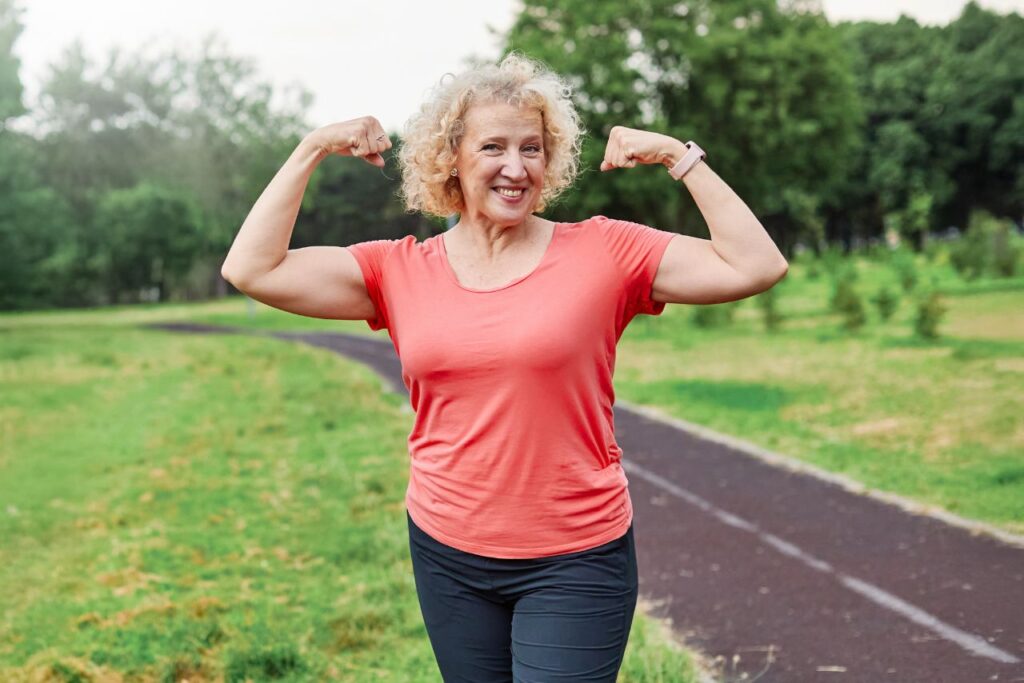
Yes, you absolutely can rebuild muscle after 50, starting today. This is one of the most encouraging truths about the human body. Your muscles can still respond strongly when given the right signal, and that signal is strength training.
Strength training tells your muscles that they are still needed. It reminds your body that strength remains required, even now. Over time, your body begins to adapt and respond.
You do not need heavy weights or a complicated gym routine to start. A chair squat, a wall push-up, or a resistance band row can work well. These movements may not look dramatic, but they are genuinely powerful when done consistently.
READ ALSO: Can I Build Muscle Without Using Heavy Weights? Absolutely. Here’s How.
What Is the Best Way to Rebuild Muscle After 50?
The best way to rebuild muscle after 50 combines strength training, enough protein, and real recovery. Strength training should happen regularly, ideally several times each week. The goal is to challenge your muscles safely, not exhaust your body completely.
Over time, you can gradually increase resistance, repetitions, or difficulty as your body grows stronger. This approach is known as progressive overload, and it keeps your progress moving forward steadily.
Protein matters too, since it gives your muscles the building blocks they need to repair. Many women benefit from 0.8 to 1.2 grams of protein per kilogram daily. Spreading that across each meal works better than saving it all for dinner.
Recovery matters just as much as the workout itself. Muscle is built after the workout, while your body repairs and adapts. Sleep, rest days, hydration, and gentle movement all support this process.
READ ALSO: How to Activate Your Muscles & Improve Your Workout: A Guide for Women Over 50
Simple Strength Training Exercises for Women Over 50
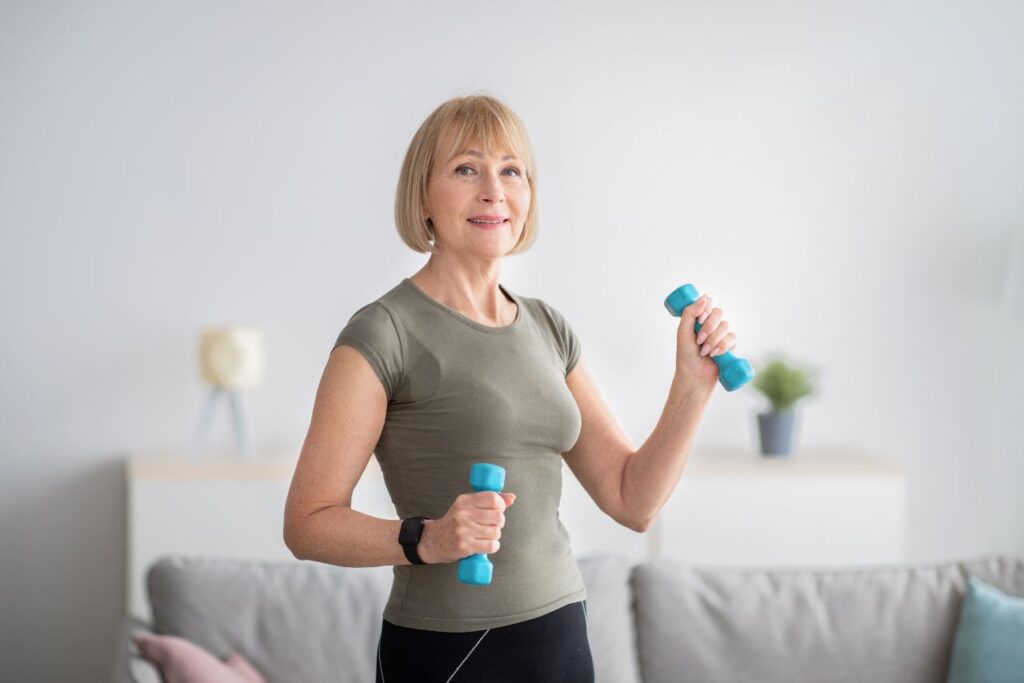
If you are just starting out, focus on movements that help with everyday life. Chair squats can strengthen your legs and hips effectively. Wall push-ups can help build real upper body strength.
Step-ups support balance and make stair climbing noticeably easier over time. Resistance band rows strengthen your back and improve your posture too. Glute bridges activate your hips and support your lower back.
These exercises are simple, but they are not small in their impact. They teach your body to trust movement again, one rep at a time. Start slowly, use good form, and rest whenever you genuinely need to.
READ ALSO: Strength and Muscles Over 50
What If You Feel Weak or Out of Shape?
If you feel weak, tired, or out of shape, you are not behind. You are simply starting from exactly where you are right now.
Many women avoid strength training because they believe they need to get fit first. But strength training is actually how you begin to feel fit again. You do not need to do everything at once, and you do not need to prove anything.
You only need one small step, repeated often enough for your body to respond. Over time, those small steps genuinely become strength. Then strength becomes confidence, and confidence changes how you move through your day.
The Mindset Shift That Makes Strength Possible
Perhaps the most powerful shift here is not physical at first. It is mental, and it changes how this whole stage feels.
Instead of seeing muscle loss after 50 as proof of decline, consider seeing it as information instead. This stage of life may not be asking you to do less. It may be inviting you to train differently than before.
Strength can become less about performance and more about real possibility. Every rep, every walk, and every protein-rich meal is a quiet reminder. Aging is not just something that happens to you passively. It is something you can actively shape, one choice at a time.
Keep moving with these:
Can I Build Muscle Without Using Heavy Weights? Absolutely. Here’s How
How to Build Muscle and Get Stronger Over 50
How to Activate Your Muscles & Improve Your Workout: A Guide for Women Over 50
9 Key Reasons You’re Losing Muscle Mass Over 50
The Only 10-Minute Cardio You Need To Lose Belly Fat
Why This 8-Minute Walk Works Better Than Regular Cardio
30-Minute Fat Loss Cardio + Brain Boost Workout For Healthy Aging
How a Slightly Faster Walking Pace Can Boost Strength & Stamina for Women
Best Low-Impact Cardio Workouts for Women Over 50
How Much Walking Do You Need for Heart Health After 50?
Zone 2 Walking for Longevity: A Beginner’s Guide for Women Over 50
How to Build Stamina After 50 Without Exhausting Yourself
Final Thoughts
You might be just noticing changes or already managing sarcopenia in menopause. You might be wondering how to rebuild muscle after 50.
Either way, you are not starting too late. Your body is still listening closely, and your muscles are still capable of responding well.
The work now is not to become exactly who you were before. It is to discover how strong you can genuinely become next.
Frequently Asked Questions
Muscle loss happens gradually through our 30s and 40s, then accelerates noticeably around perimenopause as estrogen begins to decline.
Yes, muscle tissue stays responsive to strength training and proper nutrition throughout our lives, even after significant loss has occurred.
No, bodyweight exercises, resistance bands, and a few simple dumbbells at home are enough to start building real strength.
Research points to roughly 0.8 to 1.2 grams per kilogram of body weight daily, spread evenly across meals rather than concentrated at dinner.
That is completely fine, since simple moves like chair squats and wall push-ups are perfect, accessible starting points for real beginners.
Two to three sessions a week is genuinely enough to create meaningful, lasting improvements in both strength and muscle mass.
Sources
- Journal of Mid-life Health, “Sarcopenia in Menopausal Women: Prevalence, Risk Factors, Hormonal Mechanisms, and Management Strategies” (2025): https://journals.lww.com/jomh/fulltext/2025/10000/sarcopenia_in_menopausal_women__prevalence,_risk.4.aspx
- The Menopause Society, “New Study Identifies Potential Predictive Biomarker for Sarcopenia in Midlife Women” (2025): https://menopause.org/press-releases/new-study-identifies-potential-predictive-biomarker-for-sarcopenia-in-midlife-women
- Frontiers in Endocrinology, “Research progress on the correlation between estrogen and estrogen receptor on postmenopausal sarcopenia” (2024): https://www.frontiersin.org/journals/endocrinology/articles/10.3389/fendo.2024.1494972/full
- Bonafide, “Strength Training Tips for Women in Menopause & Meno Belly”: https://hellobonafide.com/blogs/news/try-strength-training-and-other-exercises-to-reduce-menopause-belly
- Clinical Nutrition, “Protein intake and exercise for optimal muscle function with aging”: https://www.espen.org/files/PIIS0261561414001113.pdf
- GeroScience, “Resistance training, but not leucine, increased basal muscle protein synthesis and reversed frailty in older women” (2025): https://link.springer.com/article/10.1007/s11357-025-01877-2