When we talk about osteoporosis, we often focus on bone density, calcium, vitamin D, strength training, and impact. All of those are important, but there is another piece that deserves just as much attention: balance.
Most fractures in people with osteoporosis happen because of a fall. That means one of the most practical ways to protect bone health is to reduce the risk of falling in the first place. This is where balance exercises for osteoporosis become so valuable.
Balance training teaches the brain and body to communicate more clearly. It helps us shift weight, recover from a wobble, step with more control, turn safely, and feel steadier on uneven ground. We do not train balance so we never lose our balance. We train balance so we can get it back.
Balance is also one of the Five Pillars of the Fabulous50s Longevity Protocol™ because it supports fall prevention, coordination, steadiness, confidence, and nervous system response. Inside the protocol, Balance works together with Strength, Cardio, Mobility, and Power so women over 50 are not relying on one type of movement alone.
Key Takeaways: Balance Exercises for Osteoporosis
- Balance exercises for osteoporosis help reduce fall risk, which is important because falls can lead to fractures.
- Safe balance work should include support, slow progressions, posture, strength, and control.
- Women with osteoporosis should avoid risky movements such as fast twisting, deep forward bending, or unsupported balance drills if they feel unsafe.
- The Fabulous50s approach trains balance as part of the Fabulous50s Longevity Protocol™, alongside Strength, Cardio, Mobility, and Power.
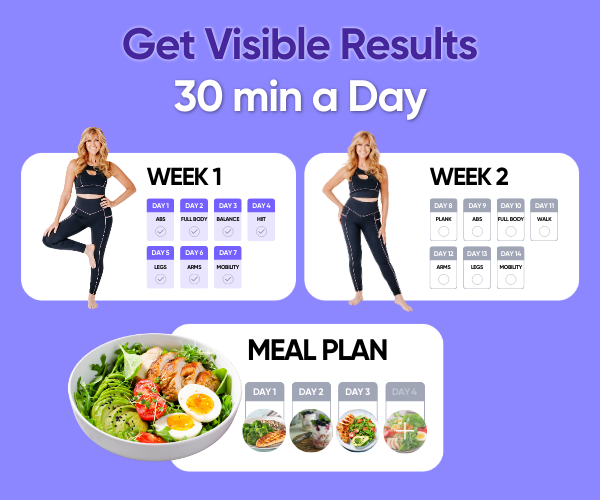
- The Fabulous50s Vitality App gives women over 50 a guided way to practice safe, consistent movement.
How Does Balance Training Help Protect Bones?
Balance training does not directly build bone in the same way as resistance training or appropriate impact work. Its main role is different. It helps reduce the chance of falling, and that matters because falls are a major cause of fractures in people with osteoporosis.
The International Osteoporosis Foundation says an exercise program for people with osteoporosis should target posture, balance, gait, coordination, and hip and trunk stabilization, rather than relying only on general aerobic fitness. It also notes that some movements may not be suitable for people with osteoporosis, especially those with spinal fractures.
This is why balance exercises for osteoporosis should feel controlled, supported, and progressive. We are not trying to make the body feel unsafe. We are teaching it to respond better.
READ ALSO: How to Start Exercising After an Osteoporosis Diagnosis
What Balance Exercises Are Safer for Osteoporosis?
The safest starting point is usually supported balance work. That means practicing near a wall, bench, kitchen counter, or sturdy chair so you can hold on whenever needed.
Try these gentle options:
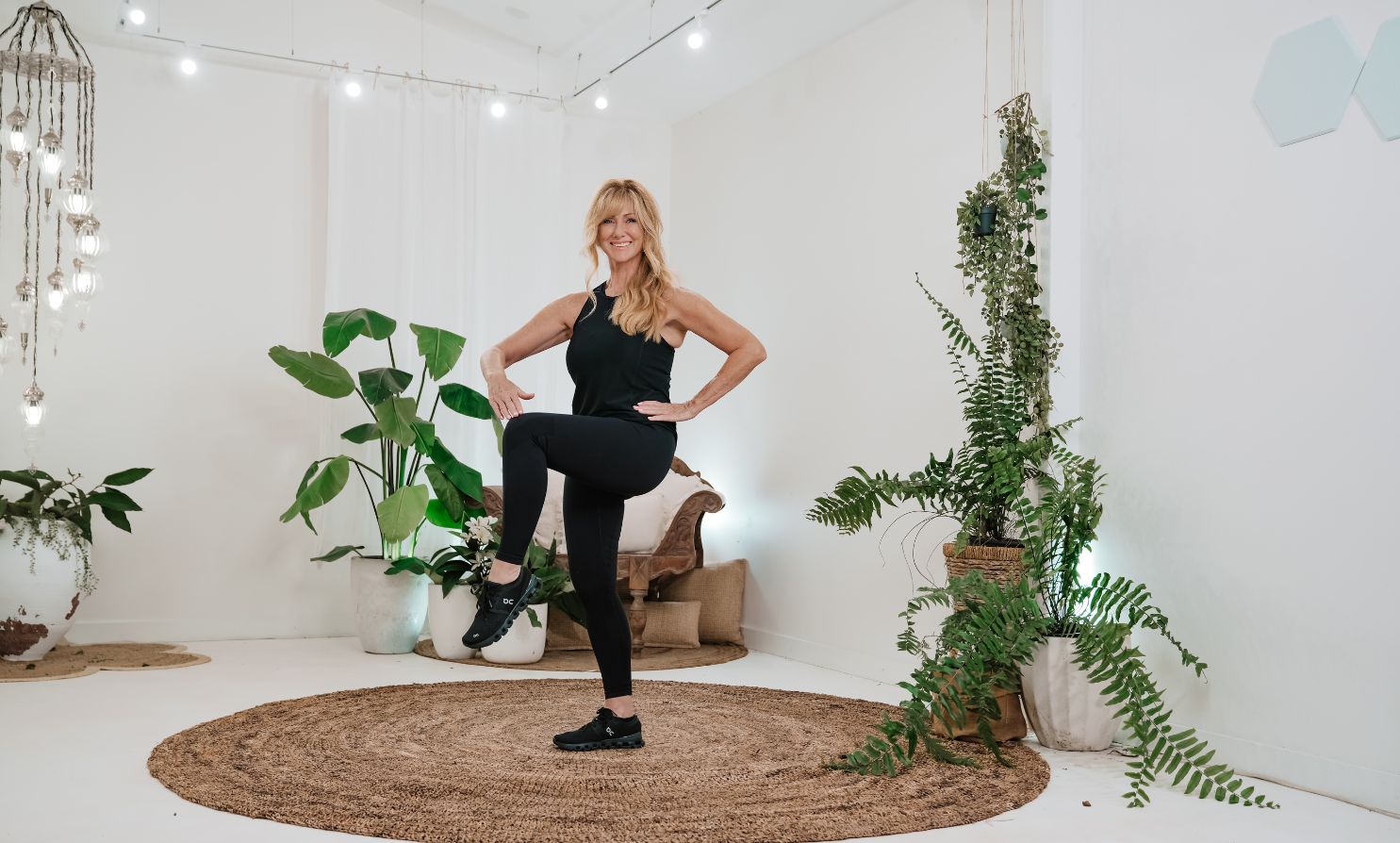
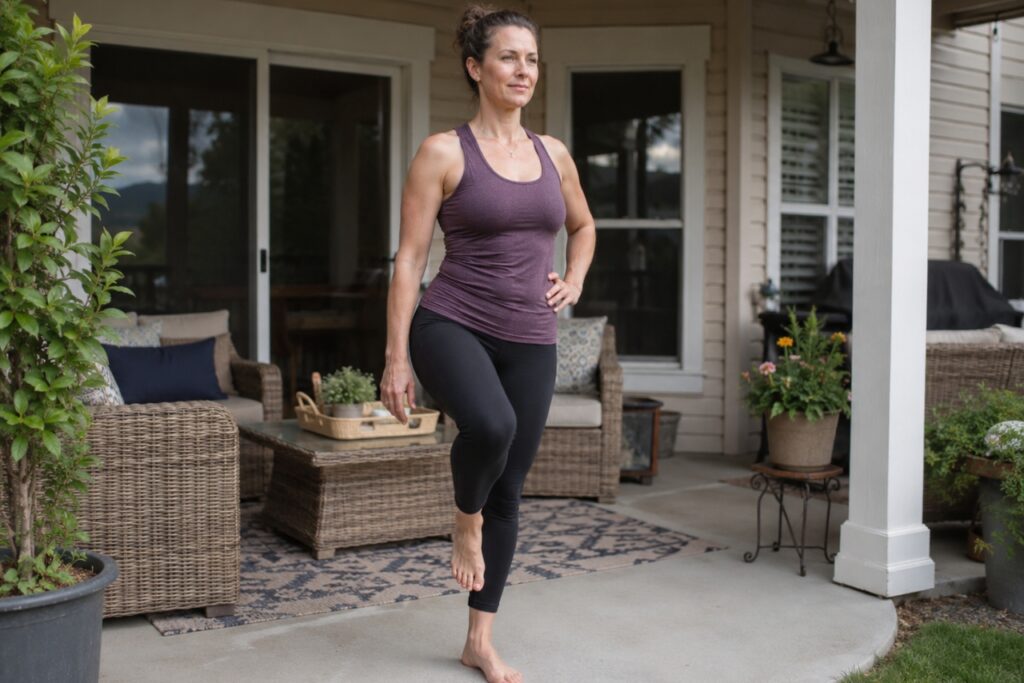
Supported Single-Leg Stand: Stand tall beside a chair or wall. Shift your weight into one leg and lift the other foot slightly off the floor. Hold for a few seconds, then change sides.
Heel-to-Toe Stand: Place one foot directly in front of the other as if standing on a line. Keep support nearby and hold the position.
Side Steps: Step gently to the side, bring the other foot in, then repeat. This trains lateral control, which is important because many falls happen when we lose balance sideways.
Weight Shifts: Stand with feet hip-width apart and slowly shift your weight forward, backward, and side to side. Keep the movement small and controlled.
Sit-to-Stand: Rise from a chair with control, then sit back down slowly. This supports leg strength, posture, and everyday stability.
The “Too Fit To Fracture” strongly recommends multicomponent programs that include resistance and balance training for people with osteoporosis or osteoporotic vertebral fractures.
READ ALSO: Safe Balance Training for Women With Low Bone Density
Which Movements Should Women With Osteoporosis Avoid?
Osteoporosis does not mean avoiding movement, but it does mean choosing wisely. Women with osteoporosis, especially those with spinal fractures or very low bone density, may need to avoid deep forward bending from the waist, loaded spinal flexion, fast twisting, high-impact movements without preparation, and unsupported balance exercises that feel unsafe.
The Bone Health and Osteoporosis Foundation advises people who have recently broken a bone or have very low bone density to speak with a physical therapist or healthcare provider before trying certain exercises and to avoid activities that require bending forward from the waist or too much twisting of the spine.
A simple rule is this: if a movement makes you feel unsafe, rushed, dizzy, or out of control, it is not the right version for today. Modify it, slow it down, or use support.
READ ALSO: Best Osteoporosis Exercises for Beginners Over 50
Fabulous50s Balance Exercises for Women With Osteoporosis

These Fabulous50s YouTube workouts can support balance, coordination, and bone-health confidence.
Choose the safest option for your body, keep support nearby, and speak with your healthcare provider if you have osteoporosis, recent fractures, dizziness, spinal pain, or any concern about safe movement.
Build Stronger Bones Fast With This Simple 8 Min Routine
This osteoporosis-focused workout is designed to help build stronger bones, improve balance, and increase power.
Master Your Balance at 50+ With This Quick Standing Workout
A gentle 7-minute balance workout for women over 50 who feel unsteady, stiff, or concerned about falling.
10 Minute Balance Exercises Workout
A 10-minute Fabulous50s balance routine focused on stability and fall prevention after 50.
9-Minute Balance Workout – Improve Stability & Prevent Falls
A short balance workout for women over 50, beginners, and seniors who want to improve stability.
Osteoporosis Workouts for Women Over 50 Playlist
A Fabulous50s playlist with osteoporosis-focused workouts for bone strength, balance, and confidence.
How Often Should You Practice Balance Exercises for Osteoporosis?
For most women, balance exercises for osteoporosis can be practiced two or more times per week, with short daily practice added when it feels safe.
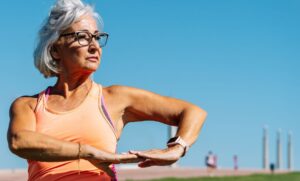
Osteoporosis Canada’s Too Fit To Fracture guidance recommends balance exercises at least two times per week, with difficulty increased over time. It includes leaning in different directions, heel-to-toe walking, sideways walking, stopping, changing direction, and tai chi-style movements.
You do not need a long routine. Five to ten minutes is enough to begin. The key is consistency and safe progression.
READ ALSO: Low-Impact Osteoporosis Exercises for Women Over 50
How Can You Progress Without Increasing Risk?
Progress does not have to mean making an exercise harder quickly. It can mean holding a position for a few more seconds, using lighter support, moving more slowly, standing taller, or adding a gentle reach.
For example, a supported single-leg stand might progress like this: hold the chair with two hands, then one hand, then fingertips, then brief moments without touching. There is no rush. Confidence comes from feeling safe enough to repeat the movement.
Mayo Clinic also notes that stability and balance exercises help muscles work together in ways that make falls less likely, with examples such as standing on one leg and movement-based exercises like tai chi.
READ ALSO: Balance Exercises for Osteoporosis and Fall Prevention After 50
Final Thoughts
Balance exercises for osteoporosis are not about fear. They are about preparation. They help us move through daily life with more steadiness, more confidence, and a better ability to recover when life knocks us slightly off-center.
If you have osteoporosis, your movement plan should be safe, progressive, and designed for your body. Balance training belongs beside strength, posture, mobility, and appropriate bone-supporting movements.
Inside the Fabulous50s Vitality App, you can follow guided workouts that support Balance, Strength, Cardio, Mobility, and Power as part of the Fabulous50s Longevity Protocol™. It gives you a simple way to stay consistent, choose safe modifications, and keep building confidence one workout at a time.
Frequently Asked Questions
Balance exercises can be safe with osteoporosis when they are supported, controlled, and appropriate for your current ability. Use a chair or wall nearby and avoid movements that feel unsafe.
Supported single-leg stands, heel-to-toe standing, side steps, gentle weight shifts, and sit-to-stands are useful starting points.
Balance training may help reduce fall risk, and fewer falls can mean fewer fall-related fractures. It should be combined with strength, posture, mobility, and bone-supporting movement.
Short daily practice can be helpful if it feels safe. A few minutes near a wall or chair can build confidence without overwhelming the body.
Avoid deep forward bending from the waist, fast twisting, unsupported balance drills that feel unsafe, and high-impact moves unless cleared by a healthcare professional.
Many Fabulous50s workouts include modifications, but osteoporosis varies from woman to woman. Choose gentle options first and get medical guidance if you have spinal fractures, recent fractures, severe pain, or very low bone density.
Stop, hold support, and return to a safe position. If unsteadiness is new, severe, or linked with dizziness or falls, speak with a healthcare professional.
International Osteoporosis Foundation. “Exercise.” International Osteoporosis Foundation. https://www.osteoporosis.foundation/patients/prevention/exercise
Giangregorio, L.M., et al. “Too Fit To Fracture: Exercise Recommendations for Individuals With Osteoporosis or Osteoporotic Vertebral Fracture.” Osteoporosis International, 2014. https://pmc.ncbi.nlm.nih.gov/articles/PMC5112023/
Osteoporosis Canada. “Too Fit To Fracture.” Osteoporosis Canada, 2024. https://osteoporosis.ca/too-fit-to-fracture/
Mayo Clinic. “Exercising With Osteoporosis: Stay Active the Safe Way.” Mayo Clinic. https://www.mayoclinic.org/diseases-conditions/osteoporosis/in-depth/osteoporosis/art-20044989
Bone Health and Osteoporosis Foundation. “Be Bone Strong™: Exercise to Stay Healthy.” Bone Health and Osteoporosis Foundation. https://www.bonehealthandosteoporosis.org/preventing-fractures/exercise-to-stay-healthy/