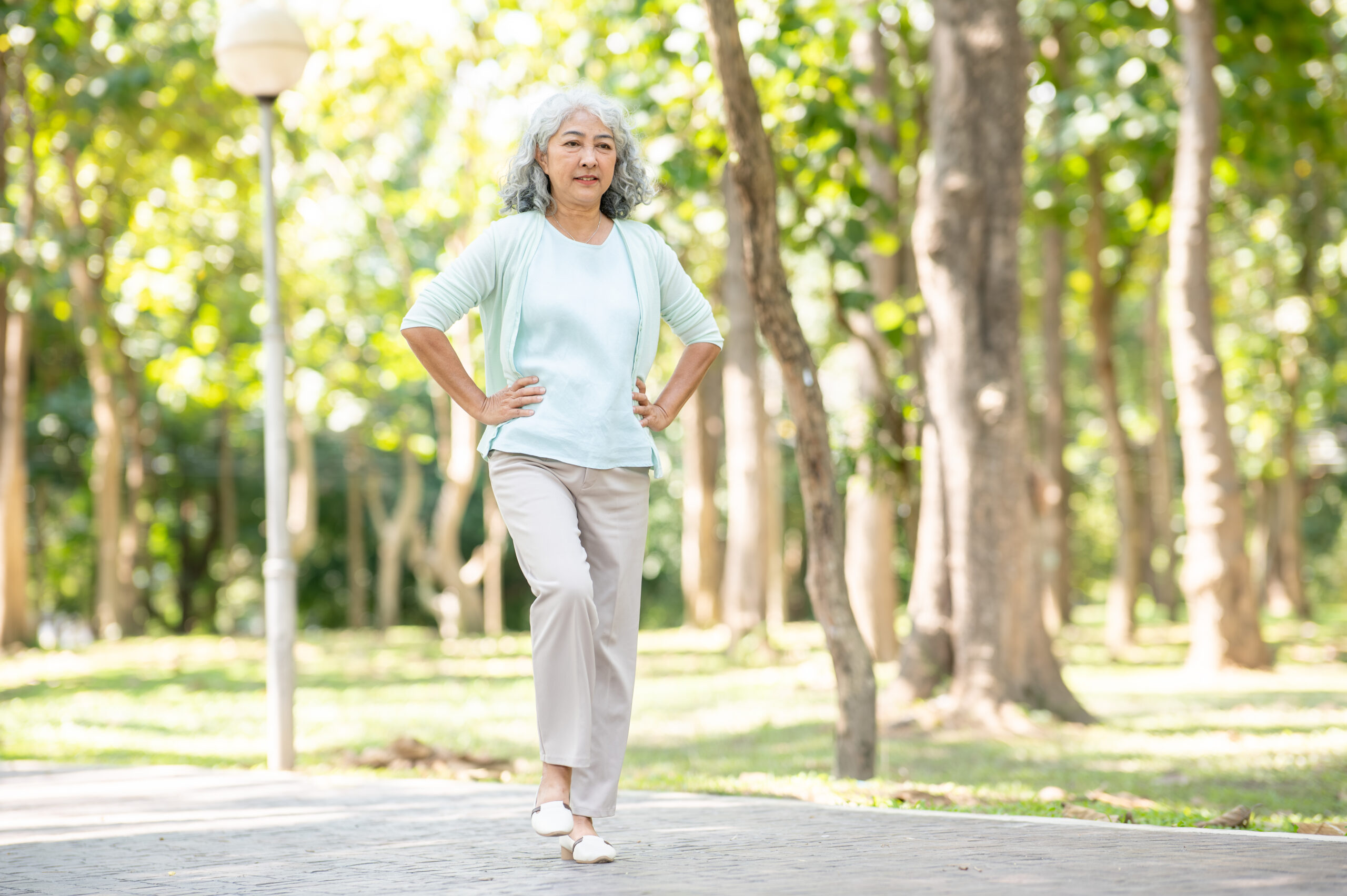
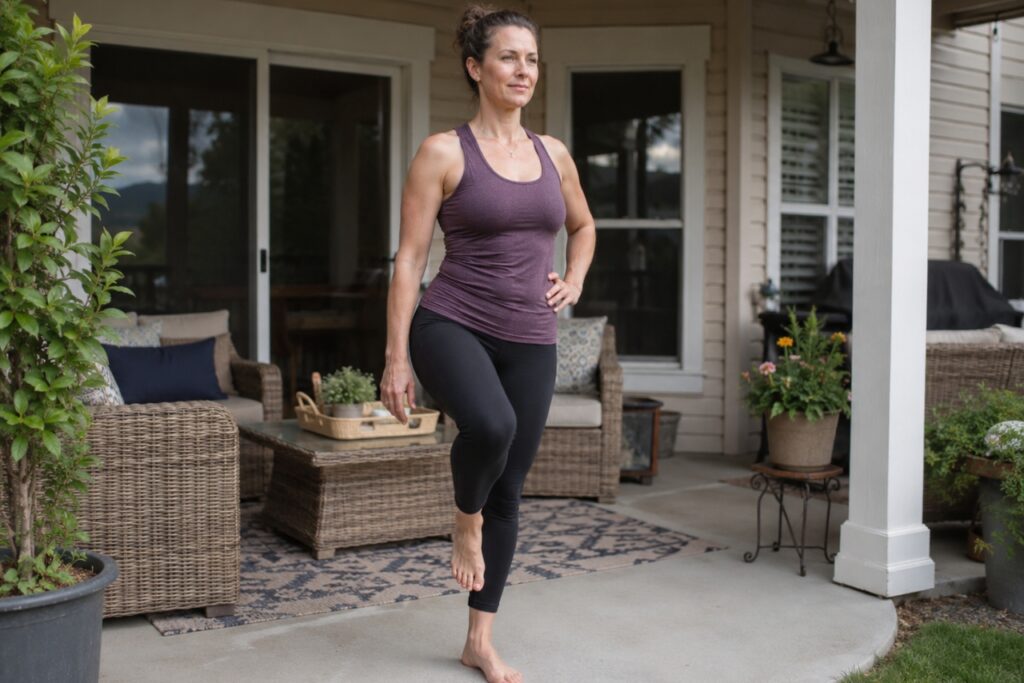
Balance can change so gradually that we may not notice it at first. We might feel less steady on stairs, hesitate on uneven ground or reach for support when turning quickly. These small changes are easy to dismiss, but they can affect how confidently we move through everyday life.
The encouraging part is that balance is not something we either have or lose forever. It is a skill that can be trained at any age.
With regular practice, the wobble can become smaller, movements can feel steadier and confidence can begin to return. The goal is not to avoid ever losing our balance. It is to help our brain and body become better at finding it again.
Simple daily habits, such as shifting our weight, standing briefly on one leg, strengthening our feet and moving in different directions, can gradually make the body more adaptable.
Here are practical ways to build better balance into the routines we already have.
Key Takeaways: Daily Balance Habits
- Daily balance habits help train steadiness through small, repeatable actions.
- Balance improves when the feet, ankles, hips, core, eyes, and nervous system practice working together.
- Simple habits like weight shifts, heel raises, mindful turns, and sit-to-stands can support confidence after 50.
- Research shows balance and functional exercises help reduce falls in older adults.
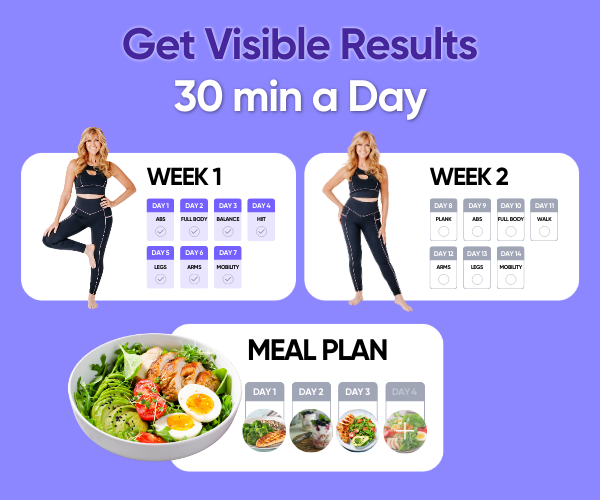
- The Fabulous50s Vitality App helps women train Balance as part of the Fabulous50s Longevity Protocol™.
The One-Minute Balance Check Before Breakfast
Before the day gets busy, stand near a wall or kitchen counter and notice how your body feels. Are you leaning more on one foot? Are your toes gripping the floor? Are your shoulders rounded forward? Are your knees locked?
Try shifting your weight gently from one foot to the other for 30 seconds. Then shift slightly forward and backward. Keep the movement small and controlled. This wakes up your feet, ankles, hips, and core before you start moving through the day.
These kinds of daily balance habits help the brain and body communicate more clearly. Balance training teaches us how to react, recover, and find our center again when we become unstable.
Use Your Toothbrush as a Balance Cue
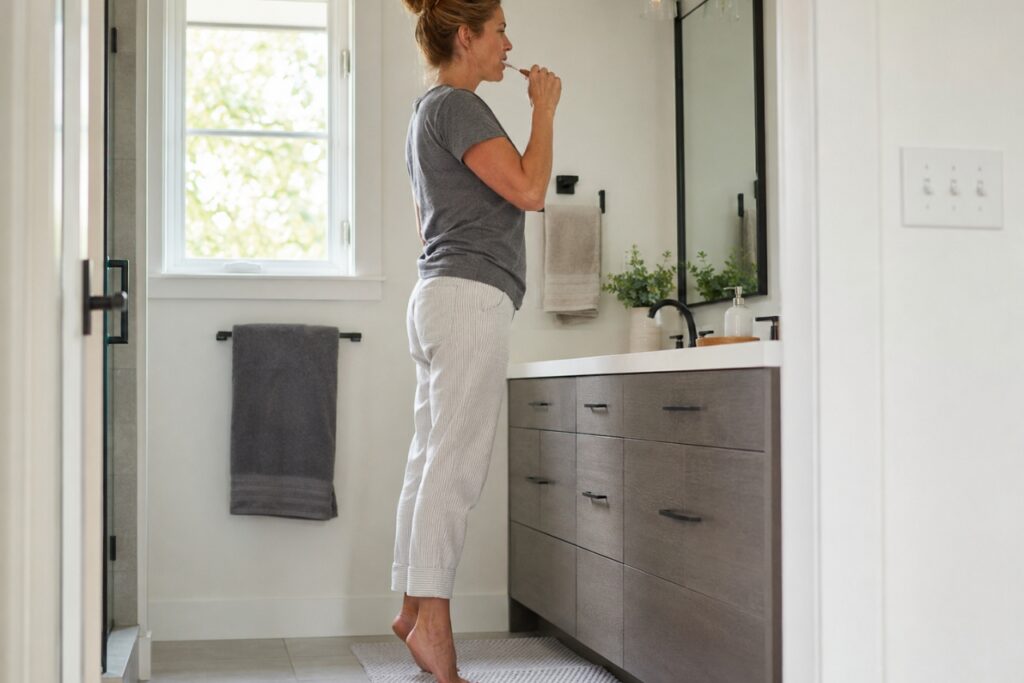
Brushing your teeth is already part of your day, so it is a perfect reminder to practice balance safely. Stand near the sink, keep one hand close to support, and gently lift one heel, then the other. After a few days, try slow heel raises with both feet.
Heel raises strengthen the calves, ankles, and feet, which all help with steadiness. The CDC lists lower body weakness and difficulties with walking and balance among fall risk factors in older adults, so small lower-body habits are worth taking seriously.
Keep this simple. Rise slowly, pause, and lower slowly. The control on the way down is just as useful as the lift.
READ ALSO: These 7 Exercises Rebuild Leg Strength After 50
Turn With Intention
Many balance wobbles happen during transitions: turning around in the kitchen, changing direction in a hallway, reaching for something behind us, or stepping away from a cupboard.
One of the most useful daily balance habits is to slow your turns slightly. Instead of twisting quickly through the spine or pivoting on one foot, take two or three small steps to turn your whole body. Keep your eyes looking where you are going.
This trains safer movement patterns without making daily life feel like exercise. It also supports the Fabulous50s approach to balance, which recognizes that real life includes reaching, turning, stepping, and changing direction, not only standing still on one leg.
READ ALSO: Best Balance Exercises at Home for Women Over 50
Practice Sit-to-Stands During the Day
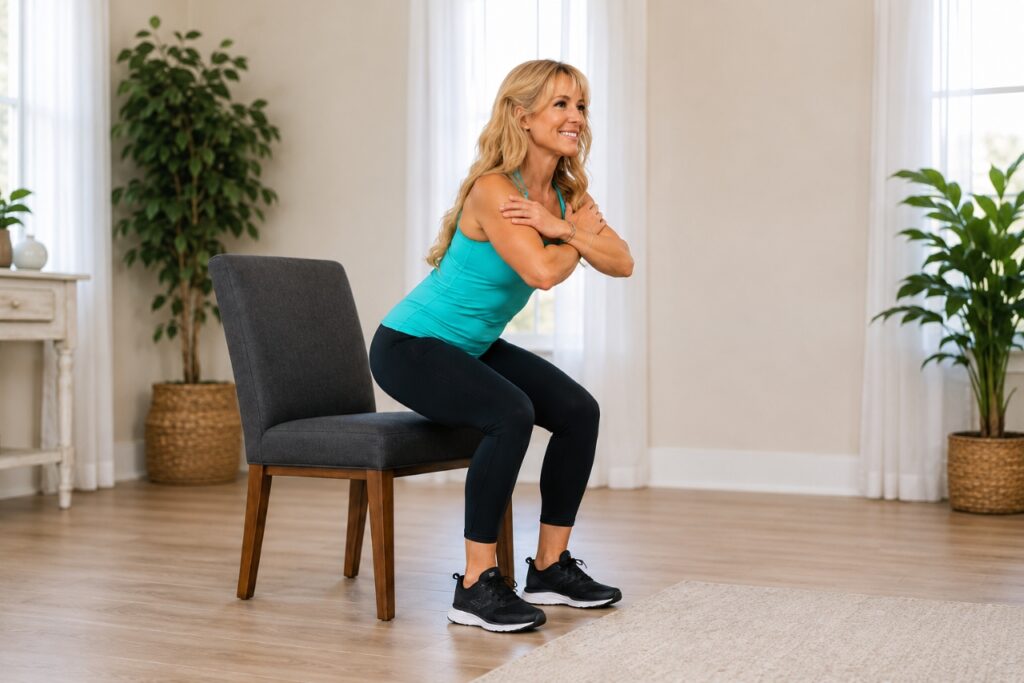
Every time you stand up from a chair, you are training strength, balance, and coordination. Instead of pushing up quickly and dropping back down, use one or two moments each day to practice with control.
Sit near the front of a sturdy chair. Place your feet flat on the floor. Stand up slowly, pause, then sit back down with control. Use your hands if needed, but try not to collapse into the chair.
The World Guidelines for Falls Prevention recommend balance-challenging and functional exercises, including sit-to-stand and stepping movements, performed regularly and progressed over time.
A few careful sit-to-stands each day can become one of the easiest daily balance habits to maintain.
READ ALSO: Fast Sit-to-Stands: A Simple Power Exercise After 50
Let Your Walk Train Your Balance
Walking is already a balance exercise, but we can make it more useful by paying attention. During a short walk, notice your posture, stride length, arm swing, and foot placement. Look forward rather than constantly looking down, unless the ground is uneven and needs attention.
You can also add tiny balance challenges when safe. Walk a little more slowly for 10 steps. Then return to your normal pace. Step around an object with control. Practice walking in a straight line beside a wall or fence if you need support.
The NHS includes simple balance exercises such as sideways walking, heel-to-toe walking, and grapevine-style stepping, with support nearby when needed.
READ ALSO: Indoor Walking vs Outdoor Walking: Which Is Better After 50?
Give Your Feet More Feedback
Your feet send important information to your brain about where your body is in space. If your feet are stiff, weak, or always in cushioned shoes, that feedback may become less sharp.
At home, try standing barefoot or in flat supportive shoes on a safe, non-slip surface. Spread your toes. Press gently through the big toe, little toe, and heel. Then soften your knees and stand tall.
This is a small habit, but it builds awareness. Better foot awareness can make other balance exercises feel more controlled.
READ ALSO: Why Tight Hips Affect Balance and Walking After 50
Build Balance Into Kitchen Moments
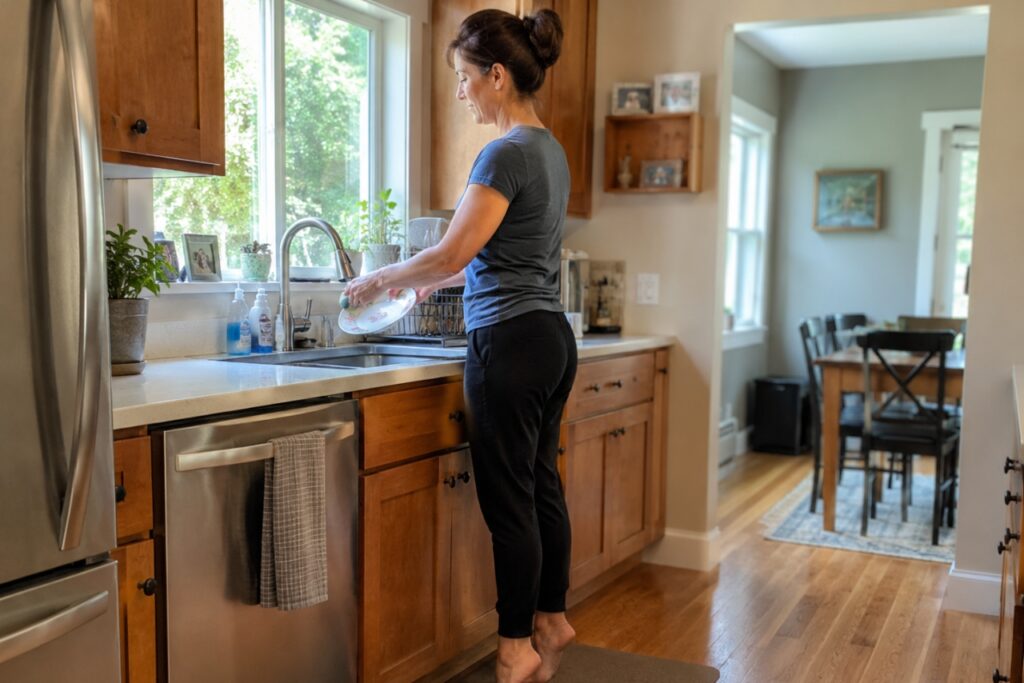
The kitchen gives us plenty of natural balance practice. While waiting for the kettle, hold the counter and do gentle side steps. While something is warming, practice slow weight shifts. While standing at the sink, rise onto your toes and lower with control.
These short moments work because they are easy to repeat. Daily balance habits do not need to feel impressive. They need to be safe, practical, and consistent.
A Cochrane review found that exercise programs involving balance and functional training reduce the rate of falls in older adults living in the community by about 24%. The takeaway is simple: balance responds to practice.
READ ALSO: How to Improve Balance After 50: 8 Min Balance & Stability
Finish the Day With a Steady Reset
At the end of the day, fatigue can affect balance. Before bed, stand near a wall and take three slow breaths. Then gently shift your weight side to side. Relax your shoulders. Notice whether one side feels more stable than the other.
This is about reconnecting with your body before the day ends. The Fabulous50s philosophy is built on consistency over intensity, and balance is a perfect example of that.
Balance is one of the Five Pillars of the Fabulous50s Longevity Protocol™ because it supports fall prevention, coordination, steadiness, confidence, and nervous system response. The protocol also teaches that small, consistent actions can create meaningful change when they are chosen for the body we have now.
Final Thoughts
If you are over 50, you don’t need a long workout to begin improving your balance. It can be a series of small decisions, again and again, such as standing taller, turning more slowly, rising with control from your chair, waking your feet up, and supporting yourself as you practice.
The best daily balance habits are the ones you can keep. Over time, these small habits help your body feel steadier, more responsive, and more confident.
Inside the Fabulous50s Vitality App, you can follow guided workouts that support Balance alongside Strength, Cardio, Mobility, and Power as part of the Fabulous50s Longevity Protocol™. It gives you a simple structure so you can turn small daily actions into lasting confidence.
Frequently Asked Questions
Yes. Balance is a skill, and small repeated habits can help the brain and body practice steadiness more often.
Supported weight shifts are a gentle place to begin because both feet stay on the floor and support is nearby.
Short daily practice can help, as long as it feels safe. Even one or two minutes can be useful.
Sit-to-stands, heel raises, mindful walking, and controlled turns are all practical daily activities that support balance.
Seek medical advice if balance changes suddenly, you feel dizzy, you have fallen, or you notice weakness, numbness, vision changes, or unusual unsteadiness.
Sherrington, C., et., al. “Exercise for Preventing Falls in Older People Living in the Community.” Cochrane Database of Systematic Reviews, 2019. https://pubmed.ncbi.nlm.nih.gov/30703272/
Bull, F.C., et al. “World Health Organization 2020 Guidelines on Physical Activity and Sedentary Behaviour.” British Journal of Sports Medicine, 2020. https://pmc.ncbi.nlm.nih.gov/articles/PMC7719906/
Centers for Disease Control and Prevention. “Facts About Falls.” CDC, 2024. https://www.cdc.gov/falls/data-research/facts-stats/index.html
National Health Service. “Balance Exercises.” NHS. https://www.nhs.uk/live-well/exercise/balance-exercise/