
A confident walk is one of those things we rarely think about until it begins to feel different.
One day, we notice our first few steps after sitting are smaller. We may feel a little less steady when we turn quickly, step off a curb, or walk across uneven ground. Our hips feel tight, our stride feels shorter, and we may need a moment before the body feels ready to move.
I have become very aware of my hips as I have moved through menopause and beyond. Not because I want to be extremely flexible, but because I know how much life depends on them. Our hips help us walk, climb stairs, travel, get down to the floor, stand back up, and move confidently through the world.
This is why hip mobility matters so deeply after 50. Tight hips are not just uncomfortable. They can change the way we walk, the way we balance, and the way we trust our body.
And the beautiful thing is this: we can begin gently. We can move our hips a little more each day, remind the body what it is capable of, and give ourselves a little more freedom than we had yesterday.
Key Takeaways: Why Tight Hips Affect Balance and Walking
- Tight hips after 50 can affect stride length, walking speed, posture, balance, and confidence.
- The hips help control how we shift weight, step, turn, climb, and recover when we feel unsteady.
- Menopause, sitting, reduced movement variety, and age-related changes can all contribute to hip stiffness.
- Hip mobility after 50 supports walking, balance, posture, and everyday independence.
- Gentle hip mobility exercises can help the body move with more comfort and control.
- The goal is not deep flexibility. The goal is useful movement for real life.
- Five minutes of consistent practice can be a powerful place to begin.
Why Do Tight Hips Affect Balance And Walking?
The hips sit at the center of so much movement. They connect the upper body to the lower body, help us shift weight from one leg to the other, and allow us to step forward, sideways, backward, and around obstacles.
When the hips are tight, walking can become slower. We may not extend the leg behind us as easily. We may rotate less through the pelvis. We may take shorter steps without even realizing it. Research on older adults has found that limited hip extension range of motion is one factor believed to contribute to common age-related differences in gait, including changes in how older adults walk.
And what that means for us is very practical. If the hips cannot move freely, the body may find other ways to get from one place to another. The lower back may work harder. The knees may feel more pressure. The stride may become shorter. The walk may feel less confident.
This is why tight hips affect balance and walking in such a quiet but important way. The change may not happen overnight. It often happens gradually until one day we realize our movement feels smaller than it used to.
What Do The Hips Have To Do With Balance?
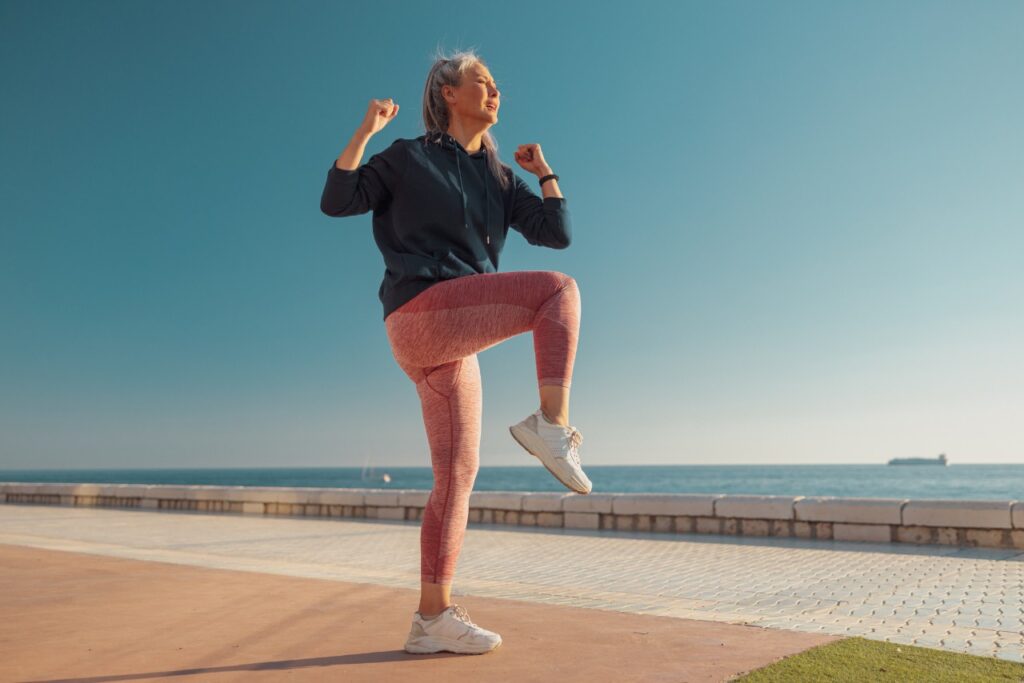
Balance is not just standing on one leg. Balance is the ability to find your center again when life moves you out of it.
We need balance when we turn, reach, step awkwardly, walk on grass, climb stairs, carry shopping, or move around a crowded room. The hips are deeply involved in all of these moments because they help control the pelvis and move the legs in different directions.
The Fabulous50s Longevity Protocol describes balance as supporting fall prevention, coordination, steadiness, confidence, and nervous system response, while mobility supports freedom of movement, flexibility, joint comfort, posture, and daily function. Together, these two pillars matter because a body that moves better often feels steadier too.
Research also supports the importance of exercise for fall prevention. A 2024 review found that exercise interventions can reduce fall risk by targeting biomechanical, physiological, and psychological factors. The CDC also reports that falls are the leading cause of injury for adults aged 65 and older, which is why balance, strength, and mobility work become so important as we age.
We are not training balance because we expect never to lose it. We are training balance so we can get it back.
Why Do Hips Become Tighter After 50?
There are several reasons hips can feel tighter after 50.
The first is menopause. Many women notice joint pain, stiffness, or a general feeling that the body does not move the way it used to. A 2024 paper introduced the term “musculoskeletal syndrome of menopause” to describe symptoms affected by the drop in estrogen, including changes that can involve joints, muscles, tendons, and other tissues.
The second reason is sitting. When we sit for long periods, the front of the hips stays shortened, the glutes are less active, and the hips are not asked to move through their full range. Over time, the body adapts to what we do most often.
I believe modern life has unintentionally designed movement out of our days through chairs, cars, elevators, and long hours looking at screens. Over time, our bodies adapt to this lack of movement by becoming stiff and rigid.
The third reason is that we stop using natural movements. Squatting, bending, climbing, carrying, walking long distances, getting down to the floor, and standing back up all keep the hips involved in real life. When those movements disappear, the hips lose regular opportunities to move well.
READ ALSO: Why You Feel Stiff After 50 and What to Do About It
How Do Tight Hips Change The Way We Walk?

Tight hips can make walking feel less fluid.
A healthy, confident walk asks the hips to extend, flex, rotate, and stabilize. We need the hip to move backward as we push off, forward as we step, and sideways as we shift weight. If one of those movements feels restricted, the body may shorten the stride.
A study on hip flexor stretching in elderly adults noted that reduced peak hip extension and increased anterior pelvic tilt can lead to smaller step lengths and decreased walking speed. Another study found that reduced hip strength and range of motion predicted physical function decline over 12 months.
This does not mean we need to panic if our hips are tight. It simply means the hips deserve attention. They are not just a stretching area. They are part of how we move through life.
When the hips move better, walking can feel more open. The legs may swing more freely. The stride may feel more natural. The whole body may feel less guarded.
READ ALSO: 8 Powerful Hip Exercises to Improve Flexibility & Mobility
How Do Tight Hips Affect Confidence?
This is the part we do not always talk about.
When our body feels stiff, we may begin to move more cautiously. We may avoid uneven paths. We may hold onto railings more often. We may stop getting down to the floor because we are unsure whether we can get back up. We may choose the elevator instead of the stairs, not because we are lazy, but because the body no longer feels as reliable.
That loss of confidence can make us move even less. And when we move less, we often become stiffer. It becomes a cycle.
This is why mobility work is not only physical. It helps rebuild trust. Each time we practise a small hip circle, a supported side step, or a gentle hip opener, we are reminding the nervous system, “I can move here. I can control this. I can stay steady.”
Mobility is freedom. It is not about being the most flexible person in the room. It is about giving your body more options.
READ ALSO: Best Mobility Exercises for Stiff Joints After 50
What Hip Mobility Exercises Help Balance And Walking?
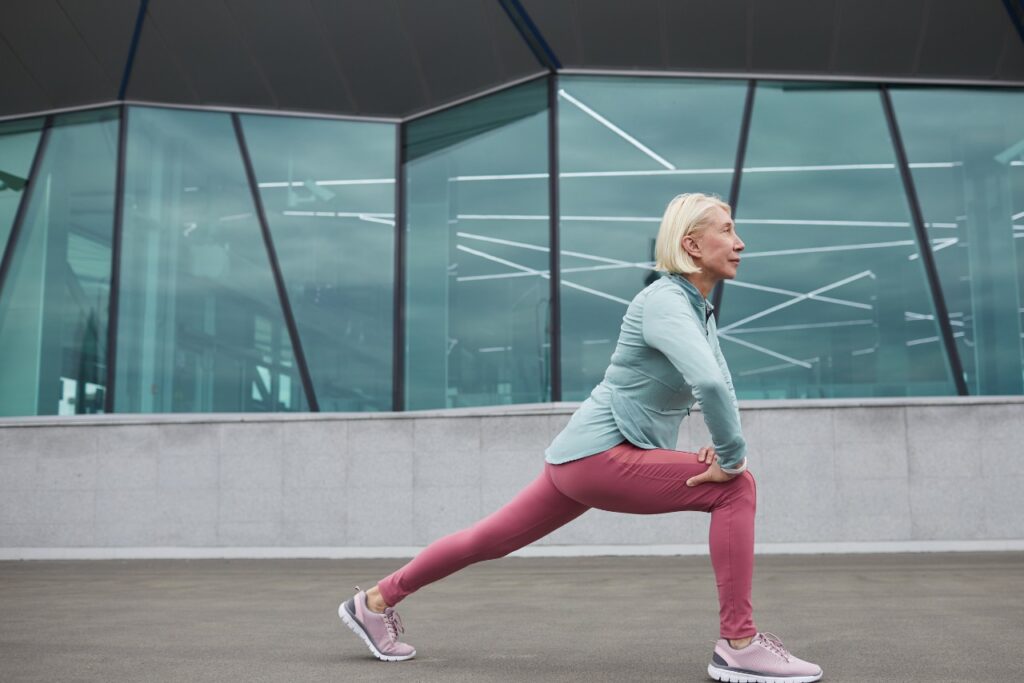
The best hip mobility exercises after 50 are gentle, controlled, and useful for daily life. We are not forcing deep stretches. We are training the hips to move in the directions life asks of them.
Standing hip circles are a lovely place to begin. Hold onto a chair, place your hands on your hips, and slowly circle the pelvis one way, then the other. Keep the movement smooth and comfortable.
Supported knee lifts help wake up the front of the hips. Hold a chair, lift one knee gently, and lower it with control. This supports the movement we need for stepping, climbing, and walking.
Hip openers help with rotation. Lift one knee slightly, open it out to the side like a small gate, then bring it back down. Keep it slow and supported.
Side-to-side weight shifts are wonderful for balance. Step your feet a little wider; shift your weight to one side, then the other. This reminds the hips how to help you move laterally, which is important for real life.
Seated figure-four stretch helps the outer hips and glutes. Sit tall, cross one ankle over the opposite thigh, and gently lean forward if comfortable. Do not push the knee down. Let the body open gradually.
Gentle hip flexor stretch helps the front of the hip, especially if you sit often. Stand in a split stance, soften the knees, and gently tuck the pelvis under until you feel a mild stretch through the front of the back hip.
Slow sit-to-stands help strength and mobility work together. Sit in a chair, stand up with control, then sit down slowly. This is one of the most practical movements we can train because we use it every day.
How Often Should We Practice Hip Mobility?
We do not need to spend hours stretching. Sometimes five minutes a day is enough.
The NHS recommends that older adults do activities that improve strength, balance, and flexibility at least two days a week, stay active daily, and break up long periods of sitting. The Fabulous50s Longevity Protocol also begins with the idea that small, consistent actions chosen for the body you have now can create meaningful change, with 10 minutes a day as a gentle entry point.
For tight hips after 50, I love the idea of little and often. A few hip circles in the morning. A seated stretch after working at your desk. A short hip mobility routine before a walk. A gentle side-to-side shift while waiting for the kettle to boil.
The body responds to regular reminders.
When Should We Be Careful?
Hip mobility should feel gentle, not painful.
If a stretch feels difficult, do not force your body to look like somebody else’s. Schellea’s reminder is simple: go only as far as your body comfortably allows, breathe, hold the position, and be patient.
If you have severe hip pain, pain after a fall, sudden weakness, numbness, swelling, unexplained pain, a hip replacement, osteoporosis, or symptoms that affect safe movement, please speak with a healthcare professional before starting new exercises.
Mobility is not about pushing through. It is about working with the body.
READ ALSO: Morning Mobility Routine for Women Over 50
How Can We Begin This Week?
Choose three hip movements: standing hip circles, side-to-side weight shifts, and a seated figure-four stretch. Practice them for five minutes a day for the next seven days.
Before you begin, notice your first few steps. Do your hips feel tight? Is your stride small? Do you feel steady when you turn?
After the routine, notice again. Maybe your hips feel warmer. Maybe your steps feel easier. Maybe you stand a little taller. Maybe the change is small, but small changes matter because they help rebuild confidence.
Tight hips affect balance and walking after 50 because the hips are central to how we move through life. When we care for them, we are not just stretching. We are protecting freedom.
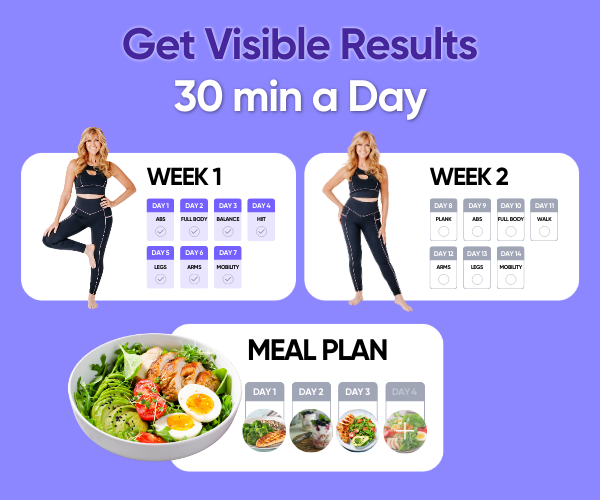
This is exactly why I love having guided mobility routines inside the Fabulous50s Vitality App. When your body feels stiff, you do not have to wonder what to do next or try to create a plan on your own. You can simply open the app, choose a gentle mobility or stretching session, and let me guide you through it step by step.
Inside the Fabulous50s Vitality App, mobility becomes part of a complete longevity rhythm, alongside strength, cardio, balance, power, recovery, and community support. You can begin with just a few minutes, build confidence gently, and keep returning to the routines that help your body feel more free.
Every stretch is a deposit in your independence. Start your 14-day free trial of the Fabulous50s Vitality App today and take your first gentle step toward moving with more freedom.
Explore More About Mobility For Women Over 50
Low-Impact Osteoporosis Exercises for Women Over 50
The 5 Ultimate Workouts Every Woman Over 50 Should Do
Why You Feel Stiff After 50 and What to Do About It
Effective Stretching Workouts to Improve Your Flexibility & Mobility
Top 5 Mobility Exercises For Women Over 50
An Easy 8-Minute Mobility and Flexibility Workout for Women Over 50
5 Minute Hip Mobility Workout For Women Over 50
Chair Exercises for Seniors: Gentle Seated Workouts for Women Over 50
Final Thoughts
Your hips help carry you into your life.
They help you walk with confidence, climb stairs, travel, turn, step, balance, and recover when the ground is not perfectly even. So when the hips become tight after 50, it is worth listening.
You do not need a long routine. You do not need extreme flexibility. You do not need to force anything.
Begin with five minutes. Move gently. Breathe. Repeat.
Mobility is not about being the most flexible woman in the room. It is about giving your body a little more freedom than it had yesterday.
Small steps, practised consistently, create remarkable changes over time.
Frequently Asked Questions
Yes. The hips help control weight shifting, stepping, turning, and recovering when you feel unstable. When the hips are tight, balance can feel less confident.
Tight hips can shorten the stride, reduce hip extension, change posture, and make walking feel less smooth. You may notice smaller steps or stiffness after sitting.
Menopause can affect joints, muscles, tendons, and connective tissue. Sitting, reduced movement variety, and less daily bending or squatting can also make the hips feel tighter.
Side-to-side weight shifts are a wonderful starting point because they train the hips to control weight transfer, which is essential for balance and walking.
It may help walking feel freer and more confident, especially if tightness is limiting your stride. Walking speed also depends on strength, balance, cardiovascular fitness, and overall health.
Five to ten minutes is enough to begin. The most important thing is consistency. A short routine repeated often is better than a long routine you rarely do.
No. You may feel gentle tension, but not sharp pain. Move only as far as your body comfortably allows and stop if something feels wrong.
Anderson DE, et al. Healthy older adults have insufficient hip range of motion and plantar flexor strength to walk like healthy young adults. https://pmc.ncbi.nlm.nih.gov/articles/PMC3975833/
Watt JR, et al. Effect of a supervised hip flexor stretching program on gait in elderly adults. https://pubmed.ncbi.nlm.nih.gov/21497318/
Coyle PC, et al. Hip range of motion and strength predict 12-month physical function decline. https://pubmed.ncbi.nlm.nih.gov/34524738/
Wright VJ, et al. The musculoskeletal syndrome of menopause. https://pubmed.ncbi.nlm.nih.gov/39077777/
Zhong YJ, et al. Mechanism-driven strategies for reducing fall risk in older adults. https://pubmed.ncbi.nlm.nih.gov/39685016