
For many years, I thought cardio had to happen in a gym, on a treadmill, or in a class where I pushed myself until I felt exhausted. I grew up in a time when cardio was presented as the answer to everything, especially if you wanted to lose weight or look fit. I rode the exercise bike, walked on the treadmill, and did classes because I believed cardio was something I had to do to stay slim.
As I have gotten older, my relationship with cardio has changed completely. Walking has become one of the most important parts of that. It is simple, underrated, and incredibly powerful. But many women ask the same question: when it comes to indoor walking vs outdoor walking, which is better after 50?
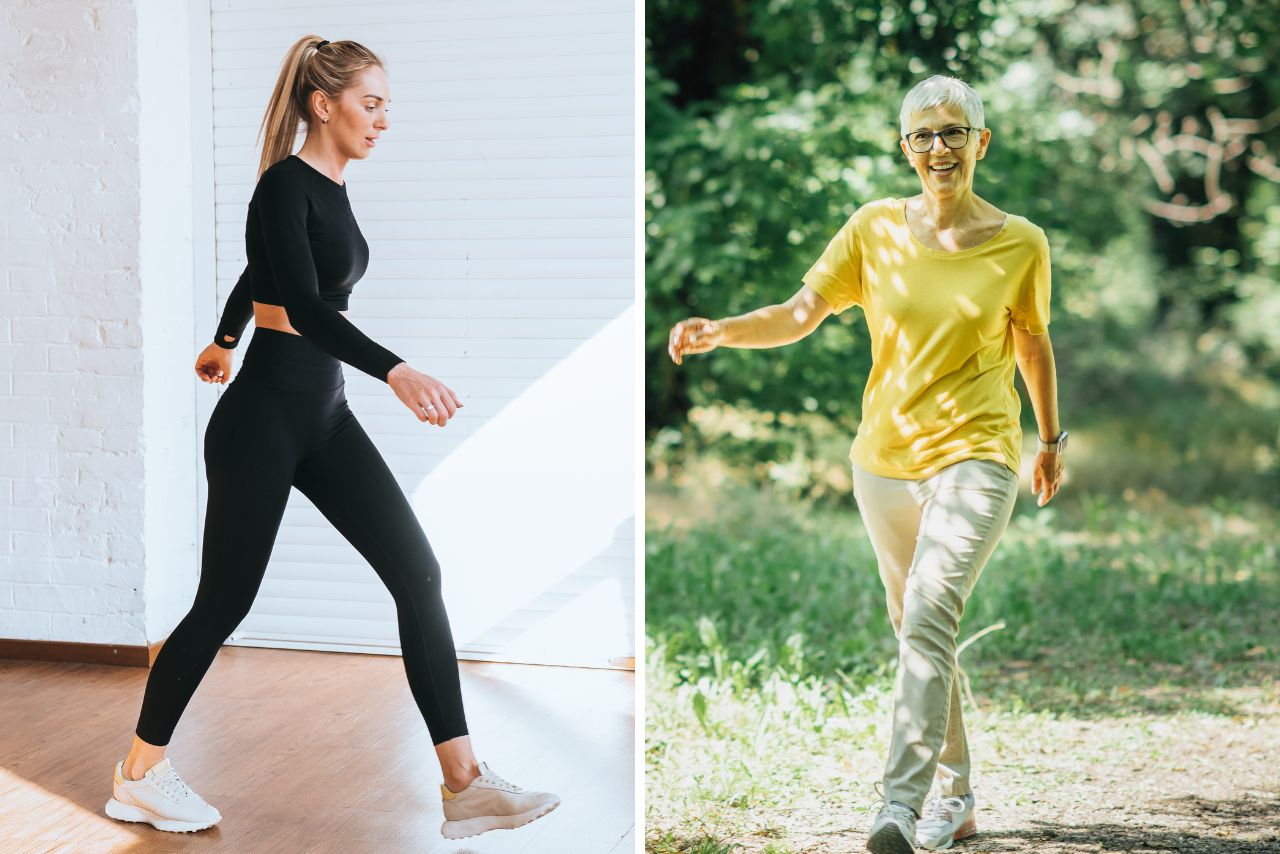
The honest answer is that both are wonderful. Outdoor walking gives us fresh air, scenery, natural light, and the rhythm of moving through the world. Indoor walking gives us consistency, safety, convenience, and the ability to move in different ways without worrying about weather, uneven paths, or time of day. The best choice is the one that helps you keep moving.
Key Takeaways: Indoor vs Outdoor Walking
- Indoor walking and outdoor walking are both excellent forms of cardio after 50.
- Outdoor walking offers fresh air, natural light, changing scenery, and a mental reset.
- Indoor walking is helpful when weather, safety, balance, time, or joint comfort makes outdoor walking difficult.
- The best walking routine is usually a combination of both, because variety helps the body and brain stay adaptable.
- Walking supports heart health, endurance, mood, circulation, and everyday confidence.
- Five minutes still counts, especially when you are rebuilding fitness or starting again after a break.
- The goal is to keep moving in a way that feels achievable and enjoyable.
What Are the Benefits Of Indoor Walking?
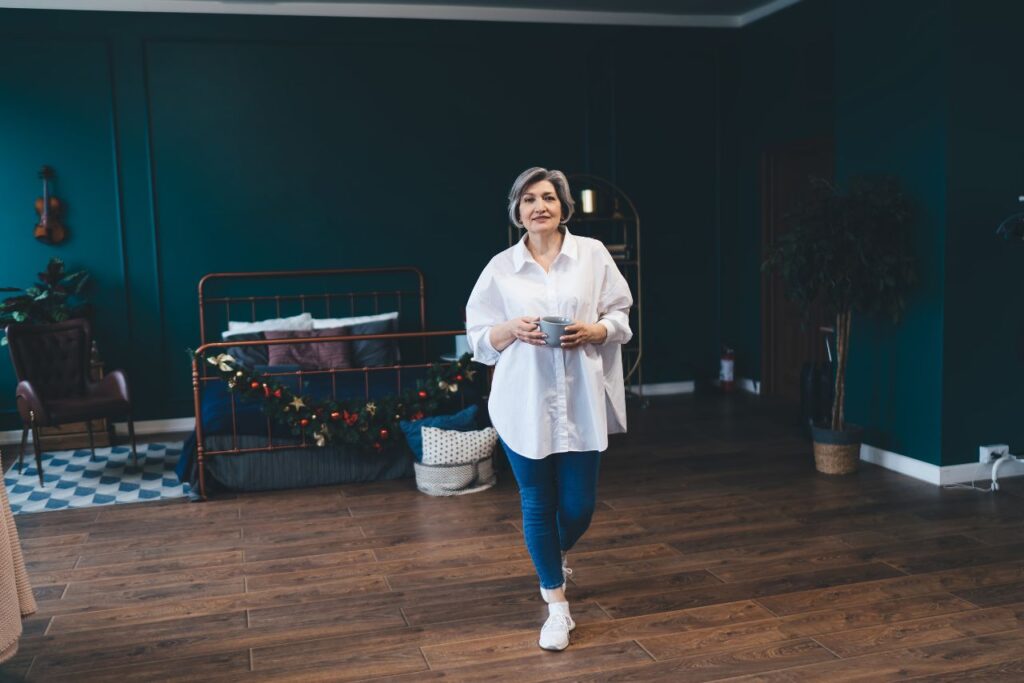
Indoor walking is one of the most practical and consistent forms of cardio after 50. You can do it at home, in a small space, in comfortable shoes, and at any time of day. You do not have to worry about rain, heat, cold, traffic, uneven ground, or whether it feels safe to walk outside.
This is one of the reasons indoor walking workouts can be so helpful for women over 50. They remove many of the barriers that stop us from moving. If you only have ten minutes, you can still march in place, step side to side, move your arms, and get your heart rate up. If your knees feel tender, you can keep the steps smaller. If your balance feels uncertain, you can stay close to a wall or chair.
Indoor walking also allows us to add variety in a controlled way. We are not simply walking in a straight line for an hour. In a Fabulous50s indoor walking workout, we may walk on the spot, step side to side, move forward and back, swing the arms, reach overhead, change pace, and coordinate the hands, core, shoulders, and legs. This trains the whole body and brain to stay adaptable, coordinated, and capable.
For many women, indoor walking is the difference between doing nothing and doing something. That is powerful, because consistency matters more than perfection.
READ ALSO: 30-Minute Fat-Burning Indoor Walking Workout Every Woman Over 50 Can Do Today
Walking is one of the simplest ways to build cardiovascular fitness after 50. If you want to understand the bigger picture of cardio and how it fits into healthy aging, explore our complete Cardio After 50 guide.
Indoor vs Outdoor Walking: Which is Better for Heart Health?
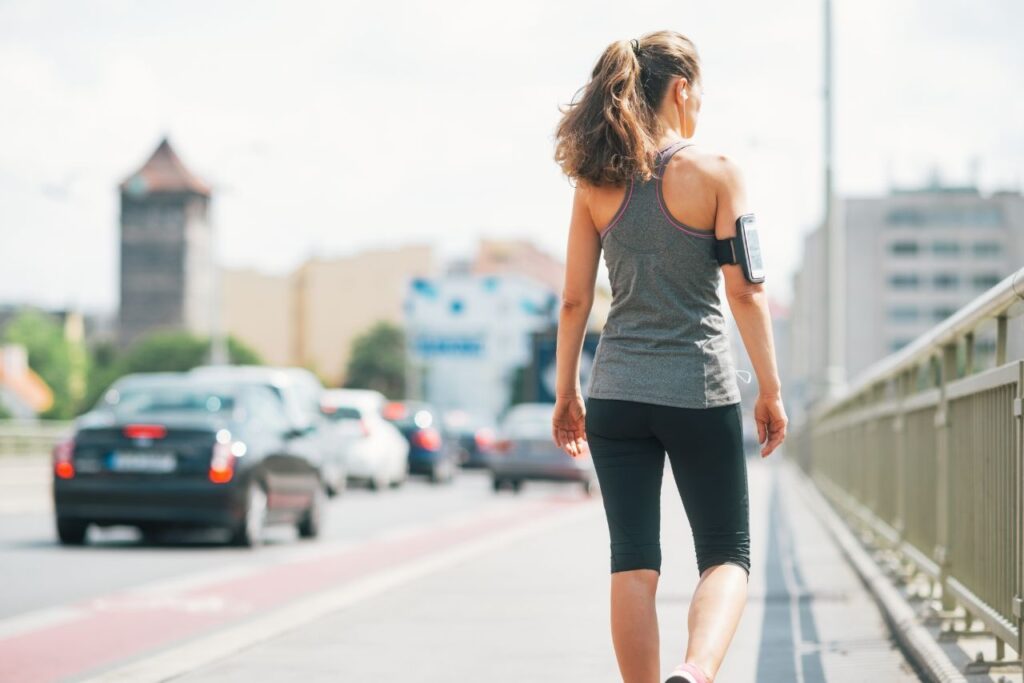
For heart health, both indoor and outdoor walking can be excellent. Your heart responds to movement, effort, breathing, and consistency, whether you are walking through your neighborhood or following a guided walking workout in your living room.
Outdoor walking may naturally encourage longer walks because the scenery keeps you engaged. You may walk further than you planned because the environment feels enjoyable. Indoor walking, on the other hand, can make it easier to move consistently because weather and safety are no longer obstacles.
The best option for heart health is the one you will actually do. If outdoor walking helps you feel calm and happy, use it. If indoor walking helps you stay consistent, use it. If you can combine both, even better.
The goal is to build enough movement across the week to support your heart, lungs, energy, and endurance. You do not need to choose one forever. You can choose what works for your body and your day.
Walking is one of the simplest ways to build cardiovascular fitness after 50. If you want to understand the bigger picture of cardio and how it fits into healthy aging, explore our complete Cardio After 50 guide.
Which is Better for Mood and Emotional Wellbeing?
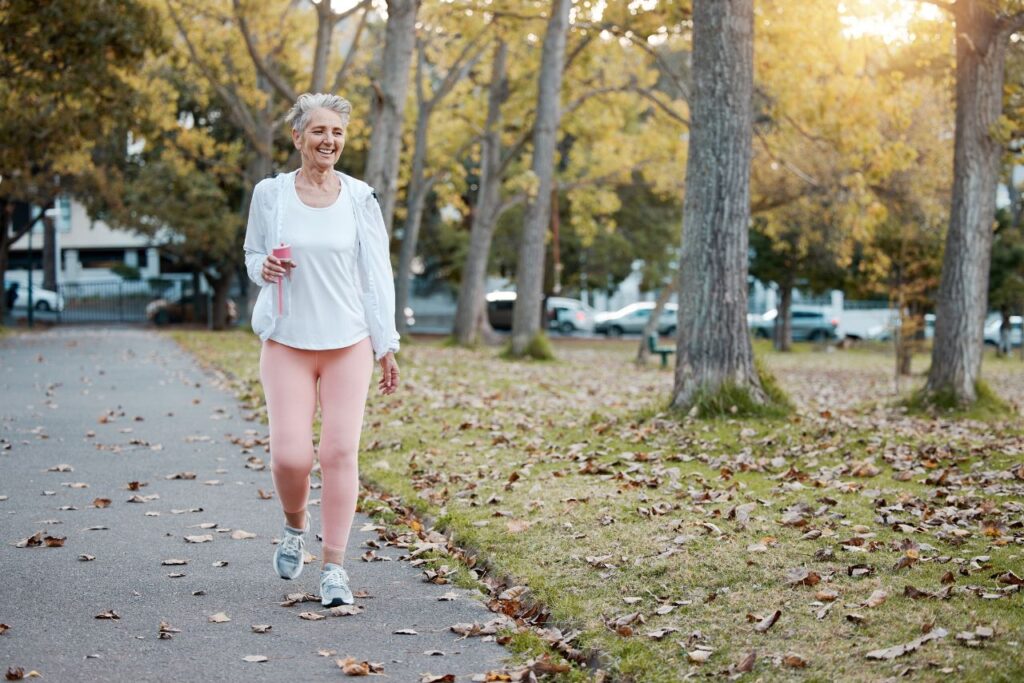
Outdoor walking may have a special advantage for mood because of the fresh air, natural light, and sense of space. A walk outside can help you feel less stuck in your thoughts, especially when you are overwhelmed or emotionally heavy.
That said, indoor walking can also shift your mood beautifully. A short walking workout, uplifting music, or five minutes of arm swinging can change the direction of your day. Movement helps regulate how we feel, whether it happens indoors or outdoors.
This is why I often say that you do not always need an hour. Sometimes five minutes is enough. Five minutes of walking, dancing, marching, or moving your arms can remind you that you are alive, capable, and able to keep moving forward.
If you can get outside, outdoor walking may give you an extra emotional lift. If you cannot, indoor walking still counts, and it can still help you feel brighter and more settled.
Want the bigger picture? Cardio is one of the five pillars of the Fabulous50s Longevity Protocol, designed to help women over 50 build heart health, energy and stamina. Explore our complete Cardio After 50 guide for practical ways to build cardiovascular fitness at your own pace.
Which is Better For Safety and Consistency?
Indoor walking often wins when safety and consistency are the main concerns. If the weather is too hot, too cold, too wet, or too dark, indoor walking gives you another option. If pavements are uneven, traffic is stressful, or you do not feel comfortable walking alone, indoor walking allows you to move without those worries.
This matters because one of the biggest challenges with fitness after 50 is not knowing what to do. It is doing it consistently. Life gets busy, energy changes, travel interrupts routines, and sometimes our bodies need a gentler option.
Indoor walking makes it easier to keep the habit alive. On days when an outdoor walk feels too hard to organise, you can still do ten minutes at home. On days when your body feels good, you can go outside and enjoy a longer walk.
The more options you have, the easier it is to keep moving.
READ ALSO: How a Slightly Faster Walking Pace Can Boost Strength & Stamina for Women
Which is Better for Posture, Stride, and Confidence?
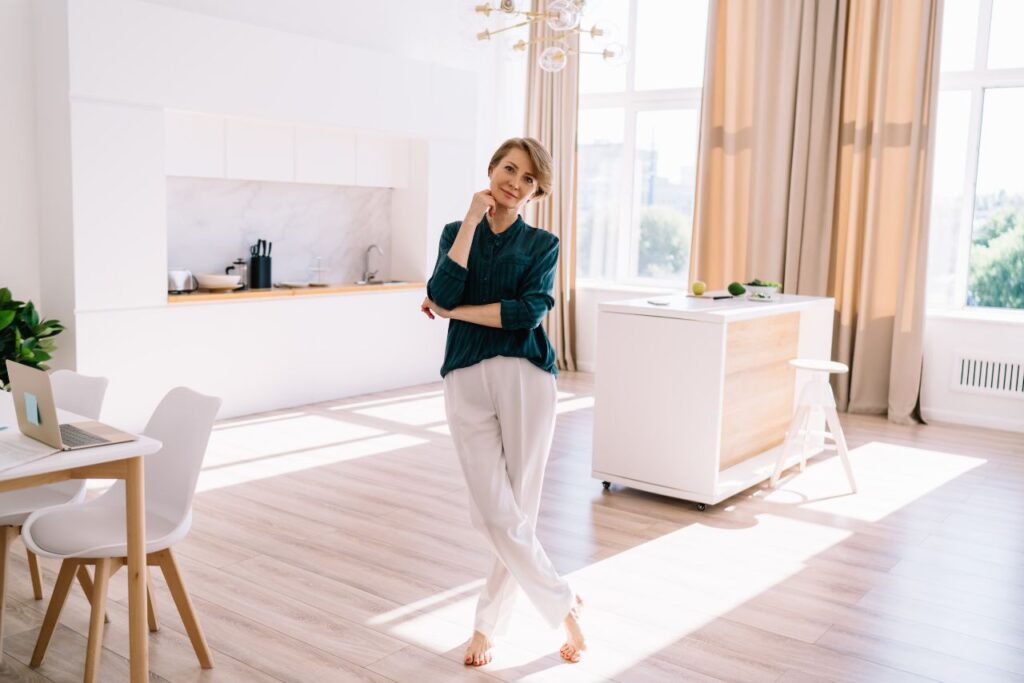
Outdoor walking gives you the chance to practise real-world movement. You look ahead, adjust to the environment, swing your arms naturally, and move through space. This can support a confident stride, especially when you walk with purpose and good posture.
Indoor walking gives you the chance to train variety. You can practise stepping in different directions, using your arms strongly, coordinating your upper and lower body, and changing pace. This matters because a confident stride is not only about walking forward. It is also about balance, coordination, posture, and power.
One thing I have become fascinated by as I have gotten older is watching how people walk. Some people move with long, confident steps, open shoulders, and energy in their stride. Others move more cautiously, with shorter steps and less arm swing. This is simply a reminder that the way we move tells a story.
Both indoor and outdoor walking can help us keep that story strong. Outdoor walking keeps us connected to the real world. Indoor walking helps us train the body and brain in ways that support adaptability.
READ ALSO: Zone 2 Walking for Longevity: A Beginner’s Guide for Women Over 50

How Can You Combine Indoor and Outdoor Walking?
The best approach for most women is to use both. You might walk outside on days when the weather is lovely and you want fresh air, then use indoor walking workouts when it is raining, too hot, too dark, or you want something guided.
A simple week might include three outdoor walks and two indoor walking workouts. You could also do a short indoor walking workout in the morning and a gentle outdoor walk later in the day. If you are just beginning, start with five to ten minutes and build slowly.
You can also use indoor walking for variety and outdoor walking for calm. For example, an indoor workout may include arm movements, step touches, and pace changes, while an outdoor walk may be your time to breathe, think, and enjoy the world around you.
This combination gives your body the best of both. You get consistency, variety, fresh air, mood support, and a stronger walking habit.
READ ALSO: How Much Walking Do You Need for Heart Health After 50?
Keep moving with these
READ ALSO: Best Cardio Exercises for Heart Health After 50
READ ALSO: 10 Signs Your Cardio Fitness Is Improving
READ ALSO: Best Low-Impact Cardio Workouts for Women Over 50
EXPLORE MORE: Tone Your Body in 20 Minutes with This Indoor Walking Workout
EXPLORE MORE: 30-Minute Indoor Walking Workout Every Woman Over 50 Can Do
You can also find guided indoor walking workouts on the Fabulous50s YouTube channel and inside the Fabulous50s Vitality App.
Final Thoughts
When it comes to indoor walking vs outdoor walking after 50, the best choice is not the same for every woman. Outdoor walking is wonderful for fresh air, natural light, scenery, and emotional wellbeing. Indoor walking is wonderful for safety, consistency, convenience, and guided variety.
Both can strengthen your heart, improve endurance, lift your mood, and help you feel more capable in everyday life. Both can help you maintain the fitness you need to walk, travel, climb stairs, carry shopping, and keep saying yes to the things you love.
So do not worry about choosing the perfect one. Choose the one that helps you move today. Five minutes still counts. A walk around the block still counts. A short indoor walking workout still counts.
Cardio is not punishment. Cardio is participation in life.
Frequently Asked Questions
Indoor walking can be just as useful for building consistency and improving cardio fitness, especially when it raises your heart rate and helps you move regularly. Outdoor walking may offer extra benefits from fresh air, natural light, and scenery, but both count.
Yes, indoor walking can support weight management when it is done consistently and combined with strength training, good nutrition, and daily movement. It is also helpful because it removes many barriers, such as weather or safety concerns.
A good goal is to build toward 150 minutes of moderate aerobic activity each week. You can break this into shorter sessions, such as ten, fifteen, or thirty minutes at a time.
Walking is a wonderful form of cardio, especially when done regularly and at a pace that gently challenges you. To improve fitness further, you can add hills, faster intervals, arm movements, or guided indoor walking workouts.
It depends on the surface and your body. Indoor walking on a flat, stable surface may feel better if your knees are sensitive. Outdoor walking can also be gentle if you choose smooth, even paths and avoid steep hills when needed.
Yes, combining both is often ideal. Outdoor walking gives you fresh air and scenery, while indoor walking helps you stay consistent when weather, safety, or time becomes a challenge.
Sources
- American Heart Association. Recommendations for Physical Activity in Adults.
- CDC. Older Adult Activity: An Overview.
- Paluch AE, et al. Daily Steps and All-Cause Mortality: A Meta-analysis of 15 International Cohorts. Lancet Public Health. 2022.
- Coventry PA, et al. Nature-Based Outdoor Activities for Mental and Physical Health: Systematic Review and Meta-analysis. 2021.
- Wicks C, et al. Psychological Benefits of Outdoor Physical Activity in Natural Versus Urban Environments. 2022.
- Physical Activity Guidelines for Americans, 2nd Edition.