

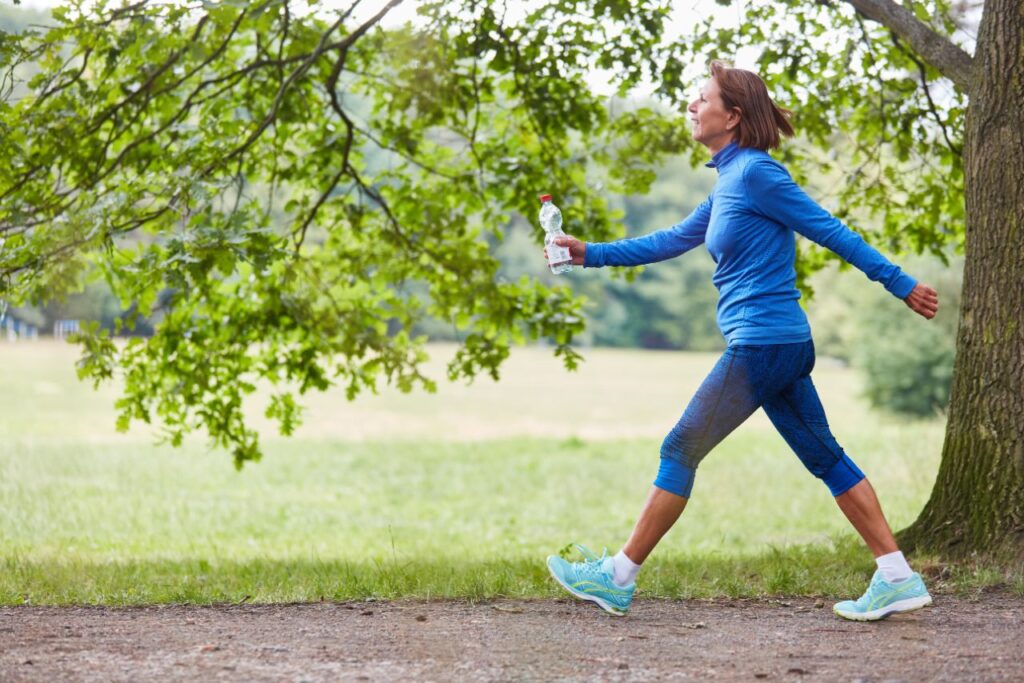
Something shifts in our bodies after 50, and if you have felt it, you know exactly what we mean. Our hearts work a little harder, our energy is different, and the stats around women’s cardiovascular health start to feel a bit more personal. The good news is that one of the most powerful things we can do for our hearts is also the simplest thing we already know how to do. Walk.
Walking for heart health after 50 is about consistent, purposeful movement that protects the most important muscle in our bodies. And the research behind it is genuinely encouraging.
So, let’s explore how much walking you need, what pace makes a difference, and how to fit it into real life without it feeling like another thing on your to-do list.
Key Takeaways: Walking For Heart Health After 50
- Walking for heart health after 50 is one of the most effective and accessible tools we have for protecting our cardiovascular system.
- The goal that research keeps pointing to is 150 minutes of moderate-intensity walking per week, which works out to about 30 minutes a day, five days a week.
- Brisk walking after 50 specifically reduces the risk of heart disease, lowers blood pressure, and improves cholesterol levels.
- After menopause, our heart health risk increases as estrogen declines, making daily walking benefits even more significant.
- Pace matters. Walking at an average to fast pace delivers greater cardiovascular protection than a slow, casual stroll.
- You do not have to do it all in one go. Research confirms that shorter walking sessions spread across the day count just as much.
Why Does Heart Health Change So Much After 50?
Before we talk about how to walk for a healthier heart, it helps to understand why heart health after 50 becomes such a priority, especially for us as women. For most of our lives, estrogen acted as a quiet protector, keeping blood vessels flexible and cholesterol levels in check. As estrogen declines through perimenopause and menopause, that protection fades.
Research from the American Heart Association confirms that a woman’s cardiovascular risk increases significantly in the years around menopause. Cholesterol levels tend to rise, blood pressure can creep up, and visceral fat, the kind that sits around our organs, becomes easier to gain. None of this is cause for alarm. It is cause for action.
Walking after 50 works directly against all of these changes. It helps us manage weight, keeps arteries more flexible, lowers blood pressure naturally, and improves our cholesterol profile. The body responds beautifully when we give it consistent movement.
READ ALSO: Walk Off Fat Fast With This 20-Minute Cardio Walking Workout
How Much Walking Do You Actually Need for Heart Health?
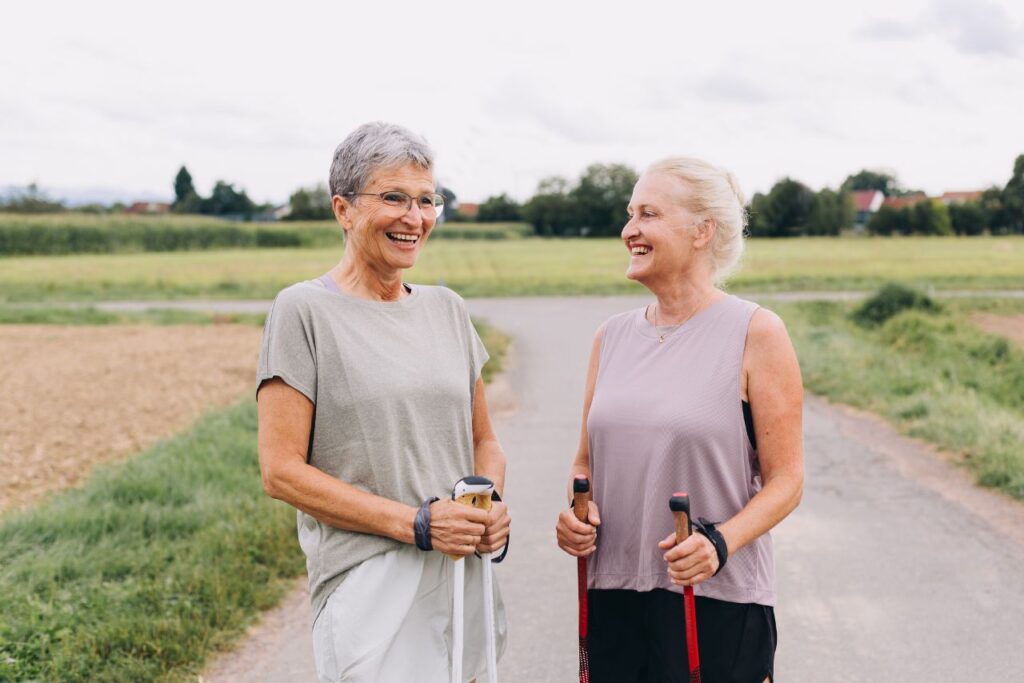
The number that keeps coming up in the research is 150 minutes per week. That is the recommendation from both the American Heart Association and global health guidelines for moderate-intensity activity. For walking, that translates to around 30 minutes a day, five days a week.
A large study published in the British Journal of Sports Medicine found that exercising for 75 minutes per week reduced the risk of heart disease by 17%, and getting to 150 minutes per week reduced the risk of early death from any cause by 16%. The exercise intensity used in this study was equivalent to a brisk walk.
What we love about this research is how achievable it feels. We are not talking about hours at the gym. We are talking about walking for heart health after 50 in a way that fits into a day, such as a morning walk before the house gets busy, a post-lunch stroll, or a relaxed evening loop around the neighbourhood.
For women specifically, research from the Nurses’ Health Study, which followed over 100,000 adults across 30 years, found that moderate physical activity, including walking, was one of the strongest predictors of healthy aging and longevity. The benefits were especially pronounced for women.
EXPLORE MORE: 20-Minute Fat-Burning Walking Workout for Women Over 50
Walking is one of the simplest ways to build cardiovascular fitness after 50. If you want to understand the bigger picture of cardio and how it fits into healthy ageing, explore our complete Cardio After 50 guide.
Does Walking Pace Make a Difference for Your Heart?
It does, and this is one of the most interesting pieces of the puzzle for walking for women over 50. Pace matters, not just duration.
A study published in the Journal of the American Geriatrics Society followed over 25,000 postmenopausal women and found that those who walked at an average or fast pace had a 27% to 34% lower risk of heart failure, compared to those who walked at a casual pace. That protective effect held regardless of body weight or whether the women did other kinds of exercise.
What does brisk walking actually feel like? A good guide is the “talk test.” If you can carry on a conversation but would find it slightly difficult to sing, you are in the right zone. Your breathing is deeper, your heart rate is up a little, but you are not gasping.
We do not want this to feel like pressure. Even casual walking is better than no walking. But if we are going to carve out 30 minutes, we might as well make those minutes count for our heart.
What Happens to Your Heart When You Walk Consistently?
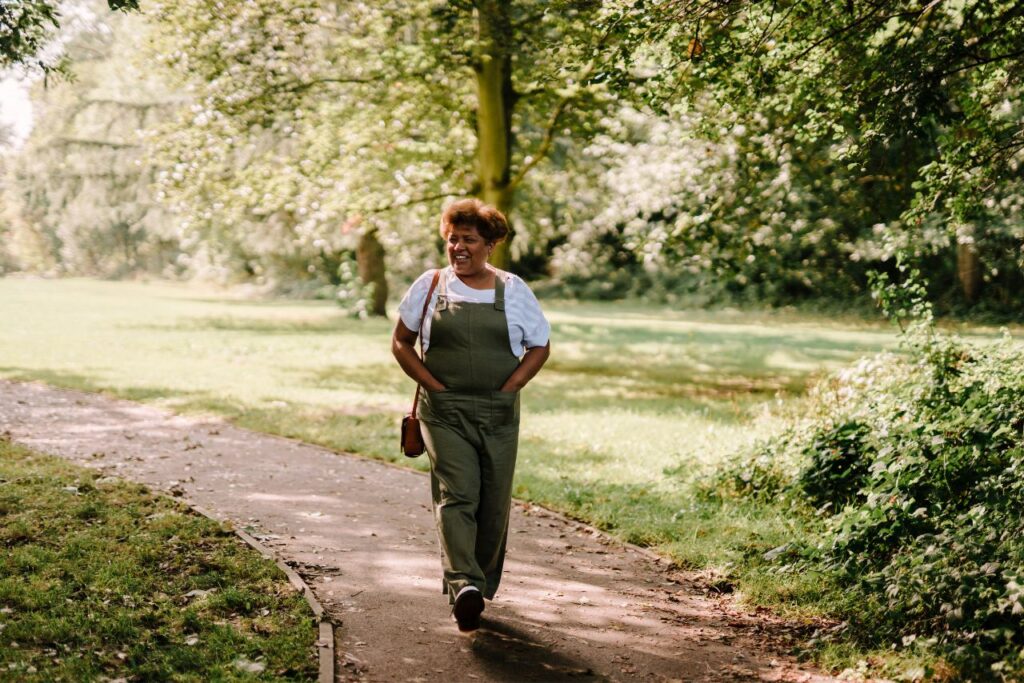
This is the part we want you to hold onto, because the daily walking benefits for the heart are remarkable and they build over time.
Walking regularly lowers resting blood pressure, a major risk factor for stroke and heart attack. It raises HDL cholesterol (the protective kind) while bringing down LDL. Regular aerobic exercise like walking helps the heart pump more blood with less effort over time, reducing the strain on the cardiovascular system, according to research cited by The Menopause Society.
A separate analysis of postmenopausal women found that walking for at least 40 minutes several times per week at an average to fast pace was associated with a nearly 25% reduction in the risk of heart failure. That benefit was consistent regardless of whether the women did other forms of exercise, which tells us that walking alone, done consistently, genuinely changes the cardiovascular picture.
Beyond the numbers, women who walk regularly report feeling more energetic, sleeping better, and experiencing a lighter mood. Those things are not separate from heart health. They are part of the same system, and walking for women over 50 addresses all of them at once.
EXPLORE MORE: The All-Round 15-Minute Walking Workout for Weight Loss
Want the bigger picture? Cardio is one of the five pillars of the Fabulous50s Longevity Protocol, designed to help women over 50 build heart health, energy and stamina. Explore our complete Cardio After 50 guide for practical ways to build cardiovascular fitness at your own pace.
Do You Have to Walk All at Once to Get the Heart Benefits?
This is one of the most common questions we hear, and the answer is genuinely reassuring. No, you do not have to do it all in one block.
The American Heart Association has clarified that what matters is how much you move across the week, not whether those minutes happen in one session. Three 10-minute walks deliver the same cardiovascular benefit as one 30-minute walk.
This is such a freeing way to think about brisk walking after 50. We can take a short loop after breakfast, another after lunch, and a gentle evening stroll. Before we know it, we have hit our daily target without it ever feeling like a workout.
If you are just starting out, this approach is especially helpful. Start with what is manageable, two or three shorter walks a day, and build from there. Consistency over time is what changes the heart, not perfection on any single day.
How to Make Walking a Heart-Healthy Habit After 50
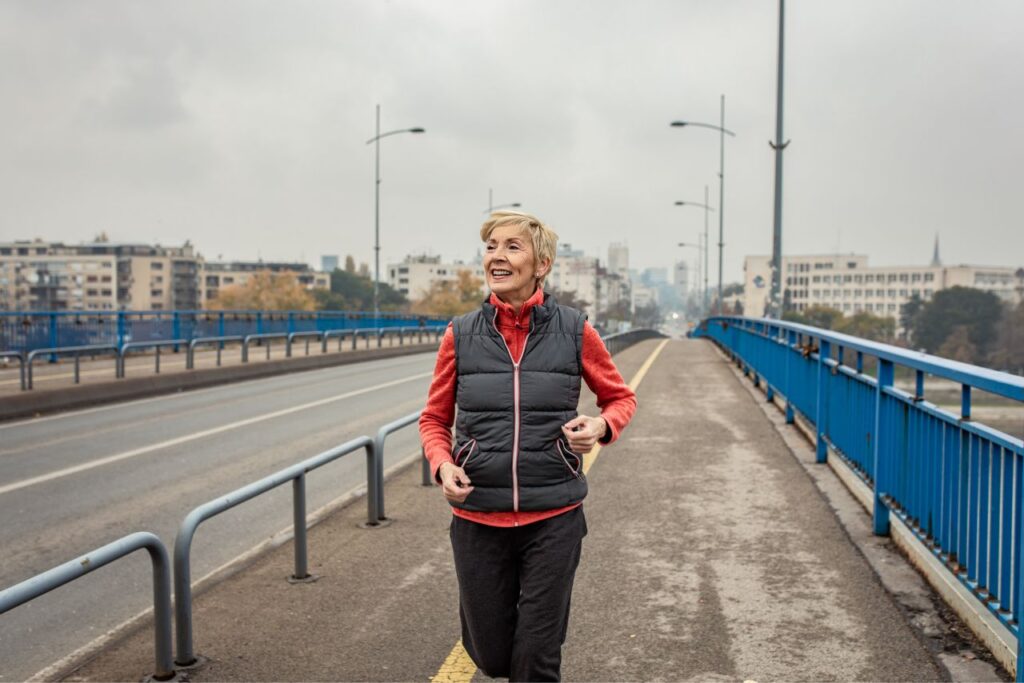
Knowing how much walking for heart health we need is one thing. Building the habit is the real work, and we want to make it as easy as possible.
Our bodies love routine. Pairing a walk with something we already do, like morning coffee, a lunch break, or the school run, makes it feel natural rather than effortful.
Invest in good shoes. Comfortable, supportive footwear makes a real difference to how much we enjoy walking and how long we can keep it up without soreness.
Track your progress, but lightly. A simple step counter or phone app is enough. We are not aiming for 10,000 steps a day from day one. We are building a sustainable practice.
Walk with a friend or listen to something you love. A podcast, an audiobook, or a playlist that lifts your mood. This is how walking becomes something we look forward to rather than tick off.
And if you want a guided walk workout that feels more like movement and less like exercise, we have options for you on the Fabulous50s YouTube channel and inside the Fabulous50s Vitality App. Try this 30-minute walking workout for a gentle start.
READ ALSO: 15-Minute Walking Workout With Dumbbells | 7-Day Challenge
Final Thoughts
Walking for heart health after 50 is one of the most generous things we can do for ourselves. It costs nothing, it fits into almost any day, and the research keeps confirming what our bodies already know: consistent movement is medicine.
We do not need to do it perfectly. We do not need to run or overhaul our lives overnight. All we need to do is to lace up and start, even for ten minutes, and build from there.
If 150 minutes a week feels like a big number right now, try 30. Then 45. Then 60. Your heart will notice, and so will you.
We are doing this together, one walk at a time.
Frequently Asked Questions
The most widely supported target is 150 minutes of moderate-intensity walking per week. That works out to about 30 minutes a day, five days a week. Even starting with less than that has measurable benefits, so please do not let the number put you off. Any walking is better than none.
It does. Research specifically on postmenopausal women shows that walking at an average to fast pace reduces heart failure risk significantly more than casual walking. The talk test is a simple guide: walk fast enough that you can hold a conversation, but not so fast that talking becomes easy.
Absolutely. Three 10-minute walks deliver the same cardiovascular benefit as one 30-minute walk. The total time across the day is what matters, not the duration of each session. This makes daily walking much more doable on busy days.
As estrogen declines through menopause, it takes with it a key layer of cardiovascular protection. Blood pressure tends to rise, cholesterol profiles can shift, and visceral fat becomes easier to accumulate.
The best time is whenever you will actually do it. Morning walks tend to be easier to protect from schedule disruptions, and some research suggests that post-meal walks help with blood sugar regulation, which also supports heart health. But honestly, any time you can get outside and move is the right time.
References
American Heart Association. Physical Activity Recommendations for Adults. https://www.heart.org/en/healthy-living/fitness/fitness-basics/aha-recs-for-physical-activity-in-adults
American Heart Association. Getting More Exercise Than Guidelines Suggest May Further Lower Death Risk (2022). https://www.heart.org/en/news/2022/07/25/getting-more-exercise-than-guidelines-suggest-may-further-lower-death-risk
Go Red for Women. Menopause and Cardiovascular Risk. https://www.goredforwomen.org/en/know-your-risk/menopause/menopause-and-cardiovascular-risk
The Menopause Society. Heart Health. https://menopause.org/patient-education/menopause-topics/heart-health
Science Daily. Regular Walking May Protect Against Heart Failure Post Menopause (2018). https://www.sciencedaily.com/releases/2018/03/180301094814.htm
Wiley Newsroom. Can Walking Pace Impact Heart Failure Risk? (2022). https://newsroom.wiley.com/press-releases/press-release-details/2022/Can-individuals-walking-pace-impact-their-heart-failure-risk/default.aspx
WebMD / British Journal of Sports Medicine. Daily 11-Minute Brisk Walk Has Big Health Benefits (2023). https://www.webmd.com/healthy-aging/news/20230301/cm/daily-11-minute-brisk-walk-big-health-benefits-study
PMC / National Institutes of Health. The Multifaceted Benefits of Walking for Healthy Aging. https://pmc.ncbi.nlm.nih.gov/articles/PMC10643563/