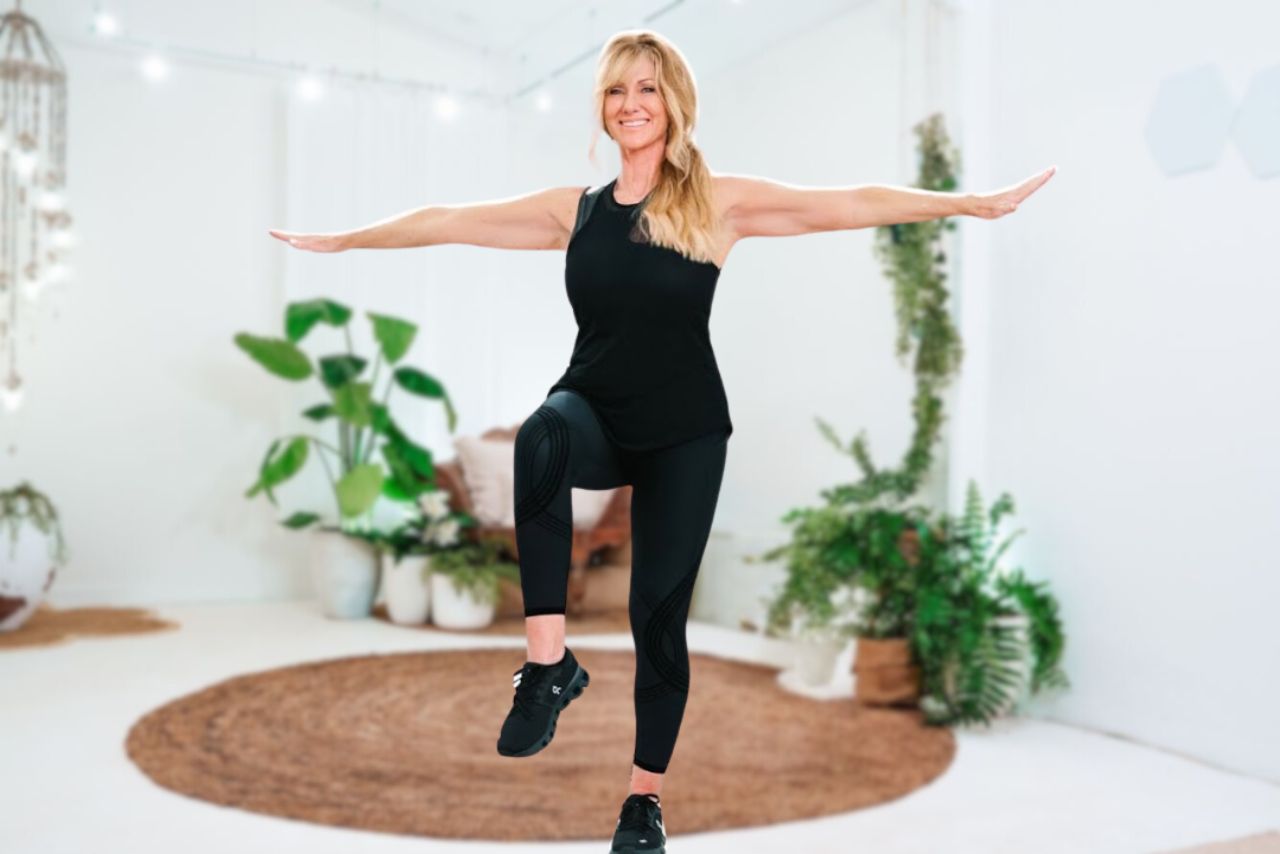

Balance is one of those things we often take for granted until it starts to feel less reliable. We notice it when we step off a curb, walk across uneven ground, turn quickly, climb stairs, or stand on one leg to put on a shoe. The moment we wobble, we realize how much our confidence depends on feeling steady.
Balance after 50 matters because it is about how well your brain, eyes, inner ear, muscles, joints, feet, and nervous system work together to keep you upright and moving with confidence. When these systems are challenged regularly, they can adapt. When they are ignored, they can become less responsive over time.
At Fabulous50s, balance is one of the Five Pillars of the Fabulous50s Longevity Protocol™ because it supports the freedom to keep moving through life with confidence. The protocol brings together Strength, Cardio, Mobility, Balance, and Power so women over 50 are not relying on one type of exercise alone. Balance protects freedom because a fall can affect confidence, independence, mobility, and quality of life.
Key Takeaways: Beginner Power Exercises
- Balance after 50 is a skill we can improve with regular practice.
- Most women benefit from balance training at least 2 to 3 times per week.
- Short daily balance “snacks” can help the brain and body stay responsive.
- Balance work supports steadiness, confidence, reaction time, and fall prevention.
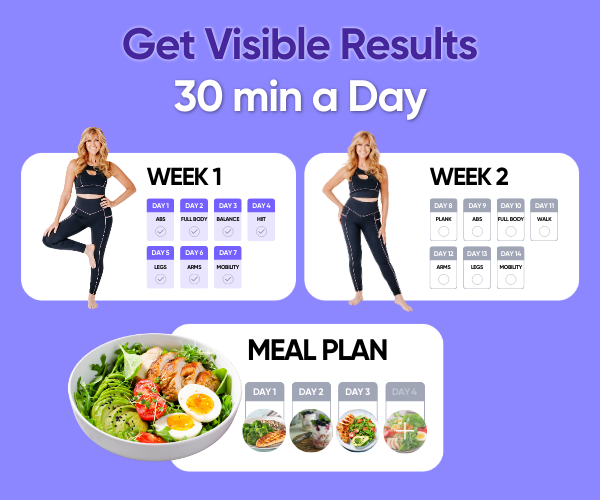
- Inside the Fabulous50s Vitality App, balance is trained as part of the full Fabulous50s Longevity Protocol™.
How Often Should We Practice Balance After 50?
For most women, a good starting point is to practice balance exercises 2 to 3 times per week. That gives your body regular opportunities to improve steadiness, coordination, and confidence without making balance feel like another overwhelming task.
Research supports this kind of rhythm. The World Guidelines for Falls Prevention recommend balance-challenging and functional exercises, such as stepping and sit-to-stand movements, at least three times per week for community-dwelling older adults, with progression over at least 12 weeks for stronger results.
That does not mean every session needs to be long. Balance training responds beautifully to small, consistent practice. Balance does not require hours of training, and even 10 minutes once or twice a week can make a meaningful difference when practiced consistently.
For women who feel unsteady, have a fear of falling, or notice they are becoming more cautious with movement, practicing balance most days can be even more helpful. This does not need to mean a full workout every day. It may simply mean adding one or two safe balance exercises into your daily routine.
READ ALSO: How Posture Affects Balance As You Age
Why Does Balance Need Regular Practice?
Balance is a skill, not a fixed trait. It improves when the body receives regular signals to adapt. Every time we practice standing on one leg, shifting weight, stepping in different directions, or turning with control, we are teaching the nervous system how to respond more effectively.
This matters because balance depends on several systems working together. Your eyes help you see where you are in space. Your inner ear helps detect motion and position. Your feet, ankles, knees, hips, and spine send information back to the brain through proprioception, which is your body’s sense of position. Your muscles then respond by making small adjustments to keep you steady.
When we practice balance after 50, we are not only training the legs. We are training communication between the brain and body. Balance training is a great way to improve steadiness, coordination, reaction time, posture, foot strength, body awareness, and nervous system response.
READ ALSO: Best Balance Exercises to Improve Your Stability and Coordination
Is Daily Balance Practice Better Than Weekly Practice?
Daily practice can be very helpful, especially when it is short and safe. Balance does not need to exhaust you to be effective. In fact, the best balance work often feels like a small challenge rather than a hard workout.
Think of it as giving your nervous system a regular reminder. A few minutes of supported single-leg standing, heel-to-toe walking, or side-to-side weight shifts can help your body stay familiar with the feeling of adjusting, correcting, and finding your center again.
The World Health Organization recommends that older adults include varied, multicomponent activity that emphasizes functional balance and strength, especially as part of weekly movement. For adults with poorer mobility, WHO guidance also highlights balance-enhancing activity on three or more days per week to help prevent falls.
For the Fabulous50s woman, the most realistic answer is this: do structured balance training 2 to 3 times each week, then add tiny moments of balance practice into daily life whenever you can. That combination builds both strength and confidence.
RED ALSO: Simple Daily Habits That Improve Balance Over 50
How Long Should a Balance Session Be?
A balance session can be as short as 5 to 10 minutes. If you are doing a structured balance workout, 10 to 20 minutes is usually enough for most women, especially when the exercises are focused, progressive, and performed with good control.
Balance after 50 does not need to become complicated. A short session might include supported single-leg balance, heel-to-toe standing, side steps, forward and backward weight shifts, gentle reaches, and controlled turns. As confidence grows, the exercises can gradually become more challenging.
The NHS recommends older adults try balance exercises at least twice a week and combine them with strength, flexibility, and sitting exercises. This supports the idea that balance training works best as part of a complete movement plan, not as a separate task that only happens when something feels wrong.
What Kind of Balance Exercises Should Women Over 50 Do?
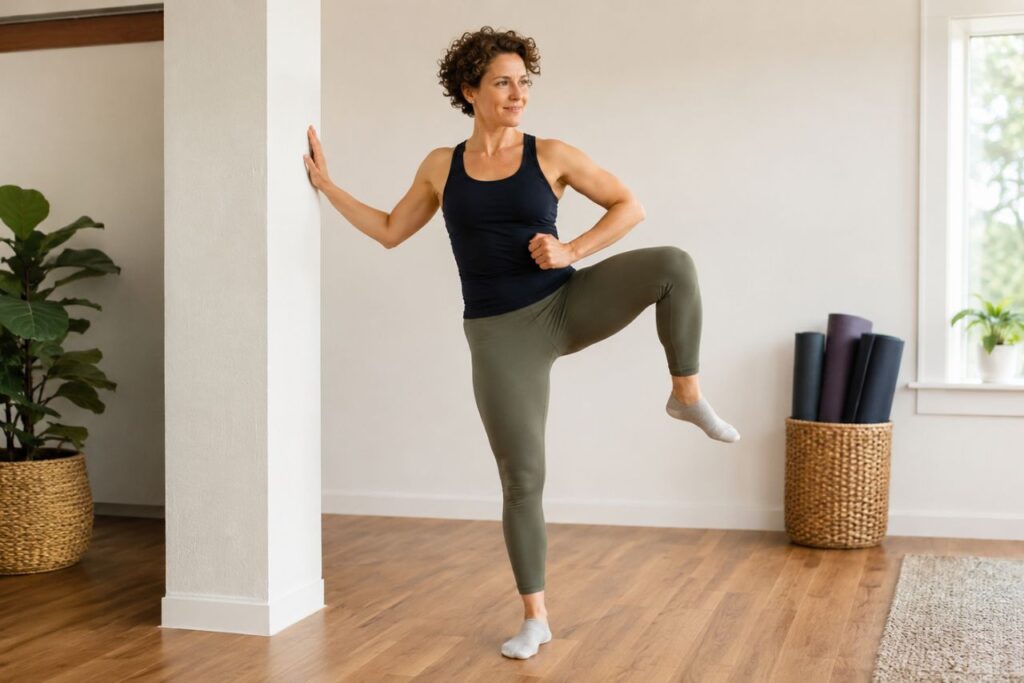
The best balance exercises for women over 50 are the ones that feel safe enough to practice regularly and challenging enough to create improvement. A chair, wall, or kitchen counter can be used for support, especially in the beginning.
Useful balance exercises include supported single-leg standing, heel-to-toe walking, side-to-side weight shifts, sit-to-stand practice, gentle step taps, slow marching, reaching while standing, and controlled turning. As confidence improves, you can gradually reduce how much support you use or add gentle movement.
Balance training is not only about standing on one leg. Life asks us to move in many directions. We step sideways, turn, reach, shift our weight forward and backward, walk on uneven ground, and recover when we stumble. That is why balance training should include variety, not just one static position.
READ ALSO: Best Balance Exercises to Improve Your Stability and Coordination
Can Balance Training Help Prevent Falls?
Balance training can reduce fall risk when it is practiced consistently and progressively. A Cochrane review led by Sherrington found that exercise programs mainly involving balance and functional training reduced the rate of falls in older people living in the community by about 24% compared with control groups.
This is one of the reasons balance after 50 is so important. A fall is not only a physical event. It can change how confident we feel. Some women begin avoiding stairs, uneven paths, travel, social outings, or even walking outdoors because they no longer trust their body in the same way.
The goal is not to become fearful of falling. The goal is to build the confidence to move through the world steadily. This is also the Balance Pillar promise inside the Fabulous50s framework: balance training is not about fear of falling. It is about building the confidence to move through the world steadily.
Can You Combine Balance With Strength, Cardio, Mobility, and Power?
Yes, and this is one of the smartest ways to train. Balance does not live in isolation. Stronger legs support steadier movement. Better mobility helps the ankles, hips, and spine respond more easily. Cardio supports stamina so we do not become tired as quickly. Power helps us react quickly if we trip or need to step suddenly.
This is exactly why the Fabulous50s Longevity Protocol™ brings the pillars together. Walking is valuable, but walking alone does not fully protect muscle, bone density, or balance. Strength training is essential, but strength alone does not fully train cardiovascular fitness, mobility, or coordination. The protocol works because it brings the right pieces together.
A balanced week might include strength workouts, low-impact cardio, mobility flows, balance practice, and gentle power or impact work where appropriate. You do not need to do everything every day. The goal is to include the right elements across the week in a rhythm that your body can recover from and your life can sustain.
READ ALSO: Why You Need Strength and Power Training in Your Routine Over 50
What Are the Signs Your Balance Is Improving?
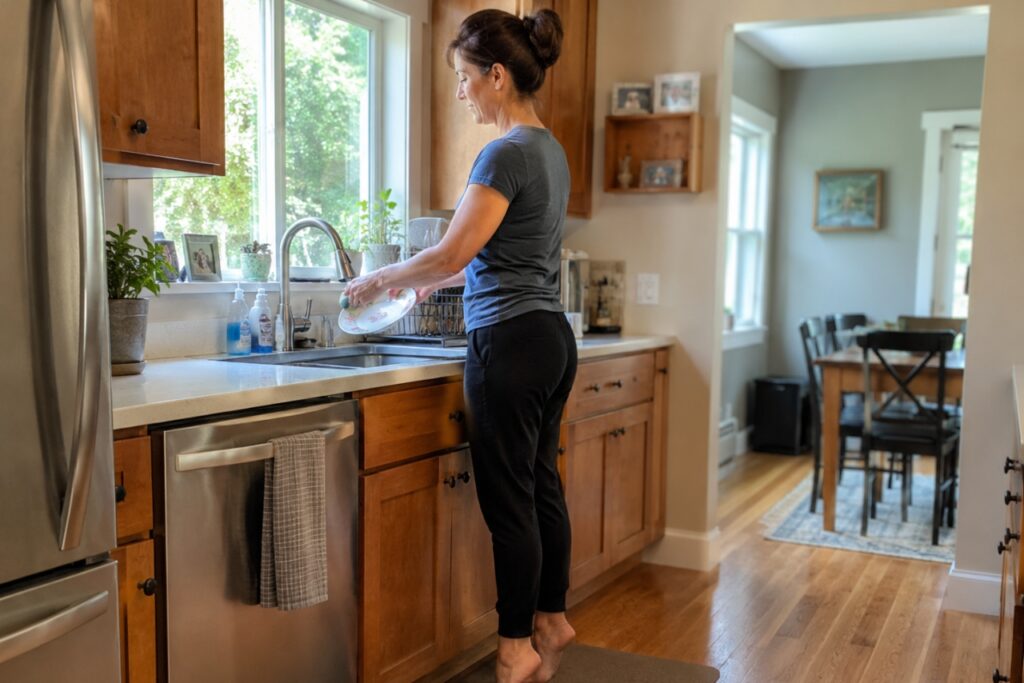
One of the most encouraging things about balance training is that progress can often be felt quickly. You may notice that you wobble less, stand taller, recover faster when you shift your weight, or feel more confident walking on uneven ground.
You may also notice that everyday movements feel easier. Getting dressed while standing may feel steadier. Turning around in the kitchen may feel smoother. Walking downstairs may feel less intimidating. You may feel more confident stepping off a curb or carrying bags while walking.
These small changes matter. Balance after 50 is not only about the exercise itself. It is about the way improved steadiness changes how safe, capable, and confident we feel in daily life.
How Can Beginners Start Safely?
Start with support nearby. A wall, sturdy chair, or kitchen counter gives your body confidence while you practice. Begin with both feet on the floor, then progress gradually to narrower stances, heel-to-toe positions, supported single-leg work, and gentle stepping patterns.
Keep the movements slow and controlled. If you feel dizzy, lightheaded, unsafe, or unusually unsteady, stop and speak with a qualified healthcare professional. This is especially important if you have osteoporosis, neurological symptoms, recent surgery, severe joint pain, unexplained dizziness, or a history of falls.
The CDC encourages older adults to include activities that improve balance alongside aerobic and muscle-strengthening activity. It also provides fall prevention resources through STEADI, a program designed to help assess and reduce fall risk in older adults.
Final Thoughts
Balance training is one of the simplest ways to invest in your future independence. It does not require hours of effort, expensive equipment, or a perfect fitness level. It simply asks for regular practice.
For most women, practicing balance exercises 2 to 3 times per week is a strong foundation. Adding short daily balance moments can make that foundation even stronger. Over time, these small practices help your brain and body communicate more clearly, react more quickly, and move with greater confidence.
Balance after 50 is not a test of whether your body is good or bad. It is a skill we can train. Every small improvement is evidence that your body is learning, adapting, and becoming more capable.
Inside the Fabulous50s Vitality App, you can practice guided balance workouts designed specifically for women over 50, alongside Strength, Cardio, Mobility, and Power. The app brings the Fabulous50s Longevity Protocol™ into a simple weekly structure so you can build steadiness, confidence, and consistency one day at a time.
Frequently Asked Questions
Most women over 50 benefit from balance exercises 2 to 3 times per week. Women who feel unsteady or want to improve more quickly may also add short daily balance practice with support nearby.
Yes. Balance after 50 can improve with regular practice because the nervous system remains adaptable. Exercises that challenge steadiness, coordination, weight shifting, and reaction time can help the brain and body work together more effectively.
Yes, 10 minutes can be enough when the exercises are focused and practised consistently. Short sessions are often easier to repeat, and consistency is what helps the body adapt over time.
Daily practice can be helpful, especially if it is short and safe. You might do a few minutes of supported single-leg standing, heel-to-toe walking, or weight shifts on days when you are not doing a full balance workout.
A supported single-leg stand is a useful beginner exercise. Stand near a wall or sturdy chair, gently lift one foot, and hold for a few seconds while keeping your posture tall. Switch sides and repeat.
Walking helps, but walking alone does not fully train balance. Balance improves more effectively when we include specific exercises that challenge stability, direction changes, weight shifts, coordination, and reaction time.
Pause and seek guidance if you feel dizzy, faint, unsafe, or unusually unsteady. It is also wise to speak with a healthcare professional if you have osteoporosis, recent surgery, neurological symptoms, severe joint pain, or a history of falls.
Montero-Odasso, M., et al. “World Guidelines for Falls Prevention and Management for Older Adults: A Global Initiative.” Age and Ageing, 2022. https://academic.oup.com/ageing/article/51/9/afac205/6730755
Sherrington, C., et al. “Exercise for Preventing Falls in Older People Living in the Community.” Cochrane Database of Systematic Reviews, 2019. https://pubmed.ncbi.nlm.nih.gov/31792067/
Bull, F.C., et al. “World Health Organization 2020 Guidelines on Physical Activity and Sedentary Behaviour.” British Journal of Sports Medicine, 2020. https://pmc.ncbi.nlm.nih.gov/articles/PMC7719906/
National Health Service. “Physical Activity Guidelines for Older Adults.” NHS, 2024. https://www.nhs.uk/live-well/exercise/physical-activity-guidelines-older-adults/
National Health Service. “Balance Exercises.” NHS, 2024. https://www.nhs.uk/live-well/exercise/balance-exercises/