
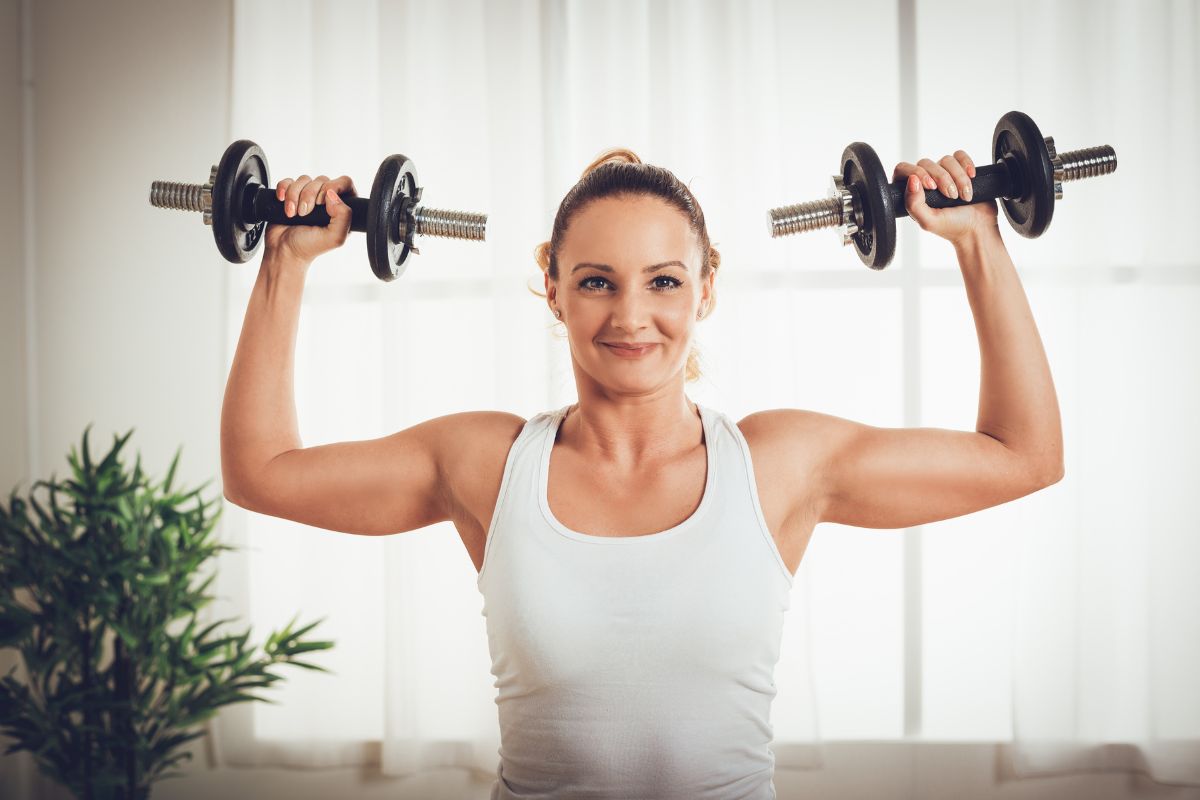
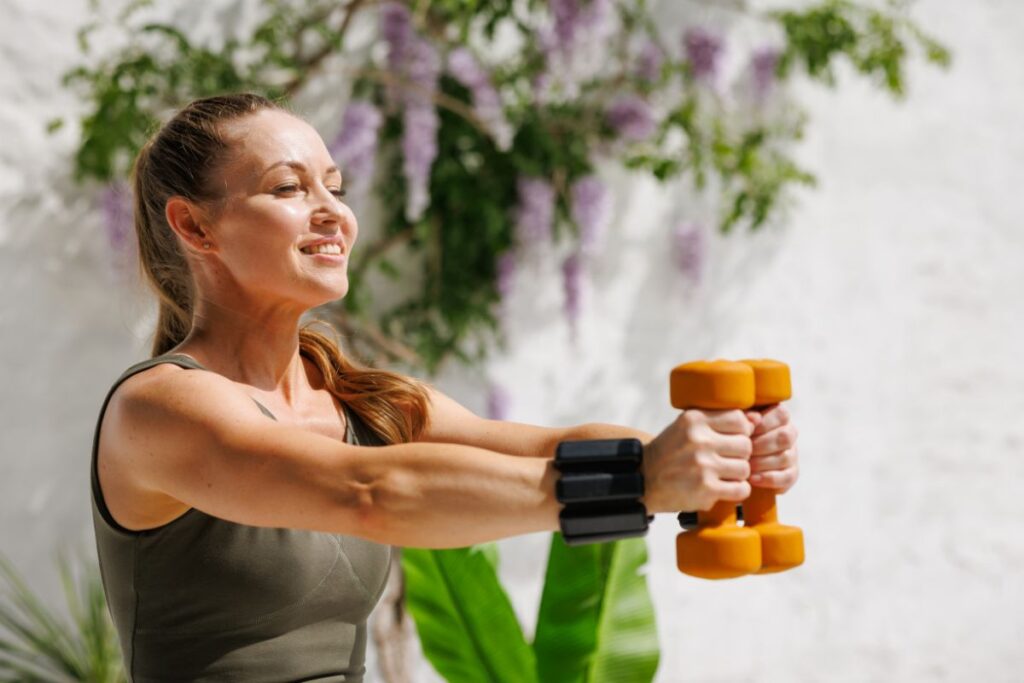
Strength and power training for women over 50 often get presented as competing choices, as if you must pick a lane. They are not competing. They are sequential. Power is built on top of strength, not instead of it.
Strength gives your muscles the ability to support you, protect your joints, carry groceries, climb stairs, and move through daily life with more confidence. Power takes that strength and teaches your body to use it quickly, which matters more than many women realize. It is the quick step that helps you catch yourself before a fall, the ability to get out of a chair with ease, the reaction time to change direction, and the confidence to move without feeling fragile.
After 50, this kind of training becomes less about appearance and more about independence, bone health, balance, metabolism, and longevity. You do not need to train like an athlete to benefit from it. You simply need the right progression, such as building strength first, then adding safe and controlled power movements that help your body stay capable, responsive, and strong for the years ahead.
Key Takeaways: Why You Need Strength and Power Training
- Strength and power training for women over 50 are not competing priorities.
- They build on each other. Strength creates the raw force your muscles can produce.
- Power determines how fast that force shows up. You cannot have meaningful power without an underlying base of strength.
- A weekly plan can combine both without doubling your workout time.
- Most women only need 3 to 4 sessions a week to train effectively.
- Skipping either one leaves a real gap in how your body performs and protects you.
How Strength Supports Power
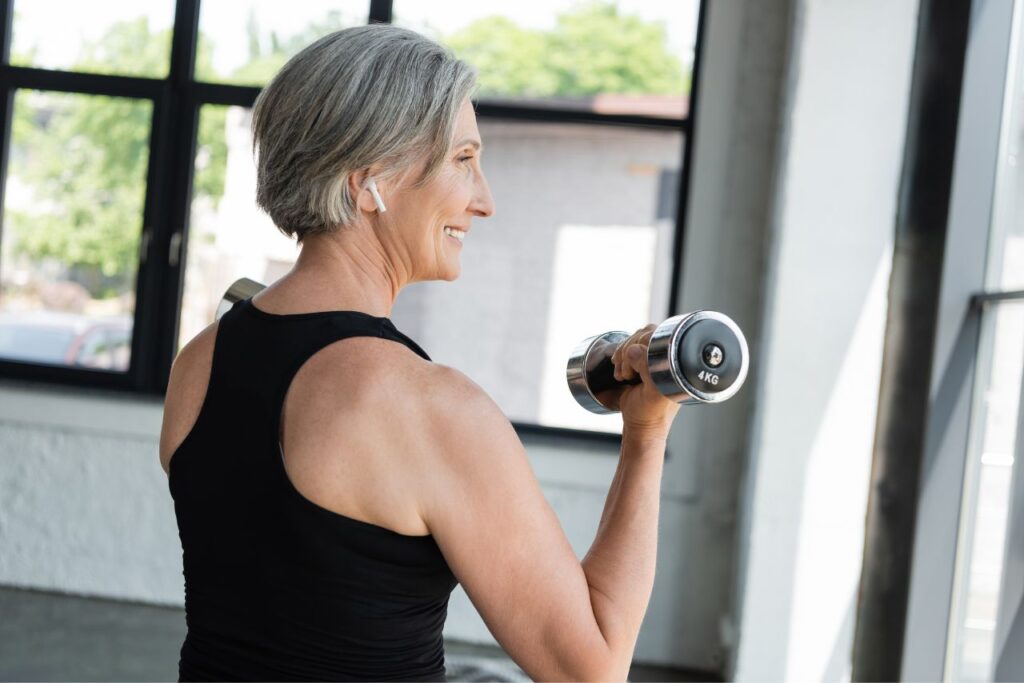
You cannot generate meaningful power without an underlying base of strength. Power is fast force, and there has to be force available to move quickly in the first place.
This is why strength and power training for women over 50 should never be sequenced backwards. A woman with very little muscle strength who jumps straight into fast, explosive movement is working without a foundation. Building baseline strength first makes every power movement safer and more effective.
How Power Completes Strength
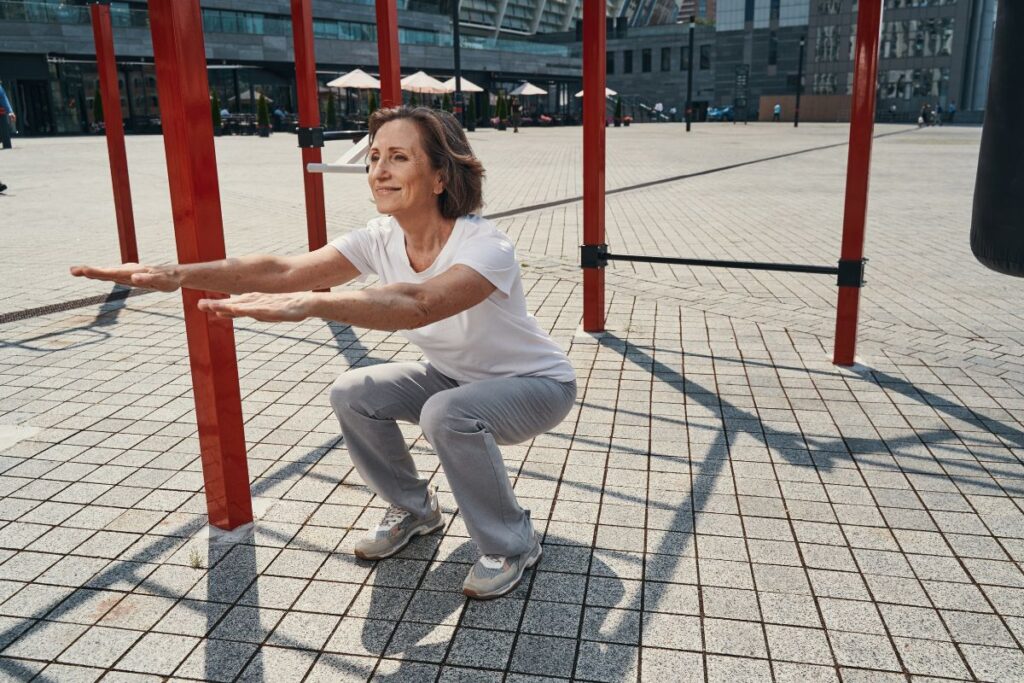
Strength alone has a ceiling on what it protects you from. You can be strong and still react slowly, since strength training rarely demands speed.
Power closes that gap. It is what determines whether you catch yourself before a stumble or take the fall, whether you rise quickly from a low chair, or whether your body can respond fast enough when life surprises you. Strength and power training for women over 50 only becomes complete when both pieces are present.
What the Combination Actually Protects
Together, strength and power training for women over 50 protect two different things. Strength protects your muscle mass, bone density, and metabolic health over the long term. Power protects your reaction time, your fall risk, and your ability to respond quickly in the moment.
Losing either one creates a real gap. A woman with strength but no power can lift a heavy bag but may not react fast enough to avoid a fall. A woman with power but no strength has quick reflexes but lacks the underlying muscle and bone support to sustain them long-term.
READ ALSO: A Guide to Power Training for Women Over 50
A Weekly Structure That Combines Both
You do not need to double your training time to include strength and power training for women over 50 in the same week. Most women can train in both effectively in three to four sessions.
A simple structure: two strength-focused sessions a week, built around slower, controlled resistance movements, and one to two power-focused sessions, built around fast sit-to-stands, quick step-ups, or light marching drills.
If time is limited, power moves can be added to the end of an existing strength session rather than scheduled separately.
READ ALSO: The Ultimate Strength Training Blueprint For Women Over 50
Sequencing Within a Single Session
If you prefer to combine both in one workout, sequencing matters. Train power first while you are fresh, since it demands more from your nervous system. Follow with your strength work once the explosive, fast-twitch demand has passed.
This order also reduces injury risk, since fatigued muscles are less able to move quickly and safely than well-rested ones.
READ ALSO: Strength Isn’t Enough: Why Women Over 50 Need Power Training Too
What A Simple Weekly Routine Look Like
Here is a gentle sample week. Adjust it to fit your life, and always start where you feel confident.
| Day | Focus | Example |
|---|---|---|
| Monday | Strength session, then power | Leg and core strength, finished with quick sit-to-stands |
| Tuesday | Gentle movement | A walk, stretching, or light mobility |
| Wednesday | Rest or easy walk | Let your body recover and adapt |
| Thursday | Strength session, then power | Upper body and balance, finished with heel raises and side steps |
| Friday | Gentle movement | A walk or a short balance practice |
| Weekend | Rest and enjoy | Rest, or add movement you love |
Notice how gentle this is. Two focused sessions, a little daily movement, and real rest. That balance is the heart of a sustainable routine.
READ ALSO: How to Build Muscle and Get Stronger Over 50.
More Power Training Resources
- Power Training: The New Science Behind Longevity and Fall Prevention for Women Over 50
- A Guide to Power Training for Women Over 50
- Why You Need Strength and Power Training in Your Routine Over 50
- Strength Isn’t Enough: Why Women Over 50 Need Power Training Too
- How to Start Power Training Without Jumping
- How Power Training Helps You Stay Independent
- Is Power Exercise Safe After 50?
- Power Exercises That Help With Stairs, Trips, And Balance
- Fast Sit-to-Stands: A Simple Power Exercise After 50
- Beginner Power Exercises for Women Over 50
- Power Training vs. Strength Training: What’s the Difference?
- Strength Isn’t Enough: Why Women Over 50 Need Power Training Too
- Why You Need Strength and Power Training in Your Routine Over 50
- Power vs Strength: What Women Over 50 Need to Know
Final Thoughts
Strength and power training for women over 50 are not rivals competing for space in your week. They are two halves of the same protective system, one building your capacity, the other determining how quickly you can use it.
Training both, in the right order and structure, gives your body what neither one can provide alone.
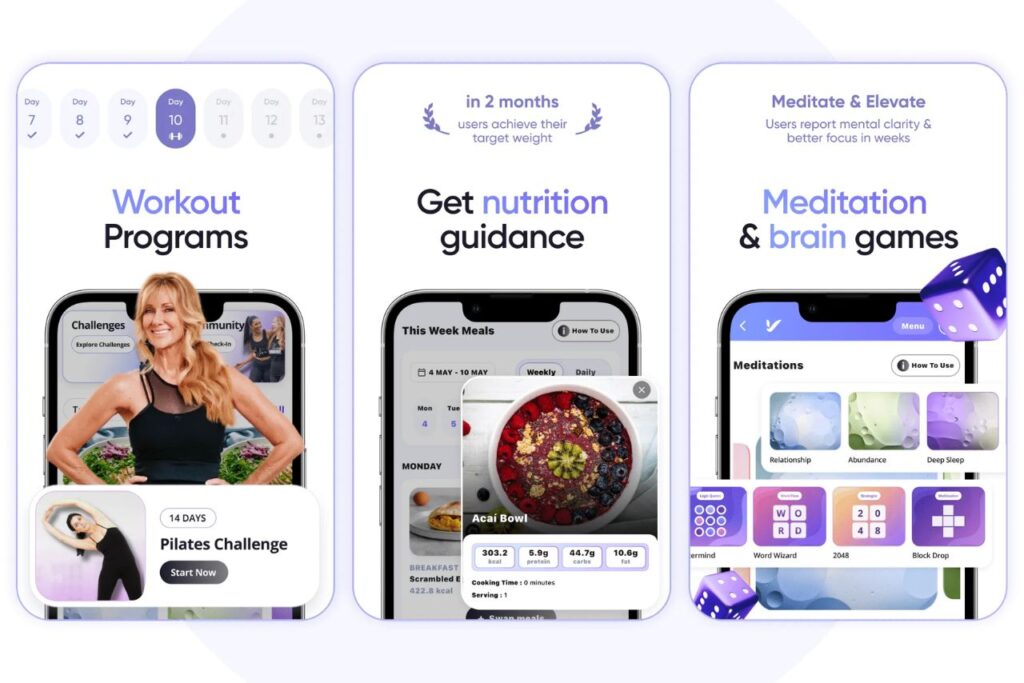
Inside the Fabulous50s Longevity Protocol™, Strength and Power work alongside Cardio, Mobility, and Balance to support the whole woman. The Fabulous50s Vitality App is where you can follow this approach with guided workouts and modifications designed for women over 50.
Start your 14-day free trial today and begin building the strength, power, and confidence your body needs for the years ahead.
Frequently Asked Questions
No. Strength and power training for women over 50 work together rather than competing, and most women benefit from including both.
Build a base of strength first if you are new to exercise. If combining both in one session, train power first while you are fresh.
Three to four sessions a week is enough, whether split between dedicated days or combined within the same workout.
Yes. Adding a few fast, controlled movements at the end of a strength session is a simple way to combine both.
You may maintain muscle and bone health but miss out on the reaction speed that protects against falls and quick, unexpected movements.
You may have quick reflexes without the underlying muscle and bone support needed to sustain them long-term.
Yes, with the right sequence. Build foundational strength first, then introduce power movements gradually and with control.
References
- Araújo CG, Kunutsor SK, Eijsvogels TMH, et al. Muscle Power Versus Strength as a Predictor of Mortality in Middle-Aged and Older Men and Women. Mayo Clinic Proceedings, 2025. https://www.mayoclinicproceedings.org/article/S0025-6196(25)00100-4/abstract
- Balachandran AT, Steele J, Angielczyk D, et al. Comparison of Power Training vs Traditional Strength Training on Physical Function in Older Adults: A Systematic Review and Meta-analysis. JAMA Network Open, 2022. https://pmc.ncbi.nlm.nih.gov/articles/PMC9096601/
- Sims, S. Train for Power, Not Just Strength. Dr. Stacy Sims, 2025. https://www.drstacysims.com/newsletters/articles/posts/train-for-power-not-just-strength-women