
The Egyptians called it the plant of immortality. Cleopatra reportedly made it a cornerstone of her beauty ritual. Alexander the Great is said to have sent soldiers to gather it specifically to treat wounds.
For a plant that has been in consistent use across cultures for over four thousand years, aloe vera has earned a remarkable amount of trust.
What we love about aloe vera for women over 50 is that it does not promise dramatic transformation or rely on synthetic ingredients. It works with the skin as it is now, gently supporting the things that change after midlife: collagen levels, moisture retention, skin thickness, inflammation, and the visible effects of sun exposure over decades.
The anti-ageing benefits of aloe vera are not merely traditional lore. There is genuine science behind them, and we want to walk you through what it actually says.
What Is Inside Aloe Vera That Makes It So Effective?
Aloe vera leaves are composed of approximately 99% water. It is the remaining 1% that makes all the difference. That concentrated fraction contains more than 75 active compounds, each contributing to the plant’s therapeutic properties.
Vitamins A, C, and E are the primary antioxidant trio. Vitamin C supports collagen synthesis and brightens uneven skin tone. And Vitamin E protects the skin’s lipid barrier and helps neutralise the free radical damage that accelerates visible ageing. Vitamin A (a natural retinoid precursor) promotes cell turnover and skin renewal.
Polysaccharides, particularly acemannan, are responsible for aloe vera’s remarkable ability to hold moisture in the skin. Acemannan works by regulating aquaporin 3 (AQP3) channels in skin cells, the pathways through which water moves in and out of the epidermis. Research published in PMC found that aloe vera extract increased AQP3 expression in skin cells, directly improving deep hydration and supporting the skin barrier that becomes more vulnerable after 50.
Plant sterols, a group of compounds unique to aloe vera, have been specifically linked to stimulating collagen and hyaluronic acid production in the skin, the two structural components most responsible for plumpness, firmness, and elasticity.
Enzymes, amino acids, minerals including zinc and magnesium, and anti-inflammatory compounds called anthraquinones complete the picture. Together, these constituents work on the skin at multiple levels simultaneously, which is part of what makes aloe vera so difficult to reduce to a single function.
READ ALSO: A Cold Shower and Its Anti-Ageing Benefits: What Science Now Knows
What Does Research Say About Aloe Vera and Anti-Ageing?
This is where we want to be both encouraging and honest, because the science tells a nuanced story depending on whether we are talking about topical use or oral supplementation.
The 2009 Collagen and Wrinkle Study
The most frequently cited clinical study on aloe vera and ageing skin was published in the Annals of Dermatology in 2009. Thirty healthy women over the age of 45 were given either 1,200 mg or 3,600 mg of pure aloe vera gel supplementation daily for 90 days. Both groups saw significant improvements in facial wrinkles and skin elasticity by the end of the trial. The researchers found that aloe vera increased type I procollagen levels, suggesting the plant signals the body to produce more of the structural collagen that diminishes with age.
A follow-up study in 2015 reinforced these findings, noting that the plant sterols in aloe vera contributed to improved skin moisture levels. A separate 8-week study found that women who took aloe vera tablets daily experienced a significant reduction in facial wrinkling.
What the 2025 Meta-Analysis Found
We want to be transparent about where the evidence currently sits. A 2025 systematic review and meta-analysis that examined four randomised controlled trials involving 284 participants found that oral aloe vera supplementation did not produce statistically significant improvements in skin hydration, elasticity, or collagen scores compared to placebo at 4, 8, or 12 weeks.
The researchers noted that the evidence base is still small, trial durations were short, and formulations varied considerably across studies.
This does not undo the earlier findings, but it does tell us that the oral supplementation story needs more research before we can be definitive about it. Where the science is on much firmer ground is in topical application, which has accumulated the strongest practical evidence for everyday use.
Topical Aloe Vera: The Stronger Evidence Base
A 2024 review published in ScienceDirect on aloe vera in cosmetology confirmed that topical application supports wound healing, skin hydration, UV protection, antioxidant activity, and anti-inflammatory benefits. These are not disputed in the research. Dermatologists consistently recommend topical aloe vera for mature skin, particularly for its ability to hydrate without clogging pores, soothe reactive or sensitive skin, and deliver antioxidant protection.
Why Is Aloe Vera Particularly Relevant for Skin After 50?
Understanding the skin changes that happen during and after menopause makes the case for aloe vera even clearer.
As estrogen declines through perimenopause and menopause, the skin changes in several significant ways. Collagen production drops by as much as 30% in the first five years after menopause. Skin becomes thinner, drier, more sensitive, and slower to repair itself.
The moisture barrier, which retains hydration and protects against environmental damage, becomes more fragile. Inflammatory skin conditions are more likely to flare.
Aloe vera addresses almost every one of these changes simultaneously. Its polysaccharides restore deep hydration to drier, thinner skin. It also has anti-inflammatory compounds that help soothe reactive skin and reduce the redness and sensitivity that many women notice after menopause.
Its antioxidants combat the oxidative stress that accelerates visible ageing. Its collagen-stimulating properties, via fibroblast activation and sterol content, work to partially compensate for the collagen loss that begins with hormonal decline.
Research has also noted that aloe vera cream has been used effectively for vaginal atrophy in menopausal women, with significant improvement in clinical indices reported after treatment, demonstrating that the plant’s soothing and tissue-supportive properties extend well beyond facial skincare.
What Are the Specific Anti-Ageing Beauty Benefits of Aloe Vera?
Deep, Lasting Hydration
Aloe vera is composed of approximately 99% water, but its hydrating effect goes far beyond surface moisture. The acemannan polysaccharides work as humectants, drawing and binding water to the skin’s deeper layers rather than simply sitting on the surface.
A 2006 clinical trial found that freeze-dried aloe vera extract significantly improved skin hydration and was effective in dry skin treatment. For women over 50, whose skin loses moisture more rapidly due to the thinning of the outer skin layer, this kind of deep, sustained hydration is exactly what is needed.
Collagen and Elastin Support
Aloe vera stimulates fibroblasts, the cells in the skin’s dermis that produce collagen and elastin. These are the two structural proteins responsible for skin firmness, elasticity, and the ability to spring back after movement.
When fibroblast activity is supported, the skin produces more of its own structural scaffolding. The plant sterols specific to aloe vera appear to be particularly effective at this, which is why the 2009 Annals of Dermatology study found increased procollagen levels in women who supplemented with the gel.
Antioxidant Protection Against Visible Ageing
Free radicals, unstable molecules generated by sun exposure, pollution, stress, and metabolic processes, are one of the primary external drivers of visible skin ageing. They attack collagen, damage DNA in skin cells, and accelerate the appearance of fine lines, pigmentation, and dullness.
Aloe vera’s vitamins C, E, and beta-carotene (provitamin A) work as a three-layer antioxidant defence, neutralising free radicals before they can cause lasting damage. For women over 50 who have accumulated decades of sun exposure, this protective function is particularly valuable.
Anti-Inflammatory Soothing
One of the most consistent and well-documented properties of aloe vera is its ability to reduce skin inflammation. This makes it ideal for the reactive, sensitive skin that is common after menopause, and for the redness, irritation, and flare-ups that can follow exfoliation, retinol use, or environmental stress.
Unlike many soothing ingredients, aloe vera delivers its anti-inflammatory effect without heaviness or occlusion, making it suitable for all skin types.
EXPLORE: A Cold Shower And Its Anti-Ageing Benefits
UV and Environmental Damage Repair
Research published in PMC found that aloe vera extract enhanced lysosomal stability to protect cells from UVA-induced photodamage. A separate review confirmed that aloe vera’s active compounds protect against UV-induced DNA damage and have genuine potential in slowing photo-ageing.
This does not mean aloe vera replaces SPF. It means using it after sun exposure, or alongside SPF as a layering ingredient, gives the skin additional support in managing the oxidative stress that UV exposure creates.
Wound Healing and Skin Repair
Aloe vera speeds the healing of minor skin damage, from sunburn and dry cracked areas to the micro-injuries that can occur with exfoliation or cosmetic treatments.
This is one of its most clinically established properties. The polysaccharides in aloe vera promote cell migration and the growth of new skin tissue, which is relevant not just for wounds but for the slower cell turnover that characterises skin after 50.
How to Use Aloe Vera in Your Skincare Routine After 50
The most effective way to use aloe vera depends on your skin’s specific concerns and what else you are already doing. These are our practical recommendations.
As a Daily Moisturiser or Serum Base
Pure aloe vera gel, applied after cleansing and before your heavier moisturiser, makes an excellent lightweight hydrating layer.
Its molecular structure allows it to penetrate deeper into the skin than many water-based serums, delivering hydration and active compounds where they can do the most good. Look for products with a high aloe vera content listed early in the ingredients.
As a Soothing After-Sun Treatment
Keeping a bottle of pure aloe vera gel in the refrigerator and applying it after sun exposure is one of the simplest and most effective forms of after-sun care.
The cold gel immediately reduces heat and inflammation, while the antioxidant compounds begin working on UV-induced free radical damage.
Straight From the Plant
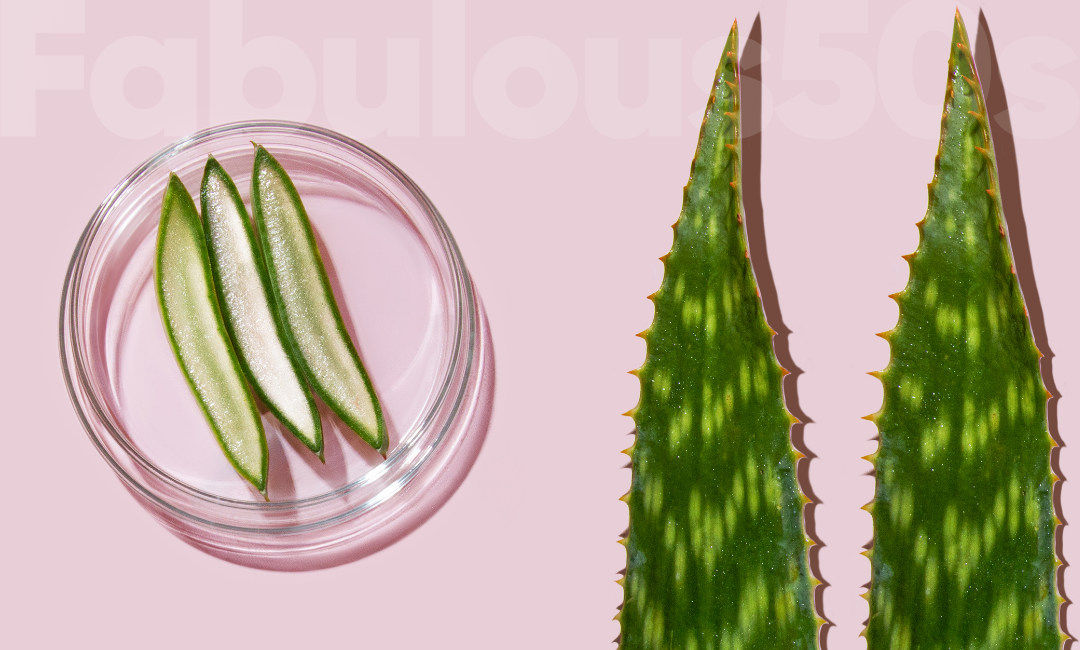
If you have an aloe vera plant at home, the fresh gel from a leaf can be applied directly to the skin. Slice open a leaf, scrape out the clear inner gel, and apply it to the face or body. It absorbs quickly and leaves skin feeling smooth and refreshed.
This is the most potent form of topical aloe vera, as nothing has been added or processed. We love this as a morning ritual, applied to clean skin before everything else.
In Product Formulations
Aloe vera pairs exceptionally well with hyaluronic acid, vitamin C, niacinamide, and retinol. When you see aloe vera listed early in a serum or moisturiser’s ingredient list (before water in some formulations), you are getting a meaningful concentration. It is also a natural stabilising ingredient that helps other actives stay effective.
Oral Supplementation
If you are interested in trying aloe vera supplements for skin health, the research suggests the most meaningful effects in studies were seen at around 1,200 mg per day over at least 90 days.
Given that the 2025 meta-analysis found the existing evidence base is still limited, we would approach oral supplementation as a complement to topical use rather than a replacement.
Always choose a high-quality, properly processed aloe vera supplement from a reputable source, and check with your doctor if you have any existing digestive conditions.
Is Aloe Vera Safe for All Skin Types After 50?
For most women, yes. Aloe vera is well-tolerated across skin types, including dry, oily, sensitive, and combination. It is non-comedogenic, meaning it will not block pores, which makes it appropriate even for skin that is prone to congestion.
A small number of people are sensitive to aloe vera, particularly those with allergies to plants in the Liliaceae family (tulips, onions, garlic). If you are trying aloe vera for the first time, do a patch test on the inside of your wrist or behind your ear before applying to your face. Wait 24 hours and check for any redness or irritation before proceeding.
For very sensitive or rosacea-prone skin, choose pure aloe vera gel rather than products with added fragrance, alcohol, or colourants, as these can irritate even when the aloe vera itself is well-tolerated.
Final Thoughts
Aloe vera has survived four thousand years of skincare history not by luck, but because it genuinely works. The anti-ageing benefits of aloe vera are particularly well-matched to what skin needs after 50: deep hydration without heaviness, support for collagen and elastin, antioxidant protection from decades of sun accumulation, soothing anti-inflammatory relief, and gentle repair of the moisture barrier that becomes more fragile with hormonal change.
We do not need to overclaim. The science is honest about where the evidence is strong (topical use, hydration, soothing, antioxidant protection) and where more research is needed (oral supplementation at scale).
Within that honest picture, aloe vera is one of the most genuinely useful, evidence-backed, and affordable ingredients in skincare for women over 50.
We are doing this together, one small ritual at a time.