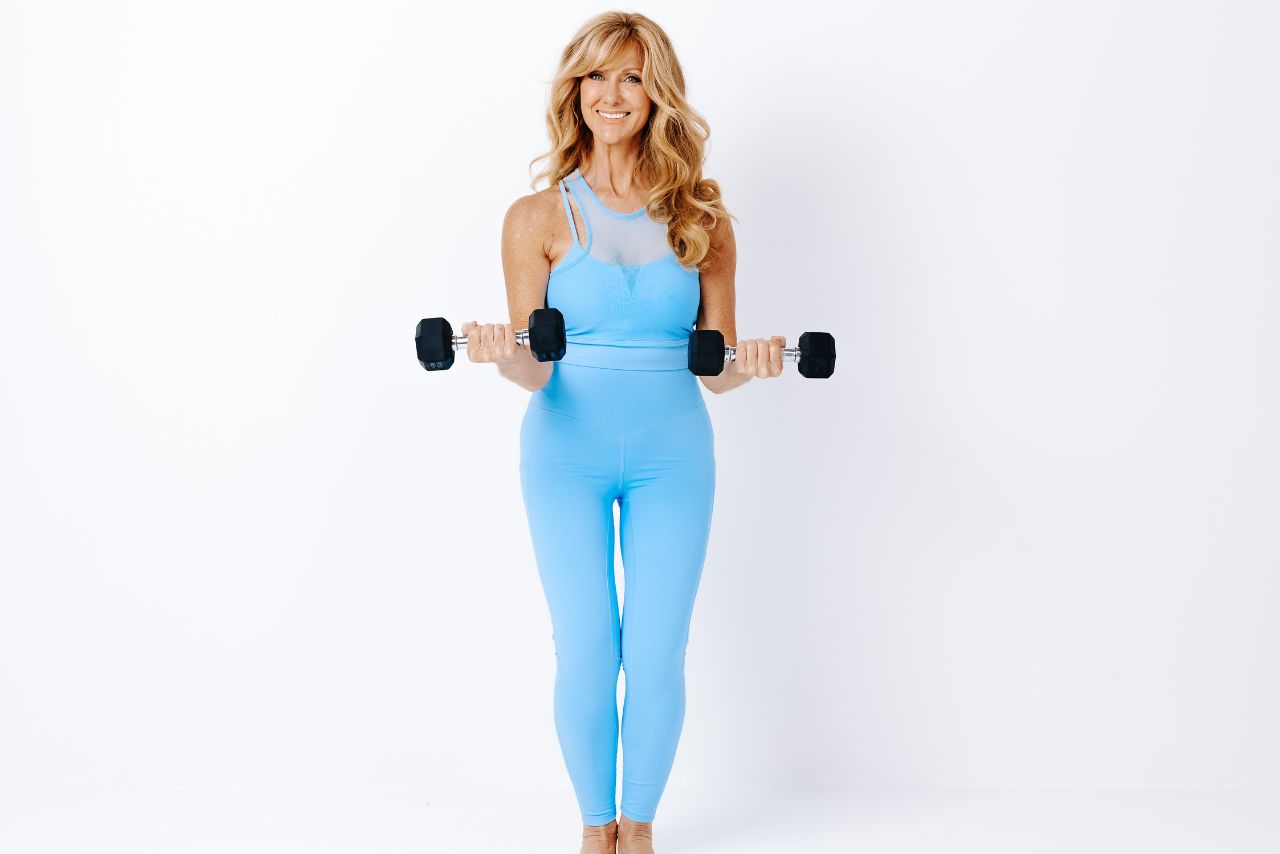

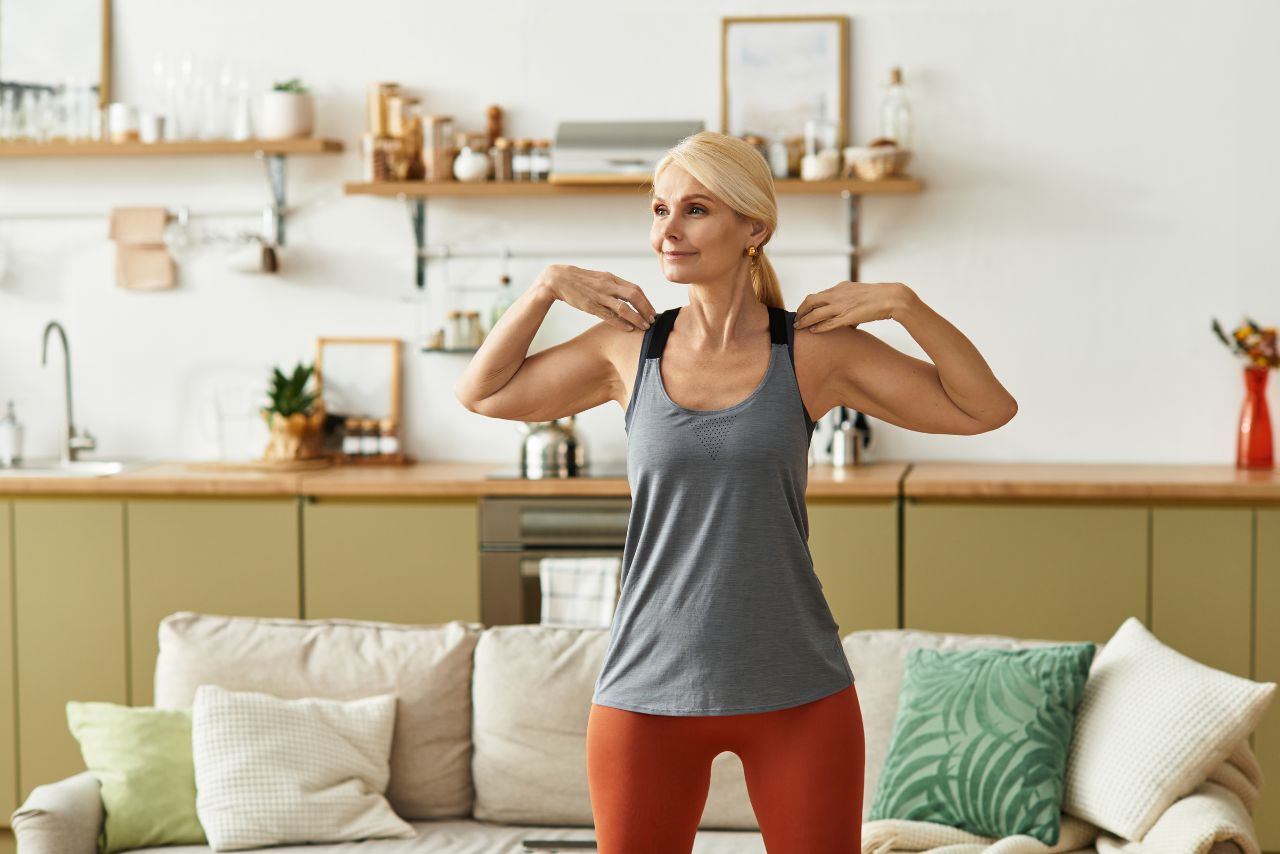
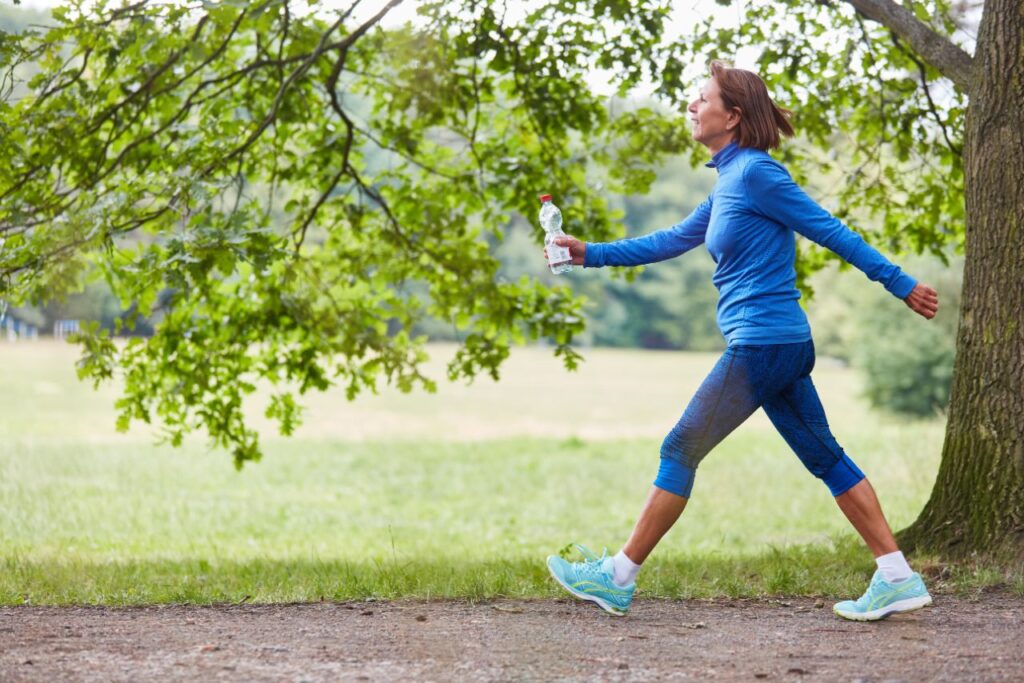
Jumping jacks, burpees, and high knees are not for everyone, especially after 50. Many of us find that jumping bothers our knees, our balance, or even our bladder. Please know this. You do not need to jump to get a wonderful cardio workout.
Cardio without jumping can raise your heart rate, lift your mood, and build real fitness. It simply keeps one foot on the ground at all times.
So let us explore how to move well, feel strong, and skip the jumping altogether.
Key Takeaways: Do Cardio Without Jumping After 50
- Jumping is not required for effective cardio after 50.
- No-jumping cardio can still strengthen your heart, improve endurance, lift your mood, and support everyday energy.
- You can make cardio more effective without impact by using your arms, changing pace, stepping in different directions, and adding short intervals.
- Walking, indoor walking, dancing, swimming, cycling, water workouts, and standing arm movements are all excellent options.
- Low impact does not mean low intensity. The goal is not athletic performance. The goal is feeling capable enough to keep doing the things you love.
- Five minutes still counts, especially if you are starting again after illness, travel, stress, or a busy season.
Why Choose Cardio Without Jumping After 50?
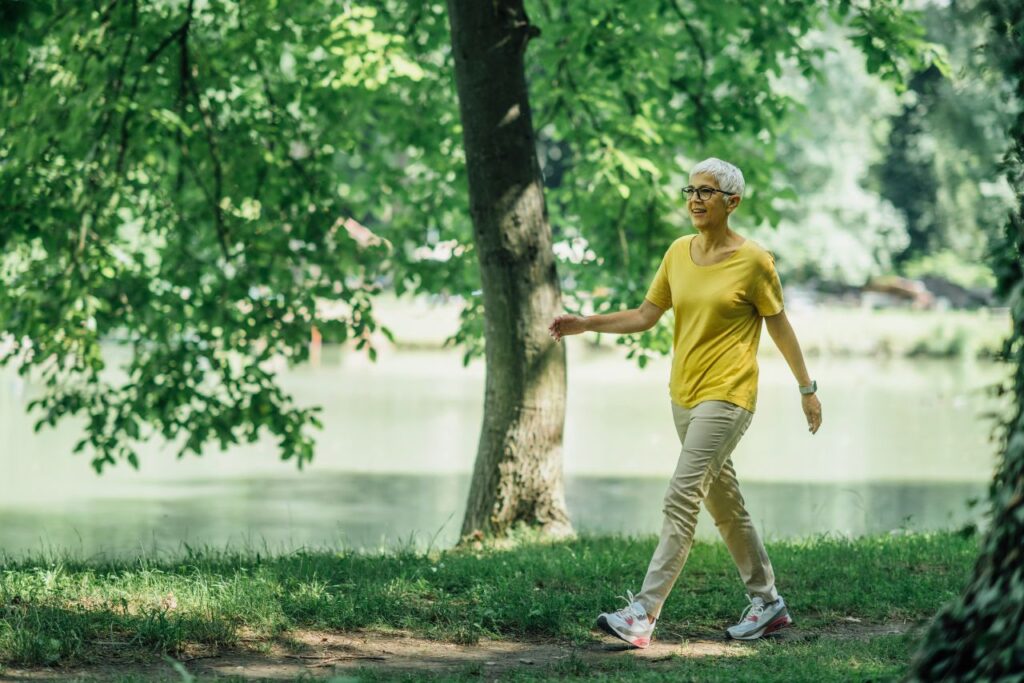
There are many reasons you may want to avoid jumping after 50. Your knees may feel tender, your hips may prefer gentler movement, your back may need more support, or your pelvic floor may not enjoy bouncing. You may also notice that high-impact workouts take longer to recover from than they used to.
Choosing cardio without jumping after 50 does not mean you are doing less. It means you are choosing a smarter way to move for the body you have today. Low-impact movement can still raise your heart rate and improve your fitness while reducing the force that travels through your joints.
This matters because consistency is what changes the body. A workout that feels too harsh may leave you sore, discouraged, or less likely to return tomorrow.
For sensitive knees or a tender back, that impact can simply hurt. Balance can change too, so both feet leaving the floor feels less secure. Many women also notice bladder leaks with jumping. Research suggests high-impact moves can increase the risk of these leaks. That is incredibly common and nothing to feel embarrassed about. So choosing cardio without jumping is often the wise and comfortable path.
A workout that feels supportive gives you confidence, and confidence helps you keep moving.
The best cardio is not the one that proves how much you can tolerate. The best cardio is the one you can repeat with care.
Can You Still Get Fit Without Jumping?
Absolutely, and this is such reassuring news. Low impact does not mean low intensity. We can raise a real sweat while keeping our feet grounded.
Higher fitness is linked to a longer, healthier life, with no upper limit of benefit. So cardio without jumping protects the heart just as beautifully. The trick is simply to challenge the body in other clever ways.
Let us look at exactly how.
How to keep your heart rate up without jumping
Here is the heart of it all. We lift intensity through effort, not impact. These gentle tricks make cardio without jumping feel wonderfully challenging.
Move your arms. Pumping or reaching the arms raises the heart rate quickly. Big arm movements do a surprising amount of the work.
Quicken your pace. Walk or march faster for short bursts. A sprint is personal, so fast is simply whatever challenges you today.
Widen your range. Bigger steps and deeper knee bends ask more of the body. Reach and stretch a little further each time.
Add gentle intervals. Try thirty seconds brisk, then thirty seconds easy. These short pushes build fitness efficiently in older adults.
Use a hill or incline. Walking uphill lifts the effort with zero jumping. A treadmill incline works beautifully too.
Want the bigger picture? Cardio is one of the five pillars of the Fabulous50s Longevity Protocol, designed to help women over 50 build heart health, energy and stamina. Explore our complete Cardio After 50 guide for practical ways to build cardiovascular fitness at your own pace.
How Do You Make Cardio Harder Without Jumping?
You can increase the challenge without adding impact. The simplest way is to use your arms more deliberately. Reach higher, swing with more purpose, or add gentle boxing movements while you march or step.
You can also change your pace. Walk comfortably for one minute, then move a little faster for 30 seconds before slowing down again. A sprint looks different for everyone. For one woman, it may be jogging, but for another it may simply mean walking as fast as she comfortably can for a short time.
You can also add variety by stepping side to side, moving forward and back, turning gently, or using a slightly bigger range of motion. This helps the body stay adaptable because life does not happen in one straight line. We reach, turn, step, carry, balance, and respond to the world around us every day.
This is why cardio without jumping after 50 can still be powerful. It trains the heart, lungs, muscles, coordination, and confidence without asking the joints to absorb unnecessary impact.
The Best No-Jump Cardio Exercises After 50
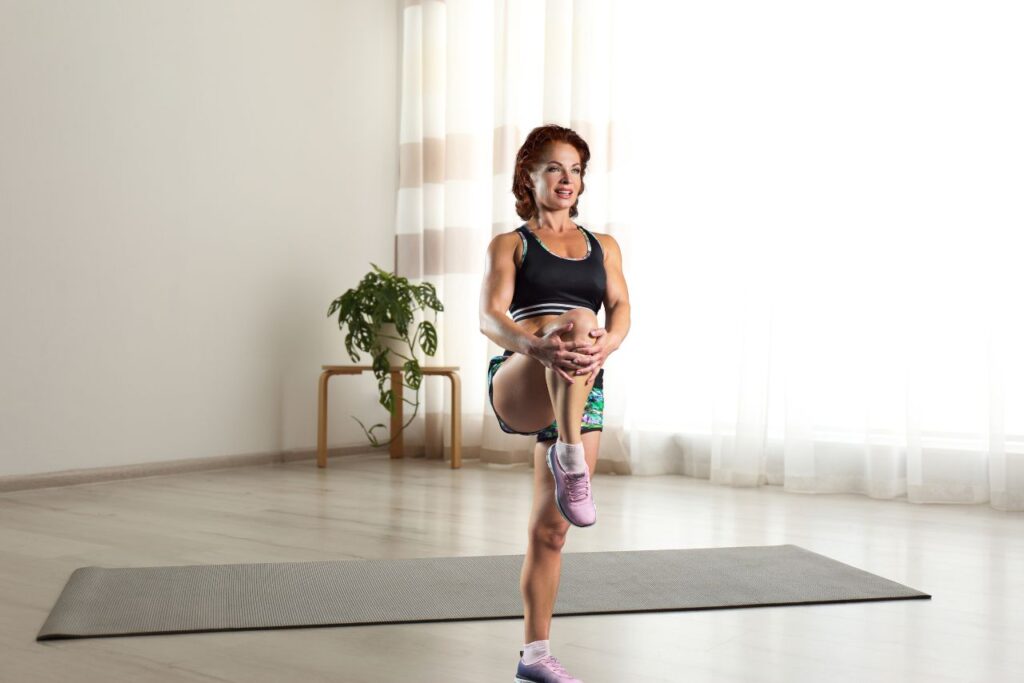
These no-jump cardio exercises all keep one foot grounded. They stay gentle on the joints while still caring for the heart.
Brisk walking. The simplest and most underrated cardio there is. Doctors often recommend it as joint-friendly movement.
Marching in place. We lift the knees and pump the arms. It is easy to do anywhere, even in a small room. Lift the knees higher to raise the effort.
Step touch. We step side to side, tapping the foot in. Add an overhead arm reach for a little more. This gentle side movement is kind to the hips.
Low knee lifts. We draw one knee up, then the other, at a steady pace. Quicken it gently for the burst.
Standing boxing punches. We punch forward with the arms while bracing the core. Energising and a little bit fun.
Swimming or water aerobics. Water carries our weight for wonderful low-impact cardio. It is kind to tender joints.
Cycling. Indoors or out, it builds fitness with no impact at all. We control every bit of the effort.
How do you begin if you feel unfit?
Begin exactly where you are. If you have been sick, travelling, busy, stressed, or sitting more than usual, you may notice that your fitness has faded. You may feel more breathless during a walk or more tired after simple tasks. I have felt this myself, and it always reminds me how quickly fitness can change when movement slips away.
The good news is that fitness can also improve again. Start with five minutes of no-jumping cardio. March in place, walk around the room, swing your arms, or dance gently to one song. Then notice how you feel afterwards.
You do not need an hour to begin. Five minutes still counts, and those five minutes can completely change the direction of your day.
A Simple No-Jump Cardio Routine To Try
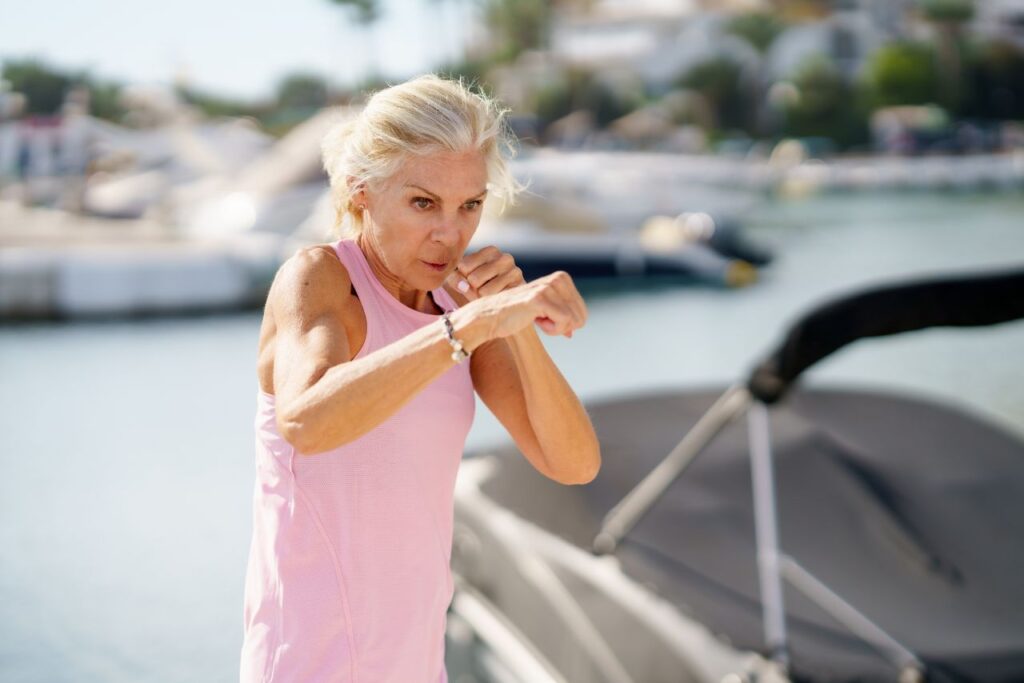
Let us put it all together into one gentle flow. This simple routine takes about fifteen minutes and needs no equipment.
- Warm up with three minutes of easy marching in place.
- Move through step touch, low knee lifts, and boxing punches.
- Do each for forty seconds, with twenty seconds of easy marching between.
- Repeat the little circuit two or three times, quickening your pace on the bursts.
- Cool down with two minutes of slow walking and a gentle stretch.
This proves that cardio without jumping can feel complete, joyful, and effective. Adjust the pace to suit your day, and rest whenever you need.

No-Jump Workouts To Follow Along
When you would rather follow along, these gentle sessions are perfect. Each one keeps both feet friendly to the floor. Even a few minutes of movement still counts.
20-Minute Full Body Workout: Low Impact, No Equipment An apartment-friendly session with no jumping at all. It blends arms, standing abs, and walking.
10-Minute Low-Impact HIIT: Standing Full Body Fat Burn Short, standing, and joint-friendly. A lovely burst when time is tight.
30-Minute Indoor Walking Workout (Low Impact) A steady half-hour indoor walk. Wonderful for building stamina without any jumping.
15-Minute Get Fit Indoor Walking Workout A gentle one-mile walk for busy days. Perfect for beginners easing back in.
Explore many more on the Fabulous50s YouTube channel. Choose whichever length feels kind today.
Keep moving with these
READ ALSO: 20-Minute Full Body Workout: Low Impact, No Equipment
READ ALSO: 10-Minute Low-Impact HIIT Workout: Standing Full Body Fat Burn
EXPLORE MORE: The 5 Ultimate Workouts Every Woman Over 50 Should Do
EXPLORE MORE: Fit Over 50: Why It Is Vital We Remain Fit and Active
Final Thoughts
Learning how to do cardio without jumping after 50 is not about limiting your fitness. It is about choosing movement that helps your body feel supported, capable, and confident.
You can strengthen your heart, improve endurance, lift your mood, and build energy without pounding your joints. Walking, indoor walking, dancing, cycling, swimming, water workouts, and standing arm cardio all count.
The goal is not athletic performance. The goal is being able to keep doing the things you love. It is walking with confidence, climbing stairs comfortably, travelling with energy, and saying yes to life.
So start small, move with care, and celebrate every little win. Five minutes still counts. A gentle walk still counts. A no-jumping workout still counts.
Cardio is not punishment. Cardio is participation in life.
Frequently Asked Questions
Yes, you can absolutely do cardio without jumping after 50. Walking, indoor walking, cycling, swimming, dancing, water workouts, and standing arm cardio can all raise your heart rate without impact.
No-jumping cardio can be very effective when it is done consistently and at a pace that gently challenges you. Your heart responds to movement, effort, rhythm, and breathing, not only to jumping.
Walking is one of the best places to begin because it is simple, free, and easy to repeat. Indoor walking, cycling, swimming, and low-impact dancing are also excellent choices.
You can use stronger arm movements, walk faster, add short intervals, step in different directions, increase your workout time gradually, or use light resistance on a stationary bike.
Jumping raises pressure inside the abdomen and pushes down on the pelvic floor. This can trigger leaks in some women. It is very common and worth mentioning to your doctor.
Move your arms, quicken your pace, and widen your steps. Short brisk intervals help too. Effort matters far more than impact.
Yes, no-jumping cardio is often kinder to the knees because it reduces hard landings and pounding. Choose smooth movements and stop or modify anything that causes sharp pain.
Begin with five to ten minutes if you are new or returning after a break. As your fitness improves, you can build toward 20 to 30 minutes on most days or collect shorter sessions throughout the day.
Sources
1. Nygaard IE, Shaw JM, et al. Stress incontinence during different high-impact exercises in women: a pilot survey. 2020. https://pmc.ncbi.nlm.nih.gov/articles/PMC7696460/
2. Baylor Scott & White Health. Low-impact exercises: joint-friendly workouts to try. https://www.bswhealth.com/blog/low-impact-exercises-joint-friendly-workouts-to-try
3. Stanford Lifestyle Medicine. How to modify exercises for those with arthritis. https://lifestylemedicine.stanford.edu/exercises-arthritis-2/
4. American Heart Association. American Heart Association recommendations for physical activity in adults and kids. https://www.heart.org/en/healthy-living/fitness/fitness-basics/aha-recs-for-physical-activity-in-adults
5. Bruseghini P, et al. Effects of high-intensity interval and continuous moderate aerobic training on fitness and health markers of older adults. 2024. https://www.sciencedirect.com/science/article/abs/pii/S0167494324001274
6. Mandsager K, et al. Association of cardiorespiratory fitness with long-term mortality among adults undergoing exercise treadmill testing. JAMA Network Open. 2018. https://jamanetwork.com/journals/jamanetworkopen/fullarticle/2707428
7. Stamatakis E, et al. Association of wearable device-measured vigorous intermittent lifestyle physical activity with mortality. Nature Medicine. 2022. https://www.nature.com/articles/s41591-022-02100-x