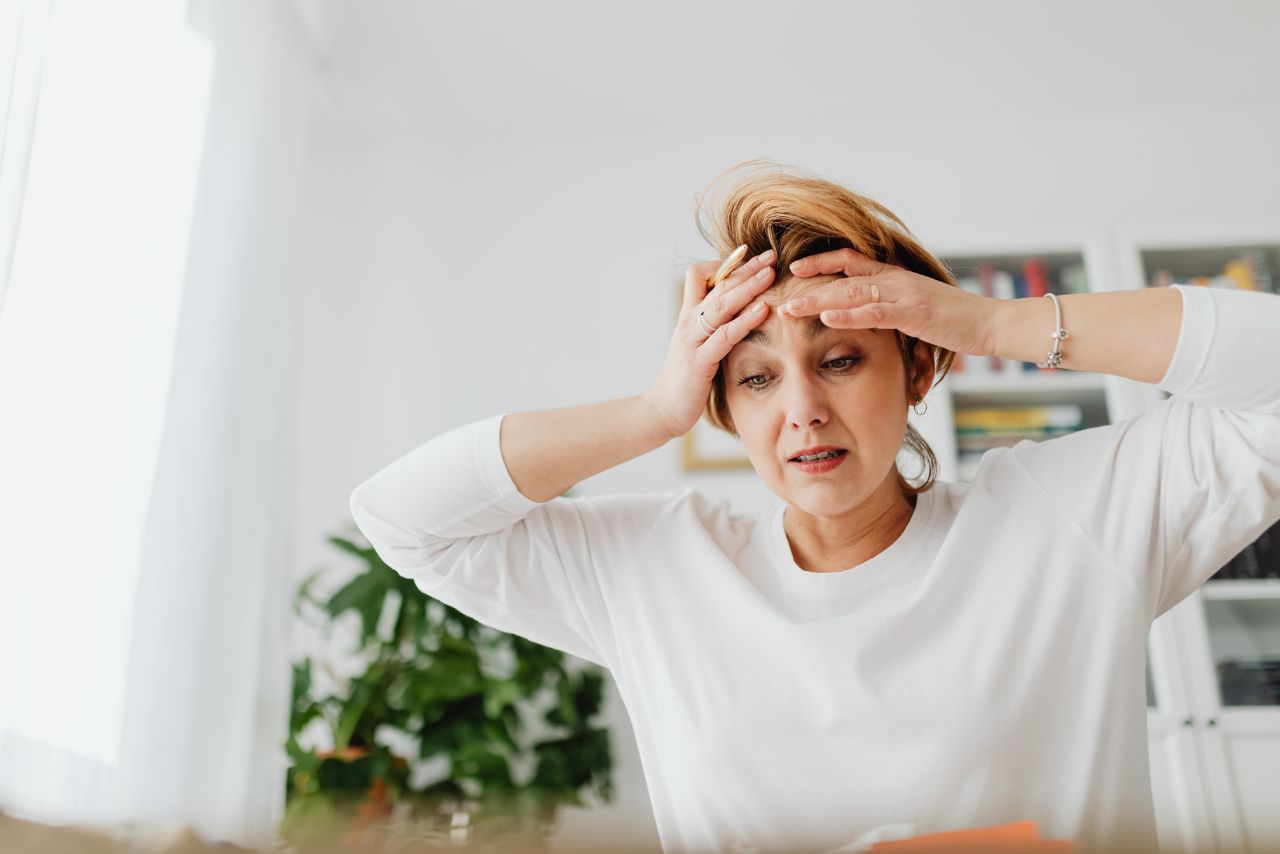

Getting a diagnosis of osteoporosis is a shock in a certain way. You feel like yourself one minute, and the next you get a DEXA scan result that changes how you see your body. A lot of questions start to come in. What can I still do? What if I fall? Is it safe to exercise? Will I hurt myself?
I know how you feel because I’ve been there. You don’t need to worry too much because science is on your side. In most cases, it’s safe to exercise after being diagnosed with osteoporosis, and it’s one of the best things you can do.
The right exercise, done the right way, can slow bone loss, build the muscle that protects your skeleton, improve your balance so you are less likely to fall, and give you back the sense of confidence and capability that a diagnosis can take away.
So, let’s explore how to start exercising after an osteoporosis diagnosis, what to prioritise, what to modify, and how to build a routine that works with your body instead of against it.
We are going to take this one step at a time, together.
Key Takeaways: How to Start Exercising After an Osteoporosis Diagnosis
- Exercise is one of the most powerful tools for managing osteoporosis and reducing fracture risk after diagnosis
- The first step after your diagnosis is a conversation with your doctor or physiotherapist to understand your fracture risk level and get personalised movement guidance.
- Safe exercises after an osteoporosis diagnosis include walking, gentle resistance training, balance work, and posture-focused movement.
- Certain exercise routines, particularly those involving deep spinal flexion or uncontrolled twisting, need to be approached with care or avoided depending on the severity of your bone loss.
- You do not need to start big. A 10-minute walk and a few strength exercises done consistently will build real bone-protective benefit over time.
- Exercise after an osteoporosis diagnosis is about moving smarter, with more intention and care than ever before.
What Should You Do First After an Osteoporosis Diagnosis?
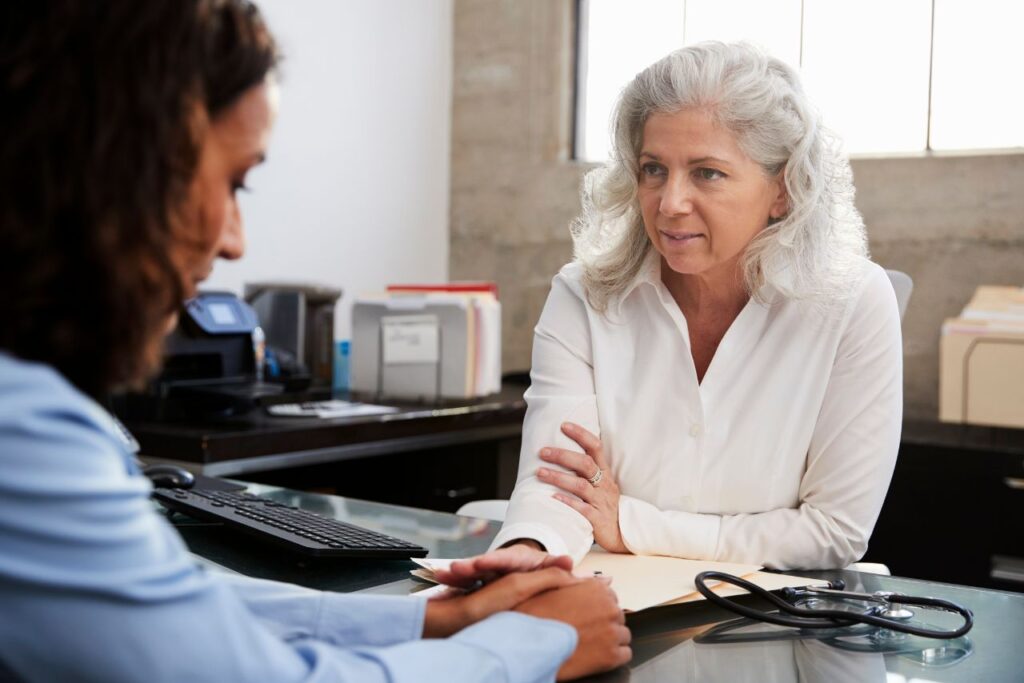
The most important thing to do before starting a new exercise routine is to talk to your doctor or a physiotherapist who works with bones. This is not to get permission, but to know exactly what your situation is. There are different levels of osteoporosis, and the exercises that are safe and good for someone with mild bone loss may not be the same for someone with more serious changes in bone density or a history of fractures.
Ask about your FRAX score, which is a clinical tool that tells you how likely you are to break a bone in the next ten years, during that conversation. If you know whether your risk of breaking a bone is low, moderate, or high, you and your healthcare team can make smart choices about how to safely continue your exercise.
A physiotherapist can also find any areas that are especially weak, like the lumbar spine or femoral neck, and make a plan that puts stress on those areas in a controlled way instead of avoiding them entirely. Avoidance is rarely the answer.
Continue Your Osteoporosis Exercise Journey
This guide is part of our osteoporosis exercise series for women over 50. For the full collection of safe workouts, beginner guides, balance exercises, strength training tips, and video routines, visit our main hub: Osteoporosis Exercise Videos for Women Over 50.
Why Is Exercise So Important After an Osteoporosis Diagnosis?
At the cellular level, it’s important to know that your bones are not static. They are living tissue that is always breaking down and rebuilding. After menopause, the cells that break down bone (osteoclasts) tend to work faster than the cells that build it (osteoblasts). Exercise, particularly weight-bearing and resistance training, is one of the few things that can tip that balance back toward building.
A position statement on exercise guidelines for osteoporosis management published in the Journal of Bone and Mineral Research (2023) confirms that targeted resistance and weight-bearing exercise can maintain or even increase bone mineral density at the hip and lumbar spine in women with osteoporosis, while also significantly reducing fall risk through improvements in balance, strength, and neuromuscular coordination.
Exercise is the only thing that can improve bone density and lower the risk of falling at the same time. Medications can make your bones stronger, but they can’t teach your body how to catch itself before it falls. Movement can. That’s why it’s so important to have a complete exercise plan, even a simple one for beginners, after a diagnosis.
A review of exercise prescription for osteoporosis published in BMC Musculoskeletal Disorders found that targeted exercise training is the only strategy that can simultaneously improve multiple skeletal and fall-related risk factors. No single medication can do what movement can do.
What Exercises Are Safe After an Osteoporosis Diagnosis?
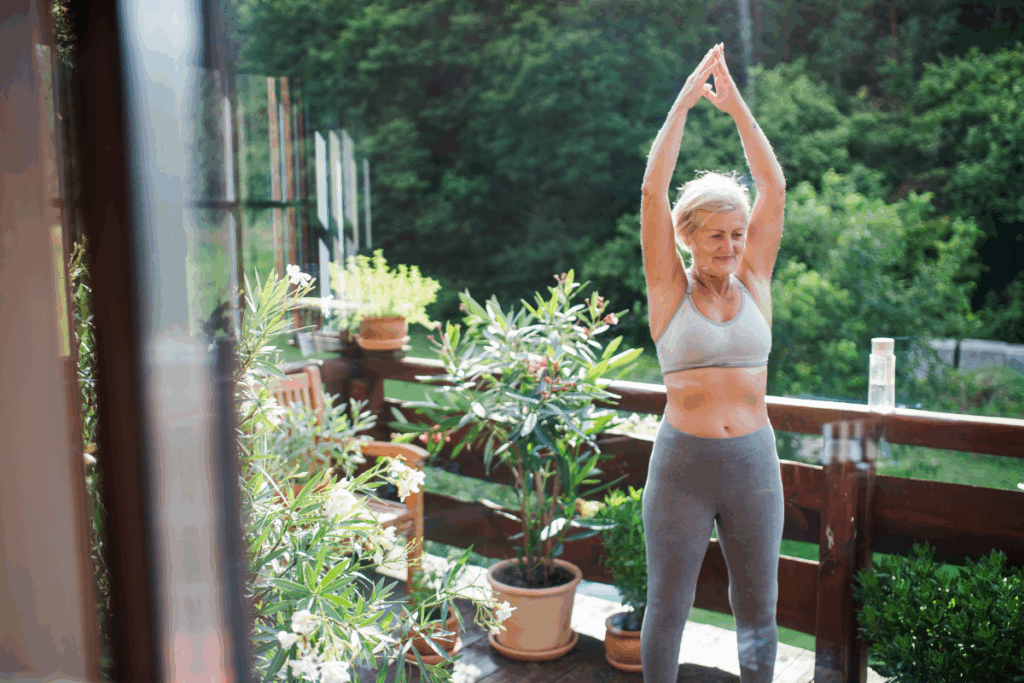
There is a wide range of safe and effective options. The exercises below are generally recommended for women with osteoporosis, though modifications may be needed depending on your individual fracture risk and fitness level.
Always start within your current capacity and build gradually.
Walking
Walking is often the first exercise recommended after an osteoporosis diagnosis, and for very good reason.
It is weight-bearing, meaning every step loads the bones of the hips, legs, and spine in a gentle, repetitive way that signals bone building. It requires no equipment, can be done at any pace, and is appropriate for almost every fitness level.
Start with 10 to 15 minutes on flat ground if you are just beginning. Focus on upright posture, chest lifted, shoulders back, and gaze forward. Over weeks and months, build toward 30 minutes most days. Even breaking it into two shorter walks works beautifully.
Try this guided session: 20-Minute Stay Young Indoor Walking Workout for Women Over 50
Gentle Resistance Training
Resistance training is a cornerstone of bone health management after an osteoporosis diagnosis. When muscles pull against bones during strength exercises, the mechanical stress stimulates osteoblast activity, the rebuilding process.
Over months of consistent training, this can produce measurable improvements in bone mineral density.
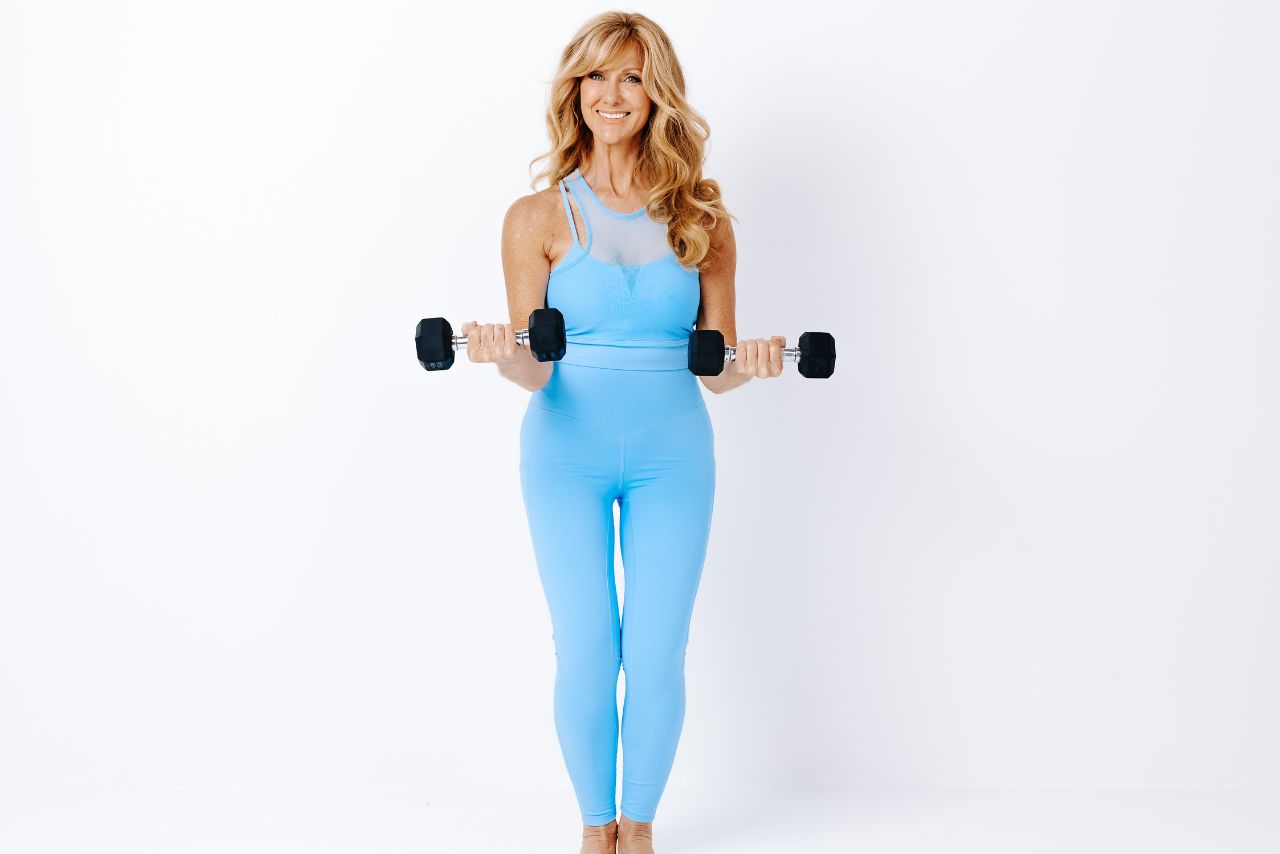
For beginners, start with light resistance bands or very light dumbbells (1 to 2 kilograms).
Focus on the major muscle groups that support the most fracture-prone bones: glutes and legs for the hips, upper back muscles for the spine, and forearm muscles for the wrists.
Safe beginner exercises include seated resistance band rows, wall push-ups, chair squats, glute bridges lying on the floor, and standing calf raises. Two sessions per week, each lasting 20 to 30 minutes, is a meaningful starting point.
EXPLORE MORE: 20-Minute Strength Training Workout for Women Over 50
Balance Training
After an osteoporosis diagnosis, balance training may be the most urgently important category of exercise because falls are the primary driver of fractures. When your balance improves, your risk of a fall drops.
When your risk of a fall drops, your risk of a fracture drops. The logic is straightforward and the science supports it consistently.
Start with simple, supported balance exercises: standing on one foot while holding a chair, slow heel-to-toe walking along a wall, or gentle side-step patterns.
Practice daily, even for just five minutes. Small, consistent sessions build proprioception, which is your body’s sense of where it is in space, far better than occasional longer sessions.
Practice daily with: 5 Minute Balance Exercises for Women Over 50
READ ALSO: Best Exercises to Improve Balance and Prevent Falls After 50
Posture and Core Work
Osteoporosis-related spinal fractures frequently advance asymptomatically and may be exacerbated by inadequate posture that subjects the vertebrae to continuous compressive stress.
Exercises that strengthen the muscles in the upper back and core and open the chest are very protective. They also help with the forward rounding that many of us get from years of working at a desk and looking at phones.
Some gentle posture exercises are seated or standing thoracic extensions, chest openers, shoulder blade squeezes, and supported back extensions while lying face down on a mat. These have low risk, low intensity, and high value.
Pilates is another great way to build core and postural strength, especially mat Pilates with a qualified instructor who knows about osteoporosis.
Gentle Yoga and Tai Chi
There is more and more evidence that both yoga and Tai Chi can help women with osteoporosis improve their balance, flexibility, and bone health. Tai Chi has been studied specifically for preventing falls, and it has consistently shown that older women who do it have lower fall rates.
If you want to do yoga, tell your teacher about your diagnosis and ask them to point out any poses that involve bending your spine forward deeply (like seated forward folds or rounding into a ball position), twisting too hard, or making big changes.
A knowledgeable teacher will be able to make changes that keep you safe while still letting you get the most out of the practice.
Which Exercises Should You Modify or Avoid with Osteoporosis?
This is one of the questions we get asked most often, and the answer is more nuanced than a simple list of forbidden movements. Context matters. The exercises flagged as higher risk for people with osteoporosis are generally those that place significant compressive or rotational force on the spine or that carry a high fall risk.
As a general guide, the following movement patterns need more care:
- Deep spinal flexion under load, such as weighted crunches, traditional sit-ups, or reaching down to touch your toes while bending at the waist with a curved spine. This puts compressive force on vertebrae that may already be compromised.
- High-impact activities without a gradual build-up, such as jumping jacks, running, or aerobics classes with uncontrolled landing patterns. These are not necessarily off-limits, but they need to be approached very carefully and built into over time.
- Aggressive spinal twisting under load. Gentle rotation through a pain-free range is usually fine. Forceful twisting, especially in yoga poses like deep twists, is where risk increases.
- Exercises with a high fall risk, such as step aerobics on raised platforms or balancing on unstable surfaces without support, until your balance is well established.
The key word in all of this is “gradual.” Many exercises that seem risky become safe when approached progressively, with good form, and under appropriate supervision. Do not self-restrict unnecessarily. Work with a professional to understand specifically what your body can and cannot do right now, and build from there.
What Does a Safe Starter Exercise Week Look Like After an Osteoporosis Diagnosis?
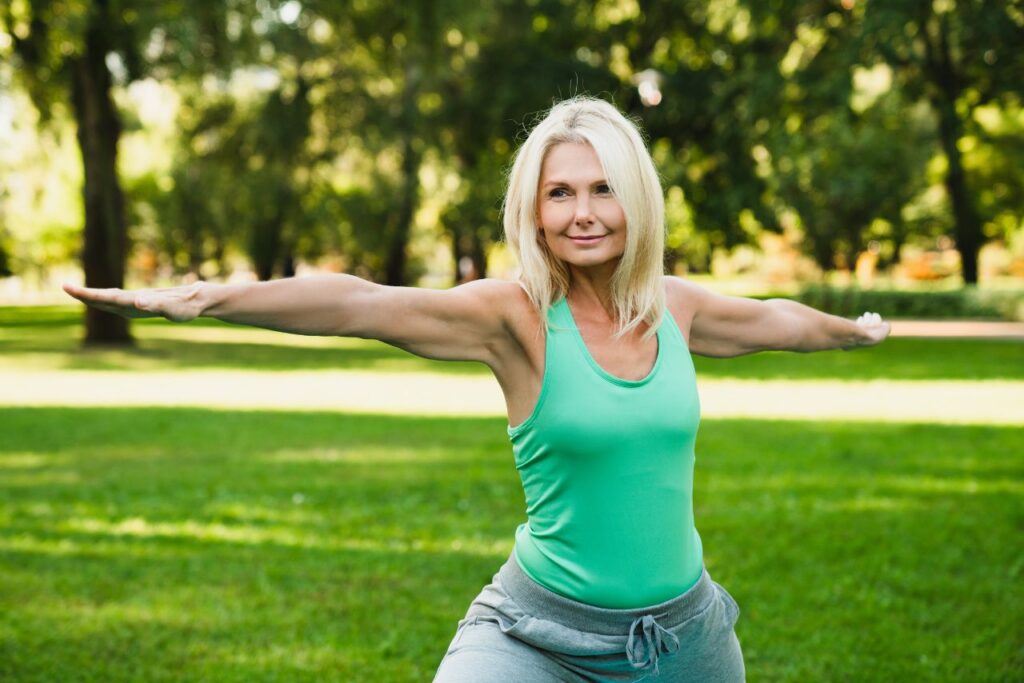
This sample week is designed for someone who has recently been diagnosed and is beginning to move again. It is gentle, achievable, and builds a foundation without overwhelm. Adjust based on your energy, your pain levels, and any guidance from your healthcare team.
- Monday: 10 to 15-minute walk at a comfortable pace, plus 5 minutes of balance exercises near a wall or chair
- Tuesday: 20-minute gentle strength session (chair squats, wall push-ups, resistance band rows, calf raises)
- Wednesday: Rest, or a slow 10-minute walk if energy allows
- Thursday: 5 minutes of posture and chest-opening exercises, followed by 10 to 15 minutes of walking
- Friday: Gentle strength session focusing on upper back and core posture work
- Saturday: Balance practice plus a longer walk if feeling well (20 to 30 minutes)
- Sunday: Rest, gentle stretching, or a restorative yoga session
Over weeks, you will naturally find yourself wanting to do a little more. That is your body responding. Add five minutes here and a small amount of resistance there. Consistency across months is what builds real results.
EXPLORE MORE: Best Osteoporosis Exercises for Beginners Over 50
How Do You Manage the Fear of Movement After an Osteoporosis Diagnosis?
Fear of fracture is real and understandable. For many women, a diagnosis of osteoporosis creates a kind of movement anxiety where every step feels like a risk, every stumble feels like a near-disaster, and the safest option seems like doing less. We want to gently challenge that instinct, because the research is clear that inactivity accelerates bone loss and dramatically increases fall risk over time.
Bones get weaker when they aren’t used. Muscles that aren’t used get smaller and can’t protect the bones as well. Balance that isn’t practiced gets worse. If we act on our fear of movement, we make ourselves more fragile, which is what we’re trying to avoid.
Beginning small is not the same as beginning incorrectly. A 10-minute walk is not a prize. It really helps bones stay healthy, and it gives you the confidence and strength to do more. After a diagnosis, we want to change how you think about exercise. Instead of seeing it as something dangerous that you have to be careful with, see it as the most loving and proactive thing you can do for your body right now.
READ ALSO: Power Training: The New Science Behind Longevity and Fall Prevention for Women Over 50
What Practical Safety Tips Should You Follow When Exercising with Osteoporosis?
A few simple habits will help you exercise with confidence and reduce the chance of an accidental fall or injury during your workouts:
- Always warm up before strength or balance work. Five minutes of gentle marching in place or arm circles raises body temperature and lubricates joints.
- Use a sturdy chair or wall for balance support during any single-leg exercise until your balance feels reliable.
- Wear supportive, flat-soled shoes with good grip during all exercise. Avoid exercising in socks on slippery floors.
- Never hold your breath during resistance exercises. Exhale on the effort (the lift, the push, the squeeze) and inhale on the return.
- Keep your spine neutral during strength work. Think tall, not rounded. Imagine a long string pulling the crown of your head toward the ceiling.
- Exercise in a clear, clutter-free space where there is nothing to trip on or bump into.
- Stay hydrated. Dehydration affects coordination and increases dizziness risk.
- If you feel pain (not mild effort or muscle fatigue, but actual pain), stop and rest. Pain is a signal, and it is worth listening to.
Explore More Osteoporosis Exercise Guides for Women Over 50
Osteoporosis can feel worrying at first, but the right kind of movement can help you feel stronger, steadier, and more confident in your body again. These guides will help you understand which exercises are safest, how to begin, and how to build a simple routine that supports bone strength, balance, posture, and fall prevention.
Start with the beginner-friendly guides, then explore strength training, low-impact movement, balance exercises, and bone-supporting routines you can add to your week.
Osteoporosis Exercise Guides
Best Osteoporosis Exercises for Beginners Over 50
A gentle starting point for women who are new to osteoporosis exercise or returning to movement after a break. This guide covers walking, resistance training, balance work, and posture exercises.
How to Start Exercising After an Osteoporosis Diagnosis
A reassuring guide for women who have recently been diagnosed and want to know what is safe, what to avoid, and how to begin without fear.
Low-Impact Osteoporosis Exercises for Women Over 50
Perfect for women who want bone-supporting exercises without jumping, jarring movement, or pressure on the joints. It includes walking, Tai Chi, chair-based strength, resistance bands, and water exercise.
Strength Training for Osteoporosis After 50: A Beginner Guide
A simple guide to starting strength training safely at home, using bodyweight, light dumbbells, or resistance bands to support bone density, muscle strength, and confidence.
Balance Exercises for Osteoporosis and Fall Prevention After 50
A practical guide to improving balance, stability, and fall prevention with simple exercises you can do near a chair or wall for support.
Osteoporosis Workout for Strong Bones: The Jump Routine Every Woman Over 50 Should Try
A focused guide on how gentle impact and jumping-style routines may help stimulate bone strength, especially around the hips and spine. This is best for women who have medical clearance and feel confident with higher-impact movement.
Related Bone Health and Fall Prevention Guides
Bone Health and Menopause: Preventing Bone Loss After 50
A helpful background guide on why bone loss accelerates after menopause and what women over 50 can do to protect their bone health.
Why Strength Training Is Essential During Menopause and After 50
A supporting guide that explains how strength training helps protect muscle, metabolism, bone density, and long-term independence after 50.
Best Exercises to Improve Balance and Prevent Falls After 50
A broader fall-prevention guide that supports the osteoporosis cluster by helping women improve stability, confidence, and everyday movement.
Calcium Rich Foods for Women Over 50
A nutrition-focused support article for women who want to strengthen their bones from the inside out with calcium-rich foods.
Final Thoughts
An osteoporosis diagnosis changes how you think about your body, but it does not have to change your relationship with movement. In many ways, it is an invitation to begin moving with more intention, more care, and more respect for what your body is capable of, at any age.
The women we see who change their bone health don’t go back to the gym right away for intense workouts. They are the ones who walk every day, do some resistance exercises, and practise their balance every morning by the kitchen counter. Every week, every month.
Working out after being diagnosed with osteoporosis isn’t about going against your body. It’s about working with it, being patient, and doing it over and over again until you become the strongest, most resilient version of yourself. We’re here for every step of that trip.
Ready to follow along with guided workouts designed for women just like us? Visit the Fabulous50s YouTube channel and find a routine that feels right for where you are today.
Frequently Asked Questions
In most cases, yes, with appropriate guidance. The priority after a diagnosis is to speak with your doctor or physiotherapist to understand your specific fracture risk and any movements to approach with care. Gentle walking, balance work, and light resistance training are generally considered safe and beneficial to begin relatively quickly. Avoid starting a high-intensity or high-impact program without professional guidance.
Research consistently shows that targeted weight-bearing and resistance exercise can maintain, and in some cases modestly increase, bone mineral density in women with osteoporosis. The effect is most pronounced at the sites most commonly affected, including the hip and lumbar spine. Exercise will not reverse osteoporosis completely, but it is one of the most effective tools we have for slowing its progression and reducing fracture risk alongside any prescribed medication.
Bone remodelling is a slow process. Meaningful changes in bone mineral density typically take six months to a year of consistent exercise to show up on a DEXA scan. However, improvements in balance, muscle strength, posture, and general confidence tend to appear much sooner, often within four to eight weeks. These early benefits matter enormously because they directly reduce your fall and fracture risk.
Fear of movement after an osteoporosis diagnosis is completely understandable. A good physiotherapist who specialises in bone health can be invaluable here, not just for designing a safe programme, but for helping you rebuild trust in your body’s capacity to move. Starting with something as simple as a short, supported walk or a few gentle seated exercises can help ease fear.
Sources
1. Korean Society for Bone and Mineral Research (2023). Position Statement: Exercise Guidelines for Osteoporosis Management and Fall Prevention. https://pmc.ncbi.nlm.nih.gov/articles/PMC10345999/
2. Daly et al. (2019). Exercise for the prevention of osteoporosis in postmenopausal women: an evidence-based guide. BMC Musculoskeletal Disorders. https://pmc.ncbi.nlm.nih.gov/articles/PMC6429007/
3. Koshy et al. (2022). Exercise Prescription and the Minimum Dose for Bone Remodeling in Postmenopausal Women. Cureus. https://www.ncbi.nlm.nih.gov/pmc/articles/PMC9288128/
4. Holubiac et al. (2022). Effect of Strength Training Protocol on Bone Mineral Density for Postmenopausal Women with Osteopenia/Osteoporosis. Sensors (MDPI). https://www.ncbi.nlm.nih.gov/pmc/articles/PMC8915025/
5. American College of Obstetricians and Gynecologists (ACOG). Osteoporosis Prevention, Screening, and Diagnosis Recommendations. https://www.aafp.org/pubs/afp/issues/2022/1100/practice-guidelines-osteoporosis.html
6. Mayo Clinic. Exercising with Osteoporosis: Stay Active the Safe Way. https://www.mayoclinic.org/diseases-conditions/osteoporosis/in-depth/osteoporosis/art-20044989