
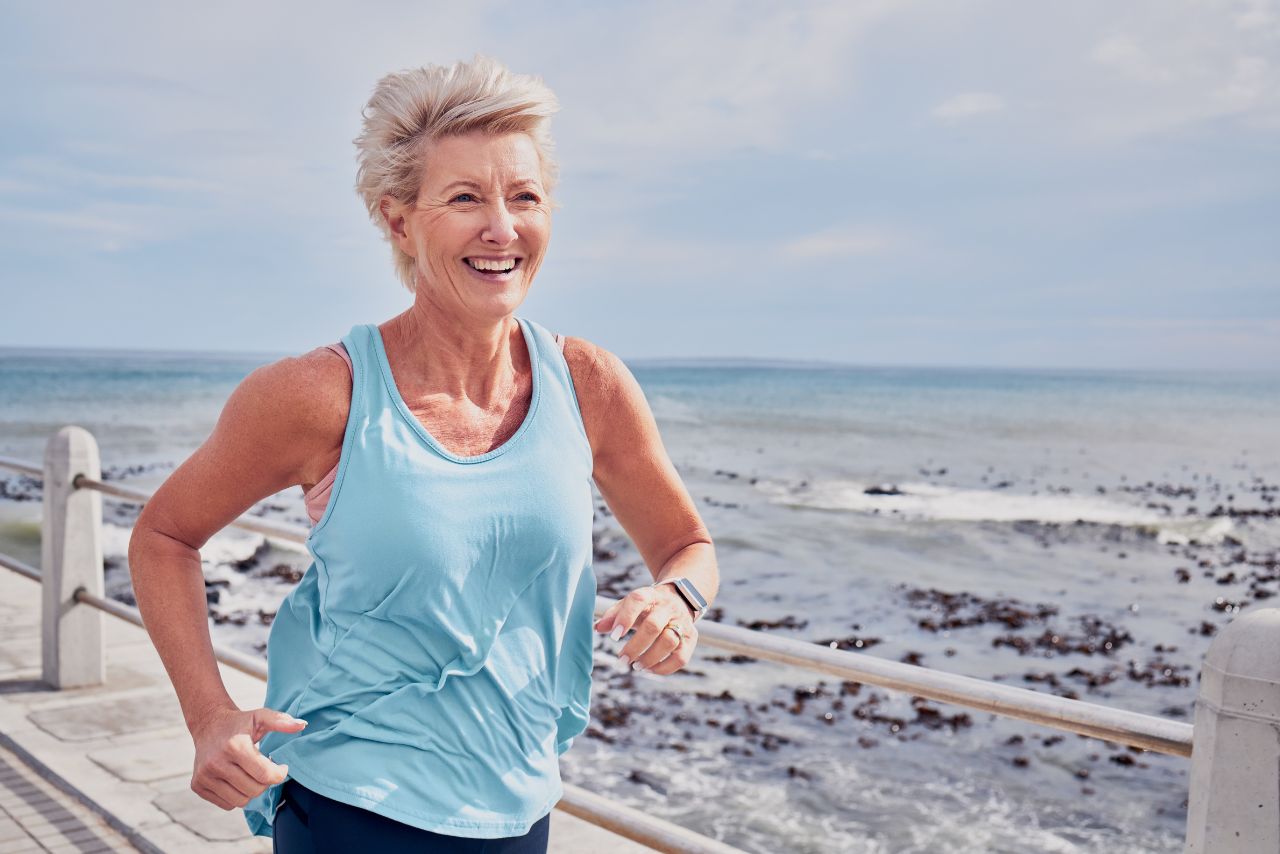
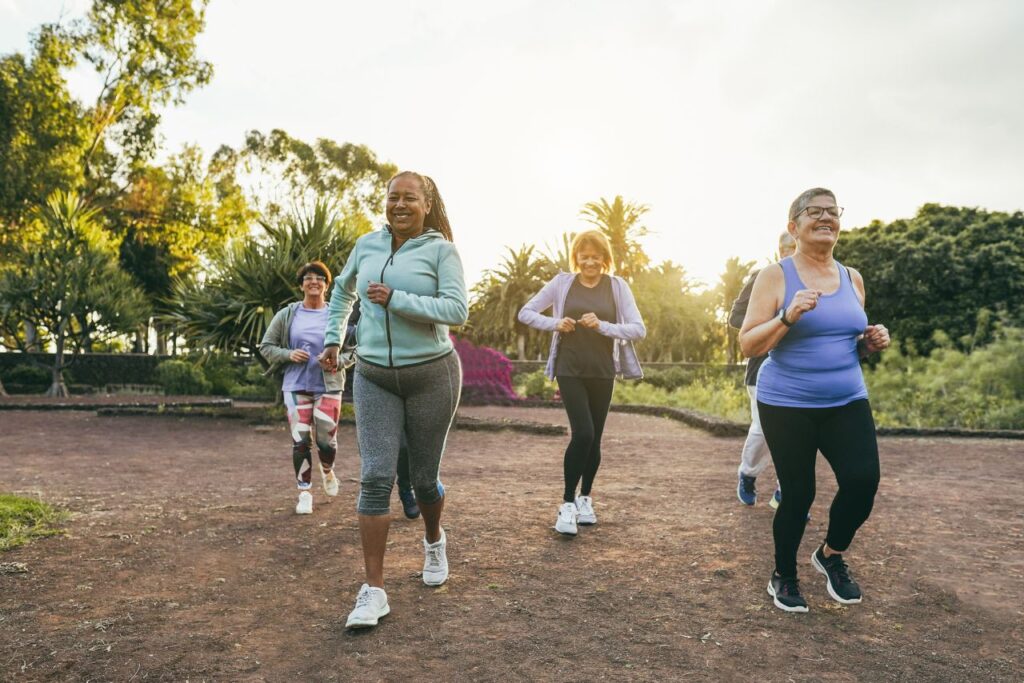
For years, I thought cardio had to be intense to count. I grew up in the 80s, 90s, and early 2000s, when cardio was presented as the answer to almost everything. If you wanted to lose weight, you did cardio. If you wanted to be fit, you did cardio. If you wanted to look good, you did cardio.
Back then, I was not thinking about longevity, heart health, or how I wanted to feel at 60, 70, or 80. I did classes, rode the exercise bike, and walked on the treadmill because my goal was to be slim. I believed that if I were sweating and exhausted, I must have done something right.
These days, my relationship with cardio has completely changed. I now think about energy, endurance, confidence, and being able to fully participate in life. I want to walk for hours while travelling, climb stairs comfortably, carry my shopping, and move through my day without feeling breathless.
That is why low-impact cardio workouts for women over 50 are so important. They allow us to strengthen the heart, support the joints, lift our mood, and build fitness without punishing the body. Cardio is not punishment. Cardio is participation in life.
Key Takeaways: Low-Impact Cardio Workouts
- Low-impact cardio can improve heart health, endurance, energy, and mood without jumping or pounding the joints.
- Walking, indoor walking, cycling, swimming, dancing, water workouts, and standing cardio are all excellent options after 50.
- The best workout is one you can repeat consistently without feeling overwhelmed or exhausted.
- Five minutes still counts, especially if you are returning after illness, travel, stress, or a busy season.
- Variety helps the body stay adaptable because we move the arms, feet, core, shoulders, and brain together.
- Fitness can fade quickly, but it can also improve again when we return to regular movement.
What Makes Cardio Low-Impact?
This is a lovely place to start. Low-impact simply means one foot stays grounded as we move.
There is no jumping, leaping, or hard pounding through the joints. Marching, walking, and gliding all count. Yet the heart still works, and the breath still quickens.
So we gain real cardio benefits without the jarring of high-impact moves. This is what makes low-impact cardio workouts so welcoming for tender knees and hips.
Why Low-Impact Cardio is Perfect After 50
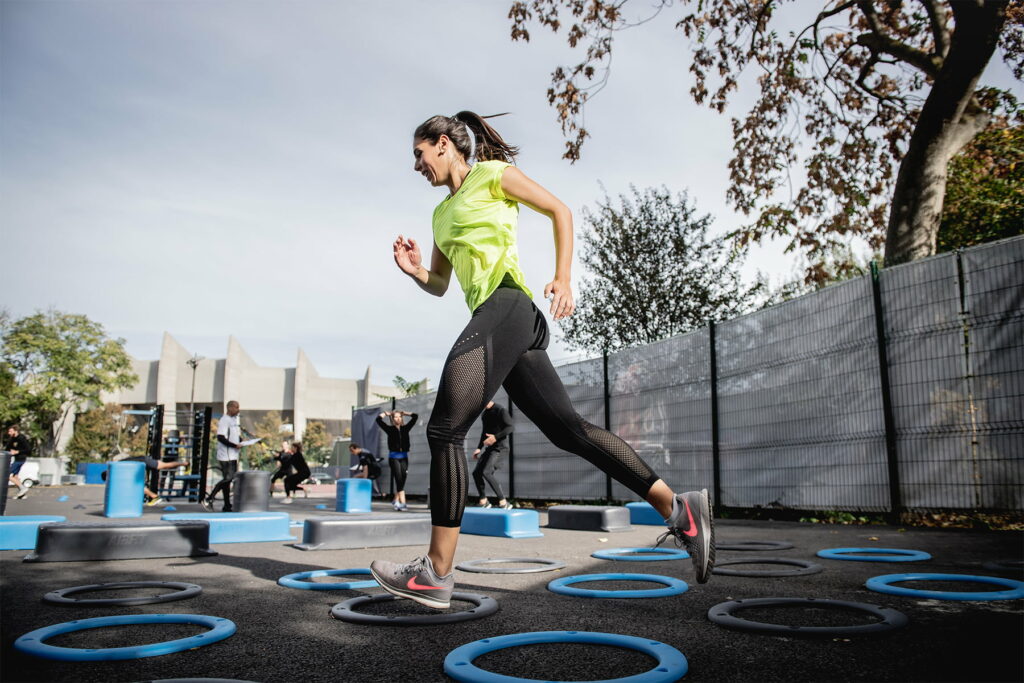
Our joints deserve extra kindness as the years pass. Low-impact movement protects the knees, hips, and spine while still strengthening the heart. Doctors often recommend joint-friendly cardio for arthritis and joint pain.
Better still, low impact does not mean low effort. We can absolutely raise a sweat and build real fitness without the strain. These cardio workouts for women over 50 let us stay active for life.
That is how we keep saying yes to travel, to grandchildren, and to long walks.
Can Low-Impact Cardio Still Improve Fitness?
Yes, low-impact cardio can be very effective. Your heart does not know whether you are jumping or marching. It responds to effort, rhythm, breathing, and consistency. When you move enough to breathe a little more deeply and feel your heart working, you are training your cardiovascular system.
This is one of the most encouraging things to understand because many women think they have to run, jump, or do high-intensity workouts to improve fitness. That is simply not true. You can build endurance with walking, cycling, swimming, dancing, and standing cardio when you do them regularly and gradually increase the challenge.
A sprint also looks different for everyone. For one woman, it may be jogging. For another, it may be walking as fast as she comfortably can for 30 seconds. The point is not speed. The point is challenge, and low-impact movement gives us many safe ways to challenge the body without making exercise feel intimidating.
Want the bigger picture? Cardio is one of the five pillars of the Fabulous50s Longevity Protocol, designed to help women over 50 build heart health, energy and stamina. Explore our complete Cardio After 50 guide for practical ways to build cardiovascular fitness at your own pace.
The Best Low-Impact Cardio Workouts For Women Over 50
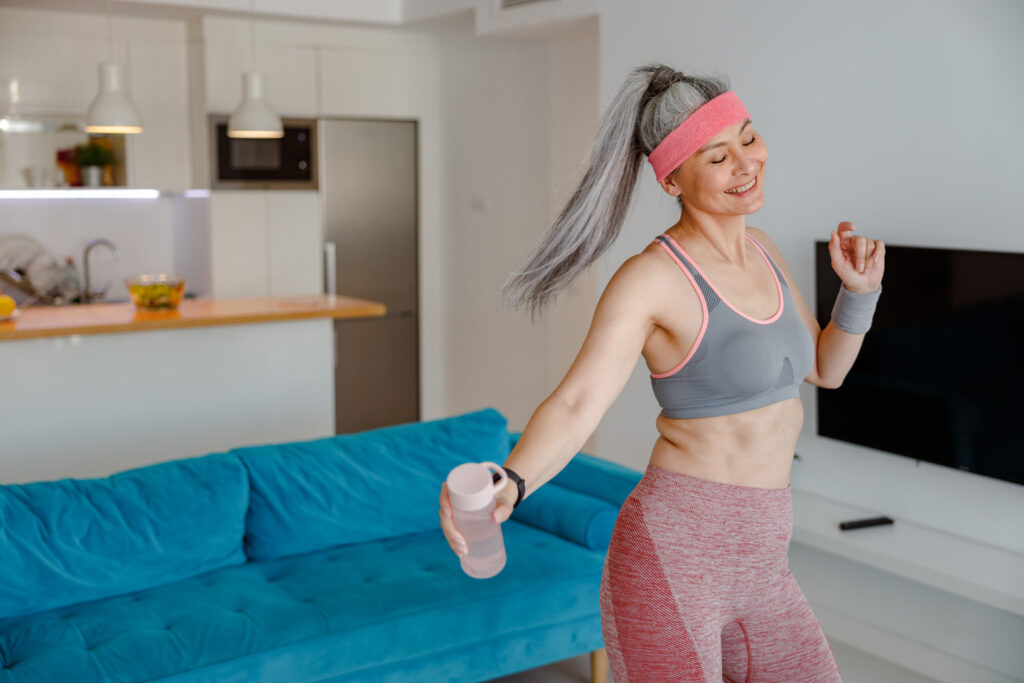
The best low-impact cardio workouts for women over 50 are the ones that feel accessible, enjoyable, and repeatable. We want movement that supports the heart, protects the joints, lifts the mood, and helps us feel more confident in everyday life.
Brisk walking
Walking is one of the most underrated forms of exercise we have. It is simple, free, gentle on the joints, and incredibly useful because walking is something we want to keep doing for as long as possible.
A brisk walk can raise the heart rate, improve circulation, support endurance, and help us feel more connected to our bodies. If you are just beginning, start with five or ten minutes on flat ground and build slowly. If you already walk regularly, you can add gentle intervals by walking faster for 30 seconds, then slowing down to recover.
I have learned not to underestimate walking. Whenever I neglect my daily walking, even if I am still doing workouts, I notice a difference. Walking keeps me connected to my fitness, and it reminds me that simple movement matters.
Indoor walking workouts
Indoor walking is perfect when the weather is not ideal, when you want to exercise at home, or when you need something gentle and convenient. You can march on the spot, step side to side, move forward and back, and add arm movements to increase the effort.
This is one of the reasons I love the Fabulous50s approach to cardio. We are not simply walking in a straight line for an hour. We move the arms, challenge the feet, change direction, and coordinate the hands, core, shoulders, and legs. This helps train the whole body and brain to stay adaptable, coordinated, and capable.
Indoor walking is also easy to modify. You can make the steps smaller, slow the pace, reduce arm height, or keep everything low and gentle on days when your body needs more care.
Dancing
Dancing is joyful cardio, and it can be beautifully low impact when you keep one foot close to the floor and avoid bouncing or twisting sharply. You can put on one song and move gently around your living room, using your arms to add energy and your feet to step with rhythm.
Dancing is not only good for the heart. It can also shift your mood. Movement changes how we feel, and sometimes a few minutes of music is enough to release tension, lift sadness, or help us feel more alive in our bodies.
This is what I love about cardio after 50. It does not always need to look like a formal workout. Sometimes it looks like dancing in your kitchen because your body needs movement and your mind needs joy.
Cycling
Cycling is a wonderful low-impact option because the movement is smooth and controlled. A stationary bike is especially helpful if you want to exercise indoors and adjust the pace, resistance, and time to suit your body.
If your knees are sensitive, begin with light resistance and make sure the seat height feels comfortable. When the bike is set up well, cycling can strengthen the legs, support heart health, and build endurance without the pounding that comes from jumping or running.
You can start with five minutes and gradually increase as your fitness improves. Five minutes still counts, especially when it helps you create consistency.

Swimming and water workouts
Water exercise is one of the kindest ways to move because the water supports your body while giving gentle resistance. Swimming, water walking, and water aerobics can all improve cardio fitness while reducing pressure on the joints.
This can be especially helpful for women with sore knees, hips, or backs. Many women find they can move for longer in water because their body feels lighter and more supported.
Water workouts also help us feel capable again when land-based exercise feels difficult. That confidence matters because the more capable we feel, the more likely we are to keep moving.
Low-impact step touches and side steps
Simple step touches and side steps are easy ways to raise the heart rate without jumping. You step one foot to the side, bring the other foot in, and repeat. From there, you can add arm movements, reach forward, press overhead, or gently pull the elbows back.
These movements may look simple, but they are powerful because they ask the body to coordinate movement from side to side. This matters as we age because life does not happen only in a straight line. We turn, reach, step sideways, change direction, and respond to the world around us every day.
Low-impact cardio workouts for women over 50 should help us stay adaptable in real life, not just fit during exercise.
Standing arm cardio
Do not underestimate arm movement. Strong, purposeful arms can raise the heart rate beautifully, especially when combined with marching or gentle steps.
You can swing the arms, reach overhead, press forward, pull back, or do gentle boxing-style movements. This allows you to increase intensity without jumping, which is helpful if your knees, hips, or ankles need a softer day.
Standing arm cardio also helps posture and coordination because it wakes up the shoulders, upper back, core, and brain. When we use the whole body, the workout feels more energising and more functional.
READ ALSO: Exercise Over 50: Combining Dumbbell & Cardio Training
The Best Fabulous50s Low-Impact Cardio Workouts

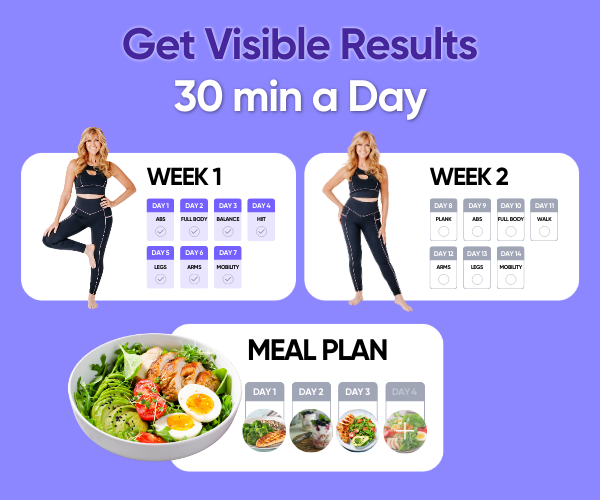
Here is the part I am most excited to share. These low-impact cardio workouts are gentle, follow-along sessions you can do at home, free of charge.
Each one is suitable for beginners. Press play, move at your own pace, and enjoy.
10-Minute Low-Impact HIIT Workout: Standing Full Body Fat Burn
A short, all-standing session with no equipment. Perfect for a busy day or a gentle start. It proves low impact can still raise a sweat. Every move keeps one foot grounded, so your joints stay protected.
15-Minute Get Fit Cardio Indoor Walking Workout
A one-mile indoor walk at a friendly pace. Lovely for beginners easing back into movement, with no fancy gear needed.
20-Minute Full Body Workout: Low Impact, No Equipment
This blends arm work, standing abs, walking, and stretching. A complete, gentle session that covers the whole body. It is apartment-friendly, with no jumping at all.
30-Minute Fat Burning Cardio Indoor Walking Workout (Low Impact)
A full half-hour indoor walk of around 3,500 steps. Wonderful for building stamina once you feel ready for more.
30-Minute Weight Loss Walking Workout for Women Over 50
Standing abs paired with steady low-impact cardio. A joyful way to move your whole body without any jumping. The brisk pace keeps the heart working while your knees stay happy.
You will find many more gentle sessions on the Fabulous50s YouTube channel. Start with whichever length feels kind today.
How to Build a Simple Low-Impact Cardio Routine
Let us keep this beautifully simple. We do not need a complicated plan to feel the benefits. A few short low-impact cardio workouts each week add up to something wonderful.
Start small
Begin with ten gentle minutes. Even five minutes of movement still counts. There is no shame in starting where you are.
Aim for 150 minutes a week
The American Heart Association suggests 150 minutes of moderate activity weekly. That is roughly 30 minutes, five days a week. Build up slowly.
Mix it up
Vary your walks, add gentle marching, or try the water. Variety keeps the body adaptable and the mind interested.
Honour recovery
Keep some days easy and active, like a slow stroll. Rest is where our fitness quietly grows stronger.
A Few Gentle Ways to Vary Your Low-Impact Cardio
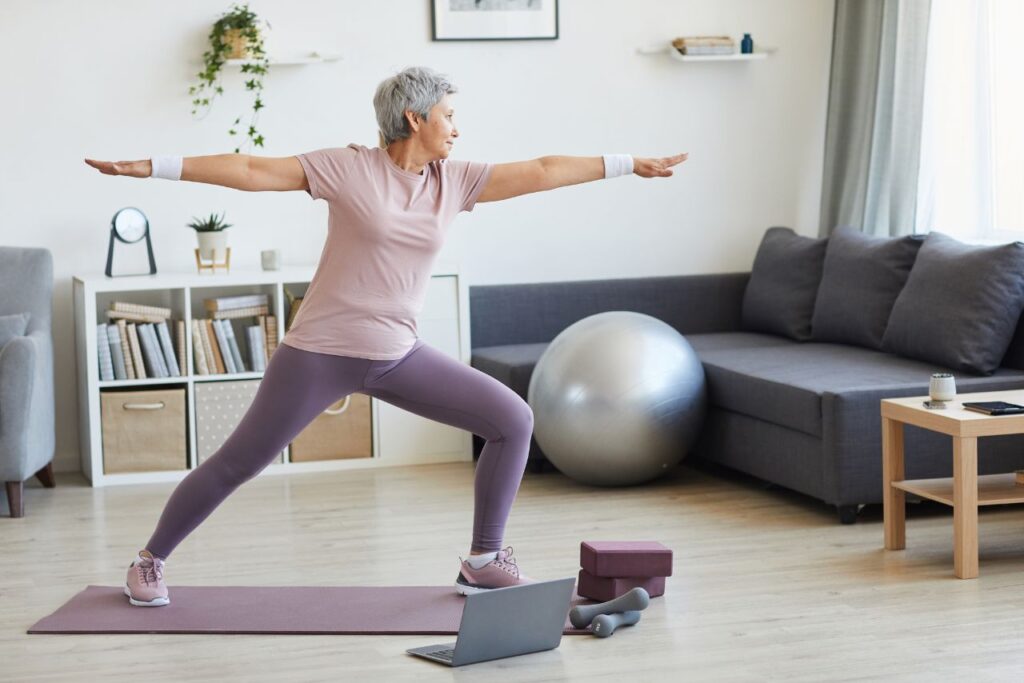
Once a daily walk feels comfortable, we can gently add variety. We are not simply walking in a straight line for an hour. We change pace, swing the arms, and switch direction.
A short, faster spell, then an easy recovery, builds fitness efficiently. A faster spell is always personal, never a race.
We coordinate the hands, core, and legs together. This keeps the whole body and brain adaptable. These small changes make our low-impact cardio workouts even more effective over time.
Can Low-Impact Cardio Really Keep My Heart Strong?
Absolutely, and the science is wonderfully reassuring. Gentle, regular activity strengthens the heart and lowers health risks. In one large study, fitter people had far lower mortality, with no upper limit of benefit. Even a daily walk is linked to a longer life.
Movement also lifts the mood and calms the mind. So these low-impact cardio workouts care for far more than our joints. They care for our heart, our energy, and our spirit.
Keep moving with these
READ ALSO: The 5 Ultimate Workouts Every Woman Over 50 Should Do
READ ALSO: 20-Minute Full-Body Workout: Low Impact, No Equipment
EXPLORE MORE: 20-Minute Stay Young Indoor Walking Workout for Women Over 50
EXPLORE MORE: Fit Over 50: Why It Is Vital We Remain Fit and Active
Final Thoughts
Low-impact cardio workouts are proof that gentle can still be powerful. We protect our joints while strengthening our hearts and lifting our spirits. There is no need to pound, push, or punish ourselves.
Cardio is not punishment. Cardio is participation in life.
So choose one workout above, press play, and simply begin. Move at your pace, celebrate every small win, and enjoy the energy that follows. We are in this together.
Frequently Asked Questions
Walking is my favourite for almost everyone. It is gentle, free, and easy to repeat. The standing workouts above are a lovely place to begin.
Yes, for the heart it works beautifully. Low impact simply removes the jarring, not the benefit. You can still raise a sweat and build real fitness.
Aim for movement on most days, kept gentle. Around 150 minutes a week is a lovely target. Build up slowly and keep some days easy.
They are designed to be gentle on the joints. Move slowly and skip anything that hurts. If pain persists, please check with your doctor first.
Not at all. A comfortable pair of shoes and a little space are plenty. The featured workouts use no equipment.
Yes, especially alongside balanced eating. Regular gentle movement burns calories and builds energy. Consistency matters far more than intensity.
Many women feel more energy within a couple of weeks. Strength and stamina then grow with consistency. Small, regular efforts add up faster than you expect.
Sources
1. Stanford Lifestyle Medicine. How to modify exercises for those with arthritis. https://lifestylemedicine.stanford.edu/exercises-arthritis-2/
2. Baylor Scott & White Health. Low-impact exercises: joint-friendly workouts to try. https://www.bswhealth.com/blog/low-impact-exercises-joint-friendly-workouts-to-try
3. American Heart Association. American Heart Association recommendations for physical activity in adults and kids. https://www.heart.org/en/healthy-living/fitness/fitness-basics/aha-recs-for-physical-activity-in-adults
4. Mandsager K, et al. Association of cardiorespiratory fitness with long-term mortality among adults undergoing exercise treadmill testing. JAMA Network Open. 2018. https://jamanetwork.com/journals/jamanetworkopen/fullarticle/2707428
5. Paluch AE, et al. Daily steps and all-cause mortality: a meta-analysis of 15 international cohorts. Lancet Public Health. 2022. https://www.thelancet.com/journals/lanpub/article/PIIS2468-2667(21)00302-9/fulltext
6. Singh B, et al. Effectiveness of physical activity interventions for improving depression, anxiety and distress: an overview of systematic reviews. Br J Sports Med. 2023. https://bjsm.bmj.com/content/57/18/1203
7. Stamatakis E, et al. Association of wearable device-measured vigorous intermittent lifestyle physical activity with mortality. Nature Medicine. 2022. https://www.nature.com/articles/s41591-022-02100-x
8. Bruseghini P, et al. Effects of high-intensity interval and continuous moderate aerobic training on fitness and health markers of older adults. 2024. https://www.sciencedirect.com/science/article/abs/pii/S0167494324001274