
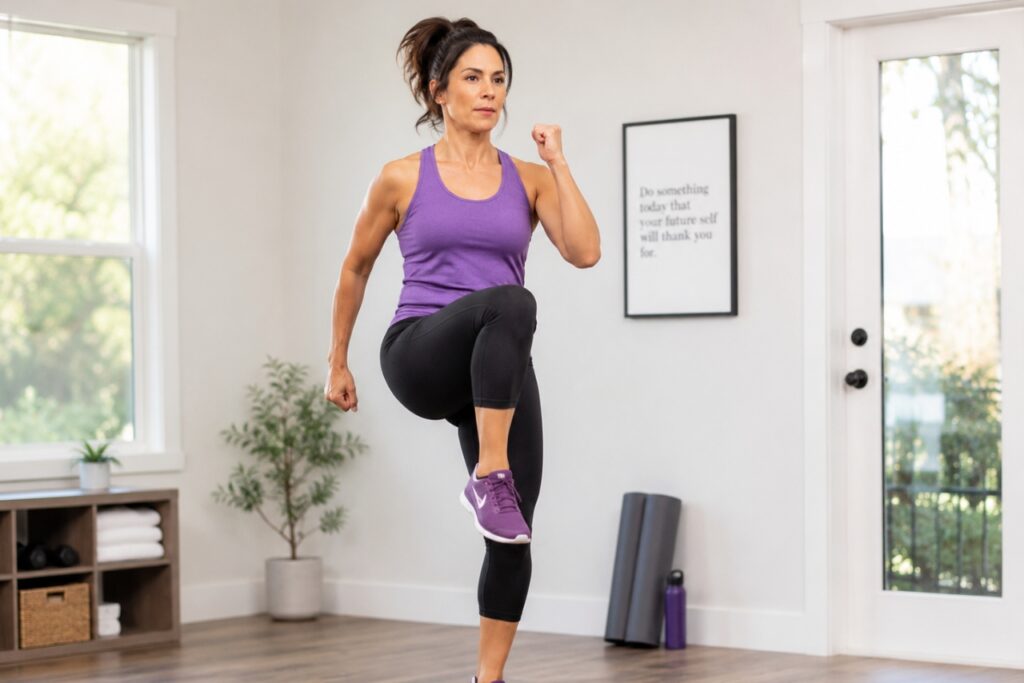
Power exercise after 50 can be safe, but it has to be done in the right way. It should be progressive, controlled, modified when needed, and matched to the body you have today. Power training is about teaching the body to respond quickly and confidently in everyday life.
Power is the ability to react quickly, move confidently, stand up from a chair, step onto a curb, catch yourself if you trip, climb stairs, and respond when life suddenly asks you to move. My own experience taught me that trying the hardest version first, such as skipping on hard surfaces or progressing quickly into box jumps, was not the right approach.
This is why Power is one of the Five Pillars of the Fabulous50s Longevity Protocol™, alongside Strength, Cardio, Mobility, and Balance. Power supports independence because it helps strength become useful in real life.
Key Takeaways: Power Exercise After 50
- Power exercise after 50 is safe when done gently and progressively.
- Research shows power training is feasible and safe for older adults.
- Injuries usually come from maximal effort or skipping progression, not from power itself.
- Beginners use light effort and small movements, so impact stays very low.
- A few conditions call for extra care, so check with your doctor first.
- Good form, support, and the quick-up, slow-down rule keep you safe.
- The Fabulous50s Vitality App guides safe progression for every level.
Is Power Exercise After 50 Actually Safe?
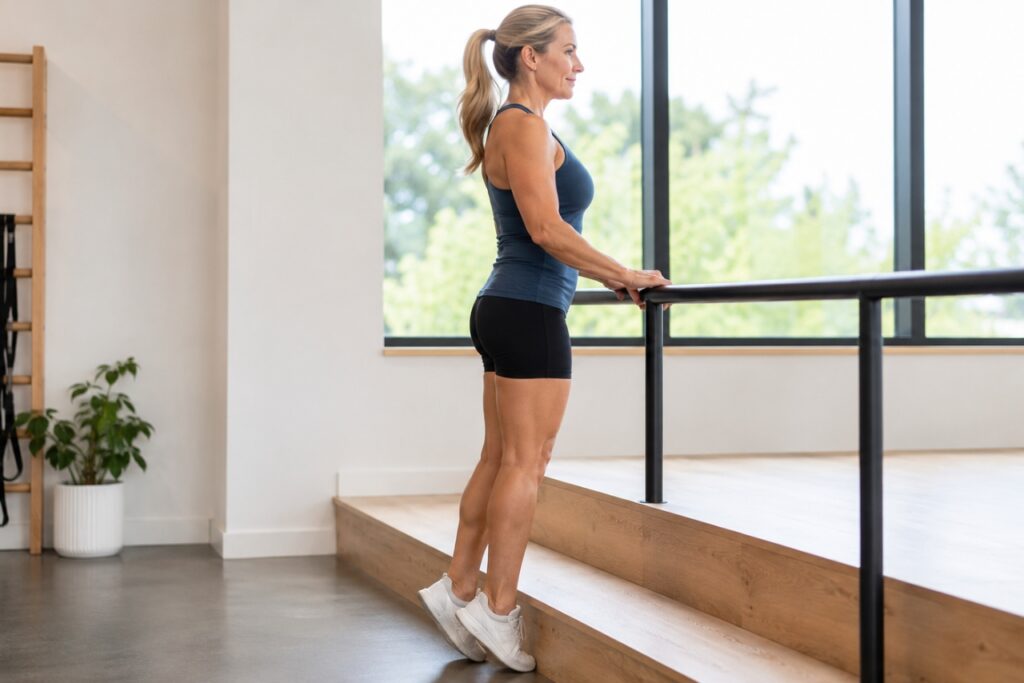
The evidence is genuinely reassuring. In one twelve-week power training study for older adults, retention was full and no one dropped out due to injury. Researchers judged the program safe and feasible.
Here is a detail I love. Studies suggest injury risk is higher during hard testing than during the gentle training itself. In other words, sensible training is the safe part.
So where do injuries come from? Research points to two culprits. Pushing to near-maximal force and working to exhaustion. Beginner power exercise after 50 avoids both by design.
READ ALSO: Power Training: The New Science Behind Longevity and Fall Prevention
Why Is Gentle Power Training So Low-Risk?
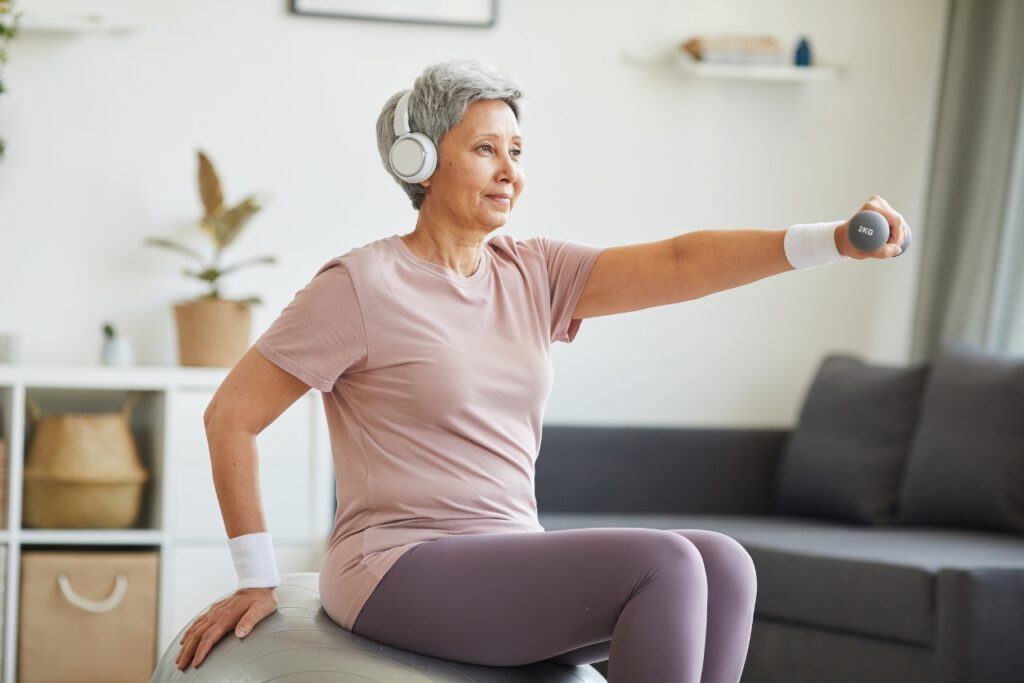
Safe power training uses light effort and small movements. You are not lifting heavy loads or leaping from heights. You simply move a little more quickly than usual, then slow down with control.
This is the opposite of the risky pattern. There is no exhaustion and no maximal strain. A quick heel raise or a brisk sit-to-stand asks very little of your joints while training your power fibers.
The key word is progression. You start at the bottom and climb one rung at a time. Confidence comes first, and capability follows. That gradual path is what keeps power training safe.
READ ALSO: A Guide to Power Training for Women Over 50
Who Should Take Extra Care?
Power exercise after 50 suits most women. But a few situations call for caution. Please speak with your doctor or physiotherapist first if any of these apply to you:
- You have a heart condition or high blood pressure that is not well managed.
- You have osteoporosis, or you have had a recent fracture or joint replacement.
- You are recovering from surgery or a recent injury.
- You have a balance disorder, dizziness, or frequent unexplained falls.
- You feel unsteady standing without support.
A quick conversation with a professional helps you start with confidence and the right modifications for your body.
READ ALSO: Beginner Power Exercises for Women Over 50
How Do You Keep Power Training Safe?
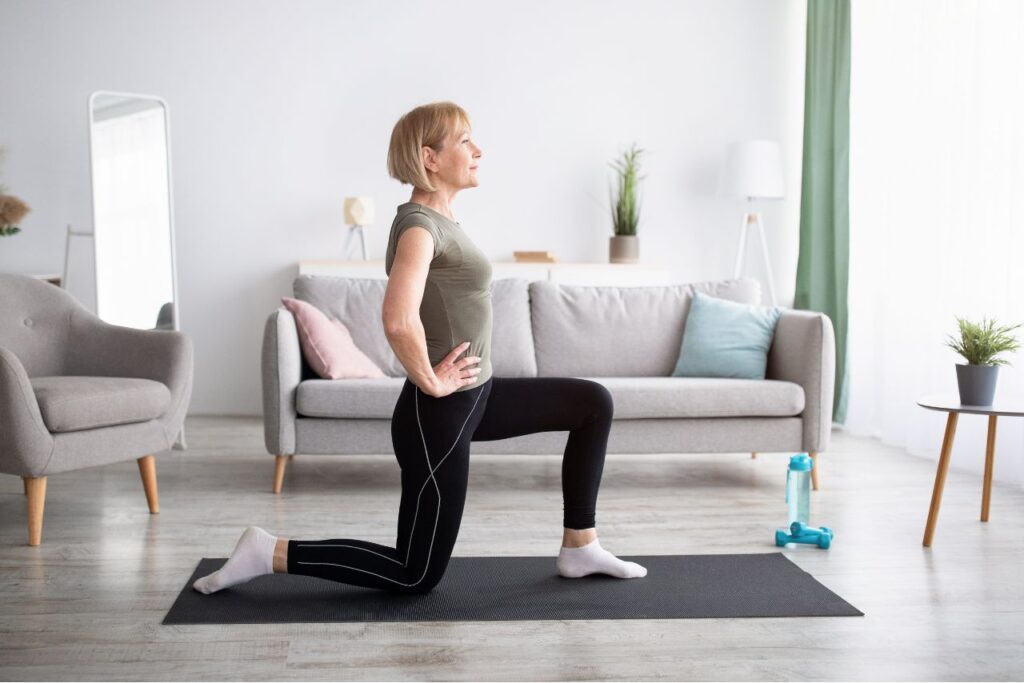
A few gentle habits keep every session safe and enjoyable:
- Progress slowly. Do not jump an untrained body. Build power one small step at a time.
- Use support. Keep a sturdy chair or countertop nearby to steady yourself.
- Follow the tempo. Move quickly on the effort, then lower slowly with full control.
- Stop at sharp pain. Muscle effort is fine, but sharp pain means stop and rest.
- Set up your space. Clear rugs and clutter, wear supportive shoes, and use good lighting.
READ ALSO: 10 Strength Training Rules Women Over 50 Need to Follow
What About Sensitive Joints or Leaking?
Two common concerns deserve a gentle word. If your joints feel sensitive, especially through menopause, make every movement smaller and slower. Sensitivity is information, not a stop sign.
Some women also leak a little when they move quickly. That is very common, and it is not a reason to avoid power work. Reduce the intensity, keep it controlled, and over time you will also train the muscles that support continence. If you prefer extra support, a seated start works beautifully.
See Chair Exercises for Seniors.
More Power Training Resources
- Power Training: The New Science Behind Longevity and Fall Prevention for Women Over 50
- A Guide to Power Training for Women Over 50
- Why You Need Strength and Power Training in Your Routine Over 50
- Strength Isn’t Enough: Why Women Over 50 Need Power Training Too
- How to Start Power Training Without Jumping
- Is Power Exercise Safe After 50?
- Power Exercises That Help With Stairs, Trips, And Balance
- Fast Sit-to-Stands: A Simple Power Exercise After 50
- Beginner Power Exercises for Women Over 50
- Power Training vs. Strength Training: What’s the Difference?
- Strength Isn’t Enough: Why Women Over 50 Need Power Training Too
- Why You Need Strength and Power Training in Your Routine Over 50
- Power vs Strength: What Women Over 50 Need to Know
Closing Thoughts
So let me leave you with reassurance. Power exercise after 50 is not only safe but also beneficial. It is one of the kindest things you can do for your independence. The risk lives in rushing, not in the movement.
Start small. Move gently. Progress slowly. Check with your doctor if you have any concerns. Build confidence first, and your future self will thank you for beginning.
The safest way to build power is with proper guidance. The Fabulous50s Vitality App walks you through gentle, progressive power movements designed for women over 50. Every session offers clear cues and modifications. You start where you feel confident and climb only when you are ready.
Start your free trial today and train power the safe, confident way.
| A Gentle Reminder: This article is for general education, not medical advice. Everybody is different. If you have a health condition or any concern, please check with your doctor first. They can help you begin power exercise after 50 safely, with modifications made just for you. |
Frequently Asked Questions
Yes, when you start gently. Beginner power moves use light effort and small movements, so impact stays very low. Begin with heel drops or slow sit-to-stands, and progress only when each step feels steady.
Gentle power training is kind to joints because it avoids heavy loads and hard landings. If a joint feels sensitive, make the movement smaller and slower. Stop at any sharp pain and rest.
No. Jumping is only one advanced form of power, and it is optional. Many women build all the power they need through low-impact movement, with their feet staying close to the floor.
Always keep a sturdy chair or countertop nearby for support. If a movement feels shaky, make it smaller or slower. Never train through dizziness, and rest whenever you need to.
Power exercise can support the quick reactions needed to recover from a stumble or sudden change in direction. It is most effective when combined with strength, balance, mobility, and cardio training.
Women with osteoporosis or osteopenia should speak with a qualified healthcare professional before doing higher-impact movement. Some low-impact power exercises may be appropriate, but the starting point should be personalized.
2110 Fitness. “Power Training for Older Adults.” 2110 Fitness. https://www.2110fitness.com/post/power-training-for-older-adults
Reid, K.F., and Fielding, R.A. “Skeletal Muscle Power: A Critical Determinant of Physical Functioning in Older Adults.” Exercise and Sport Sciences Reviews, 2012. https://pmc.ncbi.nlm.nih.gov/articles/PMC3245773/
Johns Hopkins Medicine. “Fall Prevention: Balance and Strength Exercises for Older Adults.” Johns Hopkins Medicine. https://www.hopkinsmedicine.org/health/wellness-and-prevention/fall-prevention-exercises
The Pause Life. “Menopause and Muscle Loss: Why Sarcopenia Starts Sooner Than We Thought.” The Pause Life by Dr. Mary Claire Haver. https://thepauselife.com/blogs/the-pause-blog/menopause-and-muscle-loss-why-sarcopenia-starts-sooner-than-we-thought
SB Physio. “How to Improve Your Sit-to-Stand Strength.” SB Physio. https://www.sbphysio.com/blog/how-to-improve-your-sit-to-stand-strength
Power Training in Older Adults: A Pilot and Feasibility Study (Probiologists) https://www.probiologists.com/article/power-training-in-older-adults-a-pilot-and-feasibility-study
Power Training for Older Adults (PubMed) https://pubmed.ncbi.nlm.nih.gov/16604125/
The Impact of Power Training on Physical Functioning in Older Adults (PMC) https://pmc.ncbi.nlm.nih.gov/articles/PMC12180591/
Fall Prevention: Balance and Strength Exercises for Older Adults (Johns Hopkins Medicine) https://www.hopkinsmedicine.org/health/wellness-and-prevention/fall-prevention-exercises
Skeletal Muscle Power: A Critical Determinant of Physical Functioning in Older Adults (PMC) https://pmc.ncbi.nlm.nih.gov/articles/PMC3245773/