For a long time, I thought healthy aging was mostly about cardio and strength training. Cardio helped me feel fit and energized. Strength training helped me feel capable, strong, and supported in my body. But power training was something I did not fully understand until much later.
When I was younger, I trained power without even realizing it. I skipped rope, jumped, moved quickly, ran for buses, and bounded up stairs because my body could simply do those things. Youth gives us power so naturally that we rarely stop to name it. It is only when we begin to feel slower, more cautious, or less confident in quick movements that we realize power is something we need to protect.
Looking back, I also realize I approached power training the wrong way. I skipped rope on hard surfaces, pushed into box jumps, and tried the hardest version before building the foundation. Later, when menopause arrived and my joints became more sensitive, I began to understand that power training after 50 needs a different approach. It needs to be progressive, safe, and confidence-building.
That is why Power is one of the Five Pillars of the Fabulous50s Longevity Protocol™, alongside Strength, Cardio, Mobility, and Balance. Each pillar supports a different part of healthy aging, and power has a very specific job. Strength helps us produce force. Power helps us produce force quickly enough to use it when life suddenly asks us to move.
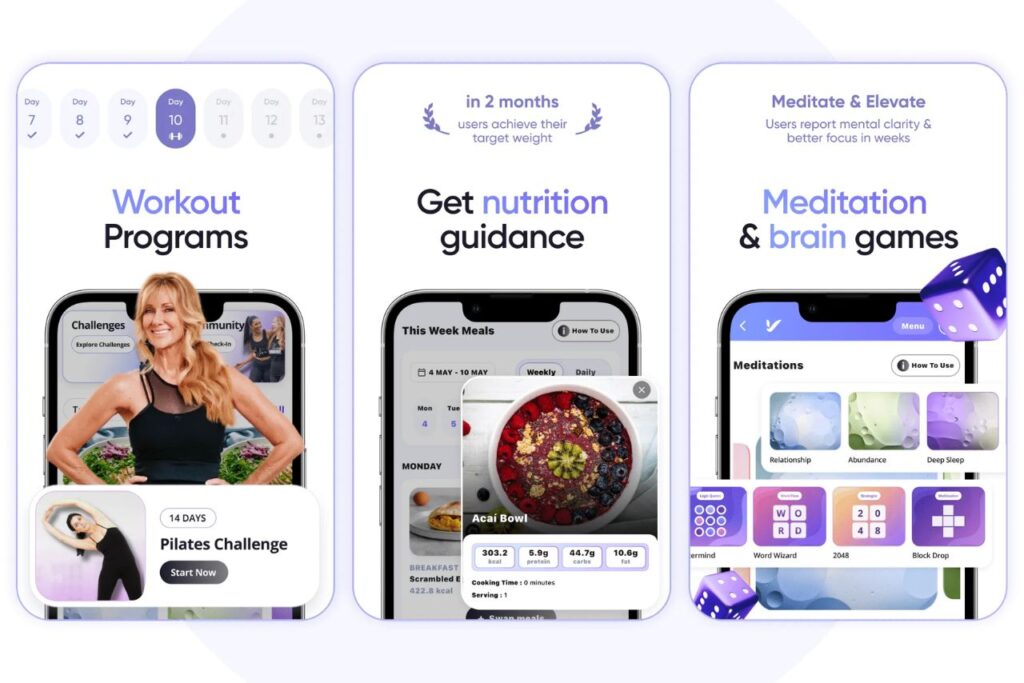
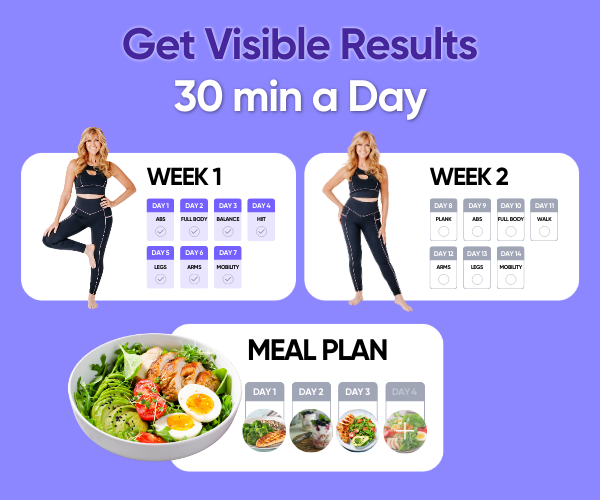
Start your 14-day free trial of the Fabulous50s Vitality App and begin training your body for strength, confidence, and lifelong independence.
Key Takeaways: Power Training vs. Strength Training
- Strength is how much force you can produce. Power is how quickly you can produce it.
- Power declines almost twice as fast as strength after 50, and it fades earlier too.
- Power is what helps you rise from a chair, climb a curb, and catch yourself when you trip.
- You do not build power by jumping. You build it gradually, starting with small, controlled movements.
- Both qualities matter, and strength is the foundation that makes power training safe.
- The Fabulous50s Vitality App guides you through both, at a pace that builds confidence first.
What is Strength Training?
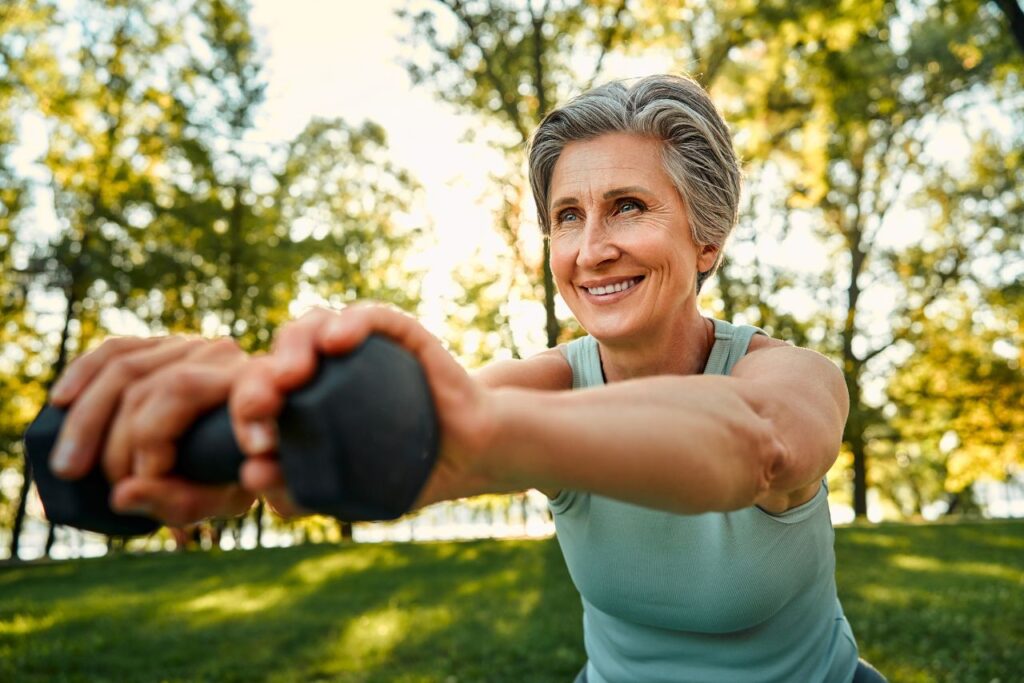
Strength training is any form of exercise that teaches your muscles to work against resistance. That resistance might come from dumbbells, resistance bands, bodyweight movements, a chair, a wall, or even everyday tasks such as lifting, carrying, pushing, and pulling.
After 50, strength training becomes especially important because it helps preserve muscle, support metabolism, protect joints, improve posture, and make daily activities easier. In the Fabulous50s Longevity Protocol Guide, Strength is described as the foundation of independence because it helps women lift, carry, climb stairs, get up from a chair, travel confidently, garden, and feel capable in their bodies.
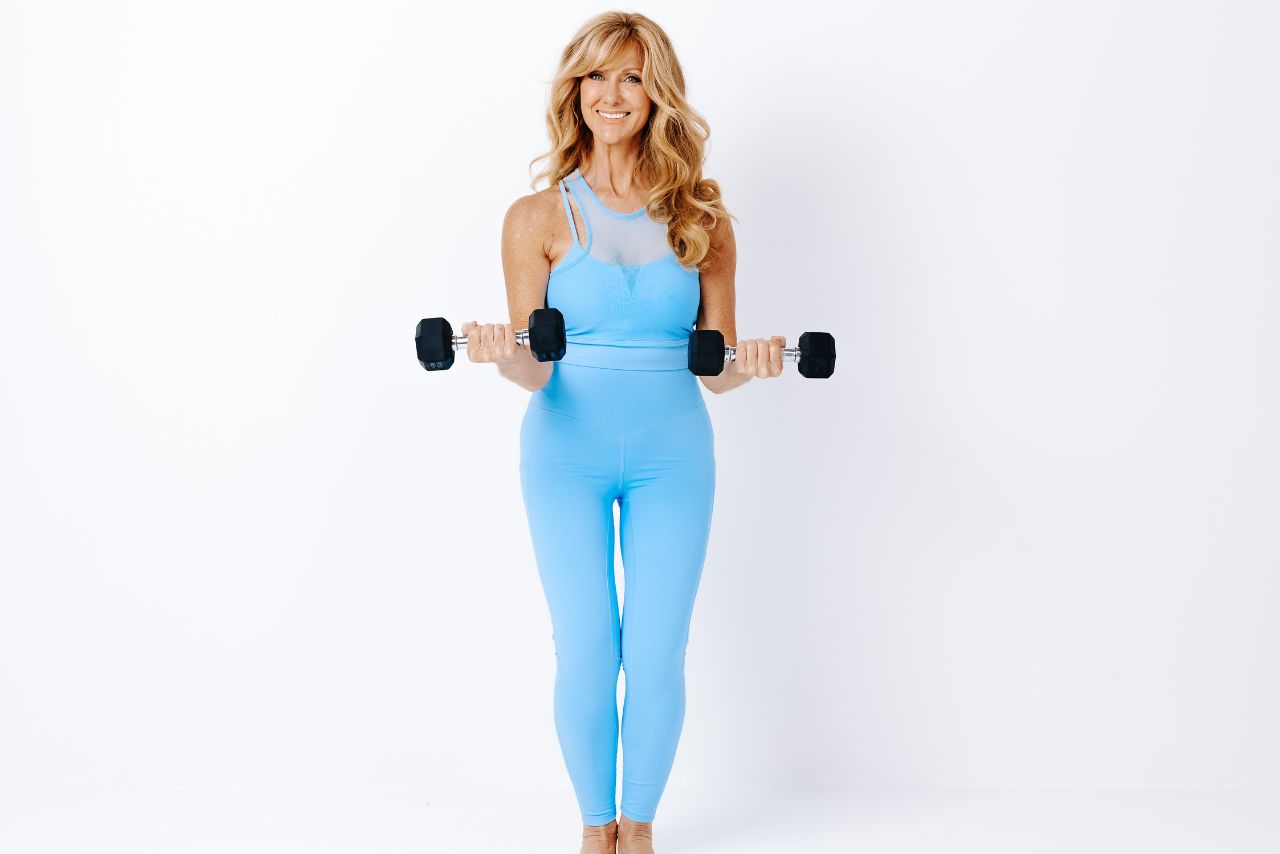
Strength training is usually controlled and deliberate. A squat, for example, may be performed slowly so we can focus on alignment, muscle engagement, and joint support. A bicep curl may be done with steady control so the muscle learns to produce force safely. This slower pace is not a weakness. It is how we build a strong foundation.
For women over 50, that foundation matters. Strength gives the body the support it needs for posture, balance, bone health, joint health, and everyday confidence. But strength alone is not the whole picture.
READ ALSO: The Ultimate Strength Training Blueprint For Women Over 50
What is Power Training?
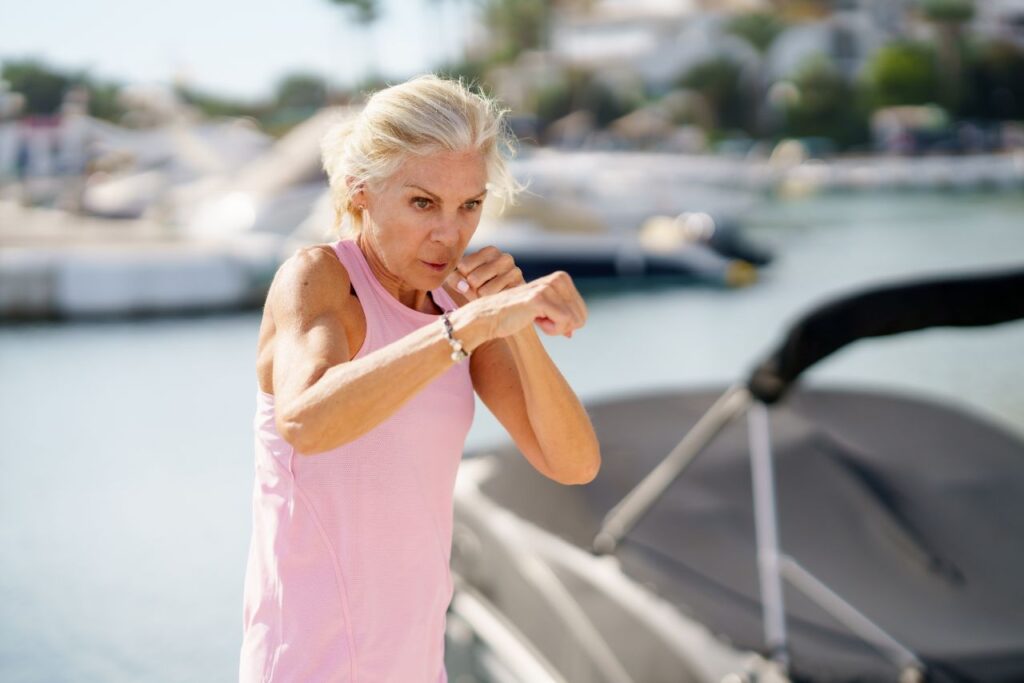
Power training is your ability to produce force quickly. It is strength plus speed.
Power is what helps you stand up from a chair with energy, step quickly onto a curb, recover if you trip, climb stairs with confidence, or move out of the way when something unexpected happens. Power is one of the missing pieces of longevity because it helps us respond to life, not just move through a workout.
Research supports this idea. Muscle power tends to decline earlier and more sharply with age than muscle strength, and it is strongly connected to physical function in older adults. This means a woman may still have some strength, but if she loses the ability to use that strength quickly, everyday movements can begin to feel slower, smaller, and less confident.
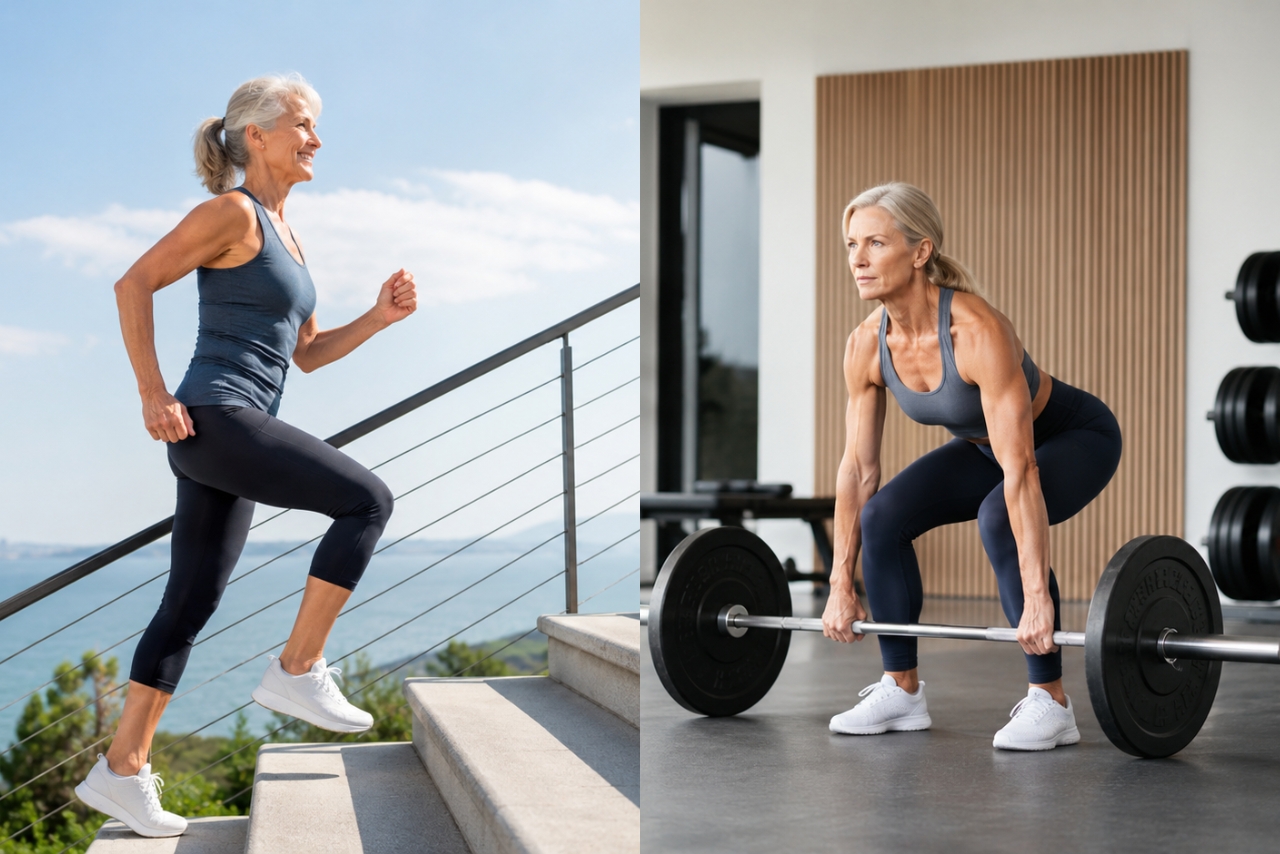
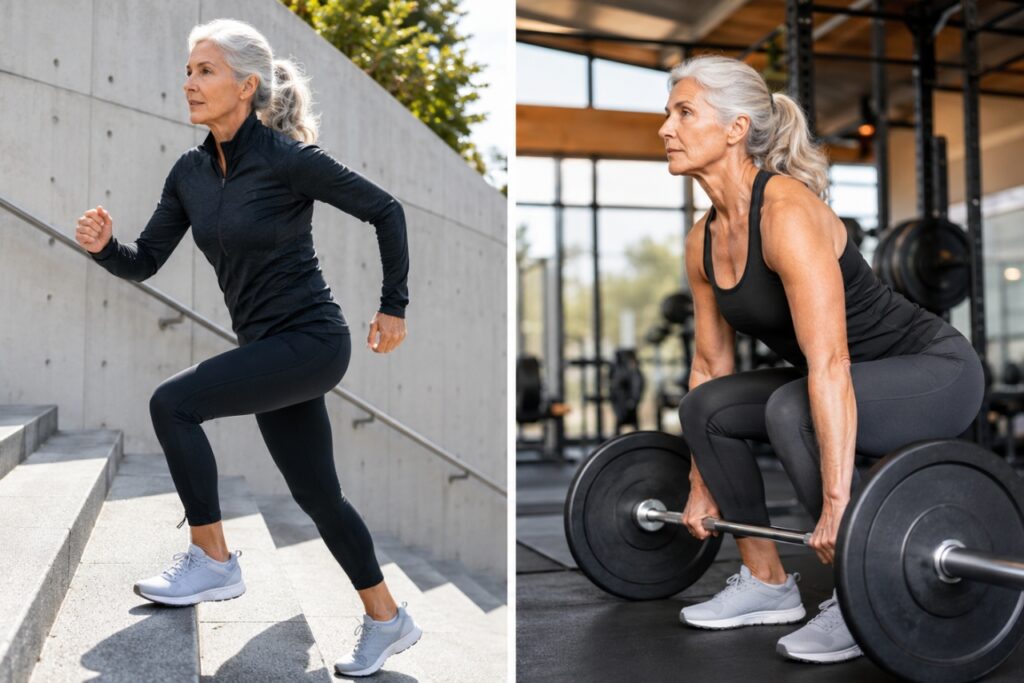
Power training does not need to look extreme. It can begin with heel drops, quick side steps, faster sit-to-stands, small controlled bounces, gentle step-ups, or moving in different directions. The goal is not to jump high or move aggressively. The goal is to help the body remember how to react.
READ ALSO: A Guide to Power Training for Women Over 50
What is the Difference Between Power and Strength?
Strength is your ability to produce force. It is the raw amount you can push, pull, or lift. Power is your ability to produce force quickly. It is force with speed attached. Scientists describe it simply as force multiplied by velocity.
Think of it this way. Strength is holding a heavy door open. Power is stepping through before it swings shut. You need force for the first. You need force and speed for the second. That speed is the piece we tend to lose.
Both come from your muscles. But power leans heavily on your fast-twitch fibers, the ones that fire in an instant. Those fibers are also the first to fade as we age. That is why power feels different and why it needs its own kind of training.
How the two show up in daily life
A few examples make the difference plain.
Strength is what you use to:
- Carry a full laundry basket up the stairs.
- Hold a plank or lift a heavy pot.
- Push a stuck door or a loaded trolley.
Power is what you use to:
- Rise quickly from a low chair or the floor.
- Step onto a curb without hesitation.
- Catch yourself the instant you trip.
Strength makes you capable. Power makes that strength useful in the real world, in the split second when life asks you to react.
Why Does This Difference Matter So Much?
A woman drops her keys, bends to pick them up, and stands back up without a thought. That small moment hides two very different abilities. One is strength. The other is power. For years, I only trained one of them.
Most of us grew up hearing that staying strong was the goal. So we lift, we tone, we build muscle. That work matters deeply, and I never want you to stop. Strength is what carries the groceries and lifts the grandchild. Power is something else entirely, and it may protect your independence even more.
Here at Fabulous50s, we treat power as one of our five core Longevity Pillars. Today, let’s look closely at how power training and strength training differ. Once you see it, you cannot unsee it.
READ ALSO: Why You Need Strength and Power Training in Your Routine Over 50
Why Does Power Decline Faster Than Strength After 50?
This is where the science surprised me most. Research shows that muscle power declines earlier and more rapidly than muscle strength as we age. It is not a small gap. Power can fade almost twice as fast.
A ten-year study published in the Journal of Cachexia, Sarcopenia and Muscle followed how both qualities changed over a decade. Power declined faster than strength, especially during faster movements. Even more telling, low power predicted mobility loss and hospitalization more strongly than strength did.
Why does this happen? A few gentle reasons. Our fast-twitch fibers shrink more than our slow-twitch ones. Our nervous system signals a little more slowly. Our tendons lose some of their spring. None of this means decline is your destiny. It simply tells us where to focus.
For women, menopause adds another layer. As estrogen drops, we lose more of those quick-firing fibers. That is the natural rhythm that once made movement feel light and responsive. The good news is that this rhythm can be relearned.
READ ALSO: How to Build Muscle and Get Stronger Over 50
How Do You Train Power and Strength Differently?
The two qualities respond to different cues. Strength training rewards effort and load. You lift a challenging weight, control it slowly, and let your muscles adapt. That controlled tempo is exactly right for building force.
Power training rewards speed of intention. The load is often lighter, but the movement is quicker. You might rise from a chair with a little pop of energy. You might tap your feet faster. The weight matters less. The intent to move quickly matters most.
A simple side-by-side
| Strength training | Power training | |
|---|---|---|
| Goal | Produce more force | Produce force quickly |
| Speed | Slow and controlled | Quick and intentional |
| Load | Heavier, challenging | Lighter, movement-led |
| Everyday payoff | Lifting and carrying | Reacting and staying upright |
READ ALSO: Strength Isn’t Enough: Why Women Over 50 Need Power Training Too
How Should You Start Power Training Safely?
Here is the lesson I learned the hard way. When I was younger, I skipped rope and jumped onto boxes. My body could tolerate it, so I kept raising the height. Then I injured my knee, and it took a long time to recover. Please do not repeat my mistake.
Do not jump on an untrained body. Power should be built progressively, the same way we build strength. It might begin with heel drops. It might be a tiny bounce where your toes never leave the floor. It might be stepping quickly from side to side.
These small, controlled movements teach your body to absorb force and produce it again. Confidence comes first. Then capability follows. There is no rush and no ceiling you must reach.
What about leaking or joint sensitivity?
Let’s talk about something many of us experience but rarely mention. Sometimes when we start to jump, we leak a little. That is incredibly common, and it is not a reason to avoid power training. It is simply information about where your body is right now.
My advice is gentle. Reduce the intensity. Make the movement smaller. Keep it controlled. Stay at the level where you feel confident. Over time, you are also training the muscles that support continence and stability. If your joints feel sensitive, especially through menopause, the same rule applies. Smaller, slower, steadier.
READ ALSO: Power Training: The New Science Behind Longevity and Fall Prevention for Women Over 50
Do You Really Need Both Power and Strength?
Yes, and they work best together. Strength is the foundation. It gives your body the structure to handle speed safely. Power sits on top of that foundation, turning your strength into quick, usable movement.
Without strength, power training can feel shaky and unsafe. Without power, strength stays slow and cannot always help you in the moment you need it. Picture strength as the engine and power as the accelerator. One builds capacity. The other lets you use it right now.
This is exactly why the Fabulous50s Longevity Protocol includes both as separate pillars. We do not ask you to choose. We ask you to build them in the right order, gently, so your body stays capable for the decades ahead.
READ ALSO: 10 Strength Training Rules Women Over 50 Need to Follow
| Train both, in the right order, with the Fabulous50s Vitality App You do not have to guess which movement comes next. The Fabulous50s Vitality App gives you a structured weekly plan that builds strength first, then layers power on top gently and progressively. Every session is designed for women over 50, with modifications so you always start where you feel confident. Start your free trial today and train for the independence that carries you through the decades ahead. |
How Does Power Training Support The Brain and Nervous System?
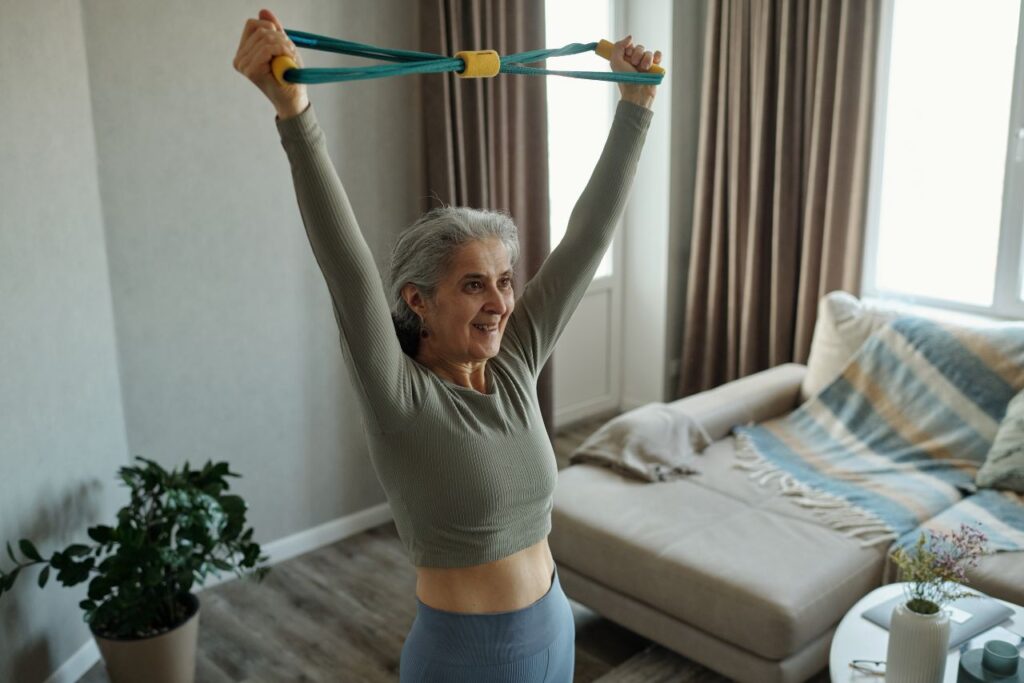
Power is not only a muscle quality. It is also a nervous system skill. When you step quickly to the side, change direction, react to a cue, or coordinate your arms and legs, your brain and body are communicating rapidly.
This matters because aging well is not only about having muscle. It is also about coordination, reaction time, balance, confidence, and adaptability.
A simple power drill can ask the brain to make decisions quickly. Step right, step left, slow down, speed up, reach, turn, and recover. These small changes teach the body that it can still respond to life, and that message is incredibly powerful for confidence.
How Can Women Safely Add Power To Strength Training?
A simple way to understand the difference is this: strength builds the engine, and power teaches the engine to respond quickly. We need both.
A strength-focused sit-to-stand might be slow and controlled. You sit down carefully, stand up with good alignment, and repeat. A power-focused version might be standing up a little more quickly while still staying safe and controlled. A strength step-up might focus on control and balance. A power step-up might include a slightly quicker push through the foot. A strength workout might build your legs. A power workout teaches those legs to react.
The key is progression. Start with strength first, then add small doses of speed when the movement feels familiar. Keep the range of motion comfortable. Use support when needed. Stop before fatigue makes your movement messy. Power training is best done when the body feels fresh enough to move well.
What is the Fabulous50s Approach to Power Training?
The Fabulous50s approach to power is warm, progressive, and practical. It is not about athletic performance. It is about independence.
Power is what helps us catch ourselves before a fall. It helps us move quickly when life asks us to. It helps us step, climb, react, and stay confident in our bodies. Power is described as one of the first physical qualities we lose as we age and one of the strongest predictors of functional independence and longevity.
This is why the message matters so much. We are not training power because we want to jump higher. We are training power because we want to live with more freedom. We want to travel, walk, climb stairs, get off the floor, play with grandchildren, move through busy places, and trust that our body can respond when life changes direction.
More Power Training Resources
- Power Training: The New Science Behind Longevity and Fall Prevention for Women Over 50
- A Guide to Power Training for Women Over 50
- Why You Need Strength and Power Training in Your Routine Over 50
- Strength Isn’t Enough: Why Women Over 50 Need Power Training Too
- How to Start Power Training Without Jumping
- How Power Training Helps You Stay Independent
- Is Power Exercise Safe After 50?
- Power Exercises That Help With Stairs, Trips, And Balance
- Fast Sit-to-Stands: A Simple Power Exercise After 50
- Beginner Power Exercises for Women Over 50
- Strength Isn’t Enough: Why Women Over 50 Need Power Training Too
- Why You Need Strength and Power Training in Your Routine Over 50
- Power vs Strength: What Women Over 50 Need to Know
Final Thoughts
Strength and power are deeply connected, but they are not the same. Strength helps you produce force. Power helps you produce that force quickly enough to use it in real life.
After 50, both matter. Strength helps preserve muscle, support joints, protect posture, and maintain independence. Power helps preserve speed, reaction, confidence, and the ability to respond to unexpected moments. When we train both gently and consistently, we give the body a better chance of staying capable for the decades ahead.
Inside the Fabulous50s Vitality App, you can follow guided workouts designed for women over 50 across the full Fabulous50s Longevity Protocol™, including Strength, Cardio, Mobility, Balance, and Power. The app helps you know what to do, where to start, how to modify, and how to build confidence one safe step at a time.
Frequently Asked Questions
No. Cardio builds your heart and lungs over time. Power training builds your ability to produce force quickly in a single movement. They complement each other, and both belong in a balanced routine after 50.
Yes, and you should start very gently. Begin with small movements like heel drops or tiny bounces where your toes stay on the floor. Build confidence first, then add speed slowly over the weeks.
Not at all. Power can be stepping side to side, changing direction, or rising quickly from a chair. Jumping is only one option, and it is never where a beginner should start.
It is never too late. Studies show older adults can restore power and mobility with progressive training. Your body adapts at any age when you train it kindly and consistently.
That is very common and simply tells you where your body is now. Reduce the intensity, make the movement smaller, and stay controlled. Over time you also strengthen the muscles that support continence.
You can, as long as you feel ready. A gentle approach is to build strength first, then add a few short power movements at the end. The Fabulous50s Vitality App sequences this for you.
Two short sessions a week is a wonderful place to begin. Consistency matters far more than intensity. Small, regular practice teaches your body to react, and that is the whole goal.
Skeletal Muscle Power: A Critical Determinant of Physical Functioning in Older Adults (PMC) https://pmc.ncbi.nlm.nih.gov/articles/PMC3245773/
Strength and Power for Longevity: Why Your Training Needs Both (Zero Point One) https://www.zeropointonept.com/functional-longevity-health-fitness/why-muscle-power-may-matter-more-than-strength-for-longevity
Powerpenia: A New Biomarker for Healthy Aging and Longevity (The Whole Health Practice) https://www.thewholehealthpractice.com/post/powerpenia-a-new-biomarker-for-healthy-aging-and-longevity
Effectiveness of Power Training Compared to Strength Training in Older Adults (PMC) https://pmc.ncbi.nlm.nih.gov/articles/PMC9367108/
Assessing Muscular Power in Older Adults (Frontiers in Aging) https://www.frontiersin.org/journals/aging/articles/10.3389/fragi.2024.1302574/full