


There is something very honest about the way the body feels first thing in the morning.
Before the day gets busy, before we have had time to distract ourselves, the body speaks. Sometimes it whispers through tight hips as we step out of bed. Sometimes it shows up as a stiff lower back, heavy legs, or shoulders that feel as though they need a little coaxing before they open properly.
I began paying close attention to this feeling around menopause. My body still felt like mine, but it needed more kindness in the morning. My hips wanted time, my joints wanted warmth, and my movement no longer arrived as automatically as it once did.
And this is exactly why I love a gentle morning mobility routine. It is simply a beautiful way to tell your body, “We are moving today. We are staying open, and we are staying free.”
Mobility is one of the Five Pillars of the Fabulous50s Longevity Protocol because it helps us keep doing the daily things that matter: walking, reaching, bending, climbing stairs, traveling, getting down to the floor, and standing back up again with confidence.
A few minutes in the morning can change the whole feeling of your day.
Key Takeaways: Morning Mobility Routine
- A morning mobility routine helps ease stiff joints and prepare the body for daily movement.
- Many women feel more stiffness after 50 because of menopause, reduced movement, sitting, and natural age-related changes.
- Mobility is different from deep stretching. It is about moving your joints with comfort and control.
- Five to ten minutes in the morning is enough to begin.
- Focus on the neck, shoulders, spine, hips, ankles, and feet.
- Never force a stretch. Move gently, breathe, and let your body open gradually.
Why Does The Body Feel Stiff In The Morning After 50?

Morning stiffness can feel frustrating, especially when you remember a time when your body simply got up and moved without much thought. After 50, there are a few reasons this can happen.
During perimenopause and menopause, falling estrogen levels can affect joints, muscles, tendons, and connective tissue. Harvard Health describes this as part of the “musculoskeletal syndrome of menopause,” which can include joint and muscle pain, stiffness, and fatigue.
And what that means for us is simple. If your body feels tighter, achier, or slower to warm up than it used to, you are not imagining it. Your body may be asking for a new rhythm of care.
Modern life also plays a role. We sit for long periods, drive instead of walk, look down at screens, and move through a much smaller range than our bodies were designed for. In Schellea’s Mobility note, she explains that many women in more traditional cultures continue to squat, bend, carry, climb, and walk as part of daily life, while Western life has often designed these natural movements out of the day.
The body adapts to what we do most often. If we spend hours sitting, our hips can tighten. Sometimes, if we round forward over screens, our shoulders and upper back can feel stiff. If we rarely move our ankles, feet, spine, and hips through their full range, those movements can begin to feel less available.
This is why a morning mobility routine is so powerful. It gently reintroduces the body to movement before the day begins.
What Is Mobility, And Why Is It So Important After 50?
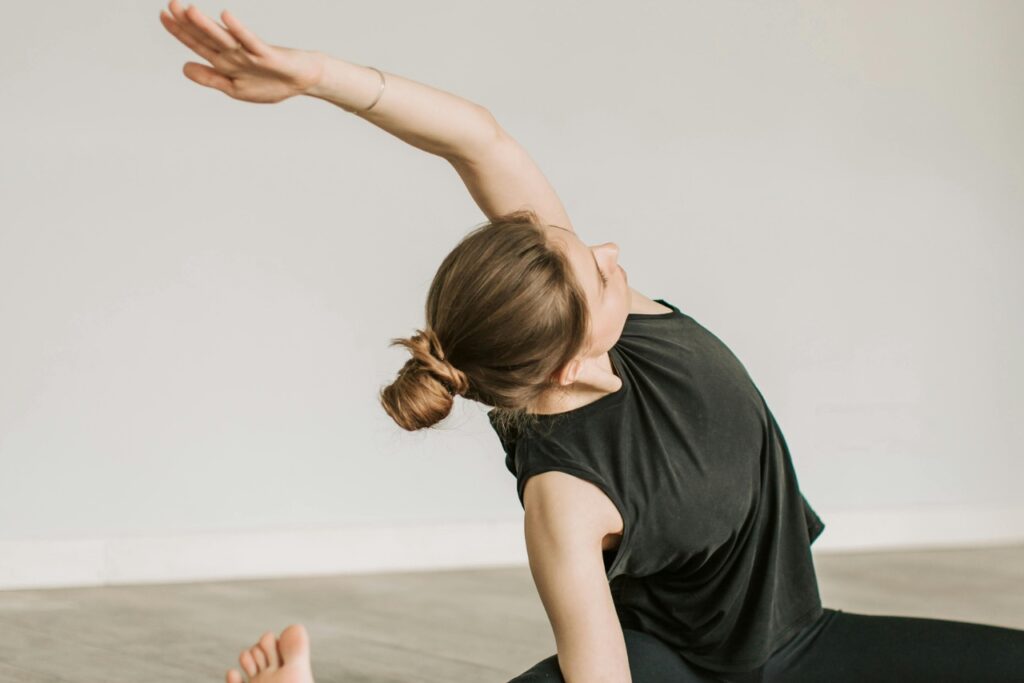
Mobility is the ability to move well. It is not just about being flexible. Flexibility is how far a muscle can lengthen. Mobility is whether you can move a joint through a useful range with comfort, control, and confidence.
We need mobility for real life. We need it when we turn to look behind us, reach for something on a shelf, step into the shower, get in and out of the car, walk on uneven ground, or bend to pick something up.
For women over 50, mobility is freedom.
Research supports the value of regular stretching and mobility-style work. A review on flexibility training in older adults explains that flexibility can decline with age, but older adults can still improve range of motion with appropriate training. Another review found that stretching is known to improve range of motion, while strength training can also help improve mobility when done well.
So we are not stuck. The body can respond, change, and be reminded how to move.
How Long Should A Morning Mobility Routine Be?
I love keeping this simple because the habit matters more than the length.
A morning mobility routine can be five minutes. It can be ten minutes. On a slower day, it might become fifteen. But we do not need to wait for the perfect amount of time before we begin.
The American Academy of Family Physicians notes that flexibility exercises can improve joint range of motion after three to four weeks of regular stretching two to three times per week, with even greater gains from daily flexibility work. That is such an encouraging reminder. Small, repeated effort matters.
For most women, the best morning mobility routine is one you can actually repeat. It should feel gentle enough that you do not dread it and useful enough that you notice a difference.
Five minutes done consistently is far more powerful than a perfect hour you never repeat.
What Should A Morning Mobility Routine Include?

A good morning routine should move the areas that tend to feel stiff after sleep and sitting. We want to wake up the spine, hips, shoulders, ankles, feet, and breath.
Here is a gentle routine you can try.
1. Start with breath and tall posture
Stand with your feet hip-width apart or sit tall on the edge of your bed. Place one hand on your ribs and one hand on your belly. Take three slow breaths.
As you breathe in, imagine creating space through your spine. As you breathe out, soften your shoulders. This simple start helps your nervous system feel safe before you move.
2. Neck and shoulder rolls
Gently turn your head from side to side, then lower one ear toward one shoulder and repeat on the other side. Keep the movement small and comfortable.
Then roll your shoulders up, back, and down a few times. Many of us hold tension in the neck and shoulders, especially after sleep or screen time. This helps the upper body begin to open.
3. Standing side bends
Reach one arm overhead and gently lean to the opposite side. Come back to the center and repeat on the other side.
This wakes up the waist, ribs, and spine. Move slowly. We are not trying to force a deep bend. We are simply reminding the body that it can lengthen and move.
4. Gentle spinal rotations
Place your hands across your chest or let your arms swing softly. Rotate your upper body from side to side.
Keep your hips fairly steady and let the movement come through your ribs and upper back. This is wonderful for the spine because daily life often keeps us moving forward and backward but not rotating enough.
5. Hip circles
Place your hands on your hips and make slow circles, as if you are drawing a circle with your pelvis. Go one way, then the other.
This is one of my favorite movements because the hips are so important for walking, climbing stairs, getting down to the floor, and moving confidently. Schellea practices hip mobility daily because she does not want her hips to limit her as she ages.
6. Supported hip openers
Hold onto a chair or wall. Lift one knee gently, open it slightly to the side, then bring it back down. Repeat slowly on each side.
Keep the movement controlled. This is not about lifting high. It is about moving the hip joint with care and attention.
7. Ankle circles and heel raises
Hold onto something steady. Lift one foot and circle the ankle a few times in each direction. Then place both feet down and slowly rise onto your toes, lowering with control.
Our ankles and feet are easy to forget, but they are essential for walking, balance, and confidence on our feet. A few simple movements can help the lower body feel more awake.
8. Gentle forward fold or chair-supported stretch
Stand behind a chair and place your hands on the back of it. Step back slightly and let your chest lower toward the floor, keeping your knees soft.
This can stretch the shoulders, back, hamstrings, and hips gently. Do not force the body. Breathe into the position and come out slowly.
How Can This Routine Help With Stiff Joints After 50?
A morning mobility routine helps by warming the body gradually and increasing movement through the joints. It encourages circulation, reduces that “stuck” feeling, and prepares the body for daily activities.
It also creates a powerful mental shift. Instead of beginning the day feeling frustrated by stiffness, we begin by doing something kind and useful for the body we have now.
The World Health Organization recommends that older adults include varied movement that emphasizes functional balance and strength as part of their weekly activity because it supports functional capacity and helps prevent falls. Mobility sits beautifully inside this wider longevity picture because it helps the body move more freely during strength, cardio, balance, and daily life.
This is why mobility is not separate from healthy aging. It supports everything else.
What If I Feel Very Stiff Or I Am A Beginner?
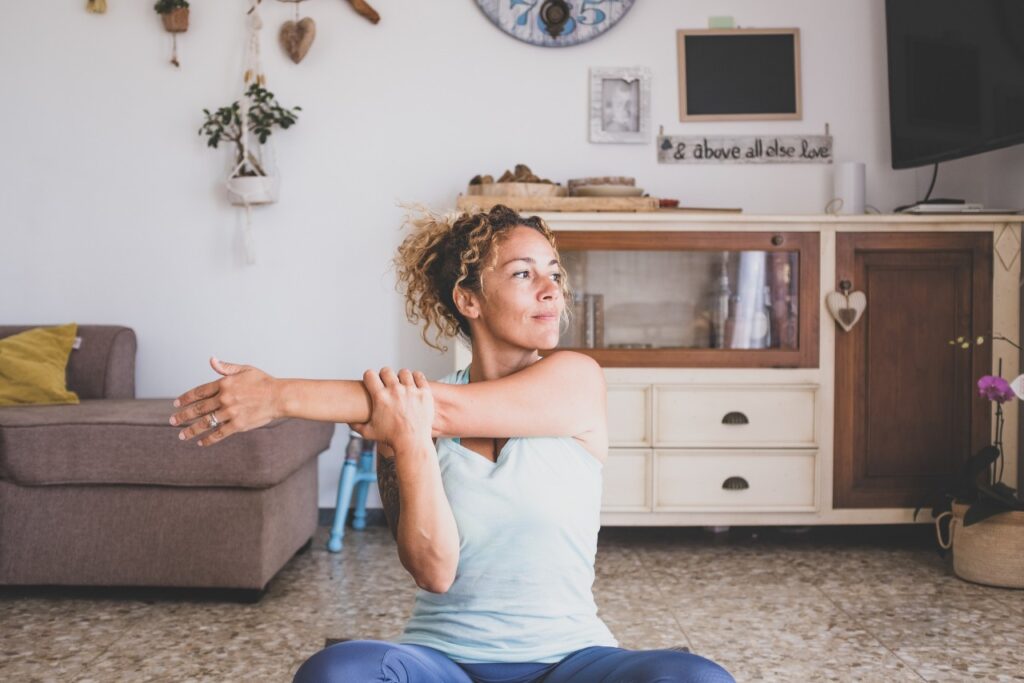
Start smaller. You can do this routine seated, holding onto a chair. You can also move through a small range.
Mobility is not a test. It is a conversation with your body. Some mornings, your body may feel open and ready. Other mornings, it may need more patience. Both are normal.
If a movement feels sharp, painful, dizzying, or wrong, stop. If you have severe joint pain, swelling, unexplained pain, osteoporosis, recent surgery, balance problems, or a medical condition that affects movement, please speak with your healthcare professional before starting something new.
The goal is not to push through. The goal is to build trust.
How Do We Make Morning Mobility A Habit?
Connect it to something you already do.
You might do your mobility routine before coffee, after brushing your teeth, after prayer or meditation, or before your morning walk. Keep it easy to start. Leave a mat nearby or simply practice beside your bed.
The best routine is the one that becomes part of your life.
One of the most beautiful lessons I learned from watching my mum is that movement does not have to be dramatic to be meaningful. It can be a quiet daily rhythm with a few breaths, stretches, and a few moments of choosing the future version of yourself.
Small steps, practiced consistently, create remarkable changes over time.
This is exactly why I love having guided mobility routines inside the Fabulous50s Vitality App. When your body feels stiff, you do not have to wonder what to do next or try to create a plan on your own. You can simply open the app, choose a gentle mobility or stretching session, and let me guide you through it step by step.
Inside the Fabulous50s Vitality App, mobility becomes part of a complete longevity rhythm, alongside strength, cardio, balance, power, recovery, and community support. You can begin with just a few minutes, build confidence gently, and keep returning to the routines that help your body feel more free.
Every stretch is a deposit in your independence. Start your 14-day free trial of the Fabulous50s Vitality App today and take your first gentle step toward moving with more freedom.
Keep Moving With These
- The 5 Ultimate Workouts Every Woman Over 50 Should Do
- Best Mobility Exercises for Stiff Joints After 50
- Why You Feel Stiff After 50 and What to Do About It
- Effective Stretching Workouts to Improve Your Flexibility & Mobility
- Top 5 Mobility Exercises For Women Over 50
- An Easy 8-Minute Mobility and Flexibility Workout for Women Over 50
- 5 Minute Hip Mobility Workout For Women Over 50
- 8 Powerful Hip Exercises to Improve Flexibility & Mobility
- Chair Exercises for Seniors: Gentle Seated Workouts for Women Over 50
- Low-Impact Osteoporosis Exercises for Women Over 50
Final Thoughts
A morning mobility routine for women over 50 is not about doing more. It is about beginning the day with care.
It is a few minutes of telling your joints, muscles, spine, hips, and feet that they still matter. This is a way of keeping your body open to the life you want to keep living.
Start with five minutes tomorrow morning. Breathe. Move gently. Notice what feels different. Then do it again the next day.
Mobility is not about being the most flexible person in the room. It is about giving your body a little more freedom than it had yesterday.
Frequently Asked Questions
The best routine gently moves the neck, shoulders, spine, hips, ankles, and feet. Start with breath, shoulder rolls, side bends, spinal rotations, hip circles, ankle circles, and gentle supported stretches.
Five to ten minutes is a wonderful place to begin. You can do more if your body enjoys it, but consistency matters more than duration.
Either is fine. Many women enjoy gentle mobility before breakfast because it helps the body feel more awake. Keep it light and comfortable.
Yes, gentle hip circles, supported hip openers, and slow side steps can help the hips feel warmer and more mobile. Practise consistently and avoid forcing the movement.
They work together. Stretching helps flexibility, while mobility helps your joints move with control. After 50, both are useful.
Sources
- Harvard Health Publishing. Musculoskeletal syndrome of menopause: when menopause makes you ache all over.
- Stathokostas L, et al. Flexibility Training and Functional Ability in Older Adults. https://pmc.ncbi.nlm.nih.gov/articles/PMC3503322/
- Afonso J, et al. Strength Training versus Stretching for Improving Range of Motion: A Systematic Review and Meta-Analysis. https://pmc.ncbi.nlm.nih.gov/articles/PMC3503322/
- American Academy of Family Physicians. Exercise Prescriptions in Older Adults. https://www.aafp.org/afp/2017/0401/p425
- World Health Organization. 2020 guidelines on physical activity and sedentary behaviour. https://pmc.ncbi.nlm.nih.gov/articles/PMC7719906/