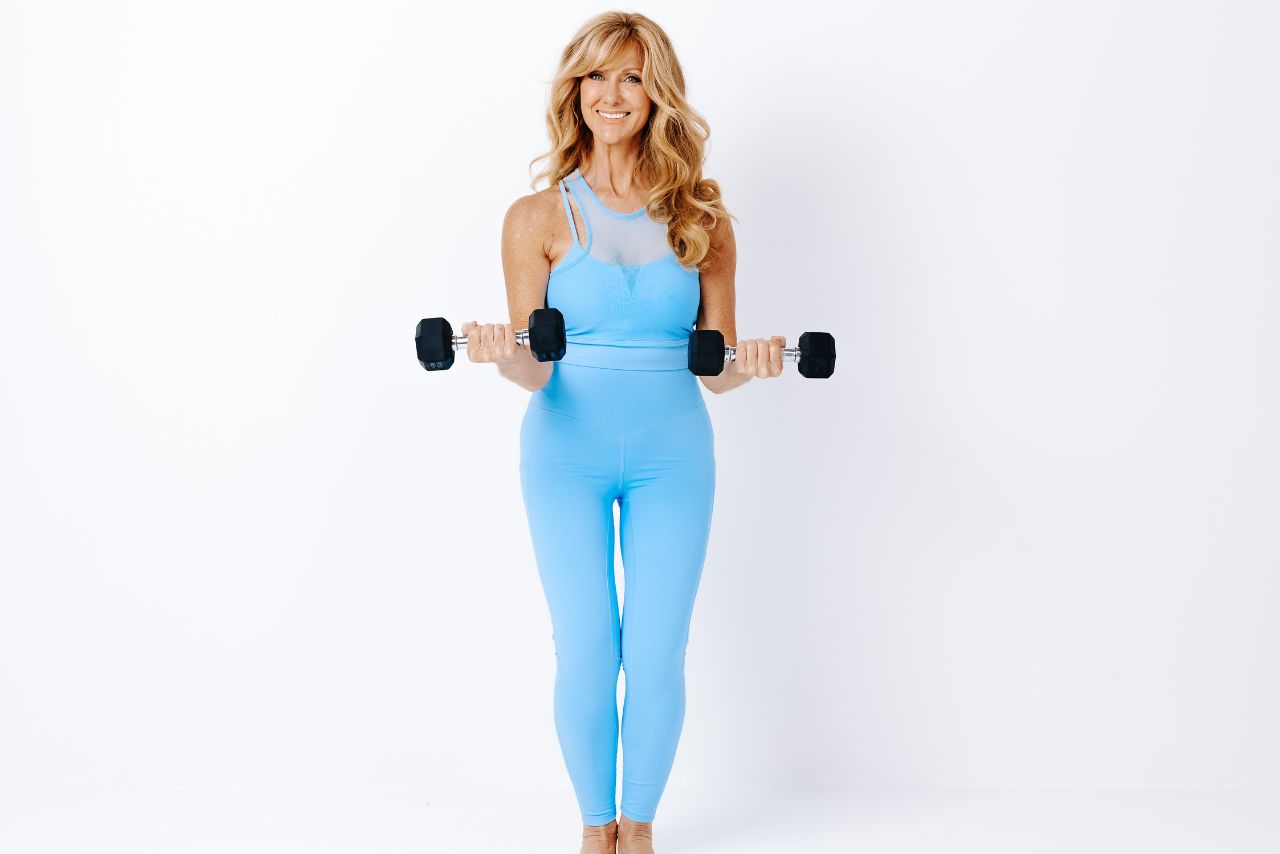


For as long as I can remember, stretching and mobility have been part of my life.
My mum was a yoga teacher and, in fact, one of the first yoga teachers here in Australia in the 1970s. From the age of four or five, I was attending her classes in the basement of our home with my sister. We would giggle away while Mum taught the ladies how to breathe, stretch, and move their bodies.
As I grew up, one thing remained constant. No matter what stage of life Mum was in, she practiced her stretching routine every day. Even when she became very ill with cancer, she still attempted to move and stretch her body. She was not always physically able to do what she once could, but the habit remained. Movement was simply part of who she was.
I was flexible for most of my life, until menopause arrived. Around 55 or 56, I started noticing that my joints hurt and my hips felt stiff. My body no longer moved the way it had before. That was the moment I realized that if I did not do something about it, I could slowly lose the freedom of movement I had always taken for granted.
That is why mobility is such an important part of the Fabulous50s Longevity Protocol. Mobility is not about being the most flexible person in the room. It is about being able to move through your life with confidence, ease, and freedom.
Key Takeaways: Why You Feel Stiff After 50
- Feeling stiff after 50 is common, especially around menopause.
- Hormonal changes, sitting, reduced movement variety, and age-related changes can all play a role.
- Mobility is the ability to move well, not just stretch deeply.
- Five minutes a day can make a meaningful difference when practised consistently.
- The hips, spine, shoulders, ankles, and feet all need regular movement.
- Never force a stretch to look like somebody else’s.
- Small steps, practised consistently, create remarkable changes over time.
Why Do We Feel Stiff After 50?
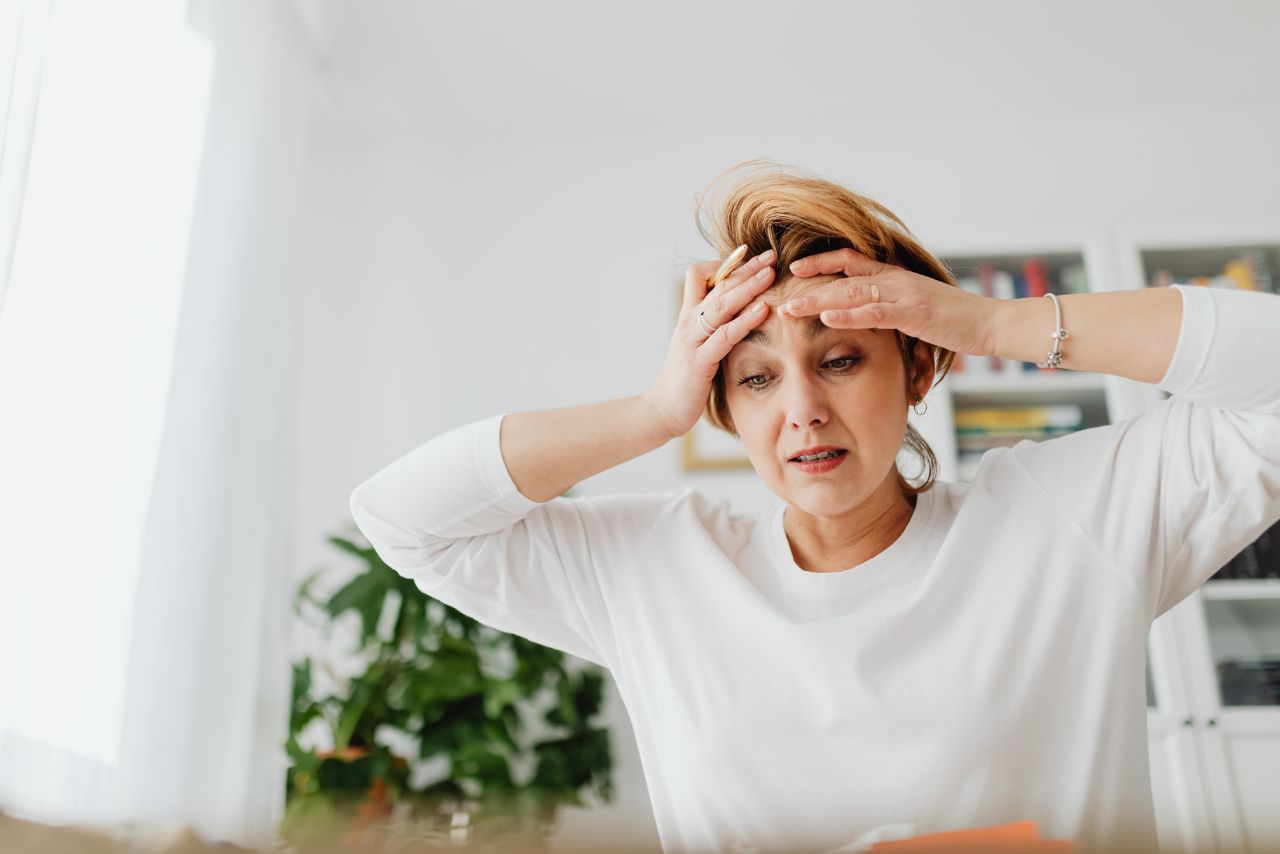
Many women feel stiff after 50 because the body is changing but also because daily life has become less movement-rich than it used to be.
During menopause, falling estrogen levels can affect the musculoskeletal system. Mayo Clinic Press notes that many women notice joint pain for the first time during perimenopause, and recent research has shown a connection between joint pain and the loss of estrogen. Harvard Health also describes the “musculoskeletal syndrome of menopause” as a newly recognized set of symptoms linked to falling estrogen levels, including joint and muscle pain, stiffness, fatigue, and related changes.
And what that means for us is simple. If your body suddenly feels stiffer than it used to, you are not imagining it. Your joints, muscles, tendons, and connective tissues may be asking for a different kind of support now.
But hormones are only one part of the story.
READ ALSO: The 3 Stages of Menopause: Perimenopause, Menopause, Postmenopause
What Does Modern Life Have To Do With Stiffness?
One thing I notice when I watch women living in more traditional cultures is how much they move throughout the day. They squat to cook, bend to clean, carry things, climb hills, walk long distances, and use their bodies in many different positions.
Their bodies continue performing natural, primal movements every day.
In modern life, many of us have unintentionally designed movement out of our routines. We sit in chairs, drive everywhere, use elevators instead of stairs, and spend hours looking at screens. Over time, our bodies adapt to this lack of movement by becoming stiff and rigid.
This is why I believe mobility after 50 matters so much. The body needs regular reminders that it can still bend, rotate, reach, squat, stretch, and move in different directions. If we only move in small, repetitive patterns, our range of motion can slowly become smaller too.
Why Do The Hips Often Feel So Stiff After 50?
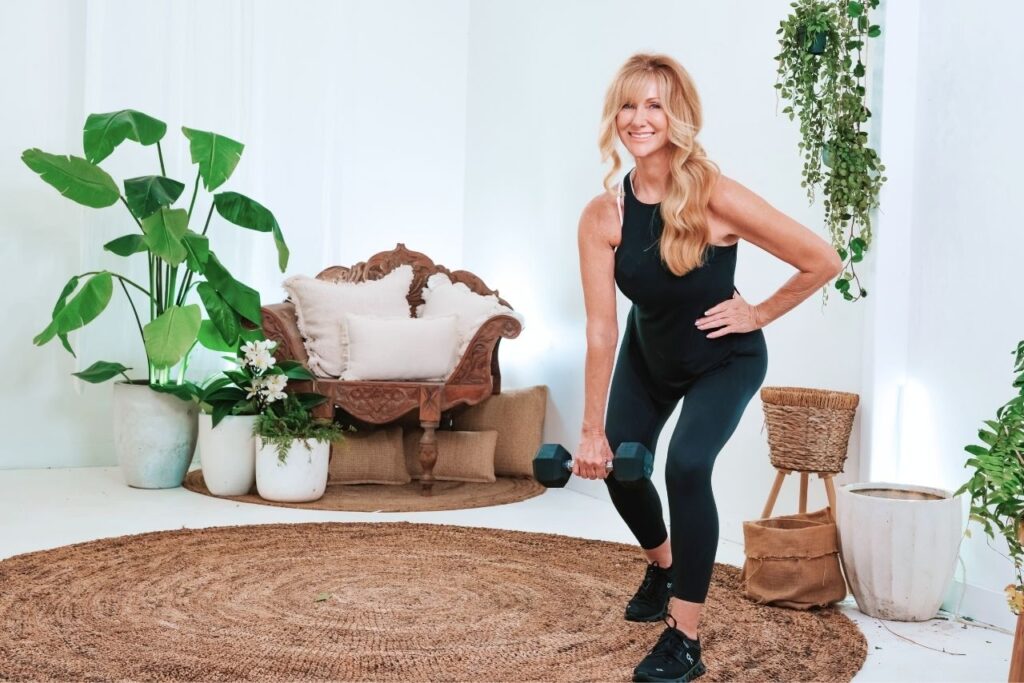
For me, the hips were the first place I really noticed stiffness. I realized that if my hips became limited, so much of life would become harder.
We need our hips for walking, climbing stairs, getting down to the floor, standing back up, gardening, traveling, and moving with confidence. When the hips are stiff, the lower back, knees, and even the way we walk can be affected.
That is why I practice hip mobility every day. Not because I want to do the splits, but because I want to keep living fully. I want to walk comfortably, travel confidently, get up and down from the floor, and move without feeling restricted.
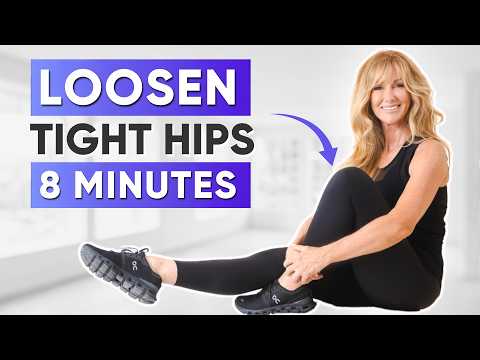
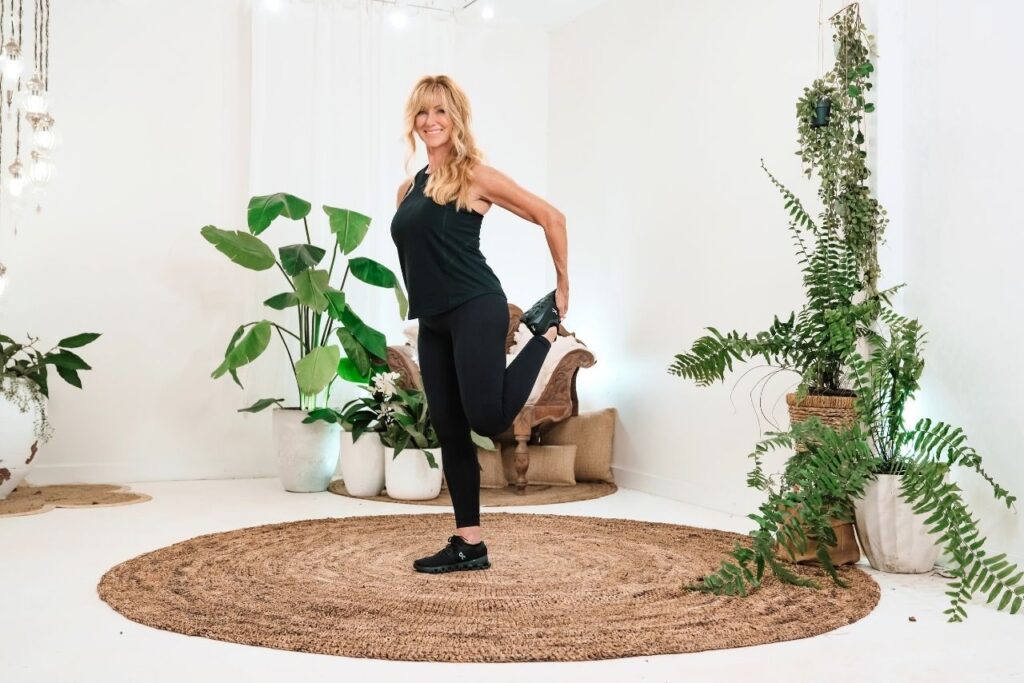
A few minutes of hip circles, gentle lunges, seated figure-four stretches, or controlled side-to-side steps can remind the hips that they are still allowed to move.
Is Stretching Enough, or Do We Need Mobility Too?
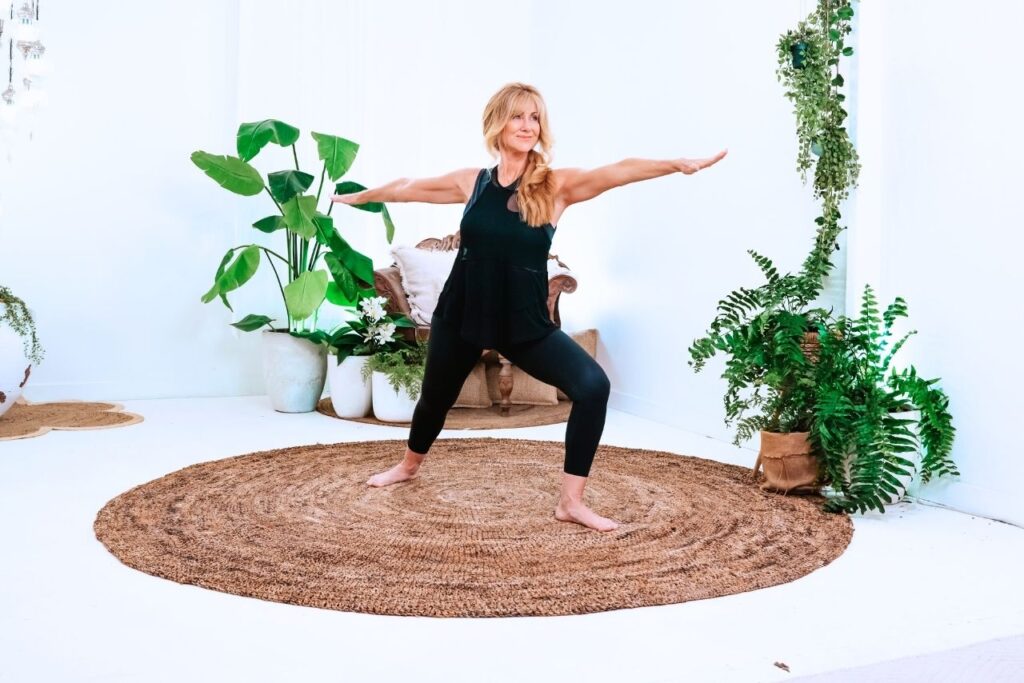
Stretching and mobility work beautifully together, but they are not exactly the same thing.
Stretching helps lengthen muscles and improve flexibility. Mobility is the ability to actively move a joint through its range with control. In real life, we need both. We need the flexibility to reach, bend, and turn, and we need the strength and control to use that range safely.
Research supports the value of stretching. A 2024 systematic review and meta-analysis found that stretch training performed regularly for at least two weeks can increase joint range of motion. The review also found that static stretching and proprioceptive neuromuscular facilitation produced greater long-term range-of-motion gains than ballistic or dynamic stretching.
So yes, stretching matters. But for women over 50, I also love adding gentle movement around the joint. Think of it as asking the body, “Can we still move here? Can we move gently? Can we move with control?”
READ ALSO: Best Mobility Exercises for Stiff Joints After 50
What Can We Do When We Feel Stiff After 50?
The first thing is to stop thinking that mobility needs to take an hour. Sometimes five minutes is enough.
Here are gentle places to begin.
Hip mobility. Try slow hip circles, supported side steps, seated figure-four stretches, or a gentle hip flexor stretch. Go slowly and notice where your body feels restricted.
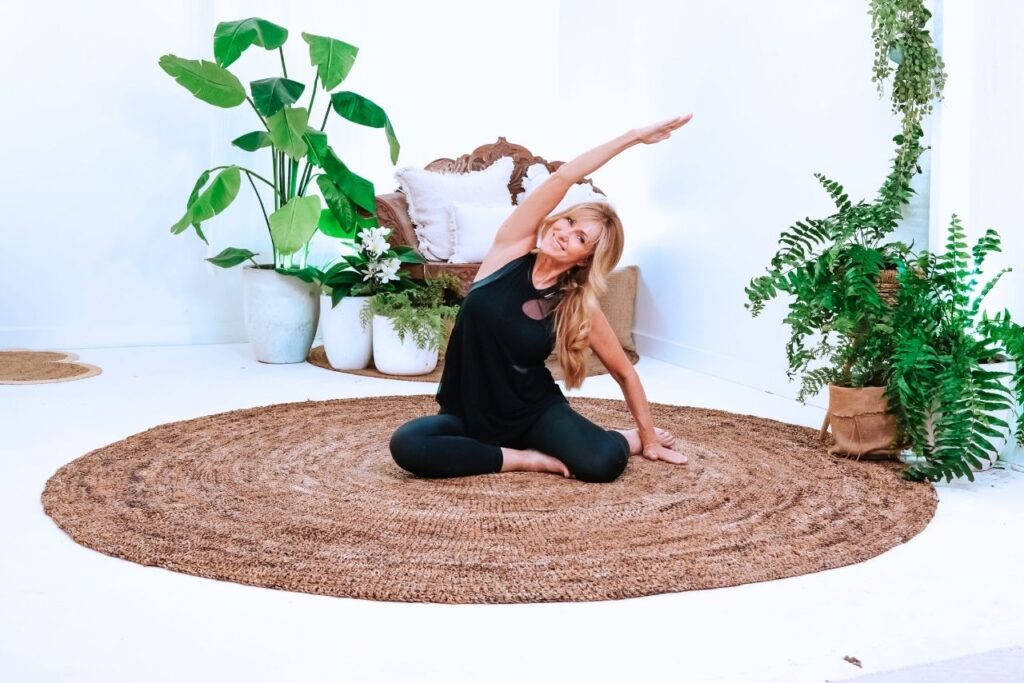
Spinal movement. Try cat-cow, seated twists, or standing side bends. The spine loves gentle movement, especially if you have been sitting for a long time.
Shoulder and chest opening. Try shoulder rolls, wall angels, or clasping your hands behind your back and gently opening the chest. This helps counter the rounded posture that can come from screens and sitting.
Ankle and foot movement. Try ankle circles, heel raises, toe lifts, or gently rolling through the feet. Our feet and ankles help us walk well, balance, and feel steady.
Full-body stretching. A short yoga-inspired flow can help the whole body feel more open. It does not need to be advanced. It simply needs to be consistent.
The goal is not to force the body. The goal is to give it more options.
READ ALSO: Best Stretching Exercises for Arthritis to Reduce Pain and Stiffness
How Often Should We Do Mobility Exercise After 50?
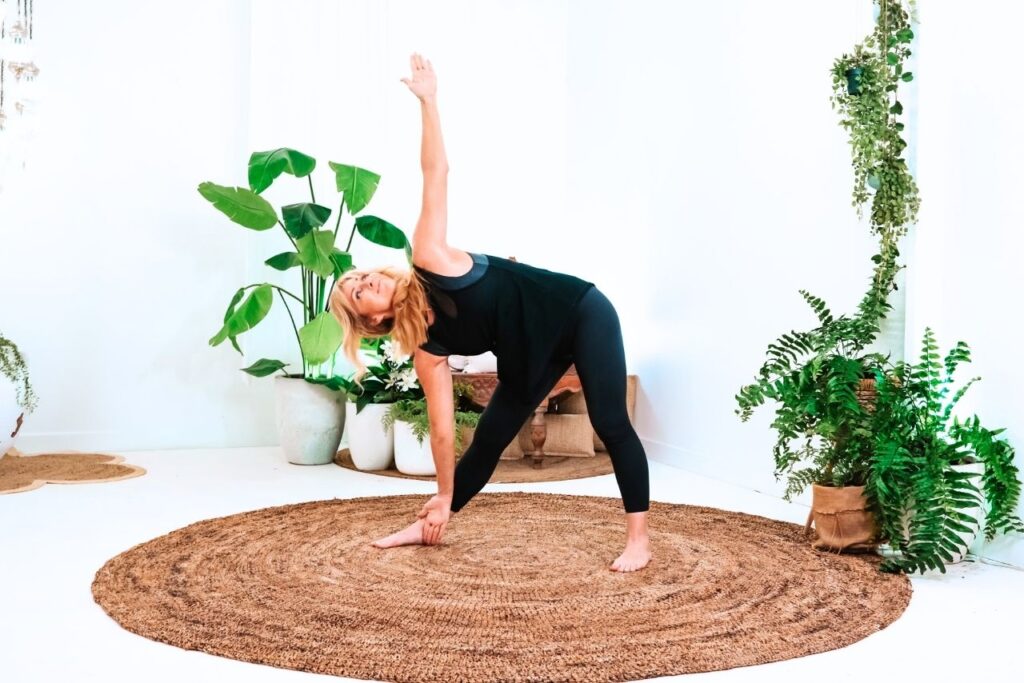
The American College of Sports Medicine position stand recommends flexibility exercises for major muscle-tendon groups, with a total of 60 seconds per exercise, on at least two days per week. The NHS also recommends that older adults do activities that improve strength, balance, and flexibility at least two days a week, while also reducing long periods of sitting.
But my personal belief is that a little mobility every day is even better, especially if you already feel stiff after 50.
This does not have to be complicated. You might do five minutes in the morning, a few hip stretches after a walk, or a short mobility routine before bed. The more often you remind your body to move well, the more natural it begins to feel.
Consistency matters more than intensity.
READ ALSO: Tips to Maintain Lifelong Mobility: A Guide for Women Over 50
How Do We Stretch Safely Without Forcing The Body?
This is so important. If a stretch feels difficult, do not force your body to look like somebody else’s. Go only as far as your body comfortably allows. Breathe. Hold the position. Be patient.
A stretch should feel like gentle tension, not sharp pain. If you feel pinching, numbness, dizziness, or pain that feels wrong, stop. If you have severe, sudden, swollen, or worsening joint pain, it is worth speaking with a healthcare professional. Mayo Clinic Press also advises not to dismiss new or severe joint pain as “just hormones” or “just aging,” because other causes may need to be checked.
Mobility is not punishment. It is care.
How Do We Begin This Week?
Choose one small mobility practice and repeat it for seven days. It might be five minutes of hip mobility in the morning or a gentle stretch after your walk. It might also be a short Fabulous50s mobility routine in the evening when your body feels tight.
Before you begin, notice where you feel stiff. After you finish, notice what changed. Your hips may feel warmer, or your shoulders may feel softer. Maybe you stand a little taller. These small changes matter because they help rebuild trust in your body.
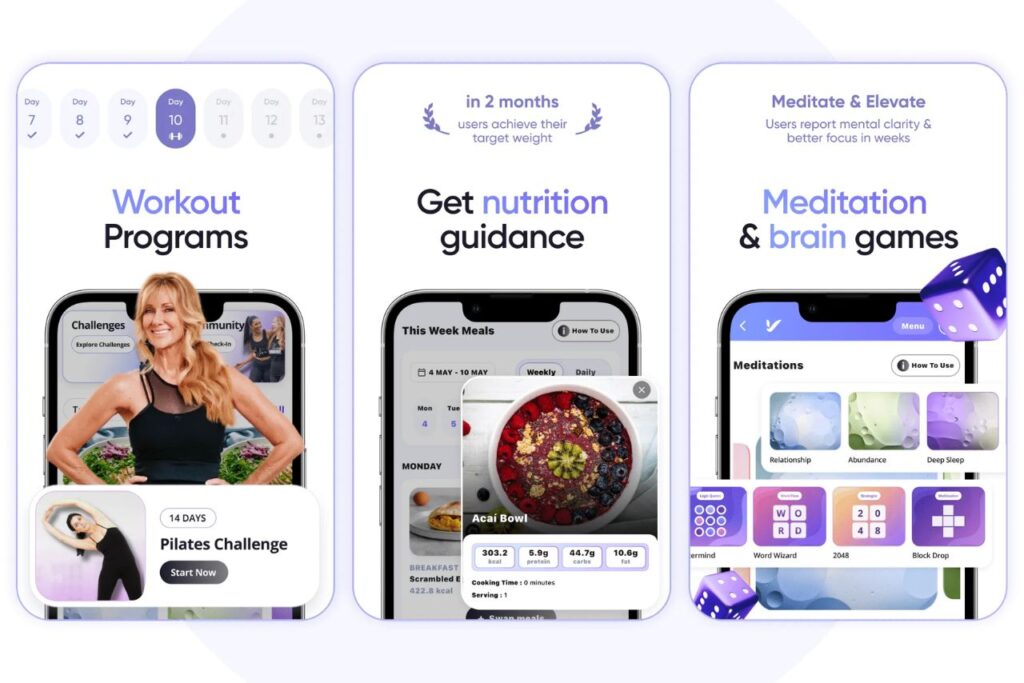
This is exactly why I love having guided mobility routines inside the Fabulous50s Vitality App. When your body feels stiff, you do not have to wonder what to do next or try to create a plan on your own. You can simply open the app, choose a gentle mobility or stretching session, and let me guide you through it step by step.
Inside the Fabulous50s Vitality App, mobility becomes part of a complete longevity rhythm, alongside strength, cardio, balance, power, recovery, and community support. You can begin with just a few minutes, build confidence gently, and keep returning to the routines that help your body feel more free.
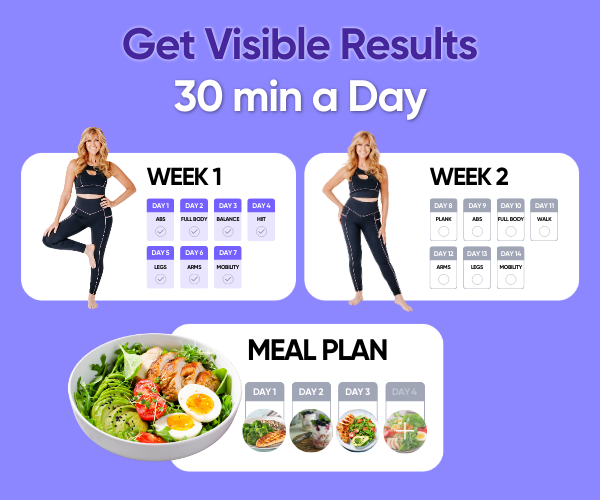
Every stretch is a deposit in your independence. Start your 14-day free trial of the Fabulous50s Vitality App today and take your first gentle step toward moving with more freedom.
Keep Moving With These
- The 5 Ultimate Workouts Every Woman Over 50 Should Do
- Best Mobility Exercises for Stiff Joints After 50
- Effective Stretching Workouts to Improve Your Flexibility & Mobility
- Top 5 Mobility Exercises For Women Over 50
- An Easy 8-Minute Mobility and Flexibility Workout for Women Over 50
- 5 Minute Hip Mobility Workout For Women Over 50
- 8 Powerful Hip Exercises to Improve Flexibility & Mobility
- Chair Exercises for Seniors: Gentle Seated Workouts for Women Over 50
- Low-Impact Osteoporosis Exercises for Women Over 50
Final Thoughts
Feeling stiff after 50 does not mean your body is failing. It means your body is asking for regular, gentle movement.
I have seen the power of stretching through my mum’s lifelong practice, and I have experienced firsthand how quickly stiffness can creep in during menopause. That is why I believe mobility is one of the keys to ageing well.
You do not need to do everything today. Begin with five minutes. Breathe. Move gently. Stay consistent.
Mobility is not about becoming the most flexible woman in the room. It is about giving your body a little more freedom than it had yesterday.
Frequently Asked Questions
You may feel stiff after 50 because of menopause-related hormonal changes, reduced movement, sitting for long periods, muscle loss, joint changes, or simply not moving through enough varied positions each day.
Many women notice more joint pain, aching, and stiffness during perimenopause and menopause. It is common, but that does not mean you should ignore severe, sudden, swollen, or worsening pain.
Gentle mobility work is a wonderful place to start. Hip circles, spinal movement, shoulder rolls, ankle circles, stretching, walking, and yoga-inspired flows can all help the body move more freely.
Start with five minutes if that feels realistic. You can build from there. The most important thing is consistency, not doing a long routine once and then stopping.
No. Stretching should feel like gentle tension, not sharp pain. Go only as far as your body comfortably allows, breathe, and let your body adapt gradually.
Yes. Research shows that regular stretching can improve range of motion. Improvement may feel gradual, but small, consistent practice can create meaningful change over time.
Hip stiffness is very common, especially if you sit for long periods. Begin with gentle hip mobility, walking, and supported stretches. If pain is strong, one-sided, worsening, or limiting daily life, speak with a healthcare professional.
Sources
NHS. Physical activity guidelines for older adults.
Mayo Clinic Press. Could this be menopause? Exploring lesser-known symptoms and what to do about them.
Harvard Health Publishing. Musculoskeletal syndrome of menopause: When menopause makes you ache all over.
Mass General Brigham. Menopause and Joint Pain.
Konrad A, et al. Chronic effects of stretching on range of motion with consideration of potential moderating variables: A systematic review with meta-analysis. Journal of Sport and Health Science. 2024. https://www.sciencedirect.com/science/article/pii/S2095254623000571
Garber CE, et al. American College of Sports Medicine position stand: Quantity and quality of exercise for developing and maintaining cardiorespiratory, musculoskeletal, and neuromotor fitness. https://pubmed.ncbi.nlm.nih.gov/21694556/