


There is a certain kind of stiffness that sneaks into the shoulders quietly.
It can show up when you reach for something on a high shelf and realize your arm does not lift as freely as it used to. It can appear when you fasten a bra, brush your hair, put on a jacket, carry groceries, or spend too long looking down at a phone. At first, it may feel like a small inconvenience. Then one day you notice your shoulders are no longer moving with the ease you once took for granted.
This is why shoulder mobility exercises matter so much after 50. Our shoulders help us reach, lift, carry, dress, hug, drive, stretch, and move through daily life with confidence. When they become tight, we do not just lose flexibility. We can begin to move a little smaller.
I have always believed that mobility is not about being the most flexible person in the room. It is about giving your body a little more freedom than it had yesterday. That is the heart of the Mobility pillar inside the Fabulous50s Longevity Protocol. We move gently, consistently, and with respect for the body we have now.
Key Takeaways: Shoulder Mobility Exercises
- Shoulder mobility exercises help keep the upper body moving with comfort, control, and confidence.
- Stiff shoulders after 50 can be affected by menopause, posture, screen time, reduced movement, and age-related tissue changes.
- The shoulders work together with the neck, upper back, ribs, and shoulder blades.
- Gentle mobility can support posture, reaching, lifting, dressing, and daily independence.
- Five to ten minutes of shoulder mobility can be enough to begin.
Why Do Shoulders Feel Stiff After 50?

Many women notice more stiffness after 50 because the body is changing, and daily life often asks less of our natural range of motion than it used to.
During menopause, falling estrogen levels can affect muscles, joints, tendons, ligaments, and connective tissues. Harvard Health describes this as part of the musculoskeletal syndrome of menopause, which may include joint and muscle pain, stiffness, and fatigue. That means stiff shoulders after 50 are not simply a sign that we are “getting older.” They may be part of a wider body change that deserves care and attention.
Modern life also plays a role. Many of us sit for long periods, drive, work at computers, and look down at phones. Harvard Health notes that screen-related posture can contribute to neck and shoulder discomfort and that regular posture checks and flexibility exercises can help deskbound bodies.
The body adapts to what we do most often. If we spend hours rounded forward, the chest can feel tight, the upper back can become stiff, and the shoulders may stop moving as freely overhead or behind us.
Why Is Shoulder Mobility Important For Women Over 50?
Shoulder mobility is about keeping the upper body useful.
We need our shoulders when we reach into a cupboard, lift a suitcase, carry shopping, wash our hair, put on a coat, garden, hold grandchildren, exercise, or support ourselves when getting up from the floor. When shoulder movement becomes limited, daily tasks can feel more awkward than they need to.
The shoulder is also one of the most mobile joints in the body, which means it needs both freedom and control. Shoulder pain is common in older adults, with research describing the shoulder as a frequent source of pain that affects about one in five adults in older populations. Rotator cuff changes also become more common with age, and one population study found full-thickness rotator cuff tears increased by decade, from 10.7% in people in their 50s to 36.6% in people in their 80s. Many were asymptomatic, which is a helpful reminder that imaging changes and pain are not always the same thing.
This is not meant to frighten us. It simply reminds us that the shoulders deserve thoughtful movement. We want to keep them mobile, supported, and strong enough for life.
The Best Shoulder Mobility Exercises For Women Over 50
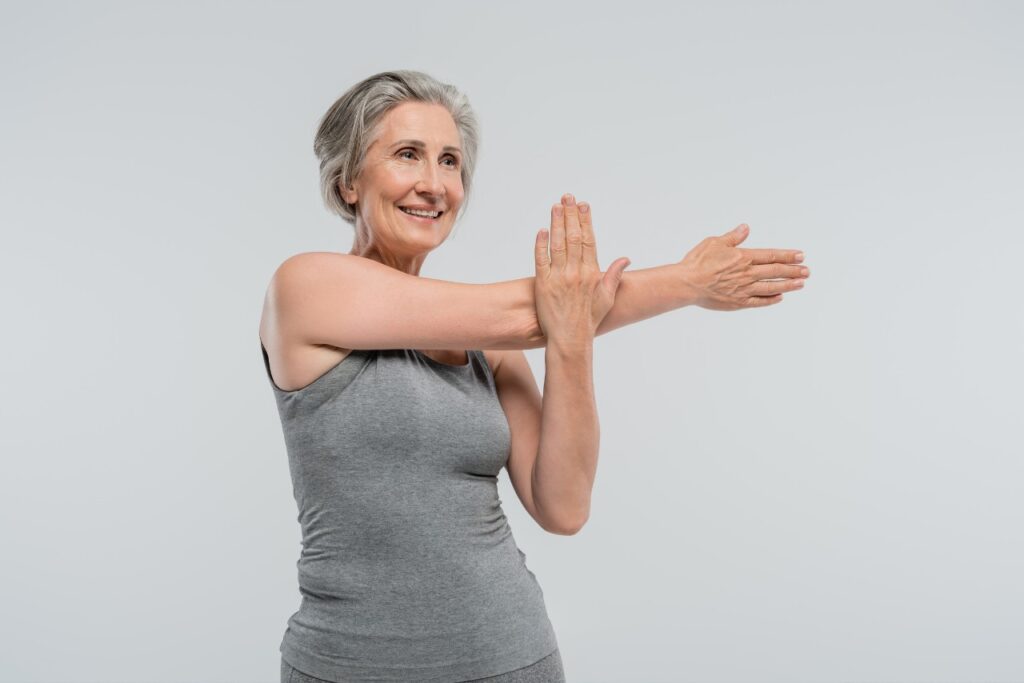
The best shoulder mobility exercises are gentle, controlled, and easy to repeat. We are not forcing the arms overhead or pushing through pain. We are reminding the shoulders, shoulder blades, chest, and upper back how to move together again.
1. Shoulder rolls
Sit or stand tall. Slowly roll your shoulders up, back, and down. Repeat several times, then reverse the direction.
This simple movement helps release tension and wakes up the upper body. It is especially useful after sitting, driving, or working at a computer.
2. Shoulder blade squeezes
Sit or stand with your arms relaxed by your sides. Gently draw your shoulder blades toward each other, then release. Keep your shoulders down and your neck relaxed.
This helps activate the muscles of the upper back, which support posture and shoulder position. It is a lovely reminder that the shoulders are not only the front of the body. The back body matters too.
3. Wall slides
Stand facing a wall or with your back against a wall, depending on what feels best. Place your forearms or hands on the wall and gently slide them upward, only as far as feels comfortable. Slowly lower them again.
This helps the shoulders practice reaching overhead without forcing the movement. Keep the ribs soft and avoid arching the lower back.
4. Arm circles
Reach your arms out gently to the sides and make small circles. Keep the circles controlled and comfortable. After a few rounds, change direction.
Start small. There is no need to make big movements if the shoulders feel stiff. Small, smooth circles can still be very effective.
5. Chest opener
Stand tall and clasp your hands behind your back, or simply hold a towel behind you if clasping your hands is uncomfortable. Gently open the chest and breathe.
This can help counter the rounded posture that comes from screens, phones, and sitting. Do not force the arms high. The goal is gentle opening through the chest and shoulders.
6. Thread-the-needle stretch
Begin on hands and knees, or do this seated at a table if the floor is not comfortable. Reach one arm underneath the other and gently rotate the upper back. Pause and breathe, then return to center.
This movement helps the shoulders and upper back work together. It is beautiful for women who feel stiff through the upper spine as well as the shoulders.
7. Towel shoulder stretch
Hold a towel with both hands in front of you. Keeping the grip wide, gently lift the towel upward and only move as far as your shoulders allow. You may also hold the towel behind your back and gently practice moving one hand up and the other down.
This can help improve shoulder range gradually, but it should never feel sharp or pinchy. Keep the movement slow and kind.
How Does Posture Affect Shoulder Mobility?
The shoulders do not work alone. They are connected to the neck, ribs, spine, and shoulder blades.
When we sit rounded forward for long periods, the chest can become tight and the upper back can become stiff. Then when we try to lift the arms overhead, the shoulders may not have the space or support they need. This is why shoulder mobility exercises often include chest opening, upper-back movement, and shoulder blade control.
Harvard Health explains that stretching muscles can help address shortening that occurs with disuse, support range of motion, reduce injury risk, and improve posture. For us, that means shoulder mobility is not just about the shoulders. It is about helping the whole upper body feel open and upright again.
How Often Should We Do Shoulder Mobility Exercises?
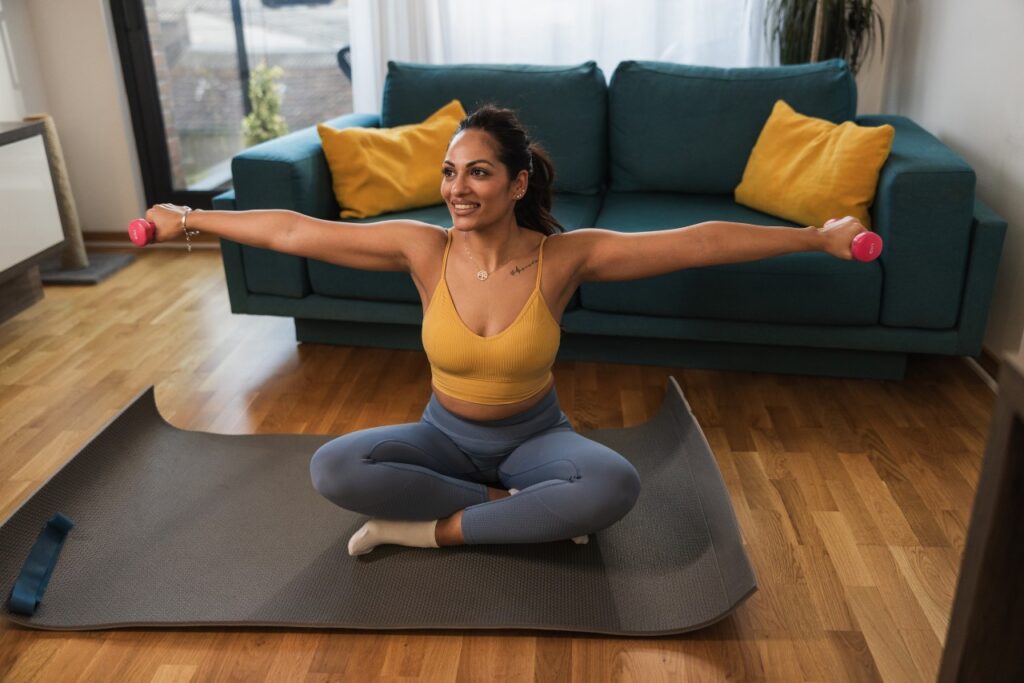
The CDC recommends that older adults include regular physical activity, including muscle-strengthening activity at least two days per week, and multicomponent movement that supports function. Flexibility research in older adults also shows that exercise interventions can help maintain or improve functional abilities, while flexibility training may support range of motion and daily movement.
For shoulder mobility after 50, five to ten minutes most days can be a wonderful place to begin. You might do shoulder rolls when you wake up, wall slides before a strength workout, or a gentle chest opener after time at your desk.
The important thing is repetition. The body responds to regular reminders.
Can Shoulder Mobility Help With Neck Tension?
It can, especially when shoulder stiffness is connected to posture and upper-body tension.
Many of us hold stress in the neck and shoulders. When the shoulder blades, chest, and upper back are stiff, the neck may begin doing more work than it should. Gentle shoulder mobility can help the upper body feel less guarded.
That said, neck and shoulder pain can have many causes. If you have pain that travels down the arm, numbness, tingling, weakness, severe pain, pain after a fall, or symptoms that are getting worse, it is important to speak with a healthcare professional.
Mobility is supportive, but it is not a replacement for medical care when something feels wrong.
How Do We Practice Shoulder Mobility Safely?
The most important rule is this: never force your body to look like somebody else’s.
Go only as far as your body comfortably allows. Breathe. Move slowly. Be patient.
A stretch should feel like gentle tension, not sharp pain. If you feel pinching in the shoulder, reduce the range. If overhead movement feels uncomfortable, keep the arms lower. Use a wall, chair, or table if getting on the floor is not right for you.
This is exactly how we build trust. We do not punish the body into movement. We invite it.
How Can We Begin This Week?
Choose three shoulder mobility exercises from this article: shoulder rolls, shoulder blade squeezes, and wall slides. Practice them for five minutes a day for the next seven days.
Before you begin, notice how your shoulders feel. Can you reach comfortably? Do your shoulders feel rounded forward? Is there tension around your neck or upper back? After you finish, take note of your posture, shoulders or any changes you have experienced.
This is also why the Fabulous50s Vitality App is such a beautiful next step. Inside the app, mobility becomes part of a complete longevity rhythm, alongside strength, cardio, balance, power, recovery, and community support. You do not have to guess what to do next. You can choose a gentle mobility or stretching session and let me guide you step by step.
Every stretch is a deposit in your independence. Start your 14-day free trial of the Fabulous50s Vitality App today and take your first gentle step toward moving with more freedom.
Keep Moving With These
Low-Impact Osteoporosis Exercises for Women Over 50
The 5 Ultimate Workouts Every Woman Over 50 Should Do
Best Mobility Exercises for Stiff Joints After 50
Why You Feel Stiff After 50 and What to Do About It
Effective Stretching Workouts to Improve Your Flexibility & Mobility
Top 5 Mobility Exercises For Women Over 50
An Easy 8-Minute Mobility and Flexibility Workout for Women Over 50
5 Minute Hip Mobility Workout For Women Over 50
8 Powerful Hip Exercises to Improve Flexibility & Mobility
Chair Exercises for Seniors: Gentle Seated Workouts for Women Over 50
Final Thoughts
Your shoulders help you reach into life.
They help you lift, carry, dress, stretch, hug, garden, travel, and move through the world with confidence. So when they begin to feel stiff after 50, it is worth listening.
Start gently. Roll the shoulders. Open the chest. Move the upper back. Breathe.
Shoulder mobility exercises are not about extreme flexibility. They are about keeping your body open, capable, and free for the life you still want to live.
Mobility is not about being the most flexible person in the room. It is about giving your body a little more freedom than it had yesterday.
Frequently Asked Questions
Shoulder rolls, shoulder blade squeezes, wall slides, arm circles, chest openers, thread-the-needle stretches, and towel shoulder stretches are gentle places to begin.
Stiff shoulders after 50 can be linked to menopause-related body changes, posture, screen time, reduced movement, stress, and age-related changes in muscles, tendons, and joints.
Yes, shoulder mobility can support better posture when it includes chest opening, upper-back movement, and shoulder blade control.
Five to ten minutes most days is a lovely goal. You can also begin with two or three days a week and build gradually.
No. You may feel gentle tension, but you should not feel sharp pain, pinching, numbness, or symptoms that feel wrong.
Yes. Shoulder rolls, shoulder blade squeezes, arm circles, and gentle chest openers can all be done seated.
Seek professional advice if you have severe pain, pain after a fall, weakness, numbness, tingling, swelling, pain that travels down the arm, or symptoms that are worsening.
Harvard Health Publishing. Stretch to ease screen-time-related neck and shoulder pain. https://www.health.harvard.edu/pain/practical-tips-and-simple-exercises-to-prevent-neck-pain
Harvard Health Publishing. 4 stretches to keep your shoulders in shape. https://www.health.harvard.edu/healthy-aging-and-longevity/4-stretches-to-keep-your-shoulders-in-shape
Davis DL, et al. Shoulder pain, health-related quality of life and physical activity in older adults. https://pmc.ncbi.nlm.nih.gov/articles/PMC10359925/
Minagawa H, et al. Prevalence of symptomatic and asymptomatic rotator cuff tears in the general population. https://pubmed.ncbi.nlm.nih.gov/24403741/
Stathokostas L, et al. Flexibility Training and Functional Ability in Older Adults. https://pubmed.ncbi.nlm.nih.gov/23209904/
CDC. Older Adult Activity: An Overview. https://www.cdc.gov/physical-activity-basics/guidelines/older-adults.html