
There is a moment in a stretch class when many of us quietly compare ourselves to the woman beside us.
She folds forward with ease. Her hands reach the floor. Her hips open beautifully. Her shoulders seem to move without any effort at all. And for a second, we may think, “That is what I am supposed to look like.”
But over the years, I have learned something that feels very freeing. The goal is not to become the bendiest person in the room. The goal is to keep moving well enough to live the life we love.
That is where the difference between flexibility and mobility becomes so important.
Flexibility helps us stretch. Mobility helps us move. Flexibility may help us reach further. Mobility helps us use that range with strength, control, balance, and confidence. After 50, we need both, but we especially need to understand how they work together in real life.
Because what matters most is not whether we can touch our toes. It is whether we can reach, bend, turn, walk, climb stairs, get down to the floor, stand back up, and move through our day without feeling trapped inside a smaller body.
Mobility is freedom. And once we understand the difference, we can train our bodies with so much more kindness and purpose.
Key Takeaways: Difference Between Flexibility and Mobility
- Flexibility is the ability of muscles and soft tissues to lengthen.
- Mobility is the ability of a joint to move well through a useful range with control.
- Flexibility is often more passive, while mobility is more active and functional.
- After 50, both flexibility and mobility matter for posture, balance, walking, daily movement, and independence.
- Stretching can improve range of motion when practised consistently.
- Mobility exercises help us use that range in real life.
What is Flexibility?
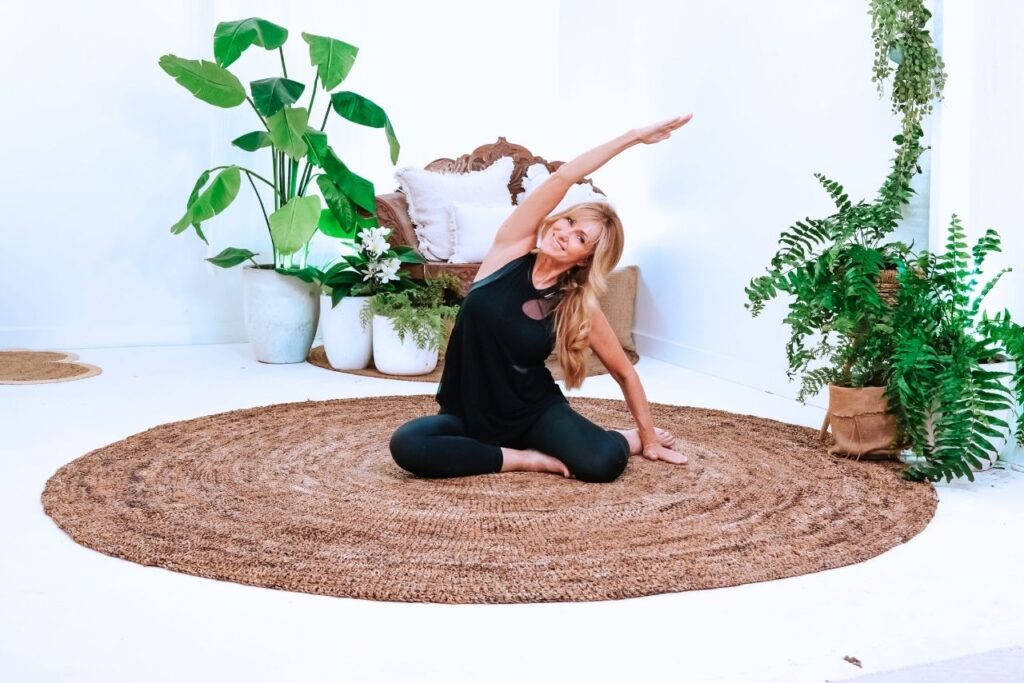
Flexibility is the ability of a muscle or soft tissue to lengthen. When we stretch the hamstrings, calves, chest, shoulders, hips, or back, we are usually working on flexibility.
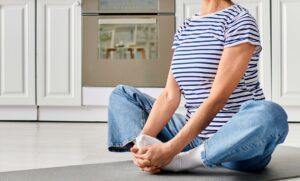
For example, if you sit on the floor and reach toward your toes, your flexibility influences how far you can comfortably go. If you clasp your hands behind your back and open your chest, your shoulder and chest flexibility influence how open that position feels.
Flexibility matters because tight muscles can make movement feel restricted. Research on older adults explains that the goal of flexibility training is to improve range of motion in the major muscle-tendon groups, based on each person’s needs and goals.
And what that means for us is simple. Stretching can help the body feel less tight, more open, and more comfortable. A recent systematic review found that stretch training performed regularly for at least two weeks can increase joint range of motion.
So flexibility is valuable. It is not just something for dancers or yoga teachers. It helps us reach, bend, dress, garden, walk, exercise, and feel more at home in our bodies.
What is Mobility?
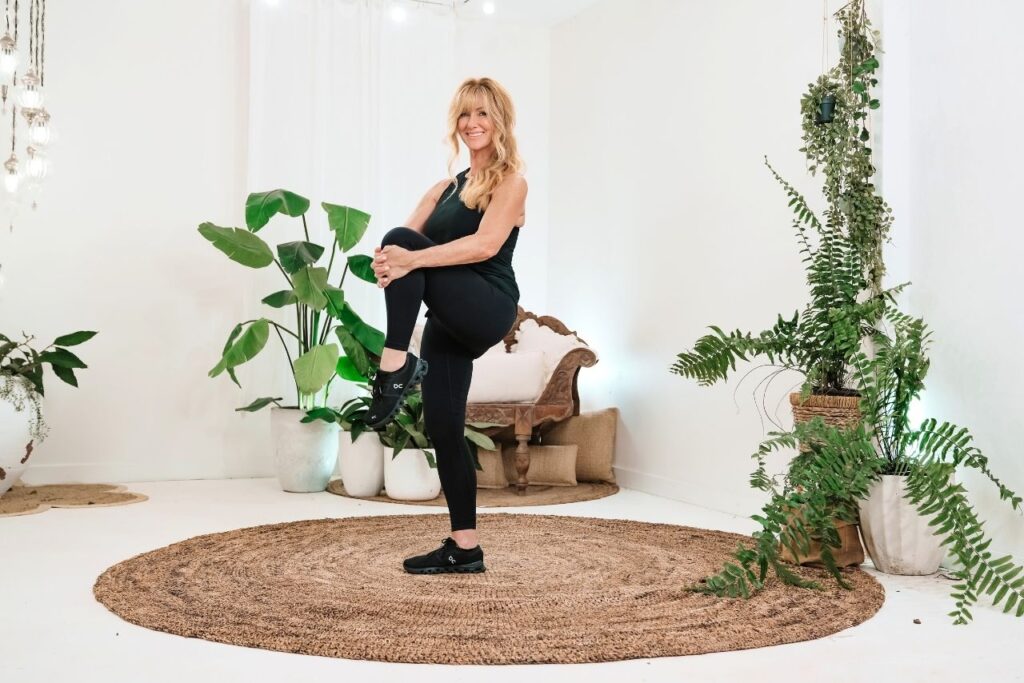
Mobility is the ability to move a joint through a range of motion with control.
This is the important difference. Flexibility asks, “Can this tissue lengthen?” Mobility asks, “Can I move well here, control the movement, and use it in real life?”
For example, being able to lie on your back and pull one knee toward your chest is flexibility. Being able to lift your knee, step over something, climb stairs, or get in and out of the car comfortably is mobility.
Being able to stretch your shoulders is flexibility. Being able to reach into a cupboard, put on a jacket, lift a bag, or support yourself when getting off the floor is mobility.
Mobility is the ability to move well. When we stop moving well, everyday tasks eventually become harder. Mobility is about giving our body a little more freedom than it had yesterday.
That is such an important distinction after 50. We are not training for a perfect pose. We are training for life.
Flexibility vs Mobility After 50: Why Does the Difference Matter
Stretching is wonderful, but if we only stretch passively and never teach the body to use that range, we may not get the full benefit in daily life. We need flexibility to create space, and we need mobility to move into that space with control.
This becomes more important after 50 because the body is changing. Many women notice stiffer joints, tighter hips, reduced range of motion, changes in posture, and less confidence with movement. The Fabulous50s Longevity Protocol recognises Mobility as one of the key movement pillars because mobility supports freedom of movement, flexibility, joint comfort, posture, and daily function.
And that is the point. We want movement that helps us live.
A deep stretch may feel lovely, but mobility helps us turn around while reversing the car, walk across uneven ground, reach for a suitcase, climb stairs, and move with confidence when life asks us to change direction.
Is Stretching Still Important After 50?
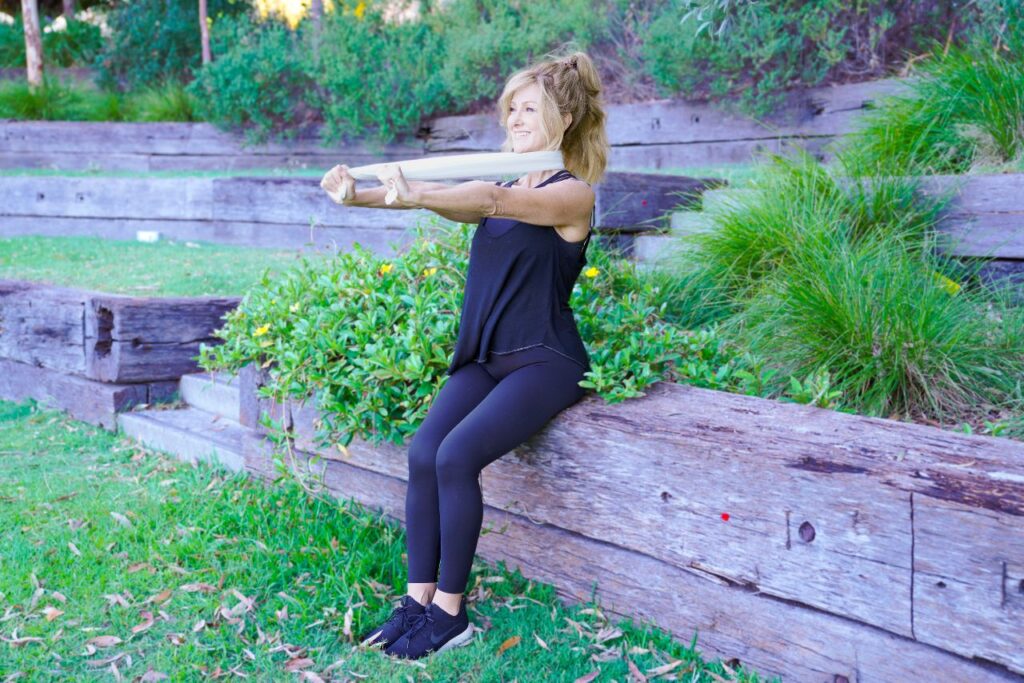
Yes, absolutely. Stretching is one of the most accessible ways to support flexibility after 50. It can help improve joint range of motion and may make daily movement feel easier. The American Academy of Family Physicians notes that flexibility or stretching exercises can improve joint range of motion after three to four weeks of regular stretching two to three times per week, with greater gains from daily flexibility work.
This is encouraging because it means we do not need to do everything perfectly. We simply need to begin and repeat.
A gentle hamstring stretch can help the back of the legs feel more open. A chest stretch can help counter the rounded posture that comes from screens and sitting. A hip flexor stretch can help the front of the hips feel less tight after long periods in a chair.
Stretching is part of the story. It helps create space. Then mobility helps us use that space.
What Does Mobility Training Look Like?
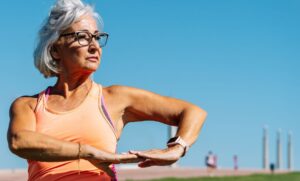
Mobility training looks like controlled movement. It may include hip circles, shoulder rolls, spinal rotations, ankle circles, gentle lunges, side-to-side weight shifts, supported knee lifts, cat-cow, arm circles, or slow, controlled reaches.
The difference is that we are moving the joint gently and intentionally. We are teaching the brain and body to work together.
For example, a seated figure-four stretch helps flexibility in the outer hip. A standing hip opener, where we lift the knee and gently open it to the side, trains mobility because the hip has to move actively with control.
A chest stretch helps flexibility. Wall slides train shoulder mobility because the shoulder blades, upper back, ribs, and arms need to move together.
Mobility feels practical because it looks more like life. We are reaching, rotating, stepping, bending, shifting weight, and moving through the ranges we want to keep.
Which Is More Important: Flexibility Or Mobility?
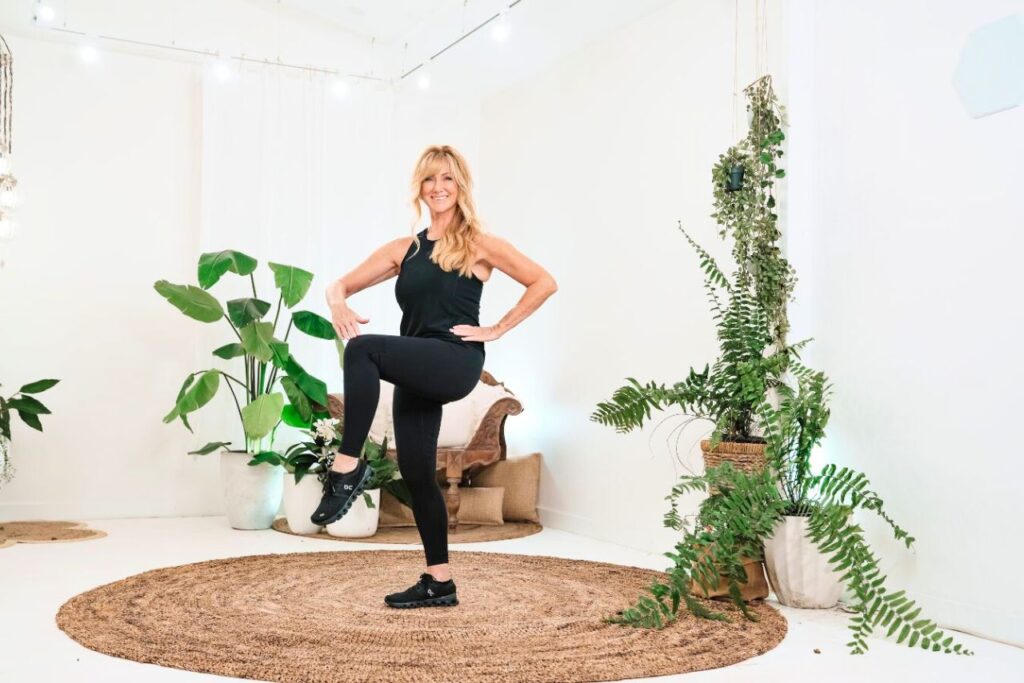
We need both. Flexibility gives the body space. Mobility gives the body usable movement. If flexibility is the open door, mobility is the ability to walk through it confidently.
After 50, I often think mobility becomes the more important focus because it connects directly to independence. The Fabulous50s Longevity Protocol is all about the five movement pillars working together because no single form of exercise can meet every need of the midlife female body.
So, stretching helps the body feel better, but it does not replace strength, balance, cardio, or other movement pillars.
This is why I love a balanced approach. Stretch the muscles that feel tight. Move the joints that feel stiff. Strengthen the body so it can support the range you are creating. Practise balance so you can use that movement confidently.
We are not choosing one over the other. We are layering them together.
How Does Modern Life Reduce Both Flexibility And Mobility?
Many of us are not stiff because we are doing something wrong. We are stiff because modern life has become very small in its movement demands.
We sit in chairs. We drive. We use elevators. We look at screens. We rarely squat, climb, reach overhead, carry heavy things, bend to the floor, or walk long distances as part of normal daily life.
Schellea noticed this clearly when watching women in more traditional cultures. They squat to cook, bend to clean, carry things, climb hills, and walk long distances. Their bodies continue performing natural, primal movements every day. In contrast, modern life has unintentionally designed movement out of our days, and over time, the body can adapt by becoming stiff and rigid.
This is why five minutes of mobility can matter. It is not just exercise. It is a way of putting movement back into a life that has quietly removed it.
Simple Examples Of Flexibility And Mobility Exercises
A flexibility exercise usually holds a position. A mobility exercise usually moves through a range with control.
For the hips, a seated figure-four stretch is flexibility. Standing hip circles are mobility.
For the shoulders, a chest opener is flexibility. Wall slides are mobility.
For the spine, a gentle forward fold is flexibility. Cat-cow or seated spinal rotations are mobility.
For the ankles, a calf stretch is flexibility. Ankle circles or heel raises are mobility exercises.
For the neck, a gentle side stretch is flexibility. Slow, controlled head turns are mobility.
The magic happens when we combine them. Stretch what feels tight, then move the joint gently through a comfortable range. This helps the body feel both open and capable.
How Often Should Women Over 50 Practise Flexibility And Mobility?
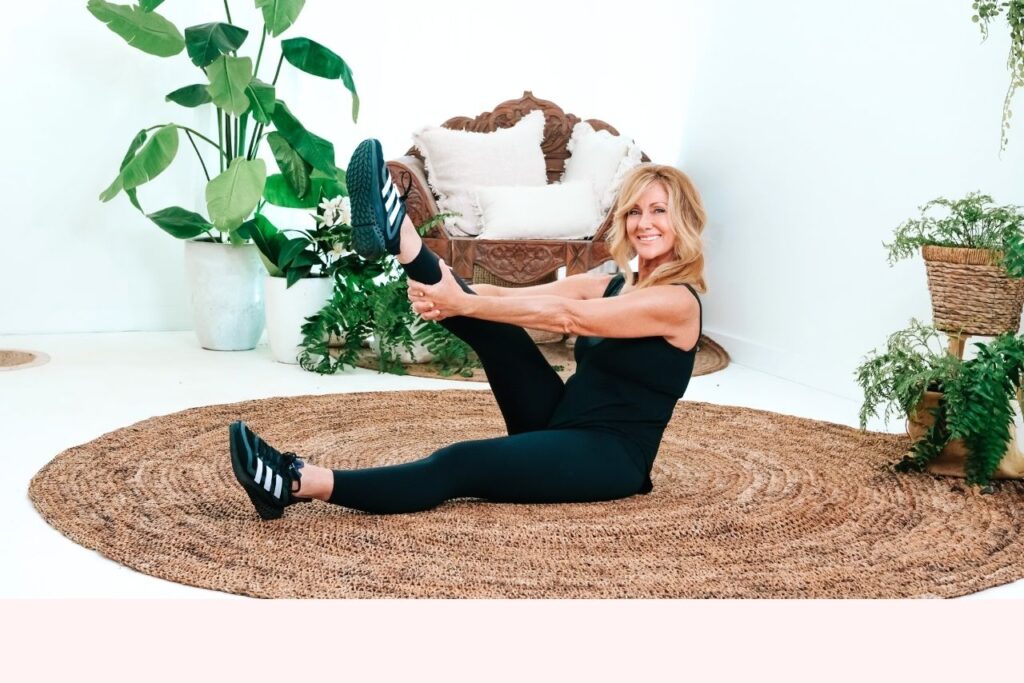
The best rhythm is the one we can repeat. We do not need to spend hours stretching. Sometimes five minutes a day is enough. My mobility philosophy is built around moving the joints regularly and taking the body into positions modern life no longer asks of it.
A simple weekly rhythm might look like this: gentle mobility most mornings, a few stretches after walking or strength training, and one longer mobility routine two or three times a week.
If you feel stiff, try small movement breaks throughout the day. Roll your shoulders after computer work. Circle your ankles while seated. Do a hip stretch after sitting. Twist gently before a walk. Small reminders add up.
Consistency matters more than intensity.
How Can We Begin This Week?
Choose one area of your body that feels tight or stiff. Maybe it is your hips, shoulders, neck, upper back, ankles, or hamstrings.
Then choose one flexibility exercise and one mobility exercise for that same area. If your hips feel tight, try a seated figure-four stretch, then standing hip circles. If your shoulders feel stiff, try a chest opener and then wall slides. If your upper back feels rounded, try a gentle chest stretch, then seated rotations.
Start with five to ten minutes today and treat it as an experiment. Notice how your body feels afterwards. Those small daily wins quietly stack up, and over time they become a change you can truly see and feel.
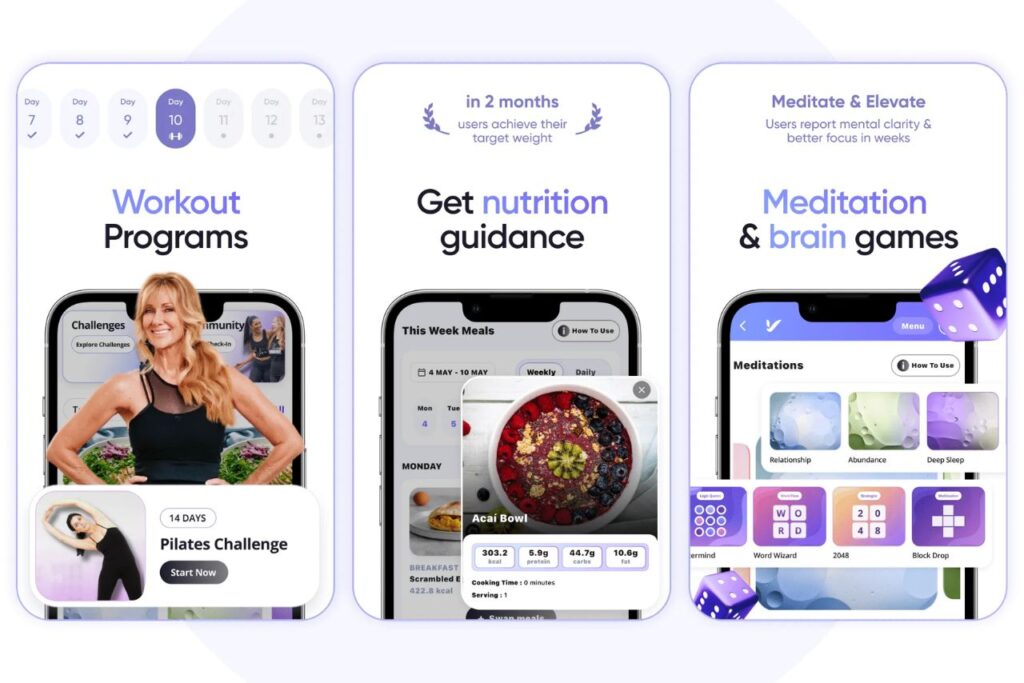
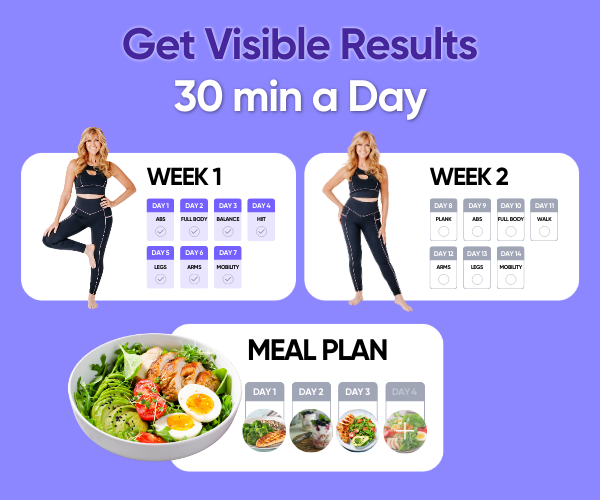
This is exactly why the Fabulous50s Vitality App is such a beautiful next step. Inside the app, mobility becomes part of a complete longevity rhythm alongside strength, cardio, balance, power, recovery, and community support. You do not have to guess what to do next. You can choose a gentle mobility or stretching session and let me guide you step by step.
Every stretch is a deposit in your independence. Start your 14-day free trial of the Fabulous50s Vitality App today and take your first gentle step toward moving with more freedom.
Keep Moving With These
Low-Impact Osteoporosis Exercises for Women Over 50
Why You Feel Stiff After 50 and What to Do About It
Best Stretching Exercises for Arthritis to Reduce Pain and Stiffness
The 5 Ultimate Workouts Every Woman Over 50 Should Do
Relieve Hip Pain Fast! 8 Powerful Hip Exercises to Improve Flexibility & Mobility
Effective Stretching Workouts to Improve Your Flexibility & Mobility
Top 5 Mobility Exercises For Women Over 50
An Easy 8-Minute Mobility and Flexibility Workout for Women Over 50
5 Minute Hip Mobility Workout For Women Over 50
8 Powerful Hip Exercises to Improve Flexibility & Mobility
Chair Exercises for Seniors: Gentle Seated Workouts for Women Over 50
Final Thoughts
The difference between flexibility and mobility is simple, but it changes everything.
Flexibility helps us stretch. Mobility helps us move. Flexibility gives us range. Mobility helps us use that range in real life.
After 50, the goal is not to force the body into shapes that no longer feel kind or useful. The goal is to keep the body open, capable, steady, and confident.
So let us stretch gently. Let us move our joints regularly. Let us stop comparing our range to somebody else’s and begin asking a better question: does this help me move through my life with more freedom?
Mobility is not about being the most flexible person in the room. It is about giving your body a little more freedom than it had yesterday.
Small steps, practiced consistently, create remarkable changes over time.
Frequently Asked Questions
Flexibility is the ability of muscles and soft tissues to lengthen. Mobility is the ability to move a joint through a useful range with control, strength, and confidence.
Both matter. Flexibility helps create range, while mobility helps you use that range in daily life. After 50, mobility is especially important for independence and functional movement.
Yes. You may be able to stretch deeply in a passive position but still struggle to control that movement actively when walking, reaching, squatting, or balancing.
Yes. The body can improve with consistent practice. Gentle mobility exercises and stretching can help restore range of motion, movement confidence, and daily function.
No. Mobility should feel gentle and controlled. You may feel mild tension, but not sharp pain, pinching, numbness, or symptoms that feel wrong.
No. Mobility should feel gentle and controlled. You may feel mild tension, but not sharp pain, pinching, numbness, or symptoms that feel wrong.
Five to ten minutes most days is a wonderful place to begin. Small, consistent movement is more helpful than occasional long routines.
Choose one stiff area, then pair one stretch with one controlled movement. For example, stretch the hips, then do hip circles. Keep it simple and repeat for one week.
Sources
- Stathokostas L, et al. Flexibility Training and Functional Ability in Older Adults. https://pmc.ncbi.nlm.nih.gov/articles/PMC3503322/
- Konrad A, et al. Chronic effects of stretching on range of motion: systematic review and meta-analysis. https://pubmed.ncbi.nlm.nih.gov/37301370/
- Lee PG, et al. Exercise Prescriptions in Older Adults. American Academy of Family Physicians. https://pubmed.ncbi.nlm.nih.gov/28409595/
- Afonso J, et al. Strength Training versus Stretching for Improving Range of Motion: A Systematic Review and Meta-Analysis. https://pubmed.ncbi.nlm.nih.gov/33917036/
- American College of Sports Medicine. Shareable Resource: Flexibility Versus Mobility. https://journals.lww.com/acsm-healthfitness/fulltext/2023/11000/Worldwide_Survey_of_Fitness_Trends_for_2023.3.aspx