
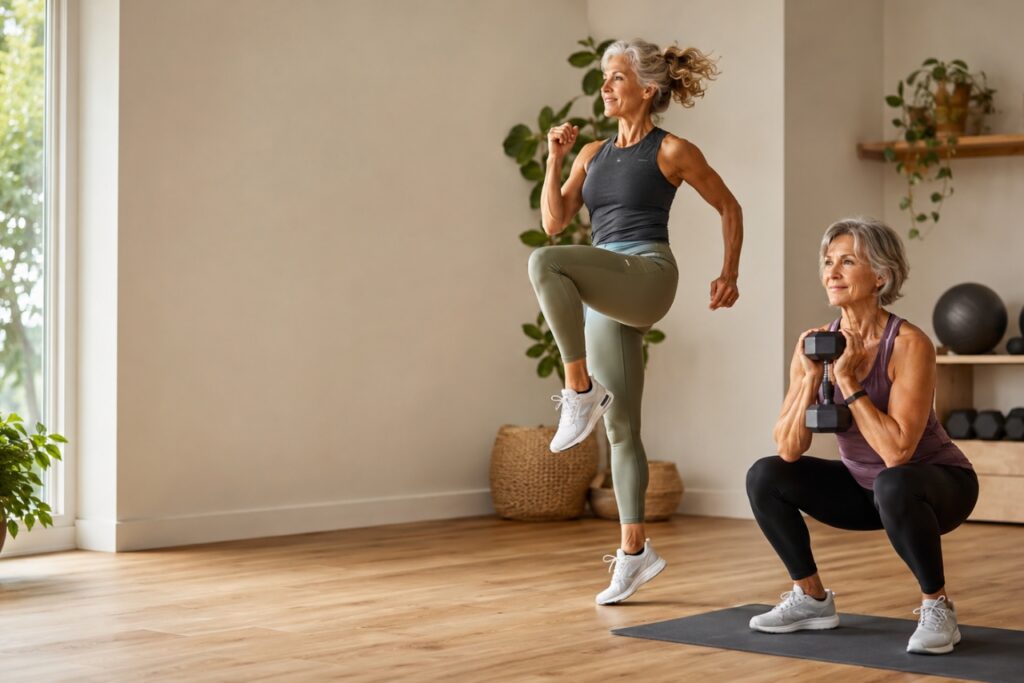
You can walk for miles, hold a yoga pose, and still struggle to rise quickly from a low chair. Many women over 50 are strong in endurance yet quietly losing something else. That something is power, and it often slips away before we notice.
For years, we have been told to stay strong. It is good advice, and strength matters deeply. But strength is only half the story after 50. The other half is how quickly your body can move when life asks it to. That speed is what keeps you steady on a curb and upright when you trip.
That is why Power is one of the Five Pillars of the Fabulous50s Longevity Protocol™, alongside Strength, Cardio, Mobility, and Balance. Each pillar supports a different part of healthy aging, and power has a very specific job. Strength helps us produce force. Power helps us produce force quickly enough to use it when life suddenly asks us to move.
Let’s walk through what women over 50 need to know about power vs. strength and what you can gently do about it.
Key Takeaways: Power Training vs. Strength Training
- Strength is how much force you produce. Power is how fast you produce it.
- After 50, power declines faster than strength, and menopause accelerates the loss.
- Falling estrogen shrinks Type-2 fast-twitch fibers first, the exact fibers that create power.
- Power, not pure strength, is what helps you catch yourself and avoid a fall.
- You do not need to jump. Small, quick, controlled movements build power safely.
- Strength is the foundation. Build it first, then layer power gently on top.
- The Fabulous50s Vitality App sequences both for you, at a confident, progressive pace.
What Is The Difference Between Power and Strength?
Strength is your ability to produce force. It is the raw amount you can push, pull, or lift. Power is your ability to produce that force quickly. Scientists describe it simply as force multiplied by speed.
Strength lets you carry a heavy suitcase. Power lets you lift it into an overhead bin before your arms give way. One is about capacity. The other is about the split second when speed decides the outcome.
Both live in your muscles. But power depends heavily on your fast-twitch fibers, and those are the first to fade with age. That single fact explains why power needs its own attention after 50.
READ ALSO: Power Training vs. Strength Training: What’s the Difference?
Why Does Menopause Make This Different For Women?
Here is the part that surprised me most. Menopause does not touch all muscles equally. As estrogen falls, we lose our Type-2 fast-twitch fibers faster than our endurance fibers. Those are the power fibers, the ones that fire in an instant.
Estrogen quietly protects our muscles. It supports how we build new tissue and slows how quickly muscle breaks down. When it declines, that protection fades, and the fast-twitch loss speeds up. This does not happen the same way for men our age.
The quadriceps, the muscles at the front of your thighs, are among the first to weaken. They are rich in fast-twitch fibers, and strong quads help predict whether you keep your mobility. This is why some women feel steady walking yet are suddenly unsteady on stairs.
READ ALSO: How to Build Muscle and Get Stronger Over 50
Why Does Power Matter So Much In Staying Independent?
Power is what real life quietly demands. It helps you stand up from a chair, step onto a curb, and catch yourself the moment you trip. Research shows that power predicts everyday function more strongly than strength does.
A ten-year study found that low power predicted mobility loss and hospitalisation more strongly than strength or muscle size. In other words, how fast you can move may protect your independence even more than how much you can lift.
When I see an older woman shuffling, I no longer see someone simply getting older. I often see someone who has gradually lost power. Her steps have grown smaller. Her reactions have grown more cautious. The wonderful truth is that power can be rebuilt at any age.
READ ALSO: How Power Training Helps You Stay Independent
How Women Over 50 Can Build Power Safely
Let me share a lesson I learned the hard way. When I was younger, I jumped onto boxes and raised the height because my body could take it. Then I injured my knee, and recovery was slow. Please do not repeat my mistake.
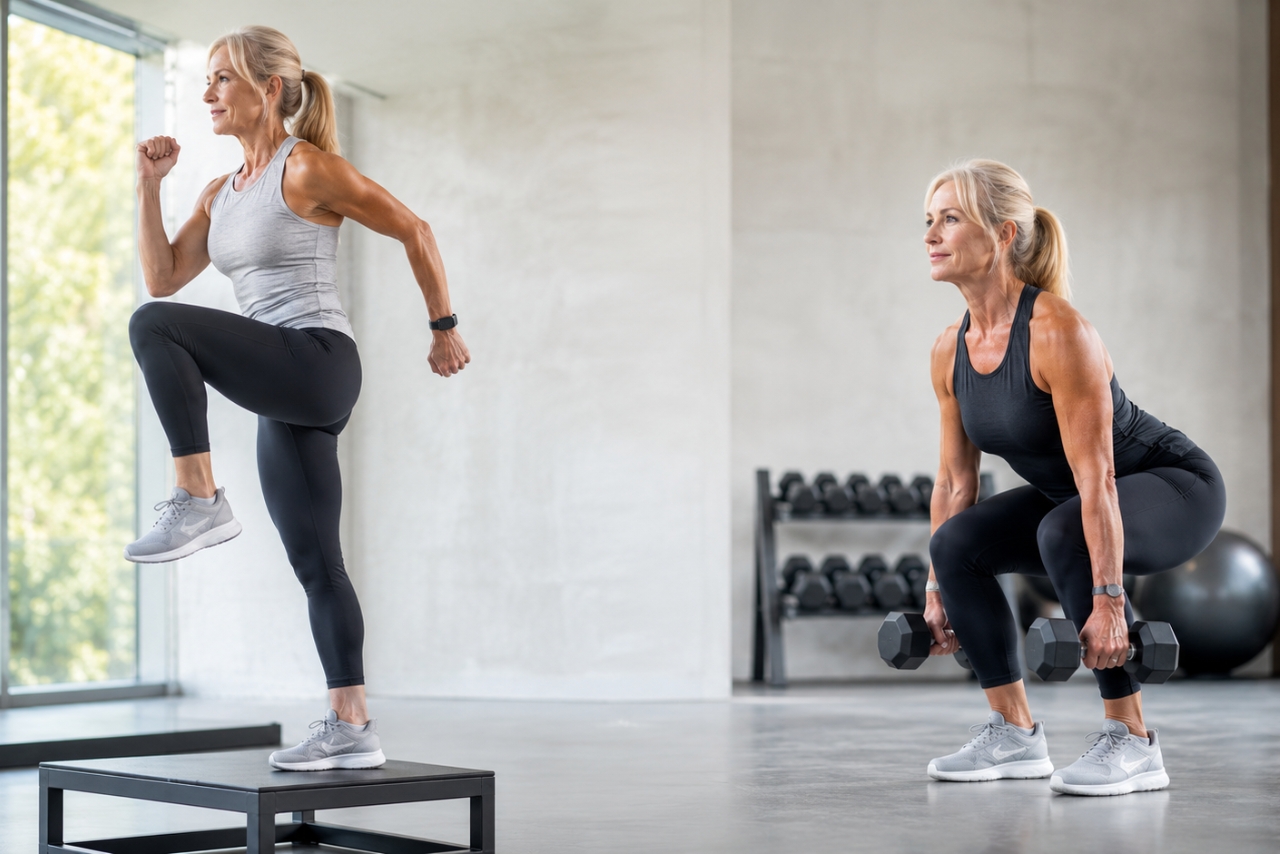
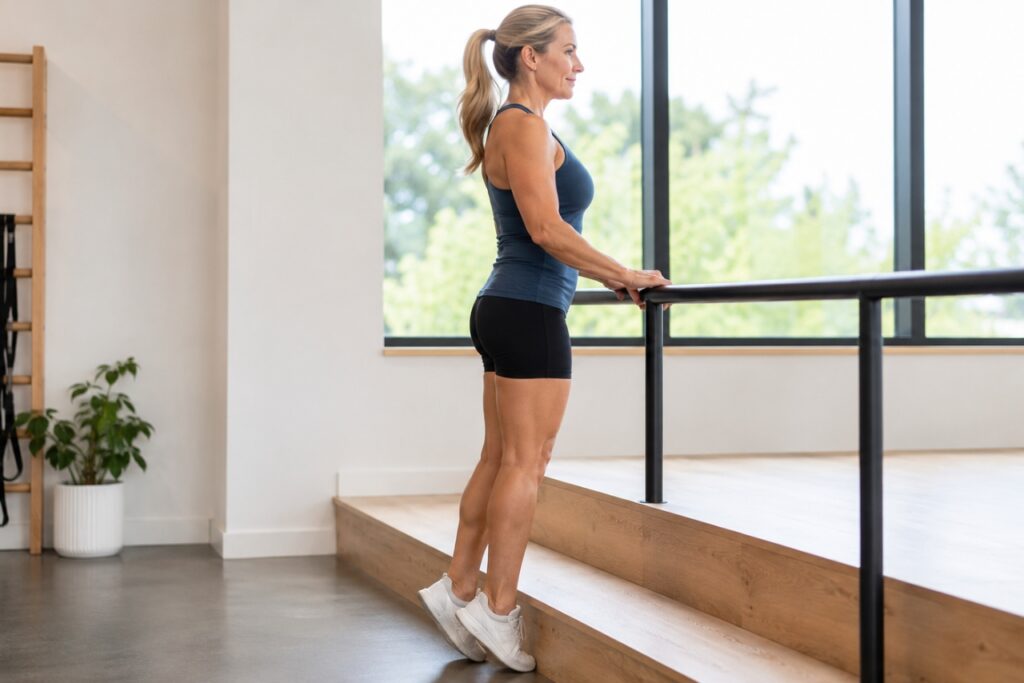
Do not jump an untrained body. Power should be built progressively, the same way strength is. It might begin with heel drops. It might be a tiny bounce where your toes never leave the floor. It might be stepping quickly from side to side.
These small, controlled movements teach your body to absorb force and produce it again. Confidence comes first. Then capability follows. Modifications are not a lesser version of training. They are the starting point.
READ ALSO: Is Power Exercise Safe After 50?
What if you leak or your joints feel sensitive?
Let’s name something many of us experience but rarely mention. Sometimes when we start to jump, we leak a little. That is very common, and it is not a reason to avoid power training. It is simply information about where your body is right now.
My advice is gentle. Reduce the intensity. Make the movement smaller. Keep it controlled. Stay at the level where you feel confident. Over time, you also strengthen the muscles that support continence and stability. If your joints feel sensitive through menopause, the same rule applies.
READ ALSO: 10 Strength Training Rules Women Over 50 Need to Follow
Do You Need Both Power and Strength?
Yes, and the order matters. Strength is the foundation. It gives your body the structure to handle speed safely. Power sits on top, turning that strength into quick, usable movement when you need it most.
Without strength, power training can feel shaky. Without power, strength stays slow and cannot always help you in the moment. Think of strength as the engine and power as the accelerator.
For a full-strength foundation, see The Ultimate Strength Training Blueprint For Women Over 50.
This is exactly why the Fabulous50s Longevity Protocol treats both as separate pillars. We never ask you to choose. We ask you to build them in the right order, gently, so your body stays capable for the decades ahead.
READ ALSO: Beginner Power Exercises for Women Over 50
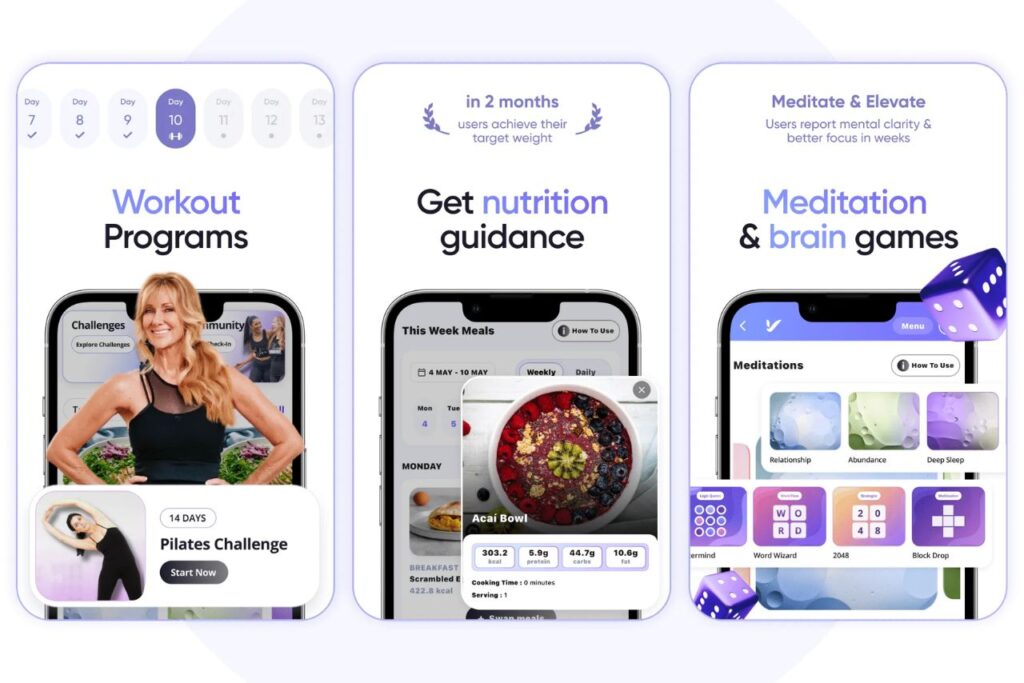
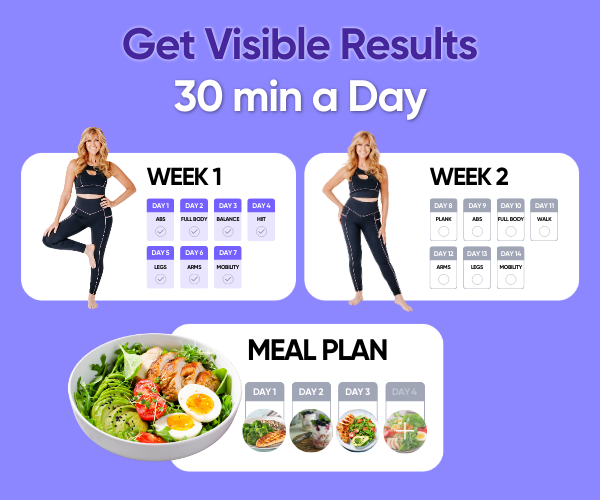
| Build strength and power in the right order, with the Fabulous50s Vitality App You do not have to guess what comes next. The Fabulous50s Vitality App gives you a structured weekly plan that builds strength first, then layers power on top gently and progressively. Every session is designed for women over 50, with modifications so you always start where you feel confident. Start your free trial today and train for the steadiness that carries you through the years ahead. |
More Power Training Resources
- Power Training: The New Science Behind Longevity and Fall Prevention for Women Over 50
- A Guide to Power Training for Women Over 50
- Why You Need Strength and Power Training in Your Routine Over 50
- Strength Isn’t Enough: Why Women Over 50 Need Power Training Too
- How to Start Power Training Without Jumping
- How Power Training Helps You Stay Independent
- Is Power Exercise Safe After 50?
- Power Exercises That Help With Stairs, Trips, And Balance
- Fast Sit-to-Stands: A Simple Power Exercise After 50
- Beginner Power Exercises for Women Over 50
- Power Training vs. Strength Training: What’s the Difference?
- Strength Isn’t Enough: Why Women Over 50 Need Power Training Too
- Why You Need Strength and Power Training in Your Routine Over 50
Closing Thoughts
For most of my life, I believed staying strong was enough. Now I understand that strength and power are partners, not the same thing. Strength lets me lift. Power lets me react. Together, they let me live with confidence.
If you take one idea from this, let it be this. Power is not about athletic performance. It is about preserving your ability to respond to life. Start small, build confidence first, and your future self will thank you.
Frequently Asked Questions
Falling estrogen during menopause speeds up the loss of Type-2 fast-twitch fibers. These are the power fibers. Men do not experience this same hormonal shift, so their power tends to fade more gradually.
It is never too late. Studies show older adults can restore power and mobility with gentle, progressive training. Your body adapts at any age when you train it kindly and consistently.
Not at all. Power can be a heel drop, a quick side step, or rising briskly from a chair. Jumping is only one option, and it is never where a beginner should start.
Some research suggests estrogen therapy may support muscle response to training. This is a personal medical decision, so please speak with your own doctor. Movement and protein remain powerful tools for every woman.
That is very common and simply tells you where your body is now. Reduce the intensity, make the movement smaller, and stay controlled. Over time you also strengthen the muscles that support continence.
Two short sessions a week is a wonderful place to begin. Consistency matters far more than intensity. Small, regular practice teaches your body to react, and that is the whole goal.
Reid, K.F., and Fielding, R.A. “Skeletal Muscle Power: A Critical Determinant of Physical Functioning in Older Adults.” Exercise and Sport Sciences Reviews, 2012. https://pmc.ncbi.nlm.nih.gov/articles/PMC3245773/
El Hadouchi, M., et al. “Effectiveness of Power Training Compared to Strength Training in Older Adults: A Systematic Review and Meta-analysis.” European Review of Aging and Physical Activity, 2022. https://pmc.ncbi.nlm.nih.gov/articles/PMC9367108/
Balachandran, A.T., et al. “Comparison of Power Training vs. Traditional Strength Training on Physical Function in Older Adults: A Systematic Review and Meta-analysis.” JAMA Network Open, 2022. https://pubmed.ncbi.nlm.nih.gov/35544136/
American College of Sports Medicine. “ACSM Publishes Updated Resistance Training Guidelines.” American College of Sports Medicine, 2026. https://acsm.org/resistance-training-guidelines-update-2026/