
When many women hear the words “power training,” they immediately think of jumping. They imagine high-impact workouts, burpees, box jumps, skipping, or exercises that feel too hard on the knees, hips, back, or pelvic floor. And if your joints feel more sensitive than they used to, or you have ever leaked a little when bouncing or jumping, it is completely understandable that power training may feel like something you would rather avoid.
But power training does not have to begin with jumping. In fact, I do not believe most women over 50 should start there.
Power is simply your ability to produce force quickly. It is what helps you stand up from a chair, step onto a curb, climb stairs, catch yourself if you trip, and move quickly when life suddenly asks you to react.
For me, power is not just jumping. It is the ability to react quickly and move confidently. In her own experience, she realized she had once trained power naturally through skipping, jumping, running for buses, and bounding up stairs but later learned that trying the hardest version first was not the right approach for a body that needed progression and joint care.
That is why Power sits as one of the Five Pillars of the Fabulous50s Longevity Protocol™, alongside Strength, Cardio, Mobility, and Balance. The purpose is not athletic performance. It is independence. We train power so the body can keep responding to real life with confidence.
Key Takeaways: Beginner Power Exercises
- Power is producing force quickly, and it fades faster than strength after 50.
- You do not need to jump. Beginners build power with small, controlled movements.
- The quick sit-to-stand is the safest and most useful starting exercise.
- Heel raises, side steps, and weight shifts train power gently and effectively.
- The rule is simple. Rise or move quickly, then lower slowly with control.
- Confidence comes first. Build it before you add speed, height, or repetitions.
- The Fabulous50s Vitality App guides these movements at a safe, progressive pace.
Can You Really Train Power Without Jumping?
Yes, you can train power without jumping. Power training is not defined by whether your feet leave the floor. It is defined by the intent to move with a little more speed, energy, and responsiveness while staying safe and controlled.
The 2110 Fitness article notes that power training for older adults does not require maximal intensity or high-impact movement. It can use lower loads, reduced movement range, supported positions, and simple repeatable patterns. The goal is not peak athletic output. It is high-quality exposure to speed in a way that matches your current capacity.
My safety philosophy is to avoid jumping an untrained body, begin small, build confidence first, and progress gradually. This means power can begin with a heel drop, a quicker chair rise, a supported side step, or a small controlled movement that teaches the body to respond again.
READ ALSO: A Guide to Power Training for Women Over 50
The Best No-Jumping Power Exercises For Beginners
A good beginner power exercise should feel simple, controlled, and repeatable. You are not trying to exhaust yourself. You are teaching your body to move with a little more intention.
Supported heel drops are a gentle place to begin. Stand near a wall, chair, or countertop. Rise onto the balls of your feet, then lower your heels with control. This introduces a small amount of force through the feet, ankles, calves, and legs without requiring a jump.
Quick sit-to-stands are one of the most useful power exercises because they directly support daily life. Sit at the front of a sturdy chair with both feet flat on the floor. Stand up with a little more energy than usual, then sit down slowly and with control. Johns Hopkins Medicine describes the sit-to-stand exercise as a way to build leg strength, body mechanics, and balance, all of which are important for reducing falls.
Supported side steps train the body to move outside a straight line. Stand near a wall or chair and step to one side, then bring the other foot in. Once you feel steady, make the step a little quicker. This helps train reaction, direction change, and confidence.
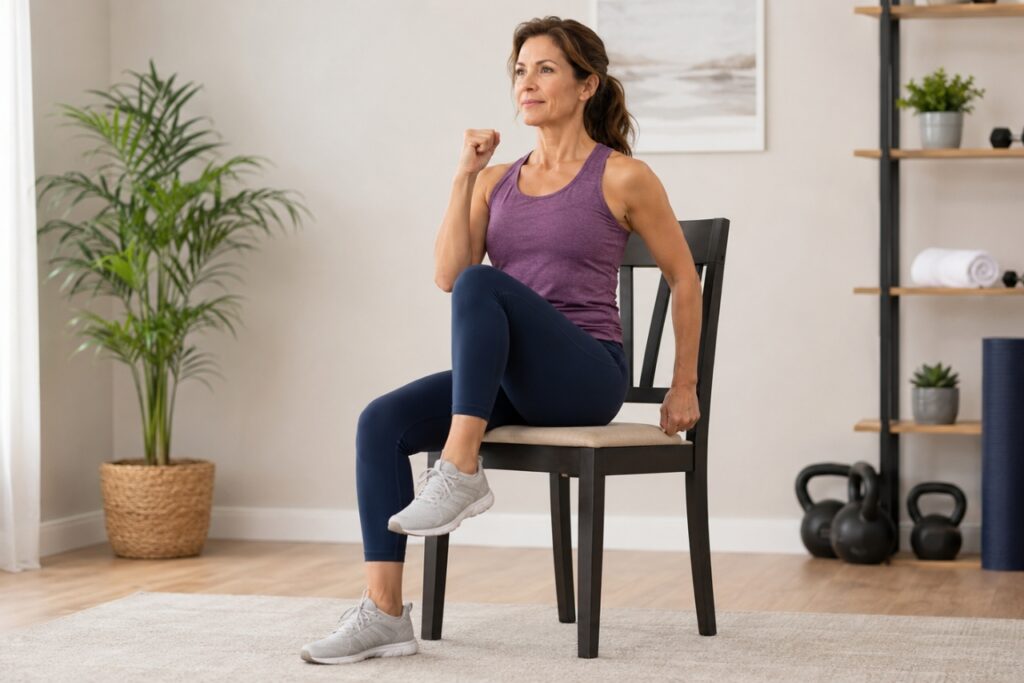
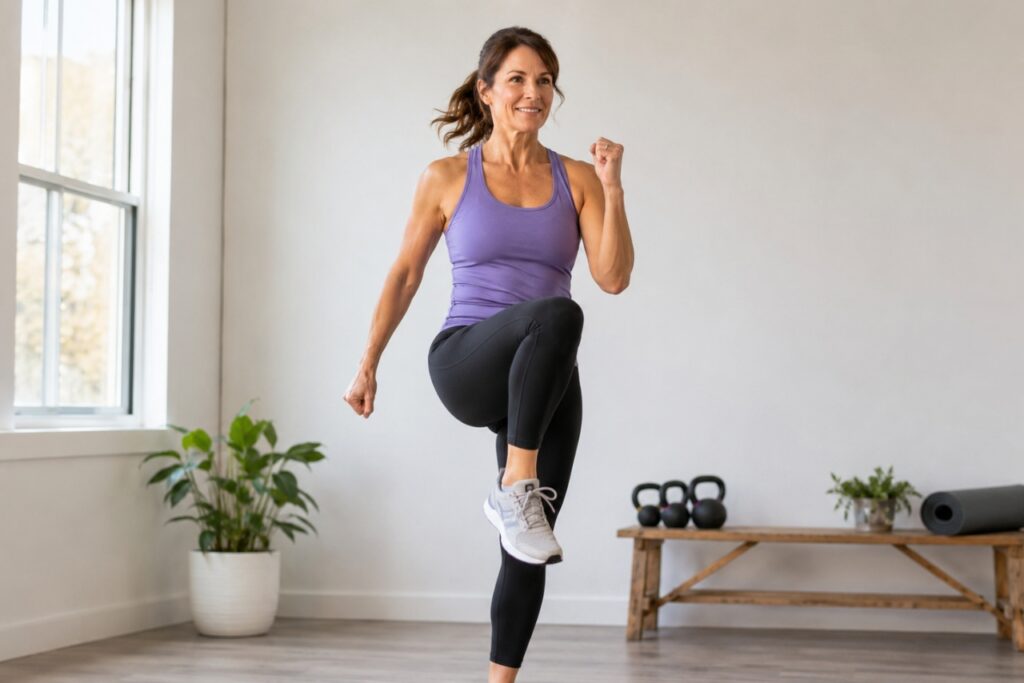
Marching with intention is a simple way to bring speed into the body without impact. Stand tall, lift your knees gently, and let your arms swing naturally. Add a little more energy while keeping the movement comfortable and controlled.
Fast hands with steady feet can be done standing or seated. Keep your feet grounded and move your hands quickly in front of your body, as if gently pushing the air away. This trains speed and coordination without loading the knees or pelvic floor.
READ ALSO: Why You Need Strength and Power Training in Your Routine Over 50
How Can You Use Sit-To-Stands For Power Training?
Sit-to-stands are one of the best ways to begin because they are practical. Getting up from a chair is something we do every day, and it is one of the movements that can tell us a lot about lower-body strength, balance, and confidence.
SB Physio explains that sit-to-stand ability is tied to everyday activity, aging well, and fall risk. Their advice is to begin with an easier setup, such as a higher chair or cushion, build good repetitions before worrying about speed, and reduce hand support gradually.
For Fabulous50s power training, we would begin with the same principle, control first. Once the movement feels safe, you can add just a little more energy on the way up. The sitting-down part should stay slow and controlled. This gives you the power benefit without making the movement rushed or unsafe.
READ ALSO: 10 Strength Training Rules Women Over 50 Need to Follow
How Does Menopause Affect Power Training?
Many women notice that movement feels different during and after menopause. Joints may feel more sensitive. Recovery may take longer. Muscle may feel harder to maintain.
The Pause Life article explains that sarcopenia is the gradual loss of muscle mass and strength and that menopause may accelerate this process for women. It also notes that the quadriceps, which help power stairs, walking, and balance, are particularly vulnerable and that changes in estrogen, progesterone, and testosterone are associated with loss of strength and power.
This matters because power training depends on the muscles that help us react, climb, stand, and recover. It does not mean women should push harder. It means women need a smarter, more progressive approach.
How Often Should You Do No-Jumping Power Training?
For beginners, a few minutes once or twice a week is a good starting point. Power training is best done when you feel fresh because it depends on coordination, timing, and movement quality. If you are tired, rushing, or losing control, the exercise becomes less useful and potentially less safe.
The 2110 Fitness article recommends keeping power training low in volume and high in quality because fatigue reduces movement speed and can affect technique. It also notes that power training can be included one to three times per week depending on the person’s recovery and overall training plan.
A simple Fabulous50s starting point could be three movements: supported heel drops, quick sit-to-stands, and supported side steps. Do one short round. Rest. Repeat only if you still feel steady and confident.
READ ALSO: Strength Isn’t Enough: Why Women Over 50 Need Power Training Too
What Does a Simple No-Jumping Power Routine Look Like?
Start with one minute of gentle marching to warm up. Then do 8 supported heel drops, 5 quick sit-to-stands, 10 seconds of supported side steps, 20 seconds of marching with intention, and 15 seconds of fast hands. Rest as needed between exercises.
Repeat the routine once more only if your body feels safe, steady, and confident. The aim is not to finish exhausted. The aim is to finish feeling more awake, more capable, and more connected to your body.
This is how power begins. Small movements, clear intention and safe progression.
When Should You Avoid Power Training or Modify It?
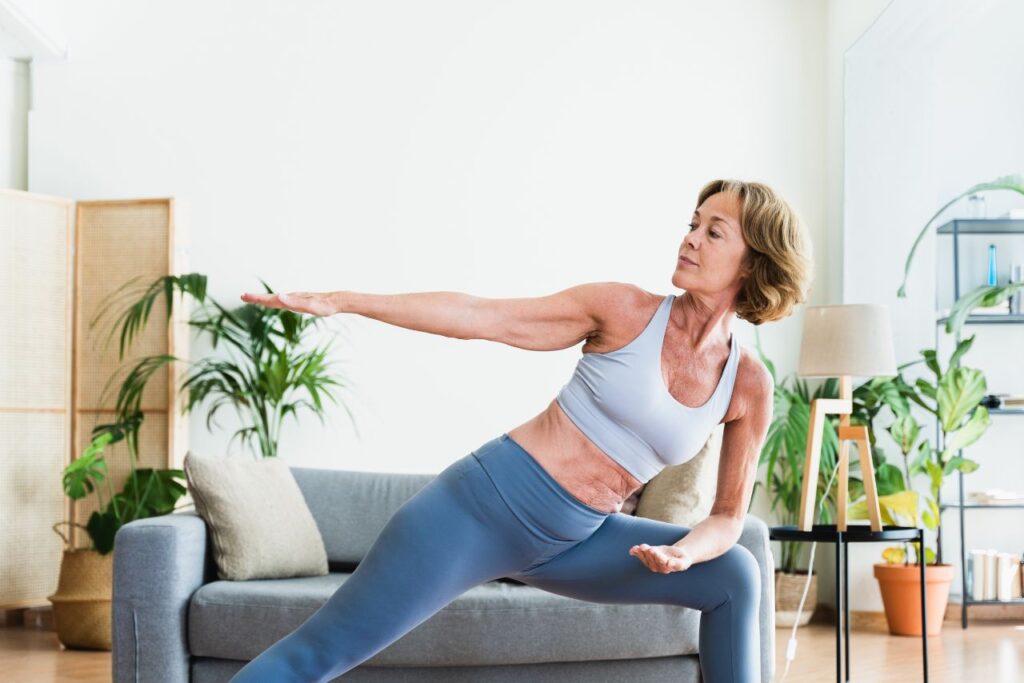
Modify power training if you feel pain, leaking, dizziness, pressure, joint discomfort, or fear. If a movement feels too intense, make it smaller. If it still feels uncomfortable, choose a different movement.
If you leak a little, it is information, not failure. Reduce the intensity, make the movement smaller, keep it controlled, and stay at the level where you feel confident.
If your joints feel sensitive, especially through menopause, the same rule applies. Smaller, slower, steadier. If you prefer extra support, a seated start works beautifully. See Chair Exercises for Seniors for a gentle seated routine.
You should also avoid higher-impact progressions unless they are appropriate for your body. If you have osteoporosis, osteopenia, balance problems, pelvic floor symptoms, joint replacements, or a history of falls or fractures, professional guidance is important before adding jumps or hops.
READ ALSO: Power Training vs. Strength Training: What’s the Difference?
How Often Should You Practice?
Start small. Two short sessions a week is a wonderful place to begin. Consistency matters far more than intensity.
Pick two or three movements from the ladder. Practice them for five to ten minutes. As they start to feel easy, add speed or another rung. Progress happens gradually, and every small session counts.
The Fabulous50s Vitality App is where you can follow guided workouts across Strength, Cardio, Mobility, Balance, and Power with safe modifications for women over 50. Start your 14-day free trial today and begin building the power your body needs for the years ahead.
More Power Training Resources
- Power Training: The New Science Behind Longevity and Fall Prevention for Women Over 50
- A Guide to Power Training for Women Over 50
- Why You Need Strength and Power Training in Your Routine Over 50
- Strength Isn’t Enough: Why Women Over 50 Need Power Training Too
- How Power Training Helps You Stay Independent
- Is Power Exercise Safe After 50?
- Power Exercises That Help With Stairs, Trips, And Balance
- Fast Sit-to-Stands: A Simple Power Exercise After 50
- Beginner Power Exercises for Women Over 50
- Power Training vs. Strength Training: What’s the Difference?
- Strength Isn’t Enough: Why Women Over 50 Need Power Training Too
- Why You Need Strength and Power Training in Your Routine Over 50
- Power vs Strength: What Women Over 50 Need to Know
Final Thoughts
Power training without jumping is not only possible; for many women over 50, it is the wisest place to begin.
A heel drop can be power training. A quicker chair rise can be power training. A supported side step can be power training. A marching drill with more intention can be power training. What matters is not whether the movement looks impressive. What matters is whether it helps your body practice reacting, recovering, and moving with confidence.
Inside the Fabulous50s Longevity Protocol™, Power is one of the Five Pillars because it supports independence in real life. We train power so we can keep climbing stairs, stepping onto curbs, getting out of chairs, recovering from trips, and moving through the world with trust in our bodies.
Frequently Asked Questions
Yes, absolutely. Power comes from moving quickly, not from leaving the ground. Quick heel raises, brisk sit-to-stands, and fast side steps all build power safely, with no jumping at all.
Begin with heel drops or a quick sit-to-stand. Both are gentle, need no equipment, and train the patterns you use every day. Once they feel easy, climb to the next rung.
Move with a little more speed and intention than usual on the effort. Then lower slowly with control. You never need to rush, strain, or force any movement.
It is never too late. Research shows older adults rebuild power and mobility at any age. Your body adapts when you train it gently and consistently, one session at a time.
Always keep a sturdy chair or countertop nearby. If a movement feels shaky, make it smaller or slower. Never train through dizziness or sharp pain, and rest whenever you need to.
It depends on the cause and severity of the knee pain. Choose low-impact options, keep movements small, and stop if pain increases. A physical therapist or healthcare professional can help you find the safest starting point.
Leaking is information from the body. Reduce the intensity, make the movement smaller, avoid jumping, and choose gentler options such as heel drops or marching. If symptoms continue, consider seeing a pelvic floor physiotherapist.
2110 Fitness. “Power Training for Older Adults.” 2110 Fitness, May 2, 2025. https://www.2110fitness.com/post/power-training-for-older-adults
Reid, K.F., and Fielding, R.A. “Skeletal Muscle Power: A Critical Determinant of Physical Functioning in Older Adults.” Exercise and Sport Sciences Reviews, 2012. https://pmc.ncbi.nlm.nih.gov/articles/PMC3245773/
Johns Hopkins Medicine. “Fall Prevention: Balance and Strength Exercises for Older Adults.” Johns Hopkins Medicine. https://www.hopkinsmedicine.org/health/wellness-and-prevention/fall-prevention-exercises
The Pause Life. “Menopause and Muscle Loss: Why Sarcopenia Starts Sooner Than We Thought.” The Pause Life by Dr. Mary Claire Haver. https://thepauselife.com/blogs/the-pause-blog/menopause-and-muscle-loss-why-sarcopenia-starts-sooner-than-we-thought
SB Physio. “How to Improve Your Sit-to-Stand Strength.” SB Physio, Jan. 21, 2025. https://www.sbphysio.com/blog/how-to-improve-your-sit-to-stand-strength